Citrix pushed a new security bulletin on August 19 for two NetScaler ADC and NetScaler Gateway flaws, and the worse of the pair doesn't require a password, a session token, or even a login attempt that fails politely — it walks straight past the login screen. CVE-2026-19490 carries a CVSS v4.0 score of 9.3 and lets a remote, unauthenticated attacker bypass authentication on appliances configured as an AAA virtual server or as a Gateway for SSL VPN, ICA Proxy, CVPN, or RDP Proxy.
What actually has to be true for CVE-2026-19490 to hit you
The precondition matters more than usual here. On current firmware, the appliance needs to be configured as a Gateway — SSL VPN, ICA Proxy, CVPN, or RDP Proxy — or as an AAA virtual server, with SAML Action configured. On older firmware builds, Citrix's own bulletin notes the Gateway/AAA configuration alone is enough; SAML doesn't have to be in the picture at all. If you're running NetScaler purely as a load balancer with no VPN or AAA role, you're likely not exposed to this specific bug. If it's your organization's remote-access front door, you almost certainly are.
Both CVEs, side by side
Type
CVE-2026-19490
Authentication bypass
CVE-2026-19489
Memory overflow / DoS
CVSS v4.0
CVE-2026-19490
9.3 — Critical
CVE-2026-19489
8.8 — High
Precondition
CVE-2026-19490
Gateway or AAA virtual server, SAML Action on newer firmware
CVE-2026-19489
SIP ALG enabled on Large Scale NAT
Auth required
CVE-2026-19490
None
CVE-2026-19489
None
Fixed in
CVE-2026-19490
14.1-73.32 / 13.1-63.21
CVE-2026-19489
14.1-73.32 / 13.1-63.21
CVE-2026-19490
CVE-2026-19489
Type
Authentication bypass
Memory overflow / DoS
CVSS v4.0
9.3 — Critical
8.8 — High
Precondition
Gateway or AAA virtual server, SAML Action on newer firmware
SIP ALG enabled on Large Scale NAT
Auth required
None
None
Fixed in
14.1-73.32 / 13.1-63.21
14.1-73.32 / 13.1-63.21
Why 'no exploitation observed yet' isn't much comfort
Rapid7 put it plainly in its own writeup: NetScaler products tend to draw fast exploitation once a flaw goes public, patch or no patch. That's not a generic warning, it's a track record — the CVE-2026-8452 SAML heap overflow we wrote about last month had confirmed in-the-wild abuse within days of disclosure. My honest read: a bug that needs zero credentials and zero user interaction is a much better fit for mass internet scanning than one that needs a crafted phishing step first, which is exactly the profile that gets automated into a scanner within a week of a public proof of concept.
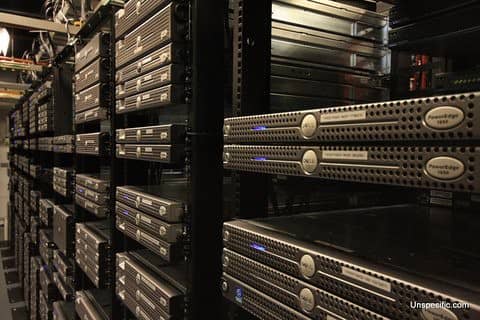
NetScaler devices commonly sit at the network edge as VPN and load-balancing appliances — exactly the position that makes an unauthenticated bypass so serious. · Unsplash
The DoS bug is narrower, but don't skip it
CVE-2026-19489 only bites if SIP ALG is turned on as part of a Large Scale NAT configuration — a specific setup, not the default. But 'narrow precondition' and 'nobody has it' aren't the same thing; carrier-grade NAT and SIP ALG show up disproportionately at ISPs and large enterprises running voice-over-IP through the same appliance handling their VPN traffic. If that's your environment, an unauthenticated remote attacker can trigger unpredictable behavior or an outright denial of service with a single crafted request.
Check your NetScaler build number against the fixed versions — 14.1-73.32+ or 13.1-63.21+, plus FIPS/NDcPP equivalents.
2
If you can't patch today, review whether NetScaler Console Global Deny Lists are available on your firmware as an interim block.
3
Confirm whether your Gateway or AAA virtual server has SAML Action configured — that's the specific trigger condition on current firmware.
4
If you run SIP ALG on a Large Scale NAT setup, treat CVE-2026-19489 as equally urgent even though its blast radius is narrower.
NetScaler CVE-2026-19490/19489: quick answers
Is this the same bug as the Citrix flaw from three weeks ago?
No. CVE-2026-8452 was a SAML heap overflow. CVE-2026-19490 and CVE-2026-19489 are a separate authentication-bypass and DoS pair, disclosed August 19. You need both patches if you're running an affected build.
Do I need SAML configured to be vulnerable?
On newer firmware, yes — SAML Action plus a Gateway or AAA role. On older builds, Citrix's bulletin says the Gateway/AAA configuration alone is sufficient.
Has this been exploited in the wild yet?
Not as of August 19, according to Citrix and Rapid7's public statements. Given NetScaler's exploitation history, that's expected to change quickly.
What if I can't patch immediately?
NetScaler Console Global Deny Lists on 14.1-60.52+ or 13.1-63.16+ firmware can restrict the attack path, but it's an interim measure — plan the real upgrade regardless.
NetScaler appliances keep landing in this slot for a simple reason: they sit at the network edge, in front of VPN and remote-access traffic, which makes every bug in them worth more to an attacker than an equivalent flaw buried three services deep. That's the same logic that made Progress Kemp LoadMaster's pre-auth RCE and Cisco's unauthenticated ASA/FTD VPN crash bug worth writing up this year, and it's why edge appliances deserve a shorter patch SLA than internal tooling gets — VMware's vCenter reverse-SSH bug is the same story with a different vendor's badge on it. If NetScaler is your organization's VPN front door, this is not a next-sprint ticket.