Tap the word "it" in the sentence below and watch which words light up.
What does "it" mean here? · tap a highlighted word
Thewasintheloginformbecausedidn'tcheckthe.
- check · 30%
- password · 28%
- form · 25%
- login · 20%
"bug" spreads across "check", "password" and "login form" — the words that explain what kind of bug.
A toy, not a real model's output: real attention runs across many layers and heads at once, and the weights are never this tidy. The idea — every word is read in the light of the others — is the real one.
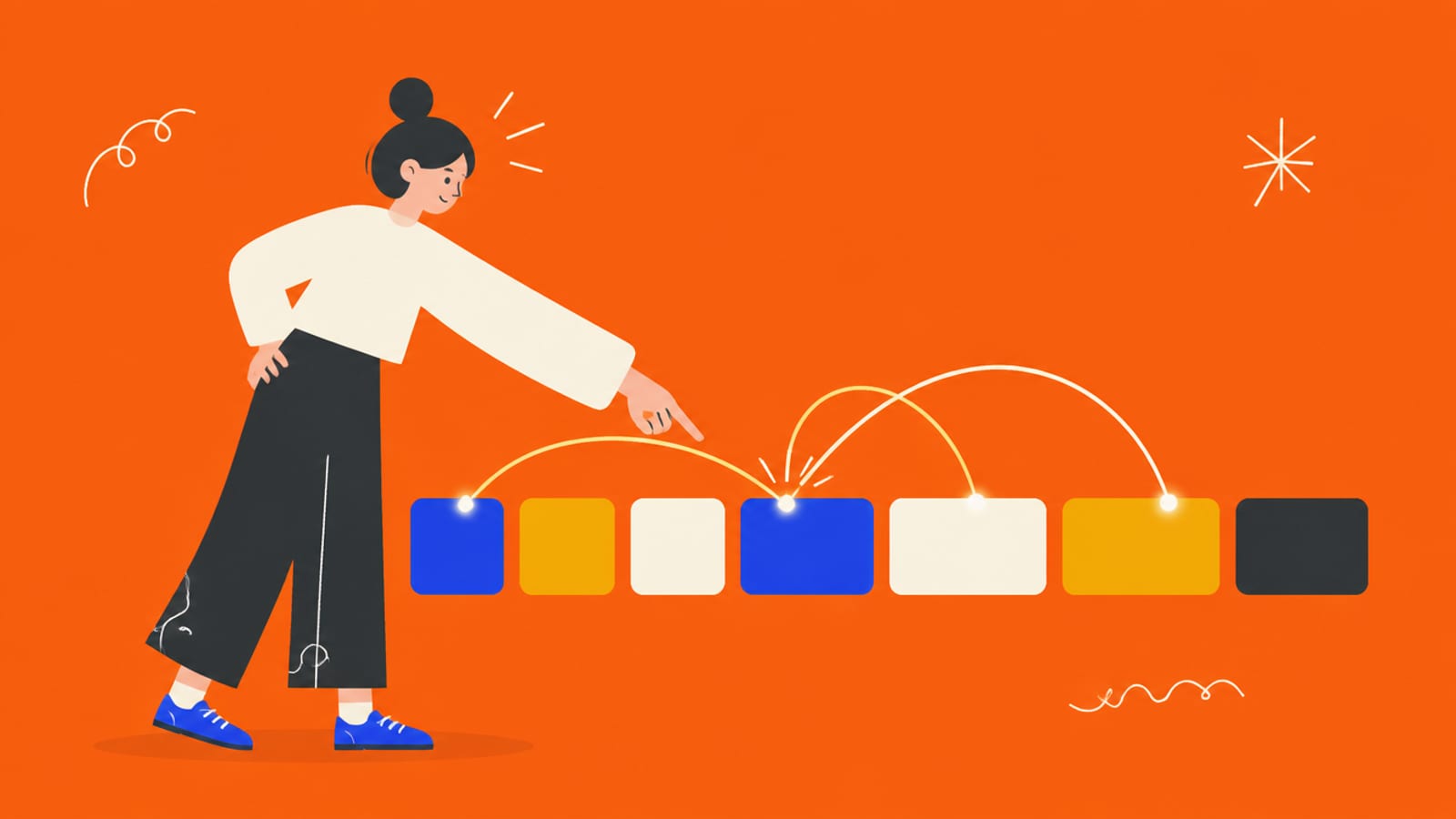
The model linked "it" to the words that explain it. That linking is called attention.
Sentence: "The bug was in the login form because it didn't check the password." To understand "it", the model has to decide which earlier words matter most.
Toy illustration: what "it" pays attention to
login form
- How much (toy)
- A lot
bug
- How much (toy)
- Some
password
- How much (toy)
- A little
The, was, in
- How much (toy)
- Almost none
That table is a toy, not output from a real model. Real models do this many times over, in many layers, for every token at once.
The idea took over in 2017. The paper "Attention Is All You Need" proposed "the Transformer, based solely on attention mechanisms, dispensing with recurrence and convolutions entirely." Today's chat models descend from it.
The takeaway isn't the maths. It's that the model is always deciding what's relevant to what, and clear, specific words make that easier.
Try it with the rules off. In the sandbox, swap "password" for "button" and tap "it" again. Then make the sentence ambiguous on purpose and watch the attention spread out.
Check yourself
0/3 got itSaved on this device only. No account, no streaks.
Next in how the AI thinks: Temperature and sampling.