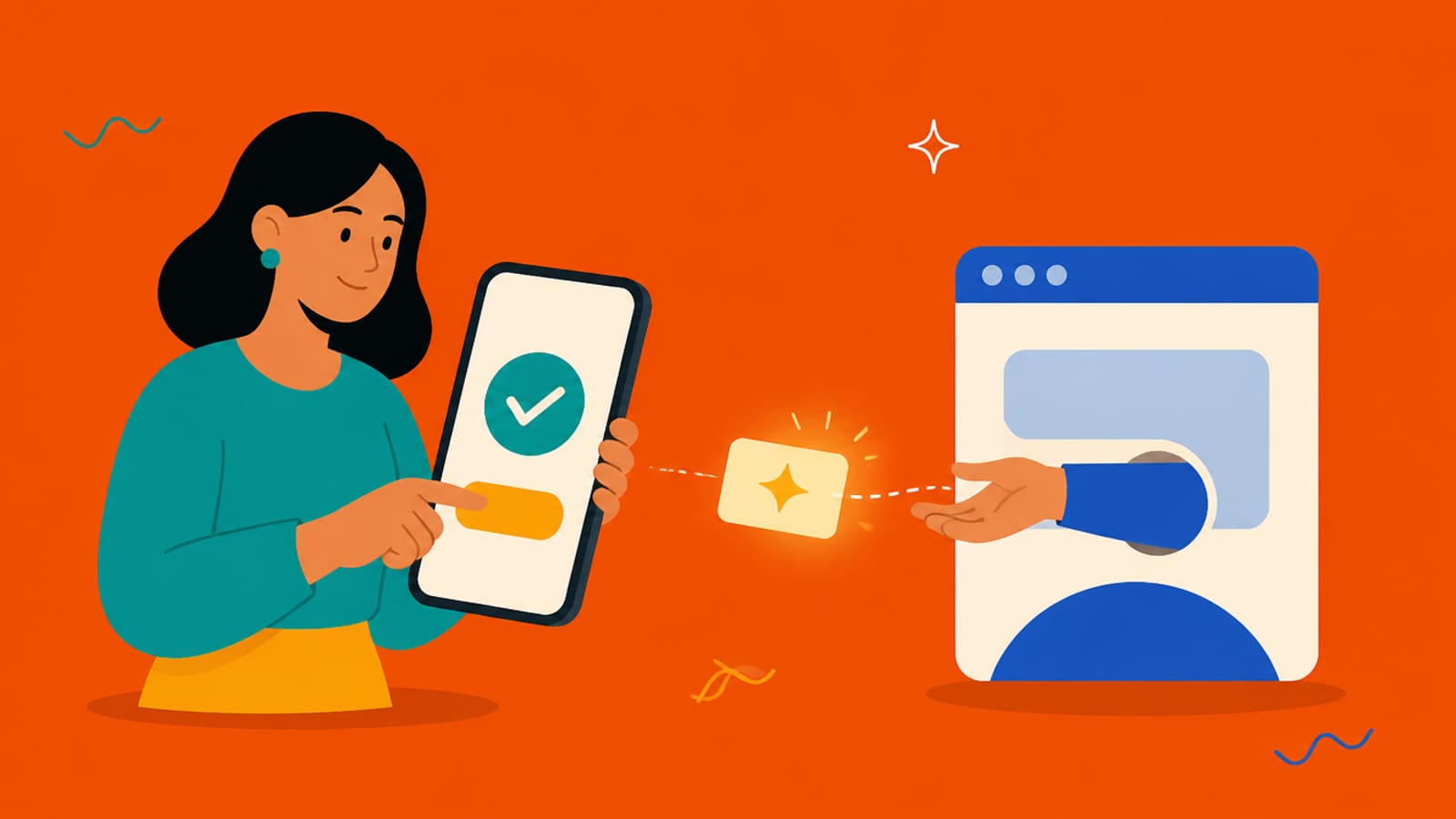
Log in on one phone below, then ask both phones for your orders.
Log in on one phone, then ask for your orders on both
—
—
- server log — nothing yet
The password is checked once. After that the token is you— whoever holds it, on whatever phone. That's why apps have "log out everywhere", and why a token in the wrong place is as bad as a password.
Only the phone that logged in got your orders. That check, proving it's you, is login, also called authentication.
MDN: "Authentication is in general the process of proving that some fact is genuine." For login, the fact is that you are who you claim to be.
- You claim an identity
You type your email: "I'm ana@example.com"
- You present a credential
A password, a one-time code, or a passkey
- The app verifies it
Does this credential match that account?
- A session starts
If it matches, you're logged in from now on
- You claim an identity
You type your email: "I'm ana@example.com"
- You present a credential
A password, a one-time code, or a passkey
- The app verifies it
Does this credential match that account?
- A session starts
If it matches, you're logged in from now on
MDN again: authentication "is typically performed by having a user present a user identifier along with a credential, such as a password, a one-time code, or an assertion signed with a private key." The identifier says who; the credential proves it.
Supabase puts it plainly: "Authentication means checking that a user is who they say they are."
The catch hides in that sentence: the app checks the credential, not the human. Anyone holding your password passes the same test, which is why a leaked password logs a stranger in as you, and why a second factor helps.
Try it with the rules off. In the sandbox, log in with the wrong password and watch it refuse. Then ask for orders on a phone that never logged in.
Check yourself
0/3 got itSaved on this device only. No account, no streaks.
Next in who are you: Passwords and hashing.