Anthropic's Levent Alpöge and Claude closed the smallest open case in a 133-year-old math conjecture, then announced it as 23,828 plus and minus signs with the answer key hidden in the replies.
On August 12, a researcher at Anthropic closed the smallest gap left in a math conjecture that's outlived four generations of the people trying to solve it. The case was order 668 — a Hadamard matrix nobody had constructed since the previous smallest gap fell in 2004. He didn't publish a paper. He posted 23,828 plus and minus signs on X, with the actual proof hidden as a decoder script in the replies.
A problem that outlasted the people chasing it
Jacques Hadamard proposed the conjecture in 1893: a square matrix of +1s and -1s, with every row perfectly orthogonal to every other row, should exist for any order that's a multiple of 4. It's simple to state and brutal to build. James Joseph Sylvester had already found one construction method back in 1867, before Hadamard even asked the question, and Raymond Paley found another in 1933 that covers a huge share of cases. Neither covers everything. By 2004, when Hamid Kharaghani and Behruz Tayfeh-Rezaie finally constructed order 428, the smallest unsolved order left was 668 — four times 167. It sat there, untouched, for 22 years.
How the smallest gap closed
1893
Jacques Hadamard proposes that a matrix of ±1 entries with mutually orthogonal rows exists for every order divisible by 4.
1933
Raymond Paley's construction fills a large share of cases — but leaves plenty of gaps.
2004
Hamid Kharaghani and Behruz Tayfeh-Rezaie construct order 428, then the smallest unsolved case.
Aug 12, 2026
Levent Alpöge posts a matrix for order 668, plus 11 more — every gap under 2000 closes at once.
That's what makes the announcement itself so strange. Alpöge didn't write up a proof. He tweeted a block of 23,828 plus and minus characters — the matrix itself, encoded as text — with a decoder shell script buried in the replies. Run it, and it spits out not one matrix but twelve: orders 668, 716, 892, 1132, 1244, 1388, 1436, 1676, 1772, 1916, 1948 and 1964. Every previously open case under 2000, gone in a single post. The credit line reads 'a team of three humans and Claude.' Epoch AI, which maintains the FrontierMath benchmark's open-problems tracker, marked order 668 'solved by AI' — provisionally, with a note that they'll revise the call if a fuller writeup shows the humans supplied the core ideas rather than just checking the AI's work.
Hadamard matrices are easy to define and famously hard to construct — some gaps have taken decades to close. · Unsplash
Why an abstract matrix problem should matter to you
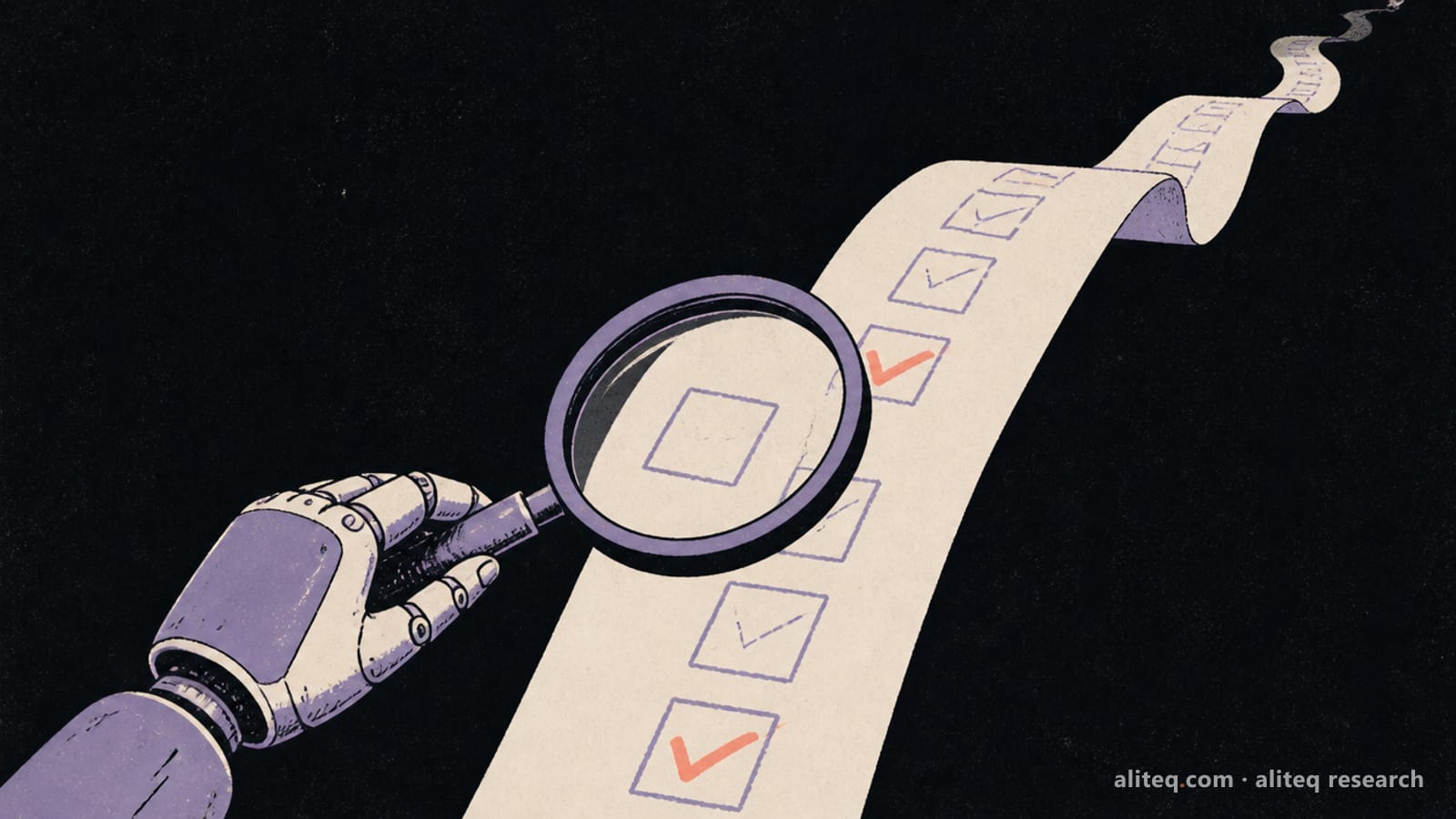
Hadamard matrices aren't just a trophy case for mathematicians. NASA used a Hadamard-code variant, derived directly from a 32-by-32 Hadamard matrix, to correct errors in the black-and-white Mars photos the Mariner 9 probe beamed home in 1971 — the code could recover a corrupted message even with several bits flipped by deep-space noise. The same matrix structure shows up in compressed sensing, coded-aperture spectrometers, and the Hadamard gate used in quantum computing. It's the same broader pattern showing up elsewhere this year — an AI system finding 14,090 real security bugs in open-source software that human reviewers had missed for years, then handing the verification work back to people. The bottleneck in both cases isn't generating candidates anymore. It's checking them.
This is the second time this month
Three weeks earlier, on July 21, the same researcher's name was already trending. Alpöge used an AI model to disprove the Jacobian conjecture, an 87-year-old problem proposed by Ott-Heinrich Keller in 1939 about whether certain polynomial maps can always be reversed. He found a counterexample — a function whose Jacobian determinant sits at a constant -2 everywhere, yet sends three separate starting points to the same output — exactly the kind of thing that isn't supposed to exist if the conjecture were true. Fortune's coverage says that post pulled more than 20 million views on X. Mathematicians reacted less like a math community and more like an industry watching its own disruption.
It is a big day. I think it's a great time to be alive, personally.
Kevin Buzzard, Imperial College London
Not everyone shared the enthusiasm. Akhil Mathew at the University of Chicago called it 'a very rapid and very unsettling change... especially for junior mathematicians' — and the specific worry he's describing isn't that AI produces wrong answers. It's that it produces right ones without showing its work, in a field where the why has always mattered more than the what. It's also not the only unsolved-problem story tied to Claude this year — the same model reportedly spent 36 hours grinding on the Riemann hypothesis without cracking it, which is either reassuring or unsettling depending on which side of this you're on.
133 years
Conjecture age
Proposed by Hadamard in 1893
22 years
Gap open before this
Order 668 unsolved since 2004
12
Matrices solved at once
Every gap under order 2000
20M+
Views on the Jacobian post
Posted July 21, 2026
Quick questions
Did AI prove the Hadamard conjecture?
No. The general conjecture — that a Hadamard matrix exists for every order divisible by 4 — is still unproven. What closed on August 12 were the last specific unsolved cases under order 2000, including order 668.
What is a Hadamard matrix actually used for?
Error-correcting codes (NASA used one on the Mariner 9 mission in 1971), compressed sensing, coded-aperture spectrometers, and the Hadamard gate used in quantum computing algorithms.
Who is Levent Alpöge?
A mathematician working at Anthropic, credited alongside two other unnamed humans and Claude on the order-668 result, and separately reported to have used an AI model to disprove the Jacobian conjecture in July 2026.
Is this peer-reviewed?
Not yet. It was announced on X as an encoded puzzle, not published as a paper, and Epoch AI's 'solved by AI' classification is explicitly provisional.
What happens next matters more than the tweet itself. If Alpöge's team publishes a real writeup and Epoch AI's classification survives it, order 668 becomes the clearest evidence yet that a frontier model can generate genuine mathematical insight, not just polished search. If it doesn't — if the credit quietly shifts back toward the three humans in the byline — this becomes a case study in how easy it is to make an AI look like the protagonist of a story it only assisted. And if all this makes you want to poke at a frontier-ish model yourself without an Anthropic research budget, Nvidia's newly opened Nemotron model and a decent local-AI GPU will get you a lot closer than you'd think — just don't expect it to hand you a 133-year-old proof.