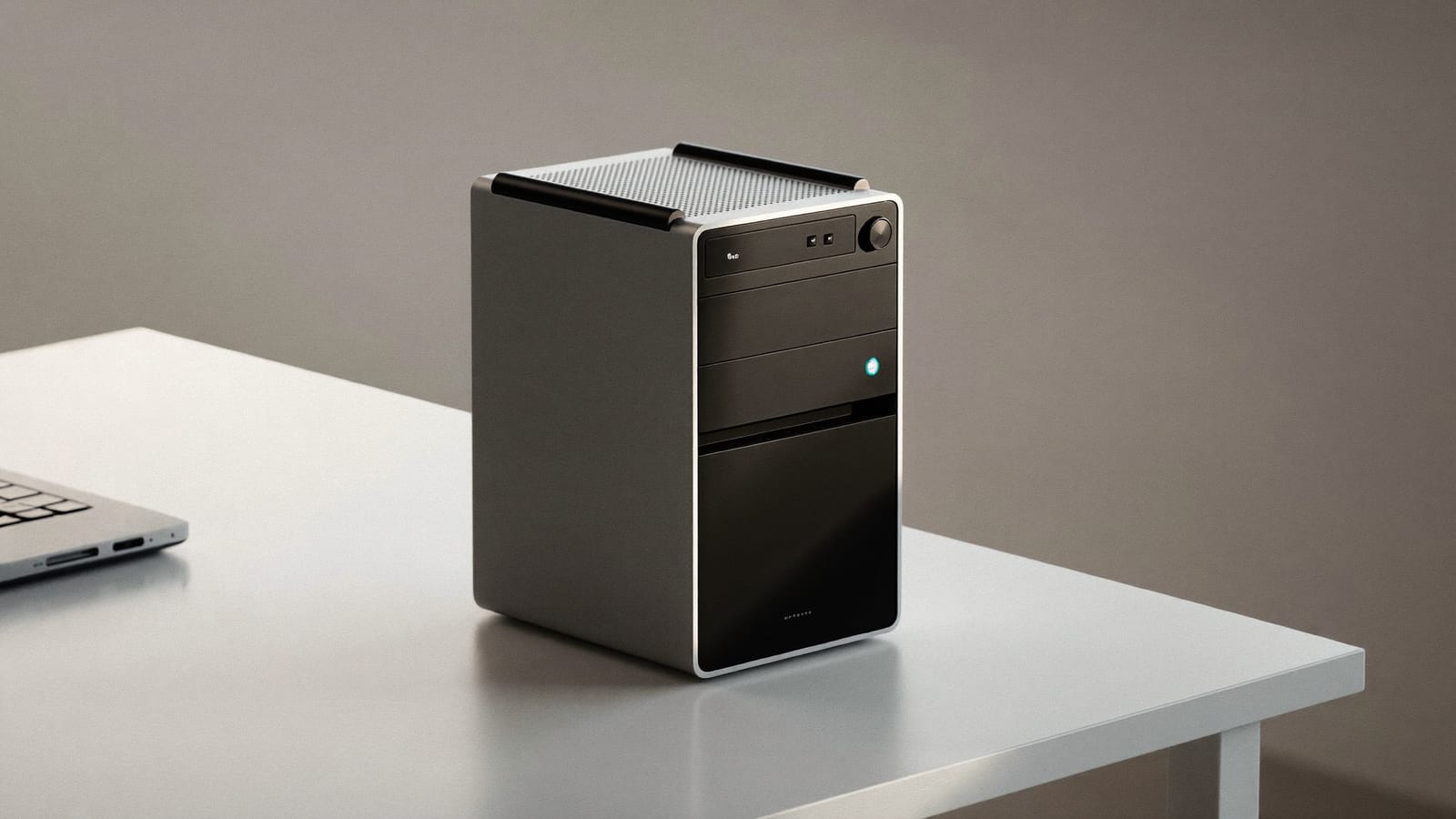
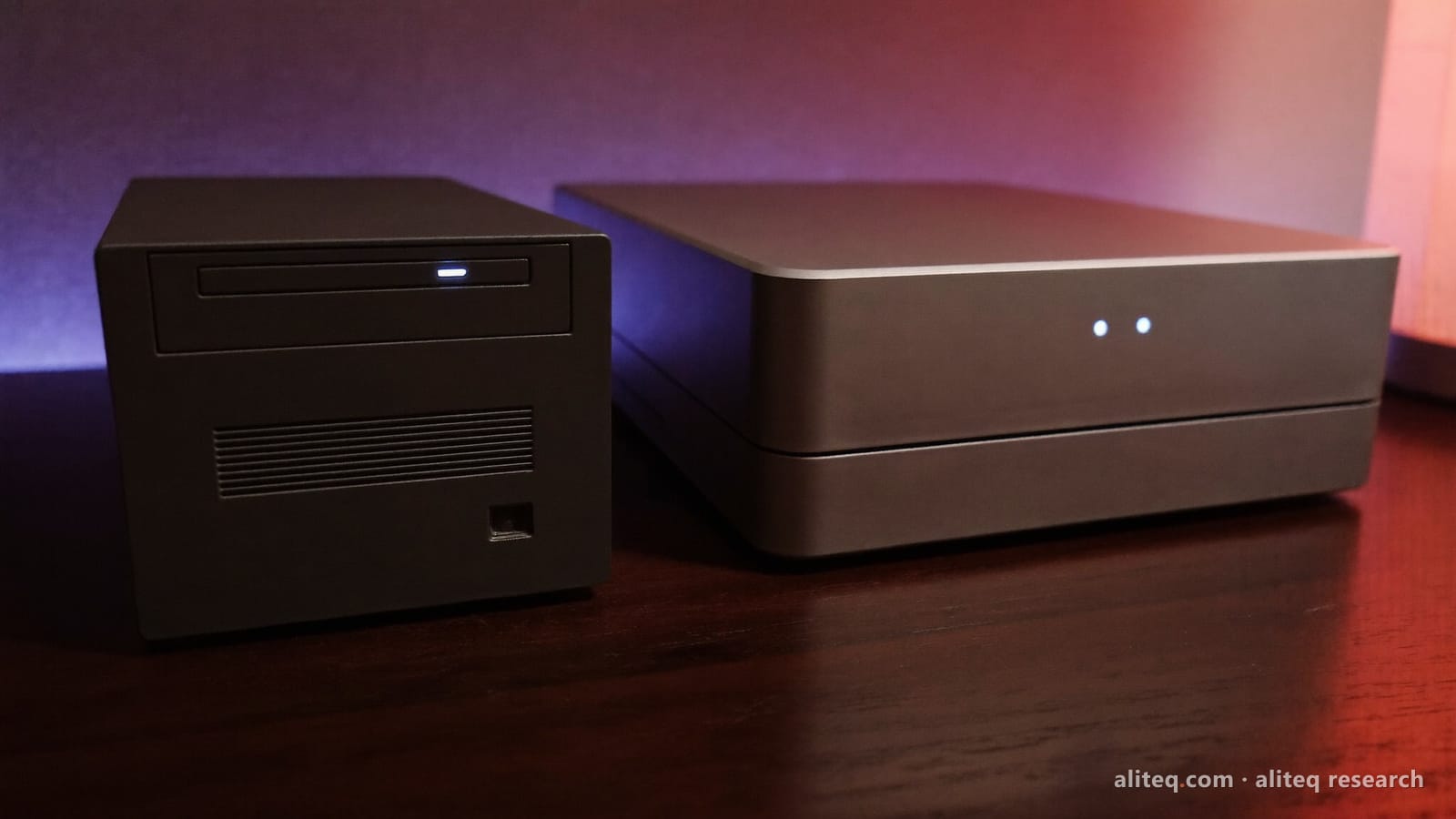
both give you ~128GB of unified memory for local AI, and their memory bandwidth is almost the same — 273 vs 256 GB/s. so the $2,700 gap buys something else entirely. here's what, and who it's actually for.
Nvidia's DGX Spark finally shipped — a $4,699 Grace Blackwell 'personal AI supercomputer' with 128GB of unified memory, aimed at exactly the same job as the $1,999 Strix Halo mini-PCs we just looked at: running big AI models at home. The obvious question is whether the Nvidia box is worth 2.4 times the price. And the answer starts with a genuinely surprising fact: on the one number everyone fixates on for local AI — memory bandwidth — they are almost identical. So whatever you're paying that extra $2,700 for, it isn't that.
$4,699
Nvidia DGX Spark
GB10 Grace Blackwell, 128GB
$1,999
Strix Halo mini-PC
Ryzen AI Max+ 395, 128GB
273 vs 256 GB/s
Memory bandwidth
nearly a tie — both are bandwidth-limited
~5x apart
AI compute
where the DGX Spark actually pulls ahead
The number everyone checks — and why it barely moves
Token generation speed on these unified-memory boxes is governed by memory bandwidth. The DGX Spark's GB10 runs LPDDR5X at 8533 MT/s for 273 GB/s; Strix Halo runs 8000 MT/s for 256 GB/s. That's a 7% difference — a rounding error. Both are a fraction of a real discrete GPU (an RTX 5090 is around 1,792 GB/s). So for the specific task of generating tokens from a dense model, the $4,699 Nvidia box and the $1,999 AMD box perform in the same ballpark, and both are slow at it. If your mental model was 'the expensive one generates text way faster,' drop it.
Memory bandwidth — the two boxes vs a real GPU
RTX 5090 (discrete GPU)1,792 GB/s
DGX Spark (GB10)273 GB/s
Strix Halo (Ryzen AI Max+)256 GB/s
Where the 2.4x actually goes: compute and CUDA
The DGX Spark's real advantage isn't bandwidth, it's raw AI compute — roughly a petaflop from its Blackwell GPU, several times what Strix Halo's integrated Radeon musters. That doesn't help token generation (bandwidth-bound), but it transforms prompt processing — the prefill step where the model digests your input before answering. On a long document, the DGX Spark reaches first-token far faster. The second thing you're buying is the entire NVIDIA CUDA software stack, preloaded. For anyone developing, fine-tuning, or running CUDA-only tooling, that compatibility is worth real money; Strix Halo's ROCm/Vulkan path works but fights you more often.
Buy the DGX Spark if you're a developer who needs CUDA compatibility, fast prompt processing on long contexts, or the NVIDIA software ecosystem — and the $4,699 is a work expense, not a splurge.
Buy a Strix Halo box if you mainly want to run large MoE models locally for inference, and you'd rather put the other $2,700 toward literally anything else. Same memory ceiling, half the price.
Either way, temper expectations: an independent review scored the DGX Spark 7.8/10, dinging it for thermal throttling and — yes — memory bandwidth. Neither box is a discrete-GPU replacement; they're big-memory inference machines.
So the honest framing: this isn't a memory-bandwidth showdown, because on that axis it's a tie. It's a compute-and-software decision. If you need CUDA and prefill speed, the DGX Spark earns its premium. If you just need the cheapest legitimate path to 128GB for running MoE models — the exact case we made for Strix Halo — the Nvidia box is a lot of money for a bandwidth number it barely beats.
Further reading, straight from the source: AMD's ROCm documentation — AMD ROCm docs.