Resolution, refresh rate, panel type, response time, and sync — get these five right and everything else is noise. Here's how to pick the monitor that fits your GPU and how you play.
Ignore the spec-sheet overwhelm — five things actually matter, and the rest is noise. In order: resolution (1080p vs 1440p vs 4K — 1440p is the 2026 sweet spot for most people), refresh rate (how many Hz you need — 144Hz for most, 240Hz+ for competitive), panel type (IPS vs VA vs OLED — QD-OLED now wins for most gamers), response time (lower = clearer motion), and VRR (variable refresh — always turn it on). The golden rule tying it together: match the monitor to your [graphics card](/best-gpu-for-4k-gaming-2026) — a 4K 240Hz panel is wasted if your GPU can't feed it. Here's how the five fit together.
Match the monitor to your GPU (this is the real rule)
The single most common mistake is buying a monitor your graphics card can't feed. A 4K 144Hz panel needs a powerful GPU to hit those frames; a 1440p 144Hz panel is comfortable for mid-to-high-end cards; and a 1080p 240Hz panel suits budget GPUs pushing high frames in esports. So decide in this order: what GPU do you have (or plan to buy), and how do you play? If you have a strong card and love single-player spectacle, a 1440p or 4K OLED is glorious. If you play competitive shooters, a 1080p or 1440p high-refresh panel and a card that can drive the frames matters more than pixel count. If your GPU is modest, a 1440p 144Hz panel is the value sweet spot — and you can always lean on upscaling to hit the refresh. Buy the monitor and GPU as a pair, not in isolation.
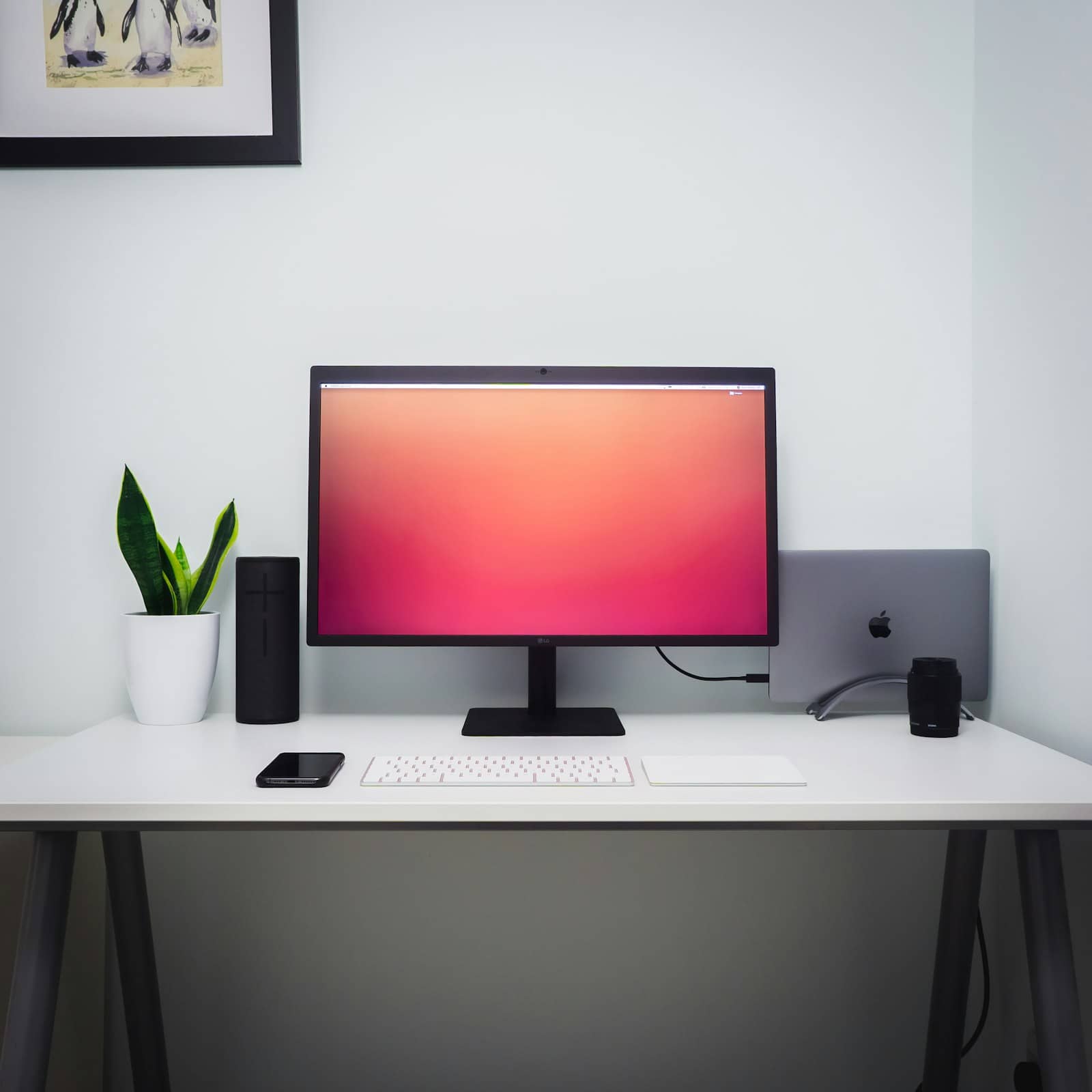
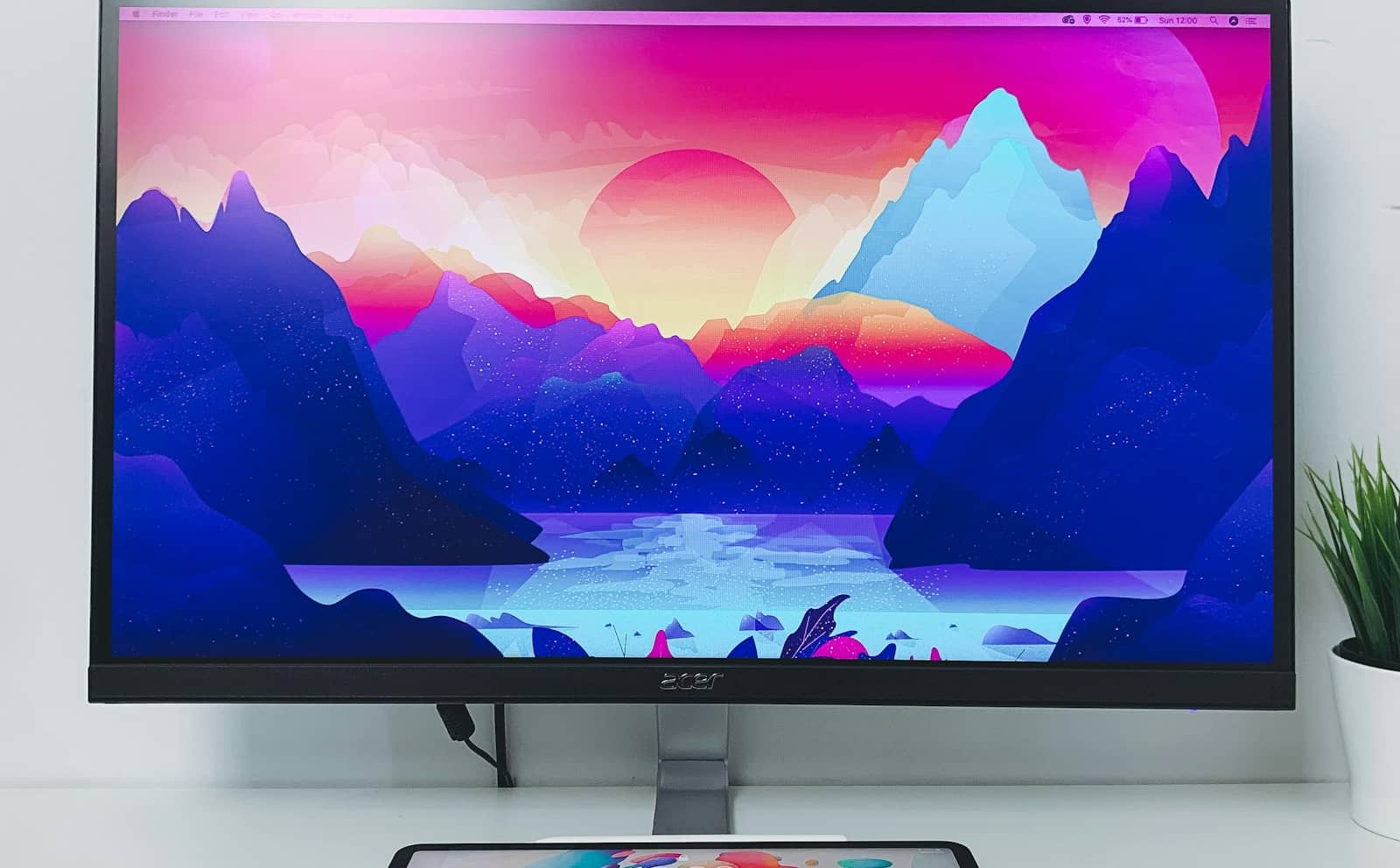
Buy the monitor and GPU as a pair — a 4K 240Hz panel is wasted if the card can't feed it. · Unsplash
The other three: refresh, panel, and sync
Once resolution is settled against your GPU, the rest falls into place. Refresh rate:144Hz or 165Hz is the practical sweet spot — the jump from 60Hz to 144Hz is transformative, while 144→240 is a smaller (but real, for competitive players) gain. Panel type: the QD-OLED vs IPS vs VA question used to be a hard trade-off, but with OLED pricing collapsing (quality 1440p QD-OLED panels now near $350 on sale), QD-OLED is the best all-round pick for most gamers — perfect blacks, ~0.03ms response, and modern burn-in protection. IPS remains a fine, cheaper choice for bright rooms; VA gives the best contrast on a budget. Response time follows from the panel (OLED best, Fast IPS close). And VRR — G-Sync or FreeSync — should always be on: it syncs the monitor to your frame rate to kill screen tearing, and it pairs with the frame-pacing rules (cap FPS just below refresh, don't double up with V-Sync) for buttery-smooth gameplay. Nail the five and you've got a monitor that flatters your GPU instead of bottlenecking it.
Quick answers
What should I look for in a gaming monitor in 2026?
Five things, in order: resolution (1440p is the 2026 sweet spot for most; 1080p for competitive or budget, 4K for AAA visuals), refresh rate (144Hz for most people, 240Hz or higher for competitive shooters), panel type (QD-OLED now wins for most gamers thanks to collapsing prices, with IPS a cheaper bright-room option), response time (lower is clearer in motion — OLED leads), and variable refresh rate (G-Sync or FreeSync, which you should always enable). The overarching rule is to match the monitor to your graphics card and play style — a high-resolution, high-refresh panel is wasted if your GPU can't feed it.
What resolution and refresh rate should a gaming monitor be?
For most people in 2026, 1440p at 144-165Hz is the sweet spot — sharp, smooth, and drivable by mid-to-high-end GPUs. Competitive players should prioritise refresh rate over resolution, going for 1080p or 1440p at 240Hz or higher, since seeing action a fraction sooner matters more than pixel count. Players who love single-player spectacle and have a strong GPU get the most from 1440p or 4K OLED. The key is matching the choice to your graphics card: 4K high-refresh needs a powerful card, while 1080p high-refresh suits budget GPUs pushing high frames in esports.
Does my GPU matter when choosing a monitor?
Enormously — it's the most important factor. A monitor's resolution and refresh rate only matter if your graphics card can actually push those frames. A 4K 144Hz panel demands a powerful GPU; a 1440p 144Hz panel suits mid-to-high-end cards; and a 1080p 240Hz panel fits budget GPUs running esports titles at high frame rates. Buying a monitor far beyond what your GPU can drive wastes money, and buying a weak monitor pairs badly with a strong card. Decide on the monitor and graphics card together as a pair, factoring in upscaling (DLSS/FSR), which can help a modest GPU reach a higher-refresh panel.