The real workflow: generate original designs with AI, upload to Printful, Redbubble, Etsy or Amazon Merch, and market a shop — plus the honest truth about a crowded market and the copyright line you can't cross.
This post contains affiliate links. If you buy through them, Aliteq may earn a commission — at no extra cost to you. Prices verified at publish time.
Share
Every few months print-on-demand has a moment on social media — someone posts a screenshot of a $4,000 month from a t-shirt shop they "built in a weekend," and a wave of new sellers floods Redbubble and Etsy with generic AI mockups. Most of those shops sell zero units. Not one. That's not me being negative about POD — it's the honest starting point, because the mechanics of the business genuinely did get easier this year and the mechanics of standing out did not.
What actually changed is the design bottleneck. Print-on-demand has always been a real business model — zero inventory, no upfront printing cost, a platform handles fulfillment and shipping, you just need a design people want on a shirt, mug, or poster. The part that used to require either real illustration skill or paying a freelancer per design is now something you can generate yourself, in your own style, in minutes. That's the shift worth talking about — not that POD is suddenly easy money, but that the one skill gate (making the art) is mostly gone. This is the actual workflow: how to pick a niche, generate designs that are legally yours to sell, get them onto the platforms, and market a shop that isn't invisible.
1. Pick a niche before you generate a single design
This is the step almost everyone skips, and it's the difference between a shop that sells and one that sits at zero forever. "Cute animal shirts" and "funny quote mugs" are so saturated that a new listing has effectively no path to a search result a buyer will ever see. What still works is stacking specifics: an audience (dog groomers, nurses, plant moms, retired teachers, a specific hobby community), a tone (deadpan, wholesome, self-deprecating), and sometimes an occasion. "Funny shirt" loses. "Sarcastic shirt for someone who fosters kittens" can find an actual buyer typing that exact phrase into Etsy search.
A quick sanity check before you commit to a niche: search your exact concept on Etsy and Amazon. If the results are wall-to-wall near-identical designs with zero reviews, that's a graveyard other sellers already tried and abandoned — not a gap. If you see a handful of listings with genuine reviews and steady sales rank, that's a real, if competitive, niche worth a specific angle nobody's covered yet.
2. Generate designs — originals only
This is where AI actually changes the economics. A print-on-demand design is, technically, a fairly narrow ask for an image model: a clean, print-ready graphic — bold typography, a line-art illustration, a retro badge, an abstract pattern — on a plain or transparent background so it can sit on a shirt, mug, or poster without a busy backdrop fighting it. Describe the concept and the style explicitly ("flat vector," "single continuous line," "retro badge," "print-ready"), generate several variations, and pick the cleanest one. Below are prompts to start from — swap the bracketed subject for your niche and keep the style and print-ready keywords.
Copy-paste design prompts
Bold typographic tee
a bold original typographic t-shirt design, short punchy phrase in thick condensed lettering, high contrast two-color palette, flat vector style, print-ready, centered composition, plain background, no logos, no trademarked characters
Minimalist line-art poster
a minimalist single-continuous-line-art illustration of [subject], clean modern poster design, thin even line weight, muted color palette, plain background, print-ready, original composition, no logos, no trademarked characters
Retro vintage badge
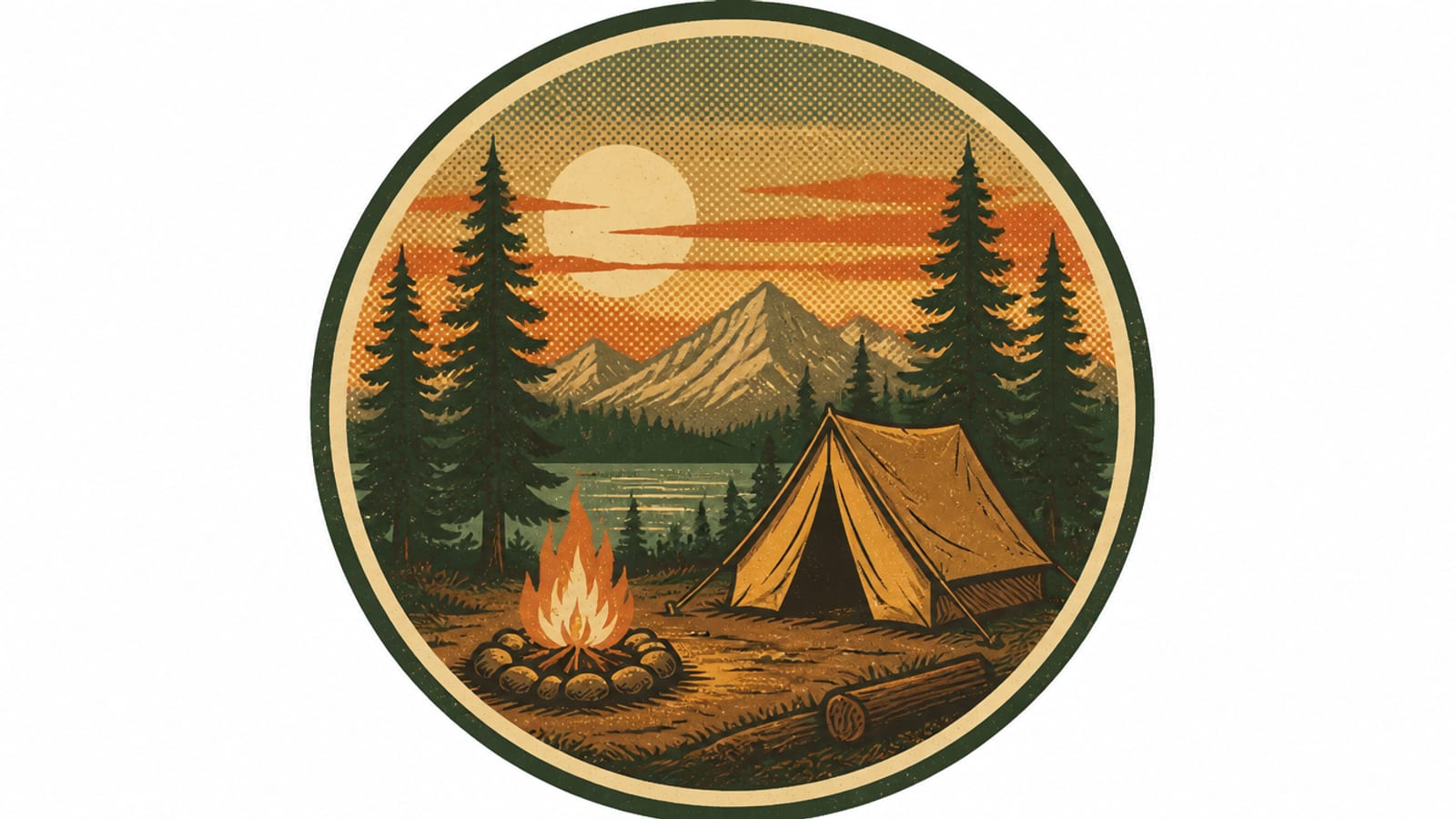
a retro vintage badge-style illustration of [subject], circular composition, distressed halftone texture, warm earthy color palette, original design, print-ready, no logos, no trademarked characters
Botanical line art (for mugs)
a delicate original botanical line-art illustration of [plant/flower], single-color linework, elegant and minimal, plain background, print-ready for a mug or tote, no logos, no trademarked characters
Abstract geometric pattern
an original abstract geometric pattern in [color palette], bold flat shapes, balanced asymmetric composition, print-ready seamless-friendly design, no logos, no trademarked characters
Hand-lettered quote design
a hand-lettered original quote design, '[your quote]', flowing script typography, small botanical accents, plain background, print-ready, no logos, no trademarked characters
Retro sunset landscape
a retro sunset landscape illustration, layered mountains and a bold circular sun, warm gradient color palette, flat vector style, original composition, print-ready, no logos, no trademarked characters
Higgsfield · Print-ready designs
Sponsored
Higgsfield's image models will generate clean, print-ready graphics directly from a text prompt — flat vector tees, line-art posters, retro badges — no illustration skill needed. Free tier to test a design before you commit to a full shop.
3. Upload to Printful, Redbubble, Etsy, or Amazon Merch
You don't need to pick one platform — most sellers who take this seriously run the same designs across several, because each has a different audience and a different cut. Printful connects to your own Etsy or Shopify store and handles printing/shipping under your brand — best if you want to build something that looks like a real store, not a marketplace listing. Redbubble and Etsy are built-in marketplaces with their own search traffic, so a new design can get discovered without you driving every visitor yourself — but you're also competing directly against every other seller in that search. Amazon Merch on Demand is invite-only and slower to get into, but Amazon's search volume and trust are hard to match once you're approved.
Whichever platform you start with, read its content policy before your first upload, not after a rejection — Redbubble's help center spells out exactly what gets a design flagged (trademarked content, hate speech, certain phrases), and the technical file requirements (minimum resolution, DPI, transparent PNG for some products) matter too: a design that looks sharp on your screen at low resolution can come back pixelated or get auto-rejected at upload. Generate at the highest resolution your tool allows and check each platform's exact spec before you batch-upload a whole niche's worth of designs.
4. Market it — uploading is not marketing
The single biggest reason niche-down POD shops fail isn't the design — it's that nobody markets them anywhere. Marketplace search (Etsy, Redbubble, Amazon) rewards the same signals as any other listing: a keyword-rich title and tags that match how a buyer actually searches, not how you'd describe the design to a friend, plus a handful of genuine early reviews. Outside the marketplace itself, Pinterest is disproportionately effective for POD specifically — its audience already searches "funny nurse shirt" or "cottagecore mug" at real volume, and a pinned product photo linking straight to your listing costs nothing. TikTok and Instagram Reels showing the design process (or just the finished product on a real person) work the same way for a shop willing to post consistently instead of uploading once and waiting.
A minimalist line-art design — generated with Higgsfield, print-ready as a poster or tee. · Generated with HiggsfieldA retro badge design — one concept works as a shirt, a mug, and a poster. · Generated with Higgsfield
HiggsfieldSponsored
Generate your first original design today
Test a niche with a handful of designs before you commit to a full shop — generate print-ready art in your own style, no illustrator, no per-design fee. Free tier to try it.
+ Zero inventory and no upfront printing cost — the platform prints and ships only after a sale
+ AI removed the design skill barrier — a real designer's output is achievable without hiring one
+ One good design becomes a whole product line (shirt, mug, poster, tote) with almost no extra work
+ Runs alongside a day job — no fulfillment, no customer shipping questions to answer yourself
+ A design keeps selling passively once it's live and marketed, unlike reselling your own time
Cons
− The category is genuinely flooded — thousands of low-effort AI-generated shops launched in 2024–2025, and most earn nothing
− Per-sale profit margins are thin (often a few dollars) — you need real volume or a design that truly resonates to add up
− Every platform enforces copyright strictly — trademarked or "inspired by" designs get taken down and can suspend your account
− Marketplace search is genuinely competitive — without a niche angle or outside marketing, a design can sit at zero indefinitely
− Platform content and quality policies tighten periodically, and rejected uploads (wrong resolution, flagged content) cost you time in batches
Quick answers
Is print-on-demand too saturated to bother with in 2026?
The generic end — "funny cat shirt," "motivational quote mug" — is genuinely oversaturated and not worth your time. The specific end (a well-chosen niche audience, an original design, marketed with even minimal effort outside the platform) still sells, because most of the flood is unmarketed, low-effort uploads. You're not competing with the whole category — you're competing with the handful of sellers who also niched down and also marketed, and there's real room there.
Can I use AI-generated art if it looks like a famous character or logo?
No — that's copyright infringement regardless of how it was made. Every major POD platform (Printful, Redbubble, Etsy, Amazon Merch) actively scans for and removes trademarked and copyrighted content, and repeated violations can get your whole account suspended. Only sell designs generated from your own original concept — no named characters, franchises, bands, sports teams, or copyrighted phrases.
Which platform should I start with?
If you want built-in search traffic while you're small, start with Redbubble or Etsy — they're marketplaces with their own buyers. If you want to build something that looks and feels like your own brand (and you're willing to drive your own traffic), Printful connected to a Shopify or Etsy store is the better long-term play. Amazon Merch on Demand is worth applying to once you have a few proven designs, since it's invite-only and slower to get approved.
How much does it actually cost to start?
The platforms themselves are free to list on — you only pay when a sale happens (their cut of the print and fulfillment cost), so there's no upfront inventory risk. Your real cost is an AI image-generation subscription (often free-tier-viable for a first batch of designs) and, optionally, a small amount of time or ad spend for marketing once you're live.
Print-on-demand is one entry point into a wider AI-assisted product lane — the same generation workflow extends to phone cases, wall art, and low-content books once you've got a niche and a design style that works. I track the ones actually worth trying in AI Studio.