Muse Glimmer runs on a single consumer GPU and, per Meta's own numbers, beats Gemma4-31B and Qwen3.6-27B at agentic and coding tasks — and Zuckerberg used the release to make his most pointed case yet for open AI over the API-gated kind.
Meta released the weights to a 30-billion-parameter AI model called Muse Glimmer on August 10, and according to Meta's own benchmark numbers, it beats Google's Gemma4-31B and Alibaba's Qwen3.6-27B at agentic, coding, and multimodal tasks — while running on a single consumer GPU. Anyone can download it right now, for free, under an Apache 2.0 license that lets you fine-tune it, resell it, or build a company on it without asking Meta for permission.
It landed alongside a second release, Muse Spark 1.2 — Meta's flagship reasoning model, and this one you don't get for free. It's API-only, priced at $1.25 per million input tokens and $4.25 per million output, and it scored 82.9% on Terminal-Bench 2.1 and 59.3% on DeepSWE 1.1 — in both cases the second-best result on Meta's own comparison chart, behind only Claude Opus 5. CEO Mark Zuckerberg didn't just ship the smaller model with a changelog. He published a personal essay laying out why giving away frontier-adjacent AI is, in his telling, the correct strategy — not a consolation prize from a company that can't outspend OpenAI.
What actually shipped
Muse Glimmer is a dense model, not mixture-of-experts — every parameter activates on every token, which Meta frames as a reliability trade-off, favoring predictable latency and long-context coherence over the routing overhead MoE models carry. At full precision it needs more than 55GB; Meta's 4-bit quantization gets that under 20GB, small enough to run inside a 24GB or 32GB GPU alongside the model's perception encoder and its speculative-decoding system, DFlash, which Meta says delivers a 3.1x speedup on an RTX 5090, 1.8x on an M5 Max, and 1.5x on an M4 Max. It's already supported in Ollama, LM Studio, llama.cpp, MLX, ExecuTorch, vLLM, and SGLang, and the weights are live on Hugging Face today.
Muse Glimmer vs. Muse Spark 1.2
Parameters
Muse Glimmer
30B, dense
Muse Spark 1.2
Undisclosed
Access
Muse Glimmer
Free, open weights (Apache 2.0)
Muse Spark 1.2
Paid API only
Hardware
Muse Glimmer
Single 24–32GB consumer GPU
Muse Spark 1.2
Cloud-side, no local option
Pricing
Muse Glimmer
$0 — download and run
Muse Spark 1.2
$1.25 / $4.25 per 1M tokens (in/out)
Headline result
Muse Glimmer
Beats Gemma4-31B, Qwen3.6-27B on Meta's benchmarks
Muse Spark 1.2
82.9% Terminal-Bench 2.1 — 2nd behind Claude Opus 5
Muse Glimmer
Muse Spark 1.2
Parameters
30B, dense
Undisclosed
Access
Free, open weights (Apache 2.0)
Paid API only
Hardware
Single 24–32GB consumer GPU
Cloud-side, no local option
Pricing
$0 — download and run
$1.25 / $4.25 per 1M tokens (in/out)
Headline result
Beats Gemma4-31B, Qwen3.6-27B on Meta's benchmarks
82.9% Terminal-Bench 2.1 — 2nd behind Claude Opus 5
For anyone tracking the local-AI hardware side of this rather than the corporate strategy, Glimmer slots into the same conversation we've been having about gpt-oss-vs-qwen3-vs-deepseek-2026 — another dense-vs-MoE trade-off, another model sized to fit consumer VRAM instead of a rack. If you've already got the hardware to run something like gpt-oss-20b locally, Glimmer is a very similar shape: 20GB quantized against a 20B model's roughly 12–16GB, close enough that the same GPU tier covers both.
Zuckerberg's actual argument
Most other labs are focused on building AI for companies, governments, or other institutions.
Mark Zuckerberg, August 2026
That's the line doing the work in Zuckerberg's essay, and it's aimed squarely at OpenAI and Anthropic without naming either — both companies increasingly sell into governments and enterprise, both keep their frontier weights closed. Zuckerberg's framing is that concentrated control over the most capable AI is itself the risk, and that the fix is making the technology "broadly distributed" so individuals, not just institutions with enterprise contracts, get to hold it. It's a clean pitch, and it's also — not coincidentally — the pitch that happens to justify Meta giving away its second-best model while keeping whatever comes after Spark 1.2 closed.
The China angle nobody expected
The odder part of the essay is Zuckerberg calling for the US to loosen restrictions on AI distillation — the technique of training a smaller model off a larger one's outputs, which is exactly how Glimmer was built, and exactly the kind of technique export-control hawks want reined in. His argument: "the US will not be able to lead if we restrict ourselves on this front," with China's open-weight labs cited as the competitive pressure, even without DeepSeek called out by name. It's a strange position for the CEO of the company that's currently ahead on distillation to hold — arguing for looser rules on the exact advantage he's using.
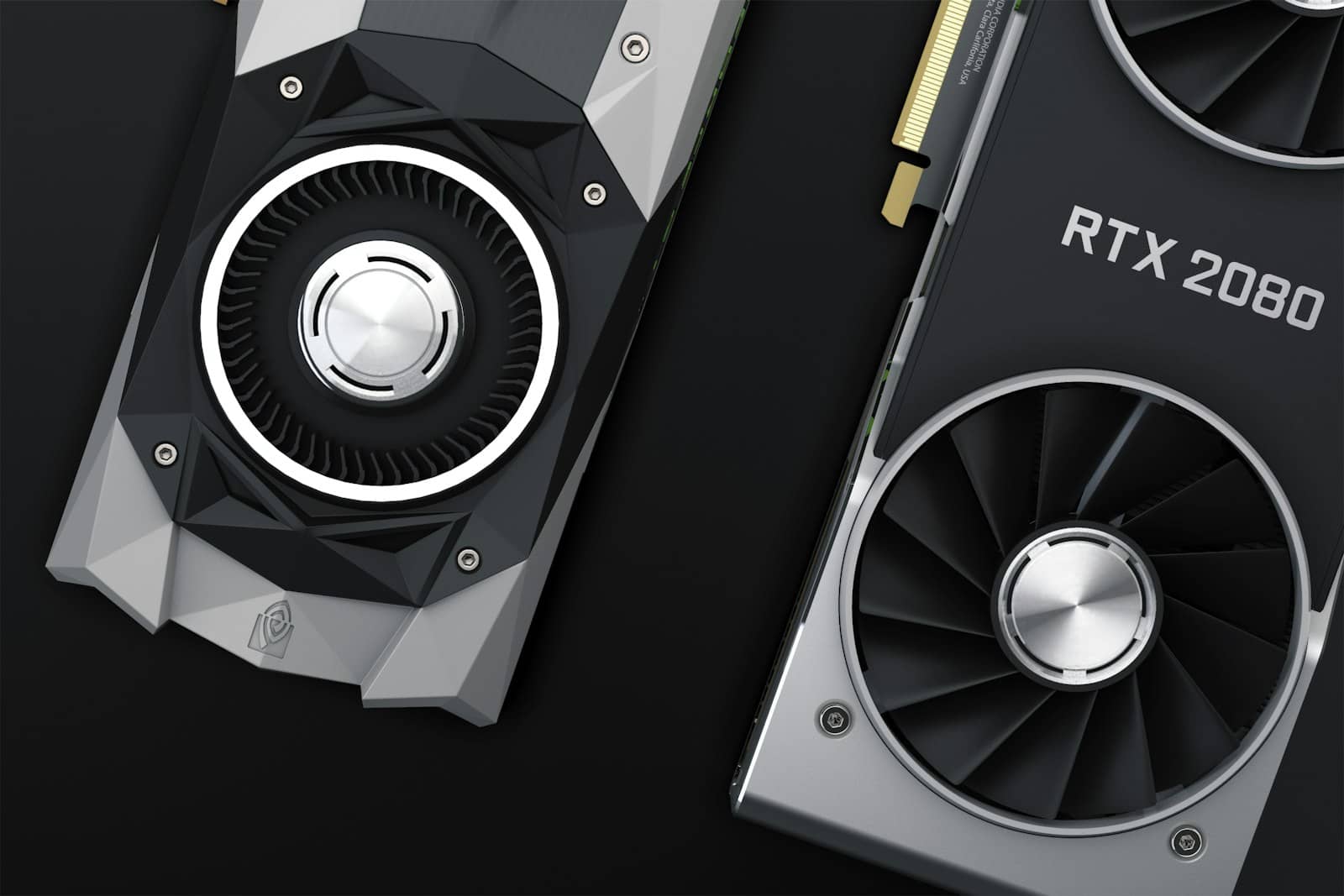
Muse Glimmer's 30B parameters are small enough that inference happens locally — no server room required. · Unsplash
Can I actually run Muse Glimmer on my own PC?
Yes — Meta's own numbers put the 4-bit quantized version under 20GB, which fits inside a single 24GB or 32GB consumer GPU alongside its perception encoder and speculative-decoding stack. It's already supported in Ollama, LM Studio, and llama.cpp.
Is Muse Spark 1.2 open-source too?
No. Spark 1.2 is API-only — Meta hasn't released its weights, and pricing runs $1.25 per million input tokens and $4.25 per million output tokens, in line with other frontier reasoning models.
How does Muse Glimmer compare to gpt-oss or Qwen3?
Meta claims it beats Qwen3.6-27B and Google's Gemma4-31B on agentic and coding benchmarks, though Meta hasn't published head-to-head numbers against OpenAI's gpt-oss line specifically — worth checking yourself before switching your stack.
What license is Muse Glimmer released under?
Apache 2.0 — a genuinely permissive license allowing commercial use, fine-tuning, and redistribution without Meta's sign-off, unlike Llama's more restrictive community license.
What happens next is the interesting part: independent benchmarks against DeepSeek's cheapest models and against Alibaba's Qwen3 line will land within days, and Meta's own numbers won't be the last word — they rarely are on release day. If Glimmer holds up once outside labs get their hands on it, it becomes the default recommendation for anyone with one good GPU who wants a genuinely capable local agent, not a toy. I'd wait a week for the independent numbers before rebuilding a pipeline around it, but I wouldn't wait much longer than that.