Arthur Hayes argues you should buy Bitcoin dips and hold to protect against currency debasement. A neutral, no-hype explainer of what he actually argues — and why to treat it as one strong opinion, not a green light.
Arthur Hayes writes some of the most-read, most-provocative macro essays in crypto, and one of his recurring arguments is that you should buy Bitcoin dips and hold — not as a trade, but as protection against what he sees as inevitable currency debasement. It's a dramatic thesis, delivered in dramatic prose, and it's worth understanding precisely because it's influential and contestable. So this is a neutral, no-hype explainer of what Hayes actually argues and why — and, just as importantly, why you should treat it as one strong opinion to reason about, not a green light to do anything with your money.
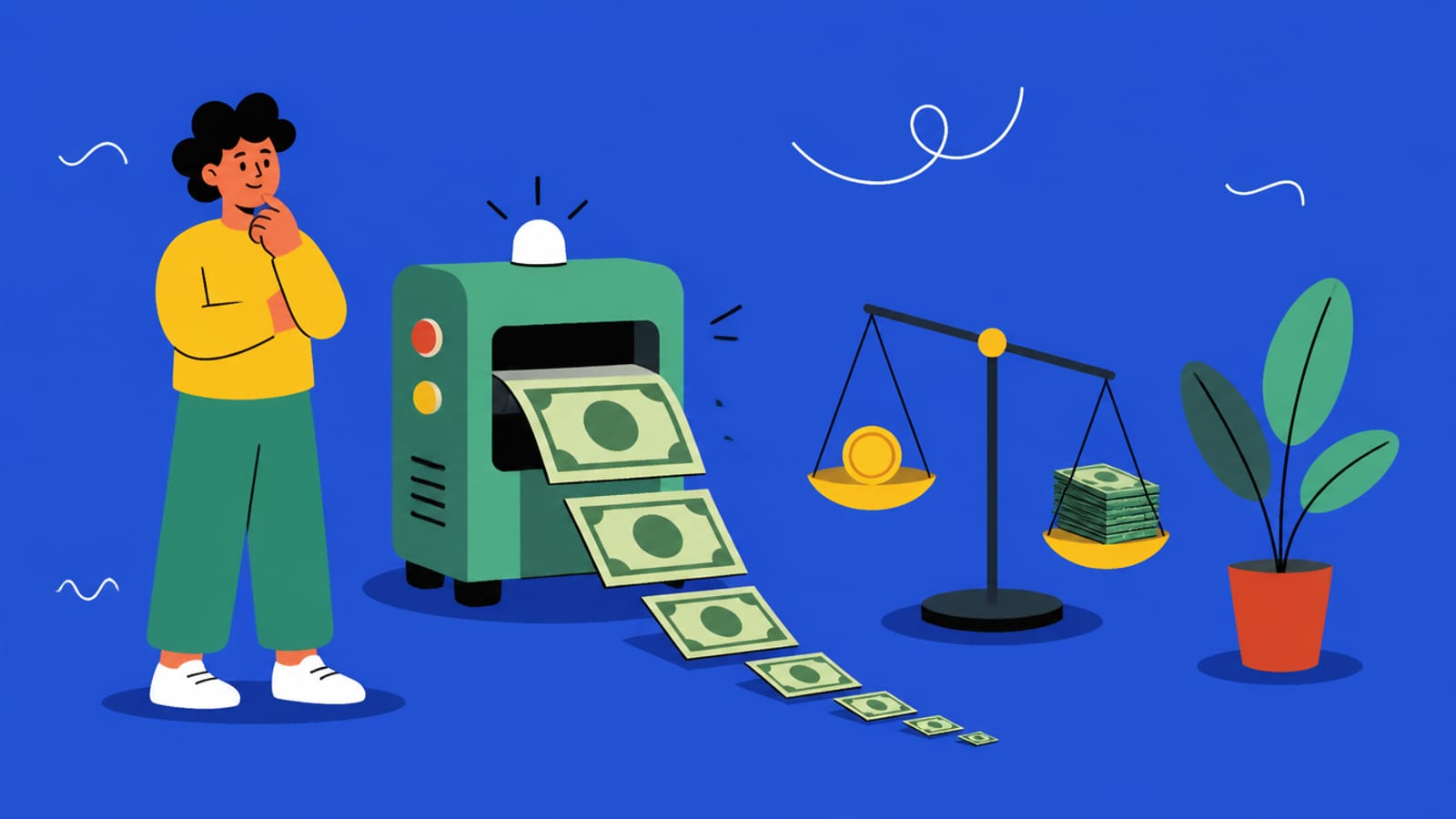
Hayes's thesis in one image: if fiat is being debased, hold scarce assets. A contestable bet, reported — not endorsed. Illustration by Aliteq. · Illustration by Aliteq / generated with Higgsfield
The argument, laid out
Strip away the theatrics and Hayes's framework is a fairly classic 'hard money' macro view. Governments, he argues, face deficits and debt loads they can't grow out of, so they'll ultimately fund themselves through some mix of inflation and financial repression — effectively printing money and letting the currency's value erode. In that world, he treats Bitcoin as a kind of barometer of global fiat liquidity: when more money is being created, scarce assets like Bitcoin (and gold) should rise over the long run. One of his tidiest summaries, from a 2024 essay, sorts assets by belief: broadly, stocks if you trust the system but not its leaders, government bonds if you trust both, and gold or Bitcoin if you trust neither.
From that base, 'buy the dip and hold' isn't a trading tip so much as a logical conclusion of the thesis: if you genuinely believe fiat debasement is the long arc, then price crashes are noise and the correct behaviour is to accumulate and wait. The 'preserve' language reframes it morally — debasement as a hidden tax that hurts savers, and hard assets as self-defence. Whether you find that compelling or overwrought, it's a coherent worldview, and understanding it helps you read a lot of crypto commentary that borrows the same logic.
Why to hold it at arm's length
It's a bet, not a fact. The debasement thesis is a plausible macro view, not a certainty — economies and central banks can and do surprise, and 'inevitable' inflation has been wrong before.
Timing is the killer. Even if the long-run direction were right, Hayes himself is frequently off on when — and 'right eventually' is cold comfort if you can't stomach an 80% drawdown in between.
Volatility cuts both ways. Bitcoin has had multiple 70–80% crashes. An asset you're told to hold 'to preserve' your wealth can also destroy a big chunk of it fast.
Consider the source's incentives. A prominent crypto figure arguing for buying and holding crypto is not a neutral analyst. That doesn't make him wrong — it means weigh the argument on its merits, not his conviction.
Quick answers
Who is Arthur Hayes?
A co-founder of the BitMEX crypto derivatives exchange and now a widely-read macro essayist. His posts are influential in crypto, known for provocative arguments about money printing, currency debasement and Bitcoin. He's a market participant with strong views, not a neutral analyst.
What is his 'buy the dip and hold' argument?
It follows from his view that fiat currencies are being structurally debased by money printing. If that's true, he argues, short-term Bitcoin price dips are buying opportunities and the right behaviour is to accumulate and hold scarce assets. We're reporting his reasoning — this is not advice to do it.
Is he right?
Nobody knows — it's a contestable macro bet. The debasement thesis is plausible but not certain, his timing is often off, and Bitcoin is wildly volatile. Understanding the argument is useful; acting on it is a personal decision that carries real risk. Not financial advice.
Should I buy Bitcoin because of this?
This article can't and won't tell you that. It explains one influential investor's thesis so you can reason about it critically. Any decision to buy, hold or avoid Bitcoin is yours, ideally made with a licensed professional and money you can afford to lose.
The debasement debate is really about trust in money — the same theme running through the whole digital money shift, from stablecoins to CBDCs. Understanding the arguments (all sides) beats following any one loud voice.