Money and assets are going on-chain in four lanes at once — private stablecoins, state CBDCs, tokenized Treasuries, and rebuilt settlement rails. The honest umbrella guide, minus the moon-talk.
"Digital money" sounds like it should already exist — you pay with your phone, your salary is a number in an app. But something more specific and more consequential is happening underneath: money and assets are moving onto blockchains, and they're doing it in four different lanes at once, run by four very different groups of people. Private companies are issuing dollar-tokens. Central banks are building state digital cash. Wall Street is putting Treasuries and funds on-chain. And the plumbing of cross-border settlement is being rebuilt on shared ledgers. I write about this stuff without the moon-talk, so here's the honest map of all four — what's real, what's hype, and why any of it matters.
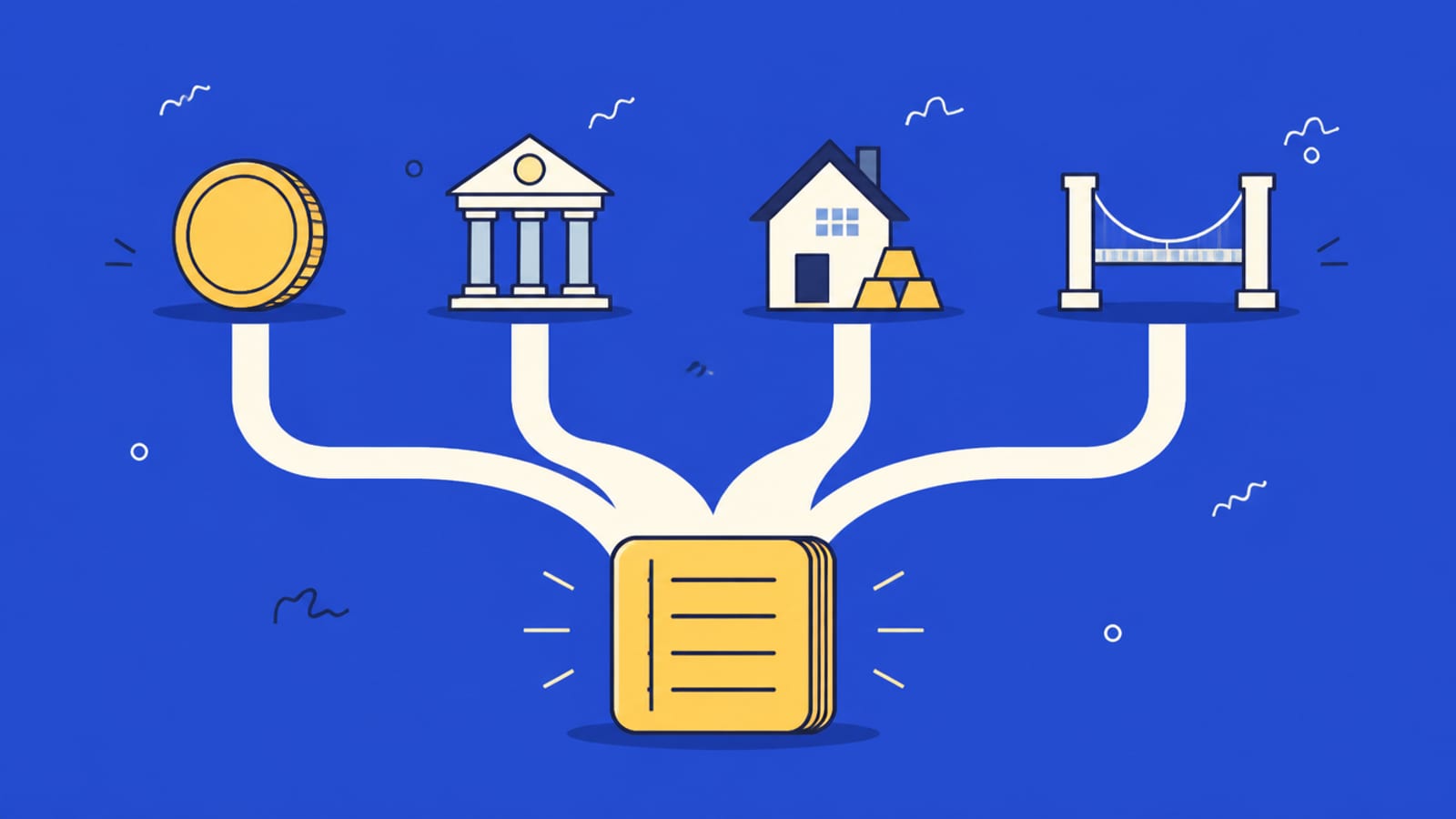
Money and assets are going on-chain in four lanes at once. Illustration by Aliteq. · Illustration by Aliteq / generated with Higgsfield
The four lanes of digital money
~$306B
Stablecoins
private dollar-tokens (2026)
~$15B
Tokenized Treasuries
US debt on-chain
$26B+
All tokenized RWAs
and growing fast
17 banks
SWIFT settlement pilot
tokenized deposits, 24/7
1. Stablecoins — private digital dollars. These are tokens pegged to a currency (mostly the US dollar) and issued by companies like Tether and Circle. At ~$306B they're the largest and most-used form of on-chain money, and the 2025 GENIUS Act finally gave the US a legal framework for them. Full breakdown: stablecoins explained.
2. CBDCs — state digital cash. Central bank digital currencies are the government's answer: money issued directly by the state in digital form. China's e-CNY is the world's largest pilot. What they are and the geopolitics around them: China's digital yuan and the CBDC story.
3. Tokenized real-world assets — Wall Street on-chain. This is the fast-growing one: putting a blockchain claim on off-chain assets. The star category is tokenized Treasuries (BlackRock, Franklin, Ondo), and the broader concept — property, funds, commodities — is covered in real-world asset tokenization explained.
4. On-chain settlement — rebuilding the plumbing. The least visible but arguably most important lane: moving the actual settlement of payments onto shared ledgers. Both China's mBridge and SWIFT's own blockchain ledger (17 banks) are doing this — and whether it reshapes the dollar's dominance is a hotly-overstated question I dig into in de-dollarization and on-chain settlement.
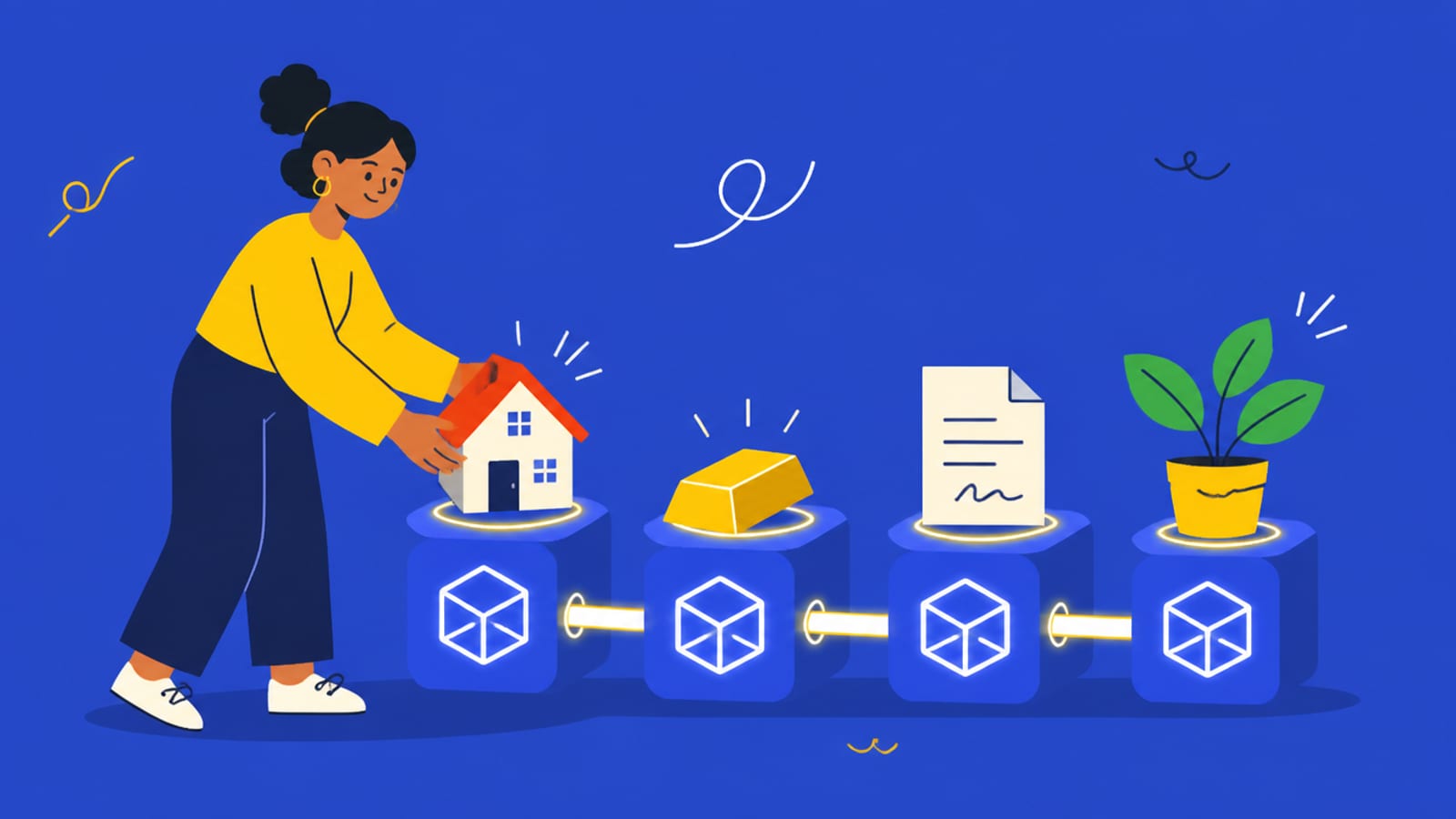
Four different builders, one direction of travel: money and its plumbing moving onto shared ledgers. Illustration by Aliteq. · Illustration by Aliteq / generated with Higgsfield
Why it matters — and where the skepticism belongs
The reason to care isn't a price chart; it's that the rails money runs on are being rewritten, and that's slow-moving but foundational. On-chain money can settle in seconds instead of days, run 24/7, and be programmable. But every honest version of this story has the same asterisk: the technology rarely breaks — the legal and trust layer is where the risk lives. Does a token actually give you an enforceable claim? Who's the custodian? What law applies when something fails? Those unglamorous questions decide whether any of this is trustworthy, and they're far from settled.
Quick answers
What's the difference between a stablecoin and a CBDC?
A stablecoin is a dollar-pegged token issued by a private company (like Tether or Circle) and backed by reserves it holds. A CBDC is issued directly by a central bank and is a claim on the state itself. Both are digital money; the difference is who stands behind it and who controls it.
Is 'tokenization' the same as cryptocurrency?
No. A cryptocurrency like Bitcoin is a native digital asset with no off-chain backing. Tokenization puts a blockchain claim on something real — a Treasury, a fund, a property. The value comes from the underlying asset and your legal right to it, not from the token itself.
Is digital money going to replace cash and the dollar?
Cash is declining but not vanishing, and 'the dollar is finished' is a wildly overstated claim — dollar-pegged stablecoins are actually the dominant form of on-chain money, which arguably extends the dollar's reach. The honest answer is evolution of the rails, not a sudden replacement.
Where's the real risk in all this?
In the legal and trust layer, not the technology. The blockchain part rarely fails; the fragile parts are whether a token grants an enforceable right, whether custodians honour it, and how unsettled regulation treats it. That's the frontier to watch.