Putting bonds, property and funds on a blockchain stopped being a pitch and became infrastructure. A plain-English map of what RWA tokenization is, why Congress is studying it, and the legal risks that actually matter.
Every few months someone tells me tokenization is about to change finance forever, and every few months I give the same answer: it already is, just slower and less glamorously than the headlines want. "Real-world asset tokenization" — putting a claim on something off-chain (a Treasury bill, a house, a fund share, a gold bar) onto a blockchain as a token — stopped being a pitch deck a while ago. The interesting question in 2026 isn't whether it's real; it's whether the rules catch up before the plumbing outruns them. So here's my plain-English map of what RWA tokenization actually is, why Washington is finally paying attention, and what I'd watch — minus the moon-talk.
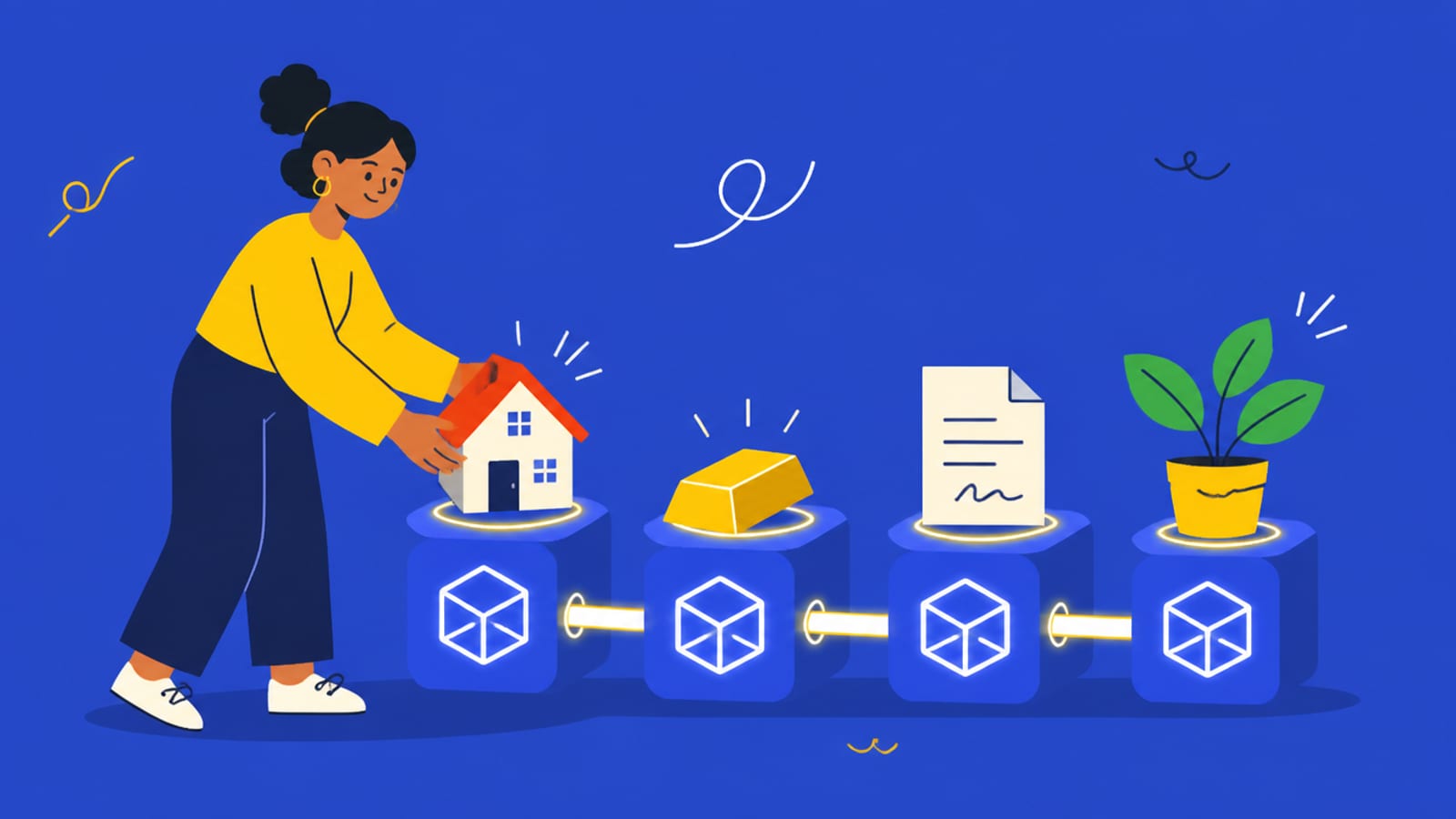
Tokenization puts a claim on a real asset — property, bonds, commodities — onto a blockchain. Illustration by Aliteq. · Illustration by Aliteq / generated with Higgsfield
What tokenization actually means
Strip away the jargon and it's simple: you take an asset that lives in the real world, and you issue a token on a blockchain that represents a claim on it. A tokenized money-market fund, a tokenized Treasury, a fractional share of a building. The pitch is that blockchains settle in seconds instead of days, run around the clock, and let you slice a $1,000,000 asset into a thousand $1,000 pieces — so ownership gets faster, more divisible, and programmable. The IMF has gone as far as describing tokenization as a potential structural reconfiguration of how markets work, which is a strong phrase from an institution that doesn't hype easily.
The reality on the ground is less cinematic and more encouraging: the biggest, fastest-growing category isn't exotic — it's tokenized US Treasuries and private credit, boring instruments that institutions actually want on-chain for efficiency. When the dull stuff moves first, that's usually a sign the technology is crossing from speculation into infrastructure.
$26B+
Tokenized RWA on-chain
early 2026, and growing fast
Treasuries
Leading category
+ private credit, not meme coins
GENIUS + CLARITY
US framework
stablecoins, then broader assets
Legal
The real bottleneck
rights, custody, jurisdiction
Why Washington is paying attention now
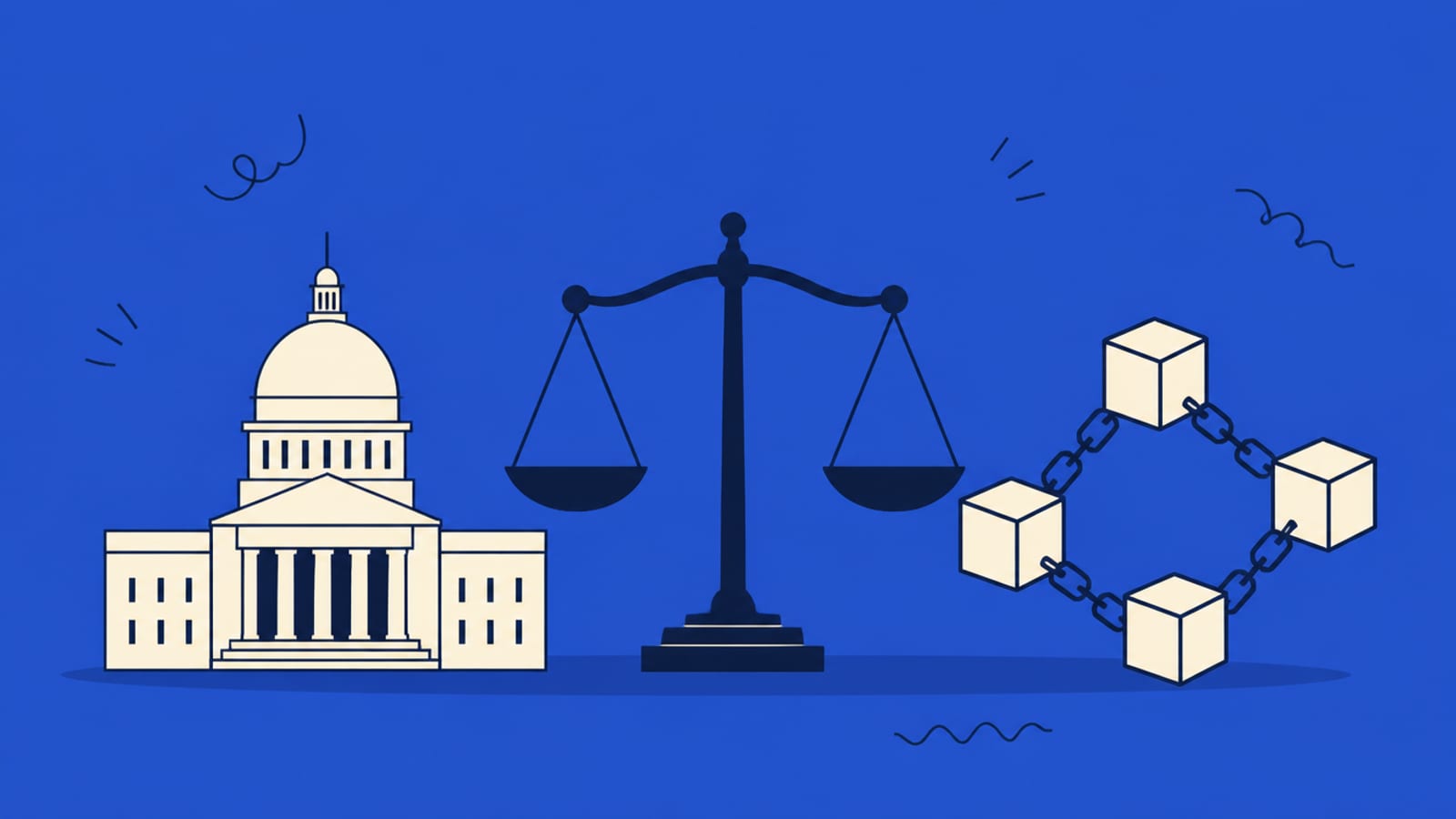
For years US digital-asset policy was a turf war between agencies and a lot of enforcement-by-lawsuit. That started to change with the GENIUS Act in 2025, which created the first federal framework for stablecoins — the dollar-pegged tokens that are the settlement layer for most of this activity. The follow-on CLARITY Act is designed to sort out everything the stablecoin law didn't: which digital assets are commodities (CFTC) and which are securities (SEC), a distinction that has haunted the industry for a decade. If both stick, expect a lengthy joint CFTC-SEC rulemaking process to fill in the details.
On top of the legislation, the House Financial Services Committee has held dedicated hearings on tokenization — asking, in effect, whether the securities laws written for paper certificates and stock exchanges need updating for assets that settle on a blockchain, or whether regulators already have the authority they need. That's the actual debate: not "is crypto good," but "do our capital-markets rules still fit when the asset and its ledger are the same thing?"
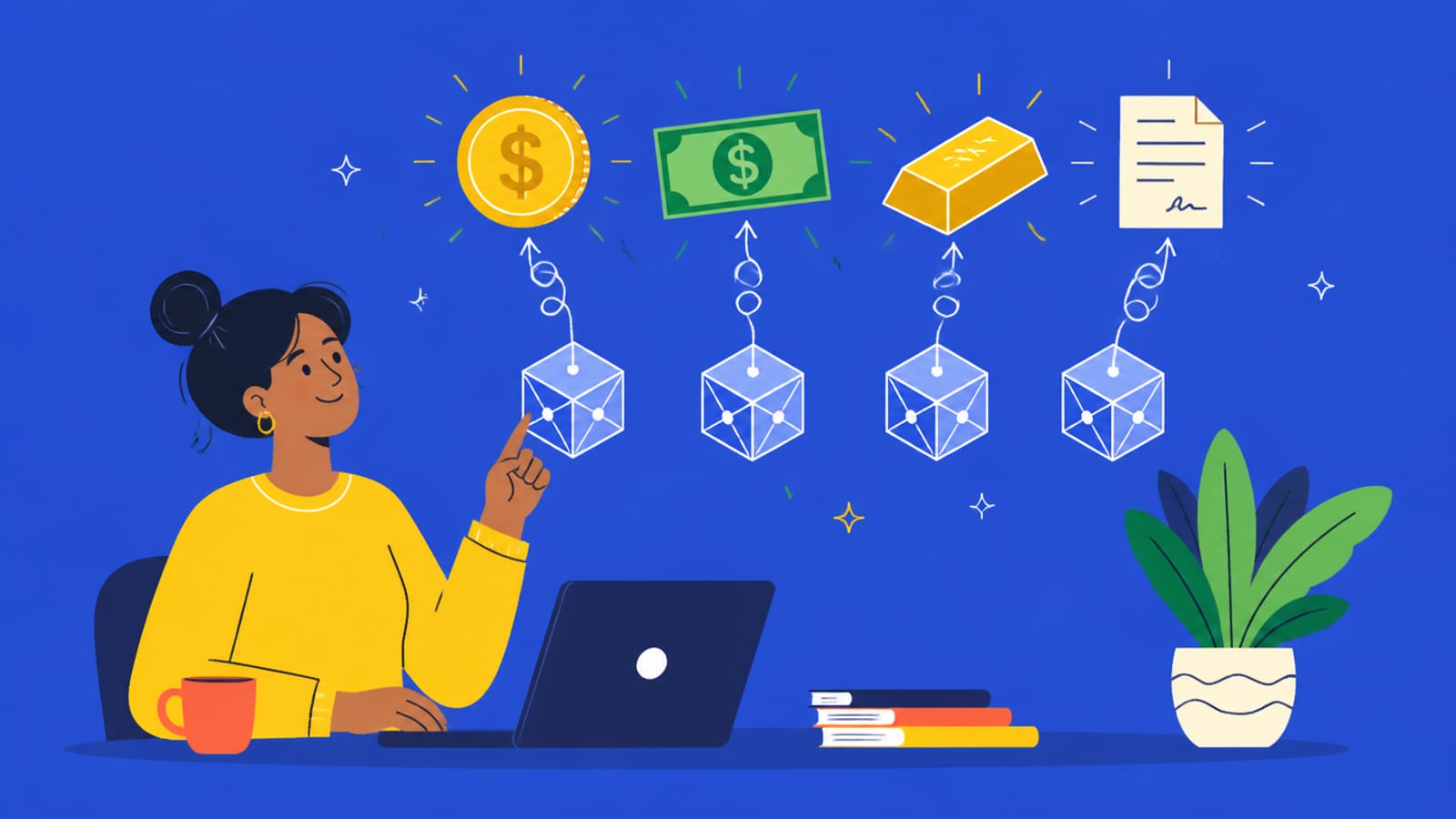
The frontier is legal, not technical: whether a token reliably grants the legal right to the asset behind it. Illustration by Aliteq. · Illustration by Aliteq / generated with Higgsfield
What I'd actually watch (and worry about)
Legal enforceability. A token is only as good as the right it grants. If the issuer vanishes or a court doesn't recognise the on-chain claim, you own a database entry, not the asset. This is the whole ballgame.
Custody and the off-chain link. Someone still has to hold the real house or bond and honour the token. That trusted party is a point of failure blockchains can't remove.
Liquidity theatre. "24/7 tradable" doesn't mean there's a buyer at 3am. Fractional and always-on markets can be thin markets.
Regulatory whiplash. Frameworks are still being written; a rule change can reprice or freeze a whole category. Treat the current clarity as progress, not a finish line.
Quick answers
Is tokenization the same as cryptocurrency?
No. A cryptocurrency like Bitcoin is a native digital asset with no off-chain backing. A tokenized real-world asset is a blockchain claim on something that exists in the real world — a bond, a fund, a property. The token is a wrapper; the value comes from the underlying asset and the legal right to it.
What's actually being tokenized today?
Overwhelmingly financial instruments: tokenized US Treasuries, money-market funds and private credit lead by value, because institutions want their efficiency. Real estate and commodities exist too but are smaller and legally trickier.
Does US law allow this?
Increasingly, yes, within a framework that's still forming. The GENIUS Act set stablecoin rules in 2025, and the CLARITY Act aims to allocate oversight of other digital assets between the CFTC and SEC. Congress is actively studying whether tokenized securities need new rules or fit existing ones.
What's the biggest risk?
That the token doesn't reliably grant the legal right to the asset behind it — because of a weak issuer, a failed custodian, or unsettled law. The blockchain part rarely breaks; the off-chain legal link is the fragile bit.
If you want the other half of the digital-money story — the government version rather than the private-market one — read my explainer on central bank digital currencies and China's digital yuan. Together they're the two big experiments in what money and assets look like when the ledger goes digital.
Tokenization is the finance-industry side of the digital-money shift; the fastest-moving consumer side is people using AI to build real income. That's a lane we cover in depth on our AI Money hub, including an honest breakdown of how people are actually making money with AI.
This is one lane of a much bigger shift. For the full picture of how money and assets are going on-chain — stablecoins, CBDCs, tokenized assets and settlement — see our digital money explained hub.