The course was never the hard part — the video and the marketing were, and AI collapsed both. Here's the honest 2026 playbook: the real money models, the exact AI stack, a cost breakdown, and the parts AI still can't do for you.
This post contains affiliate links. If you buy through them, Aliteq may earn a commission — at no extra cost to you. Prices verified at publish time.
Share
Here's the honest state of the online-course business in 2026: making the course was never the bottleneck people think it is, and now the two parts that actually stopped most people — recording hours of watchable video, and producing marketing that looks like a real brand — have collapsed in cost. That's the shift. You could always write a lesson outline. What you couldn't do, without a camera you hated being on or a budget you didn't have, was turn it into a polished video course and then market it well enough that anyone bought it. AI took those two walls down.
I build and sell this kind of content, so treat this as a map, not a pitch: what genuinely changed, the real ways people make money teaching in 2026, the exact AI stack that replaces the studio, the editor and the marketing agency, and an honest cost/time breakdown — including the parts AI still can't do for you. It is far easier than it was two years ago. It is not a button that prints money, and the market is more crowded every month, so I'll be straight about who this works for and who should skip it.
~$9.5B
Self-paced e-learning
2026 market (The Business Research Co.)
~$1T
Broader e-learning by 2032
from $325B in 2025 (Grand View)
~$29/mo
AI avatar video
vs a videographer day rate
An afternoon
Script → first lesson
vs weeks of filming
The 2026 course workflow — the lessons, the video and the marketing all made from one desk. Generated with Higgsfield. · Generated with Higgsfield
What actually changed (and what didn't)
The online-course market is genuinely large and still growing — self-paced e-learning alone was worth around $9.5 billion in 2026 and is forecast to keep climbing at roughly 7% a year, and the broader e-learning market is on a path from about $325 billion in 2025 toward $1 trillion by 2032. That's the tailwind. But a big market also means a crowded one: the same tools that let you make a course let everyone else make one too, so 'I made a course' is not a business — 'I made a course people finish and recommend' is. Keep that distinction in your head the whole way through.
Rewind to 2023. To ship a credible video course you needed to be comfortable on camera (most people aren't), own or rent decent lighting and audio, and grind through re-records every time you fluffed a line — then edit it all. Or you paid someone. The marketing was a second full job: a sales page that converted, a thumbnail that got clicked, promo clips for social. Two expensive, camera-and-budget-shaped walls stood between a knowledgeable person and a sellable course. What changed is that AI knocked both down: a script becomes a narrated, avatar-fronted lesson, and one idea becomes a full set of sales visuals and promo reels. What did not change: you still need something worth teaching, and a market that trusts you enough to buy.
The real ways people make money teaching in 2026
Self-hosted premium courses — you sell a structured course on a platform like Teachable, Thinkific, Kajabi or Podia. Highest margin, you own the customer, but you do your own marketing. This is where the AI creative stack pays off most.
Cohort & community-based courses — a course plus a live community (Skool-style). AI makes the evergreen video library; the community is the human moat that keeps it defensible.
Marketplace courses (Udemy, Coursera) — the platform brings the audience and takes a big cut, and prices are low. Lower risk, lower ceiling; a fine way to validate a topic before you build your own.
Lead-magnet / mini-courses — a free or cheap course that sells a bigger service, coaching or product. Often the most profitable use of a course: it's marketing, not the product.
The AI stack that replaces the studio and the agency
Four jobs, and AI now does most of the expensive parts of each. Here's what to reach for — and, more importantly, the order I'd do it in. Don't build the whole thing before you've validated anyone wants it.
The four jobs of a course — curriculum, video, sales visuals, promotion — most of which AI now handles. Generated with Higgsfield. · Generated with Higgsfield
1. The curriculum (start here, validate first)
Before you record anything, turn what you know — or an existing blog, PDF, or set of notes — into a structured outline: modules, lessons, learning outcomes. A large language model is genuinely good at this scaffolding, and it forces you to see the gaps. Then pre-sell or wait-list it before you build the whole thing; validation is free and saves you weeks. Full walkthrough: turn a blog or PDF into a sellable course with AI.
2. The video (the wall that stopped most people)
This is the part AI changed most. A reusable AI avatar reads your script to camera so you never have to film yourself, or a voice-over-slides workflow narrates your deck — either way, editing a lesson becomes editing text. Dedicated course-video tools like Synthesia and HeyGen are built for long-form, LMS-friendly delivery; a creative tool like Higgsfield is stronger for short avatar clips, hooks and promo. Which to use depends on the course — I break it down in make course videos with AI avatars.
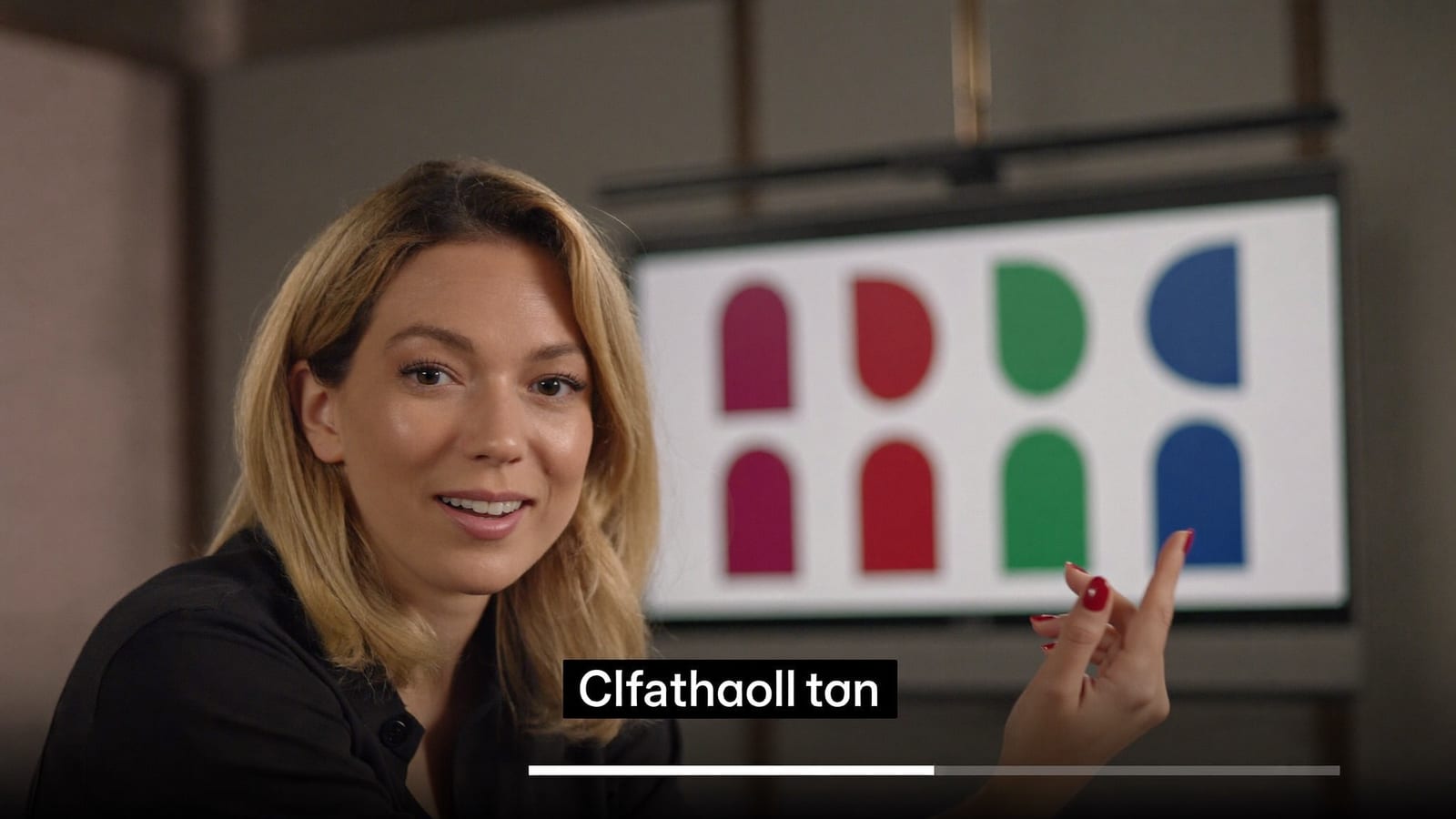
A talking-head lesson generated from a script — no camera, no re-records. Generated with Higgsfield. · Generated with Higgsfield
3. The sales page & thumbnails (why it looks like a real product)
A course lives or dies on whether the landing page and the thumbnail earn the click and the trust. AI image tools generate cohesive hero images, module thumbnails, mockups and social cards for cents — the visual polish that separates a $200 course from a Google Doc. Deep dive: AI course thumbnails & sales-page visuals that convert.
4. The marketing (there is no such thing as a course that sells itself)
Even a great course needs promo: short-form reels, ad variations, an email sequence. AI generates the promo clips and ad angles so you can test many cheaply and find the one that actually converts. Full playbook: market an online course with AI. And when you're choosing where to spend, the best AI tools for course creators, compared lays out the stack tier by tier.
Higgsfield · The creative layer
Sponsored
Higgsfield runs the image models for thumbnails and sales-page visuals, reusable avatars for short promo clips, and product-to-video ad reels in one place — the marketing-and-visual half of a course, without stitching together five subscriptions. Free tier to test before you pay.
What it actually takes to go from expertise to a sellable video course — the AI way versus the old way. Time assumes you're new and learning as you go, and none of it includes the marketing effort to actually get sales, which is the real work.
Rough cost to produce a 15-lesson video course
Videographer + editor (old way)~$5,000–10,000
shoot days + edit
DIY on camera (old way)~$1,500 + weeks
gear + your time + re-records
AI avatar / voice-over-slides~$300 + days
a subscription + your script
The four jobs, old way vs AI way
Curriculum outline
Old way
Days of solo drafting
AI way
An afternoon, AI-scaffolded + edited
Record 15 video lessons
Old way
Camera, lighting, re-records, editing
AI way
Script → avatar/voice-over, edit text
Sales page + thumbnails
Old way
Designer, or it looks amateur
AI way
Cents per image, an afternoon
Promo clips for launch
Old way
Filmed or hired, per clip
AI way
Generate + test many cheaply
The cost that remains
Old way
Audience / ad budget + real expertise
AI way
Audience / ad budget + real expertise
Old way
AI way
Curriculum outline
Days of solo drafting
An afternoon, AI-scaffolded + edited
Record 15 video lessons
Camera, lighting, re-records, editing
Script → avatar/voice-over, edit text
Sales page + thumbnails
Designer, or it looks amateur
Cents per image, an afternoon
Promo clips for launch
Filmed or hired, per clip
Generate + test many cheaply
The cost that remains
Audience / ad budget + real expertise
Audience / ad budget + real expertise
Quick answers
How much can you actually make selling an online course?
Honestly? The range is enormous and most courses earn little. Some established creators run six- and seven-figure course businesses; far more sell a handful of copies and stall. The market is real and large, but it's crowded, and income depends almost entirely on your audience, your topic and your marketing — not the tools. Results aren't typical and nothing here guarantees any income. Treat a course as a product you have to sell, not a payout.
Do I need to show my face or be on camera?
No — that's the biggest thing that changed. A reusable AI avatar can present your lessons from a script, or you can narrate slides with an AI or your own voice-over. Many top-selling courses never show the creator's face. That said, in trust-heavy niches (coaching, personal brand) your real face can help conversion, so it's a choice, not a requirement.
Will buyers care that the video is AI-generated?
For clear, well-structured teaching, most buyers care about whether they learn the thing, not how the video was made — screen-recordings and slide-narration have been normal for years. Be transparent if asked, keep the teaching genuinely good, and it holds up. Where it can backfire is a personal-brand course where people expected the real you; match the format to the promise.
Which comes first — the course or the audience?
The audience, almost always. The hardest part of this business is distribution, not production. If you have even a small email list or social following in your niche, a course is a natural next step. If you have neither, budget serious time (or ad spend) for marketing — the marketing playbook is where the real work is.
What's the single fastest way to start?
Turn something you've already written — a popular blog post, a talk, a PDF guide — into a course outline with AI, pre-sell it to validate demand, and only then produce the video. You de-risk the whole thing before spending a day building. Start with turn content into a course.
Make your course look like a real product this week
Generate the thumbnails and sales-page visuals, build reusable avatars for promo clips, and draft your launch reels — all in one place, on a free tier. The teaching is yours; this is the part that used to cost an agency.