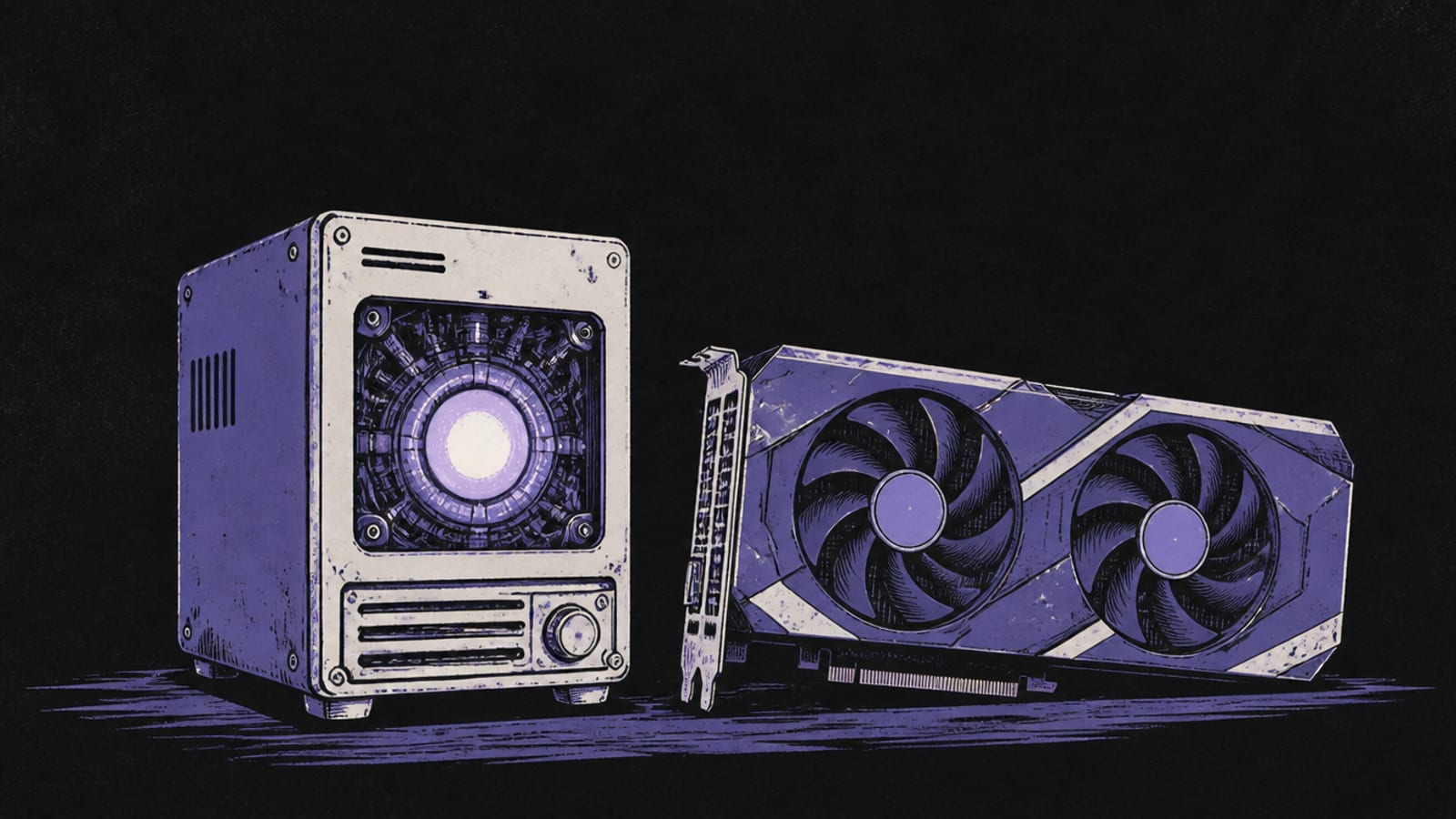
3,200 jobs cut, four studios let go, Halo shipping on PlayStation, and a 2027 super-console still being funded. everyone's reading that as collapse. I've been staring at it for a week and I think it's a deliberate — and defensible — bet.
I've now written up four separate Xbox stories in about two weeks, and I've been arguing with myself about them the whole time. Individually they read like a company falling apart. Together, I think they read like a company that has decided what it wants to be and is paying the price to get there. I'm not sure I like it. But I've stopped believing it's incoherent, and that's a meaningfully different reading from the one I keep seeing everywhere else.
Read those as four crises and you get the doom narrative that's everywhere right now. Read them as one decision and something else appears: Microsoft has concluded that owning the living room box is not where the return is, and that being the company whose software and subscription reach everyone — including people holding a PlayStation — is.
Why I think it's coherent, even though I don't love it
Here's the number that reframed it for me. In the memo itself, Xbox stated its studios lost an average of roughly 64 cents per dollar invested in a recent year. Whatever you think of how that figure is calculated — and I'd love to see the working — a platform holder saying that out loud is an admission that the exclusive-games flywheel wasn't spinning. The traditional console logic is: spend enormously on exclusives, those exclusives sell hardware, the hardware install base earns it back through a cut on everything sold. That only works if the exclusives actually move boxes. Xbox's own numbers suggest they weren't.
If you accept that premise, everything else follows with uncomfortable logic. Studios that lose money don't survive. Halo earns more on three platforms than two. Game Pass matters more than console share. And the console itself becomes a premium option for the enthusiasts who want it, not the funnel the entire business depends on. That's not collapse — it's a company reading its own P&L and acting on it, which is rarer than it should be.
The console isn't going away — but Microsoft increasingly needs you to subscribe more than it needs you to own the box. · Unsplash
The part that actually bothers me
It's not the layoffs as a line item, awful as they are for the people in them. It's the sequencing. Microsoft spent something like $76 billion acquiring studios, then concluded a few years later that those studios lose money, and the correction lands on the developers rather than on whoever approved the thesis. Double Fine and Compulsion make genuinely distinctive games — the kind of mid-size, creatively weird output the industry has been shedding for a decade. They're going independent with their IP, which is a better outcome than closure, but the broader signal is that a giant with effectively unlimited capital decided this kind of game wasn't worth funding.
And the timing sits badly. Cutting thousands of people while funding a technically ambitious 2027 console is defensible in a spreadsheet and grim in a press cycle. My honest opinion: they're spending on the box because hardware is a capital expense with a roadmap, and people are an operating expense that shows up every quarter. That's not a conspiracy, it's just how these decisions get made — and it's exactly why they feel so cold from outside.
Microsoft isn't abandoning gaming. It's abandoning the idea that it needs to win the console to matter in gaming.
The counter-argument I take seriously
The strongest case against my read is Sony. While Xbox retrenches, PlayStation is doing the opposite — stacking a fall exclusive lineup with Marvel's Wolverine, and betting its biggest single-player franchise on a God of War without Kratos. Sony's own results show a maturing console generation throwing off record profit precisely because it built an install base that buys software. If exclusives don't sell hardware, someone should tell Sony, because it's currently working.
My reconciliation — and I hold this loosely — is that exclusives work if they land, and Xbox's didn't at the scale required. Sony's own FY2025 results show a gaming division posting record operating income off a 93.7-million-console install base, which is the flywheel working exactly as designed. So Xbox is solving an execution failure with a strategy change, and that is a legitimate thing to be sceptical about. Changing what business you're in is a very expensive way to avoid admitting you were bad at the business you were in.
What I'd tell a friend buying a console this year
Buy on the games you want to play in the next 18 months, not the strategy. Every big third-party title lands on both boxes, and Xbox exclusives are now increasingly not exclusive anyway — which, ironically, makes an Xbox less necessary to own.
If you mainly want big single-player exclusives, PlayStation has the stronger confirmed lineup this autumn. That's not fandom, it's just the release calendar.
Game Pass at $22.99 is genuinely good value if you play a lot of different games. Just know new Call of Duty titles no longer arrive at launch — they come roughly a year later.
Don't hold out for Project Helix. The 2027 date came from AMD, not Microsoft, and Microsoft has only committed to dev hardware in 2027. A retail console in 2028 is at least as likely.
Where I land
I think Xbox has made a defensible bet and executed it in the most demoralising order possible. Being a publisher-and-service that reaches every platform is a real business — arguably a bigger one than selling the third-place console. But it means the Xbox of 2030 is probably a Game Pass subscription and a controller in your hand while the games run on hardware Microsoft didn't make. If you grew up with the console-war framing, that's a strange future. It might also be the correct one, and I'd rather say that plainly than pretend the doom narrative is the only available reading.
Questions I keep getting
Is Xbox dying?
No, and I'd push back on that framing. Microsoft is still funding a next-generation console, still operating Game Pass, and still publishing games — now on more platforms than before. What's shrinking is first-party headcount and studio count, which is a real and painful change, but it isn't the same as exiting gaming.
Does Halo on PlayStation mean exclusives are over?
For Microsoft, largely yes. Putting the franchise that defined the brand on a competitor's console day one is about as clear a signal as a company can send. Sony is still running the exclusive playbook, so the era isn't over industry-wide.
Should I cancel Game Pass?
Only if you're not using it. At $22.99 after the price reversal it's decent value for people who play a lot of varied games. The meaningful change is that new Call of Duty releases arrive roughly a year after launch rather than day one.
Will the next Xbox actually launch in 2027?
Unconfirmed. That window came from AMD's CEO discussing chip timelines, not from Microsoft. Microsoft has said it plans to ship alpha dev hardware in 2027, which usually implies retail hardware later. I'd plan around 2028.
What happens to the games from the spun-off studios?
Compulsion and Double Fine return to independence with their IP and catalogs. Ninja Theory and Undead Labs entered terms with new owners specifically to finish work in progress, including the next Senua project and State of Decay 3.
I'll be watching two numbers over the next year: Game Pass subscriber growth at the reverted price, and whether any of those spun-off studios ship something notable in freedom. If Game Pass grows and the studios thrive independently, the reset looks smart in hindsight. If subscribers stall and the studios struggle, this was just a very expensive way to get smaller.