Apple didn't hold an event, didn't tease it on stage, and didn't give press much runway — on August 25, 2026, it just posted a newsroom announcement and opened preorders for a new Mac mini and Mac Studio. The Mac mini now runs Apple's new M6 chip and starts at $899, a price independently confirmed by VideoCardz. The Mac Studio moves up to M5 Ultra and starts at $5,499. Both ship September 22.
What actually changed in the Mac mini
The base M6 Mac mini gets a 12-core CPU (2 super cores, 4 performance, 6 efficiency) that Apple says is up to 1.2x faster than M5 for multithreaded work, and a 12-core GPU with a Neural Accelerator in every core — roughly a 30% jump in peak AI compute over the outgoing chip. Memory bandwidth climbs to 170GB/s, a modest 10% bump over M5. None of those numbers alone is a huge leap. The headline spec is the process node: M6 is Apple's first chip built on a 2-nanometer process, and that's what's actually driving the efficiency and Neural Engine gains — a dual 16-core Neural Engine now hits roughly double the prior generation's peak compute.
Mac mini M6 — Apple's own comparisons
Multithreaded CPU
Metric
12-core (2 super + 4P + 6E)
M6 mini
1.2x faster
vs M5
2.4x faster
Peak GPU AI compute
Metric
12-core + Neural Accelerator
M6 mini
~30% higher
vs M5
8x higher
Memory bandwidth
Metric
170GB/s
M6 mini
10% higher
vs M5
2.5x higher
Neural Engine
Metric
Dual 16-core
M6 mini
~2x peak compute
vs M5
—
Metric
M6 mini
vs M5
vs M1 (2020)
Multithreaded CPU
12-core (2 super + 4P + 6E)
1.2x faster
2.4x faster
Peak GPU AI compute
12-core + Neural Accelerator
~30% higher
8x higher
Memory bandwidth
170GB/s
10% higher
2.5x higher
Neural Engine
Dual 16-core
~2x peak compute
—
The Mac Studio is a different animal entirely
Where the Mac mini is an incremental refresh with one genuinely new ingredient, the Mac Studio's M5 Ultra is a bigger architectural jump. It's Apple's first Ultra chip built with a quad-die design — fusing four dies instead of two — connected by an updated UltraFusion interconnect running at 4.4TB/s between dies, which Apple says is six times the connection density of the previous design. The practical result: up to a 36-core CPU, an 80-core GPU, a 32-core Neural Engine, and — this is the number that matters for local AI work — up to 512GB of unified memory at 1.2TB/s of bandwidth, a 50% increase over the outgoing M3 Ultra.
$5,499
Mac Studio starting price
M5 Max / M5 Ultra config
512GB
Max unified memory
M5 Ultra top config
1.2TB/s
Memory bandwidth
+50% vs M3 Ultra
4.5x
GPU AI compute
vs M3 Ultra, Apple's own figure
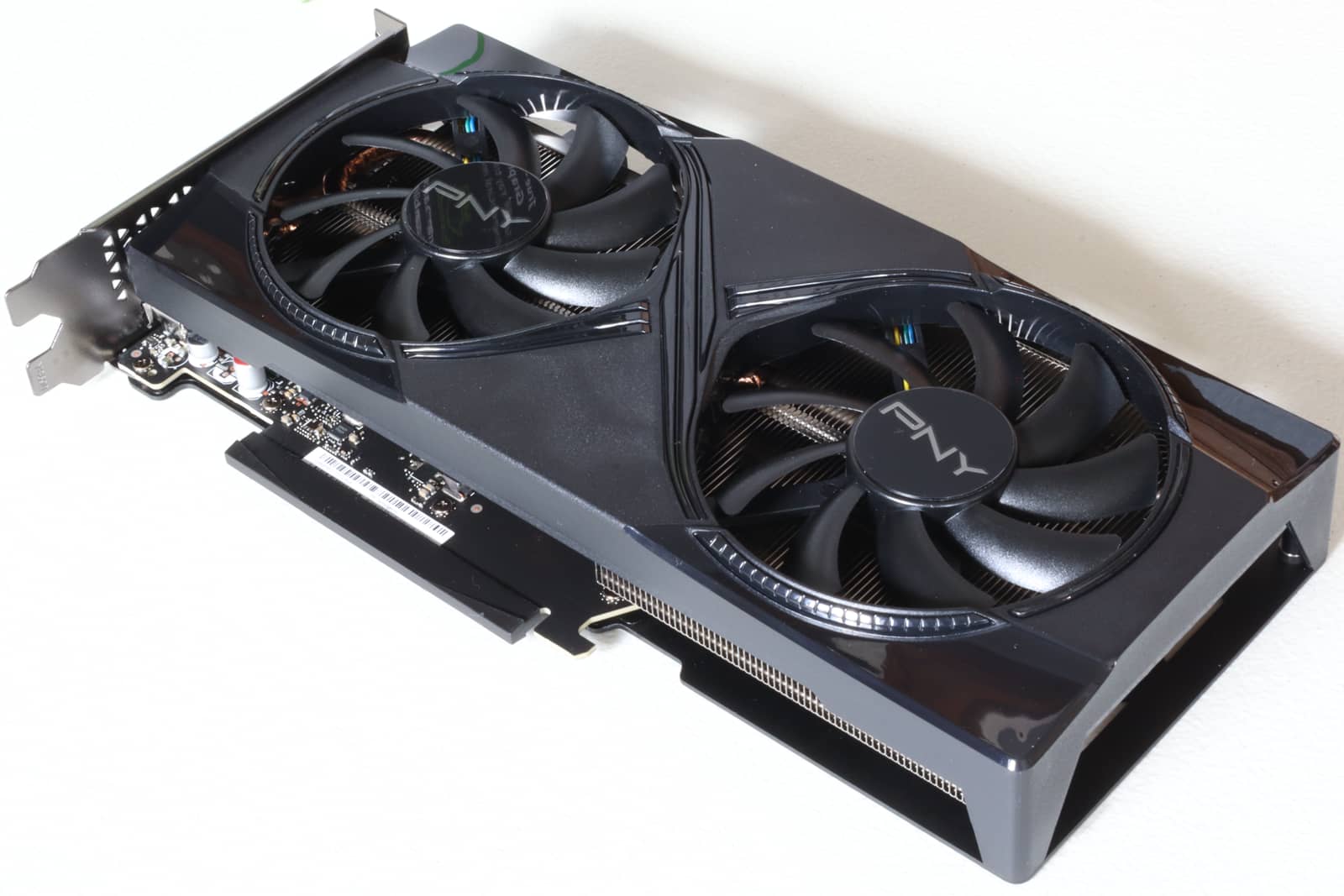
The M5 Ultra Mac Studio tops out at 512GB of unified memory — enough to load models a discrete GPU simply can't. · Unsplash
Why the surprise launch matters more than the specs
Where this fits next to the $13,000 box
We've already written about how the previous Mac Studio M5 Ultra stacks up against a $13,000 Nvidia RTX PRO 6000 workstation for local AI — the memory-capacity argument there still holds and gets stronger with this generation's 50% bandwidth bump. What's new this round is the Mac mini's relevance. At $899, a 2nm chip with a genuinely improved Neural Engine puts real local-AI capability — running smaller open models comfortably, not training anything — in front of buyers who'd never consider a $5,499 Studio. The catch is the 32GB memory ceiling; that's plenty for a 7B–14B model, tight for anything bigger. Check our best desktop for local AI leaderboard and the prebuilt vs. DIY comparison before assuming the mini replaces a proper AI box.
When does the new Mac mini ship?
September 22, 2026. Preorders opened August 25, 2026, the same day Apple announced it.
How much does the M6 Mac mini cost?
$899 for the base M6 configuration. A Pro-tier M5 Pro configuration starts at $1,599.
Is the Mac Studio M5 Ultra good for local AI?
Yes, primarily because of memory capacity — up to 512GB of unified memory lets it load models that won't fit in a consumer GPU's VRAM at all, even though raw compute still trails a dedicated Nvidia workstation card.
Is the Mac mini M6 enough for running AI models locally?
For smaller open-weight models, roughly 7B to 14B parameters, yes, comfortably. Its 32GB memory ceiling makes it a poor fit for the larger models the Mac Studio can handle.
7/ 10
Verdict
Should you buy either one right now?
If you just want a fast, quiet everyday Mac and don't care about AI workloads, the $899 M6 mini is a genuinely good deal for what it is. If you're buying specifically for local AI, the Mac Studio's memory ceiling is the real reason to spend $5,499 — but check what you actually need first; plenty of use cases don't require either machine.
Best for: Everyday Mac buyers (mini) and serious local-AI hobbyists with the budget (Studio)
What to watch next: Apple didn't touch the Mac Pro or iMac in this announcement, and the M5 Pro Mac mini's full spec sheet wasn't detailed alongside the base M6 model, so expect more granular reviews once the September 22 ship date arrives and outlets get hardware in hand. Until then, the $899 price point is the number worth remembering — that's the cheapest a genuinely modern, 2nm Apple Silicon chip has ever launched at.