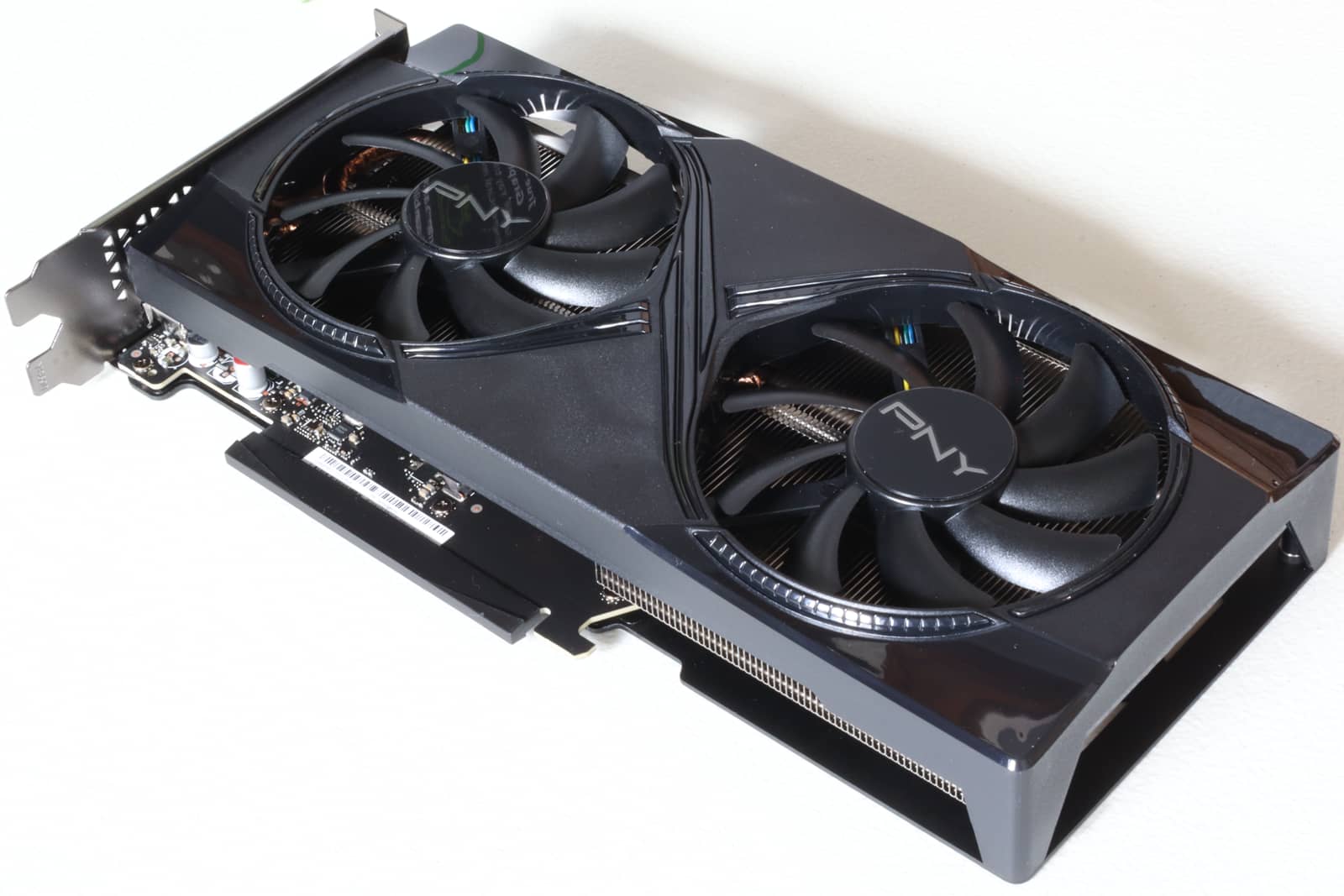
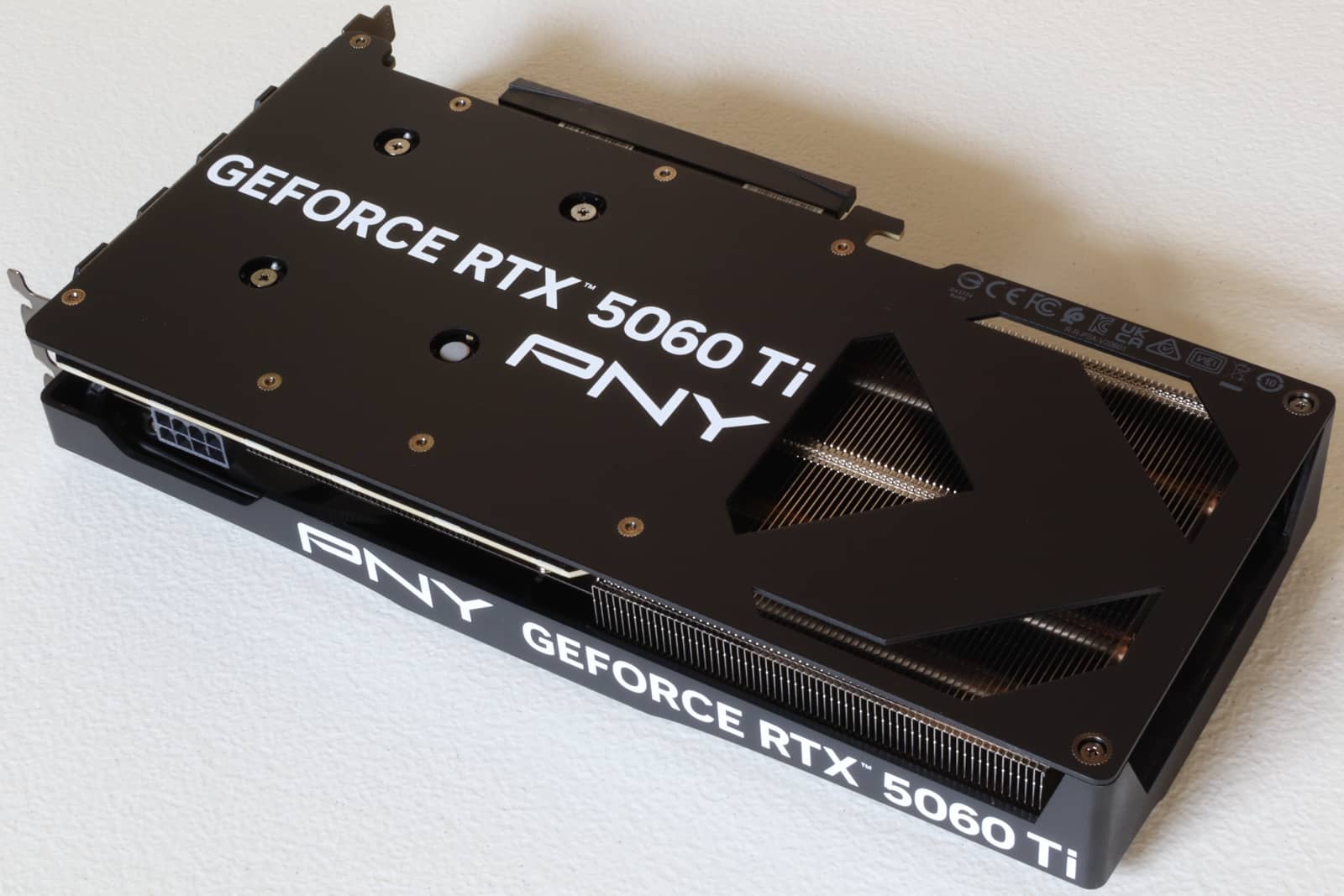
NVIDIA's RTX 5060 Ti 16GB now medians $804.99 on Newegg — 88% above the $429 it launched at, and up 39% since June alone, according to Tom's Hardware. Its little sibling, the 8GB version of the exact same card, is still selling for around $359 — practically at its original $379 MSRP. Same GPU die. Same clocks. Same everything, except VRAM. One of them got flattened by the GDDR7 shortage. The other one basically didn't notice.
why one card dodged the hike and the other one didn't
The reason isn't mysterious once you look at what's actually short. It's not GPU dies — NVIDIA can make those fine. It's GDDR7 memory chips, and the 16GB card needs twice as many of them as the 8GB one. We've written before about how DRAM and NAND shortages have been rippling through the whole GPU stack, and this is that same mechanism showing up in the sharpest way yet: two variants of one card, separated only by memory count, now separated by roughly $446 in street price.
$804.99
RTX 5060 Ti 16GB (Aug 2026 median)
vs $429 MSRP
~$359
RTX 5060 Ti 8GB (Aug 2026 street)
vs $379 MSRP
+39%
16GB price change since June
Newegg median
+27%
RTX 5060 8GB (non-Ti) change
$369.99 → $469.99
the spec gap, side by side
RTX 5060 Ti: 8GB vs 16GB
VRAM
Detail
8GB GDDR7 vs 16GB GDDR7
Launch MSRP
Detail
$379 vs $429
August 2026 street price
Detail
~$359 vs ~$805 median
Price vs MSRP
Detail
about even vs +88%
Gaming at 1440p, newer titles
Detail
marginal, VRAM-limited vs handles it comfortably
Local AI, 7B–8B models at Q4
Detail
comfortable on both — the 8GB card has room to spare here too
Detail
VRAM
8GB GDDR7 vs 16GB GDDR7
Launch MSRP
$379 vs $429
August 2026 street price
~$359 vs ~$805 median
Price vs MSRP
about even vs +88%
Gaming at 1440p, newer titles
marginal, VRAM-limited vs handles it comfortably
Local AI, 7B–8B models at Q4
comfortable on both — the 8GB card has room to spare here too
what 8GB actually gets you for local AI
None of this changes what the 8GB card is good for. A quantized 7B–8B model fits comfortably in 8GB with room left over. We go deeper on exactly where that VRAM ceiling sits in our breakdown of whether 12GB is enough for local AI, and if 8GB genuinely isn't enough for what you're doing, our full local-AI GPU rundown walks through what is. The place 8GB actually struggles isn't AI — it's gaming, where newer titles at high settings will make you feel every missing gigabyte.
GDDR7 chips, not the GPU die, are the actual bottleneck driving RTX 50-series prices up. · Unsplash8GB vs 16GB, for local AI specifically
RTX 5060 Ti 8GB
$359
vs
RTX 5060 Ti 16GB
$805
Comfortable
7B–8B models, Q4
Comfortable
Tight, needs aggressive quantization
13B–14B models
Comfortable
VRAM-bottlenecked in newer titles
Gaming at 1440p ultra
Handles it
~$45/GB
Price per GB of VRAM
~$50/GB
Best value on the RTX 50 stack
Overall value today
Only if you specifically need the VRAM
8GB wins 3wins 2 16GB
who should actually buy which
Buy the 8GB card if: you run 7B–8B local models, you're not gaming at high settings, or you just want the cheapest way onto the RTX 50 architecture.
Buy the 16GB card if: you specifically need 13B+ models locally, or 1440p/4K gaming in modern titles matters more to you than local AI.
Skip both if: you're chasing a 30B+ local model — neither card has the VRAM, and best-gpu-for-local-ai-2026 is worth reading first.
Why is the 16GB card so much more expensive relative to its MSRP?
It uses double the GDDR7 memory chips, and GDDR7 supply — not GPU die supply — is the actual constraint driving RTX 50-series prices up through 2026.
Will RTX 5060 Ti 16GB prices come back down?
That's a guess, not a fact — but memory analysts have pointed to GDDR7 and general DRAM capacity being booked out well into 2027, so don't count on it happening soon.
Is the 8GB card a bad long-term buy because of low VRAM?
For gaming, yes — it'll show its age faster than the 16GB card. For a dedicated local-AI box that isn't also your gaming rig, it's a genuinely reasonable trade.
7/ 10
Verdict
Our take
At current prices, the RTX 5060 Ti 8GB is the better buy for anyone whose primary use is local AI at the 7B–8B scale — not because the 16GB card is bad, but because paying 88% over MSRP for VRAM you might not need is a bad trade when the cheaper card does the same job.
Best for: Budget local-AI builders running 7B–8B models. Skip if you need 13B+ or heavy 1440p+ gaming.
Prices like these don't hold still, and GDDR7 supply is the kind of thing that can loosen or tighten with basically no warning — so treat this as an August 2026 snapshot, not a permanent ranking. Right now, though, if your budget tops out around $400 and your workload is local AI at the 7B–8B scale, the card that sounds like the 'worse' option is quietly the smarter buy. If you outgrow it, our RTX 5060 Ti 16GB vs 5070 Ti comparison is the next thing worth reading.