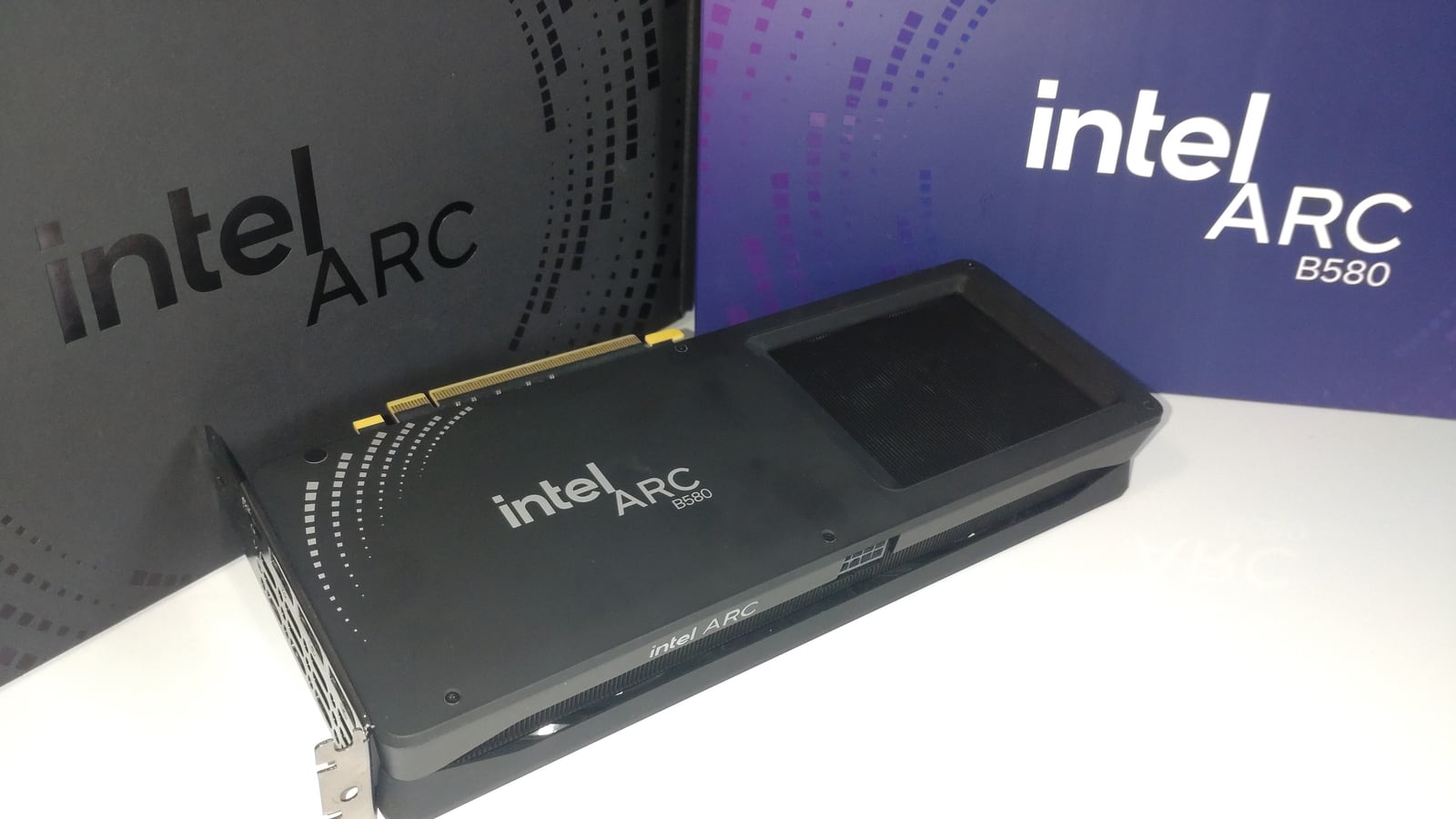
On paper, 12GB for $249 is the best VRAM-per-dollar in new cards. In practice, Intel's software stack is the catch. Here's the honest verdict for local AI.
The Intel Arc B580 makes a tempting pitch: 12GB of VRAM for around $249, which is the best VRAM-per-dollar of any new card. For local AI, where VRAM is everything, that sounds like a steal — and for the right person it is. But there's a catch that the spec sheet doesn't show, and it's the reason I can't recommend it universally: Intel's software ecosystem for AI, while much improved, still trails NVIDIA's CUDA. So the honest answer to 'is the Arc B580 good for local AI' is 'yes, if you're willing to tinker; no, if you want it to just work.'
The value is real — and so is the friction
On capability, the B580's 12GB runs the 7–14B model tier fine, the same as a 3060 12GB, and its newer silicon is capable. The friction is entirely software. Every local-AI tool targets CUDA first — llama.cpp, Ollama, and the day-one support when a new model drops are all written for NVIDIA. Intel's Arc support in these tools has genuinely improved, but you'll still hit more setup steps, the occasional tool that assumes NVIDIA, and less community troubleshooting when something breaks. If that sounds like a fun weekend, the B580 is great value; if it sounds like a headache, pay a little more for CUDA.
The Arc B580's 12GB is real value — the question is whether you'll enjoy or resent Intel's less-mature AI software. · Unsplash
Who should buy it
The Arc B580 is for the value-focused builder who's comfortable troubleshooting and wants maximum VRAM for minimum money. If you enjoy tinkering, run Linux, and don't mind occasionally being the person figuring out why a tool won't cooperate, it's a legitimately good deal. If you want your local AI to install and run without drama — especially if you're new to this — a CUDA card is worth the small premium. It's the same tradeoff as AMD for local AI: more value, more friction.
Quick answers
Is the Intel Arc B580 good for running LLMs?
For the 7–14B tier, yes — its 12GB holds those models and the hardware is capable. The limitation isn't performance but software maturity: you'll do more setup and occasionally hit tools that assume NVIDIA. If you're comfortable with that, it's excellent value. If you want the smoothest experience, an NVIDIA card of the same VRAM will be less frustrating. Judge it on your tolerance for troubleshooting, not raw capability.
Arc B580 or RTX 3060 12GB for AI?
Same 12GB, similar model capability — the difference is ecosystem. The 3060 gives you CUDA and zero software friction; the B580 gives you newer silicon and a warranty (if bought new) for similar or less money, at the cost of a less-mature AI stack. For frustration-free use, the 3060; for value with a DIY mindset, the B580. Both run the 7–14B tier well.
Will Intel Arc AI support get better?
It has been improving steadily, and Intel is investing in it — support in llama.cpp, PyTorch and other tools is better than a year ago. But it's chasing a moving target, since CUDA remains the default everyone builds for first. Buying an Arc card today is a bet that 'good enough and improving' works for you; if you need best-in-class support now, NVIDIA is still the safe choice.
The Arc B580 is real value for the right person — a tinkerer who wants 12GB cheap. For zero-friction local AI, an NVIDIA card wins. See the budget GPU guide for the CUDA alternatives, and size models in the VRAM calculator.
Further reading, straight from the source: NVIDIA's GeForce lineup — NVIDIA GeForce.