12GB of VRAM at ~$249, and the one card the 2026 price surge barely touched. Superb budget hardware for local LLMs — if you can live with Intel's software tax. My honest take on who should buy one.
I spent most of 2026 watching GPU prices go somewhere between silly and insulting — and the one card that just quietly sat there at its sticker price was Intel's Arc B580. So I keep recommending it to people on a budget who want to dip into local AI, and then immediately adding a caveat, because the B580 is the most genuinely interesting value card of the year and the one where you have to know what you're signing up for. Here's my honest take: for the money, the hardware is a steal — 12GB of VRAM at a price nothing else touches — but you pay for it in software friction, not dollars. Let me lay out exactly who should buy one and who shouldn't.
12GB
VRAM
GDDR6 — the whole point at this price
~$264–370
Price
~$249 MSRP; street, Sep 2026
Barely any
2026 price hit
least-affected of all three brands
7–14B models
Best for
first local-AI card on a budget
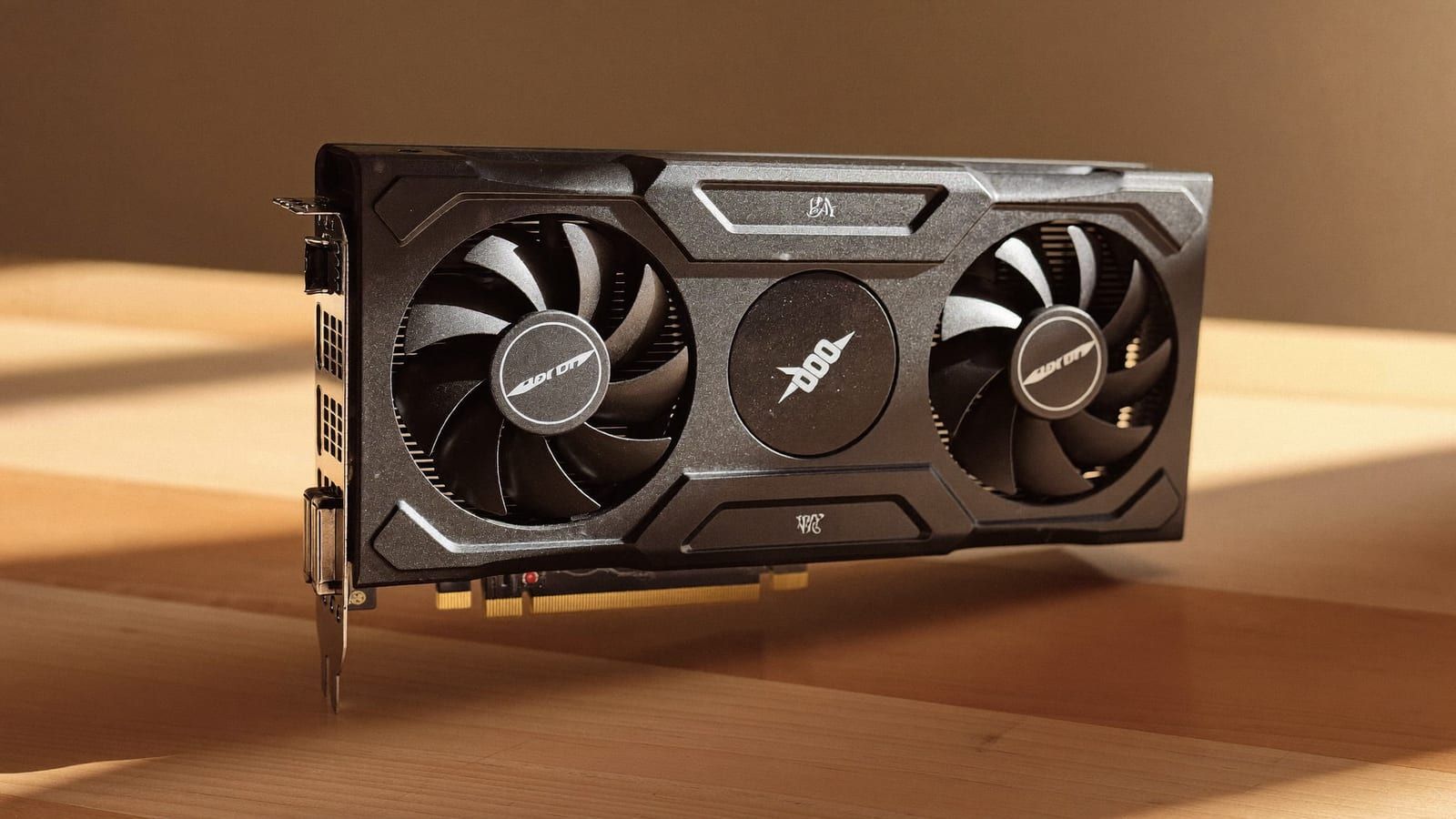
12GB of VRAM at a price nothing else matches in 2026 — the B580's whole argument. Illustration generated with AI. · Generated with Higgsfield
Why it's the sleeper value card of 2026
The B580's headline number is 12GB of VRAM for around $249 at MSRP. That was already good value at launch; the 2026 memory crunch made it look genuinely smart. While NVIDIA's and AMD's cards caught the full AI-demand price surge — I wrote up that whole surge-and-cooldown story here — Intel's Battlemage line stayed closest to list the entire time. The knock-on effect I find most telling: reviewers point out that even a used RTX 3060 now runs roughly $200–400, so the B580 ends up being both the cheaper card and the newer one. When your budget alternative is a years-old used card at a similar price, the new 12GB Intel option starts making a lot of sense.
Arc B580 vs the obvious 12GB alternatives (Sep 2026)
Intel Arc B580
VRAM
12GB GDDR6
Street price
~$264–370
Local-AI software
Vulkan (more setup)
RTX 5070
VRAM
12GB GDDR7
Street price
~$550+ (up ~36%)
Local-AI software
CUDA (plug-and-play)
Used RTX 3060
VRAM
12GB GDDR6
Street price
~$200–400 used
Local-AI software
CUDA (mature)
VRAM
Street price
Local-AI software
Intel Arc B580
12GB GDDR6
~$264–370
Vulkan (more setup)
RTX 5070
12GB GDDR7
~$550+ (up ~36%)
CUDA (plug-and-play)
Used RTX 3060
12GB GDDR6
~$200–400 used
CUDA (mature)
What it actually runs
12GB is entry-level-but-useful for local LLMs. On paper and in the reviews I trust, the B580 comfortably runs 7–9B models (Llama 3.1 8B, Qwen3 8B, a quantized gpt-oss-20B with some offload) at a pace reviewers put roughly on par with an RTX 3060, and it can stretch to a 14B model at a smaller quantization. That covers the great majority of what a first-time local-AI user actually wants to do — chat, coding help, summarization, RAG on your own docs. What it won't do is the heavy stuff: 30B-class models want more memory, and the giant models are out of reach. If you're not sure what your target model needs, I'd size it in our cost-to-run tool before buying, and the wider budget field is in the best local LLMs for 8GB of VRAM.
The honest catch: the software tax
This is the part I refuse to gloss over, because it's where people get burned. NVIDIA's CUDA is what nearly every local-AI tool targets first, so on a GeForce card things mostly just work. Intel is not there yet — but it's moved fast. The big 2026 change: Intel archived its IPEX-LLM library in January, and the recommended path now is llama.cpp's Vulkan backend, which Ollama enables by default — and by Intel's own issue trackers Vulkan runs meaningfully faster (roughly double the tokens/sec) than the old SYCL/IPEX route. That's real progress. But you should still expect more setup than a CUDA card, some tools with only indirect or experimental Arc support, and the occasional dead end you have to Google your way out of. On a GeForce card that afternoon is spent running models; on the B580 some of it is spent getting them to run.
Pros
+ 12GB of VRAM at a price nothing else matches in 2026
+ Barely touched by the year's price surge — the value story held all year
+ New card, often cheaper than a used RTX 3060 at the same VRAM
+ Software has genuinely improved — Vulkan is fast and supported by default in Ollama
Cons
− More setup than a CUDA card; some tools have only experimental Arc support
− Not for 30B-class or larger models — 12GB is an entry ceiling
− Fewer tuned guides/community answers than the NVIDIA ecosystem
− You spend some of your time on tooling instead of on models
Verdict
Who I'd tell to buy one
If you want the most VRAM for the least money to learn local AI on, and you're comfortable spending one evening getting the software right, the Arc B580 is the value pick of 2026 and I'd happily point you at it. If you want a card that runs a model on the first try with zero fuss — or you already know you want 30B-class models — buy a CUDA card instead and skip the software tax. Great hardware value, honest software cost; go in knowing which side of that trade you're on.
Best for: Budget-minded people getting into local AI who don't mind a bit of setup
Common questions
Does local AI actually work on the Intel Arc B580?
Yes — it runs 7–14B models via llama.cpp's Vulkan backend, which Ollama now enables by default. Reviewers put its speed on small models roughly on par with an RTX 3060. The caveat is setup: expect more configuration than an NVIDIA CUDA card, and some tools have only experimental Arc support.
Is the Arc B580 better value than a used RTX 3060 for AI?
For most people, yes. Both have 12GB, and with used 3060s running roughly $200–400 the new B580 is often the cheaper and newer option. The 3060 wins on CUDA maturity (less setup); the B580 wins on being current hardware with a fast Vulkan path.
Should I still use IPEX-LLM on Arc?
No — Intel archived IPEX-LLM in January 2026. Use a recent llama.cpp or Ollama build with the Vulkan backend instead; it's the supported path now and noticeably faster than the old SYCL route.
What's the biggest model the B580 can run?
Comfortably a 7–9B model, and a 14B at a quantized size. 30B-class and larger models need more than 12GB — that's where you'd step up to a 16GB or 24GB card. Size your specific model in the cost-to-run tool before buying.
The bigger picture: the B580 is the budget corner of the map, and where you go from here depends on your models. If you outgrow 12GB, my full best-GPU-for-local-AI guide walks the whole ladder from here up, and the 2026 price surge and cooldown explains why Intel ended up being the sane budget option this year in the first place.