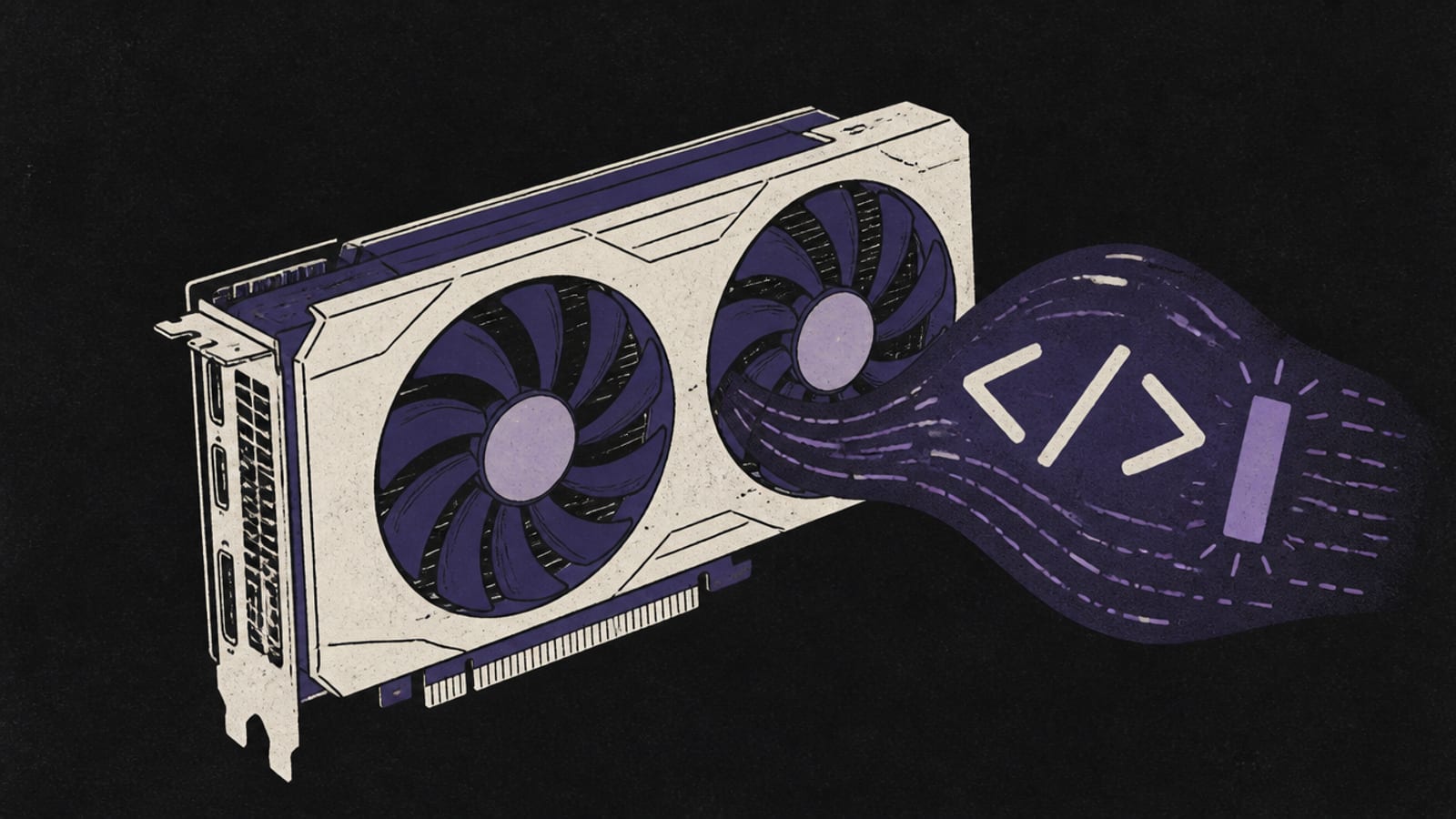
It's the value middle of the Blackwell lineup: 16GB of fast GDDR7, NVFP4 support, and enough speed to run the 14B tier comfortably without paying 5090 money. Is it the right local-AI card for you?
The RTX 5070 Ti occupies the spot most people overlook and probably shouldn't: the sensible middle. It has 16GB of fast GDDR7, native NVFP4 support from the Blackwell architecture, and enough speed to run the 14B model tier and image generation comfortably — without the price of a 5090 or the tightness of a 12GB card. For local AI it isn't the card that does everything, but for a lot of builders it's the one that does the right things at the right price. Here's the honest case for and against.
Where it fits in the lineup
Think of the 5070 Ti as the 'enough' card. Below it, the 5060 Ti 16GB has the same VRAM but less speed and a narrower memory bus. Above it, the 5090 has 32GB and far more compute at more than double the price. The 5070 Ti gives you current-gen Blackwell features and a comfortable 16GB for a mid-range outlay. For the 14B tier — the sweet spot of local models that fit 16GB — it's genuinely well-matched: fast enough to feel responsive, current enough to run NVFP4, affordable enough to not overthink.
Blackwell's NVFP4 support is a real reason to pick a 50-series card over an older 16GB option for local AI. · Unsplash
Does it fit? — the 5070 Ti's 16GB ceiling
Qwen3-32B (Q4) needs ≈20 GB
RTX 5070 Ti (16GB)16 GBover 4 GB
RTX 3090 (24GB)24 GBfits
RTX 5090 (32GB)32 GBfits
The 5070 Ti runs 14B models with ease but can't hold a 32B model — the 16GB ceiling is the one limit to know.
8/ 10
Verdict
The sensible mid-range local-AI card
The RTX 5070 Ti is the right pick for builders who want current-generation Blackwell (including NVFP4) and a comfortable 16GB, without paying flagship prices. It runs the 14B model tier and image generation well. Its only real limit is the 16GB ceiling that keeps it out of the 32B dense tier — if that's your goal, buy a 24GB card. For everyone else in the middle, it's a smart, well-balanced choice.
Best for: Yes: 14B tier, image gen, gaming, current-gen features on a budget. No: 32B dense models (need 24GB), maximum speed (5090).
Quick answers
Is the RTX 5070 Ti good for running local LLMs?
Yes, for the 14B tier and smaller — its 16GB comfortably holds Qwen3-14B-class models with context, and Blackwell's NVFP4 support makes 4-bit inference efficient. It won't run 32B dense models (those need ~20GB), but for the models that fit 16GB it's fast and current. If your target models are 14B and under, it's an excellent local-LLM card; if you want 32B, look at 24GB options.
5070 Ti or 5060 Ti 16GB for AI?
Both have 16GB, so they run the same models — the 5070 Ti is faster (wider memory bus, more compute), the 5060 Ti is cheaper and more power-efficient. If speed matters and the budget allows, the 5070 Ti; if value and efficiency lead, the 5060 Ti. Neither reaches the 32B tier. It's a speed-vs-price call within the same capability band.
Does NVFP4 make the 5070 Ti worth it over a used card?
It's a real factor. A used 16GB or 24GB card may offer more VRAM per dollar, but it can't accelerate NVFP4 — the efficient 4-bit format exclusive to Blackwell. If you want current-gen efficiency and features (plus a warranty and gaming performance), the 5070 Ti justifies its price. If raw VRAM-per-dollar is all you care about for LLMs, a used 24GB card is the value play instead.
The 5070 Ti is the local-AI card for the sensible middle: current-gen Blackwell, comfortable 16GB, fair price. Just know the 16GB ceiling. Size models in the VRAM calculator; if you want 32B, see best GPU for Qwen3-32B.
To go deeper, NVIDIA's GeForce lineup is worth a look: NVIDIA GeForce.