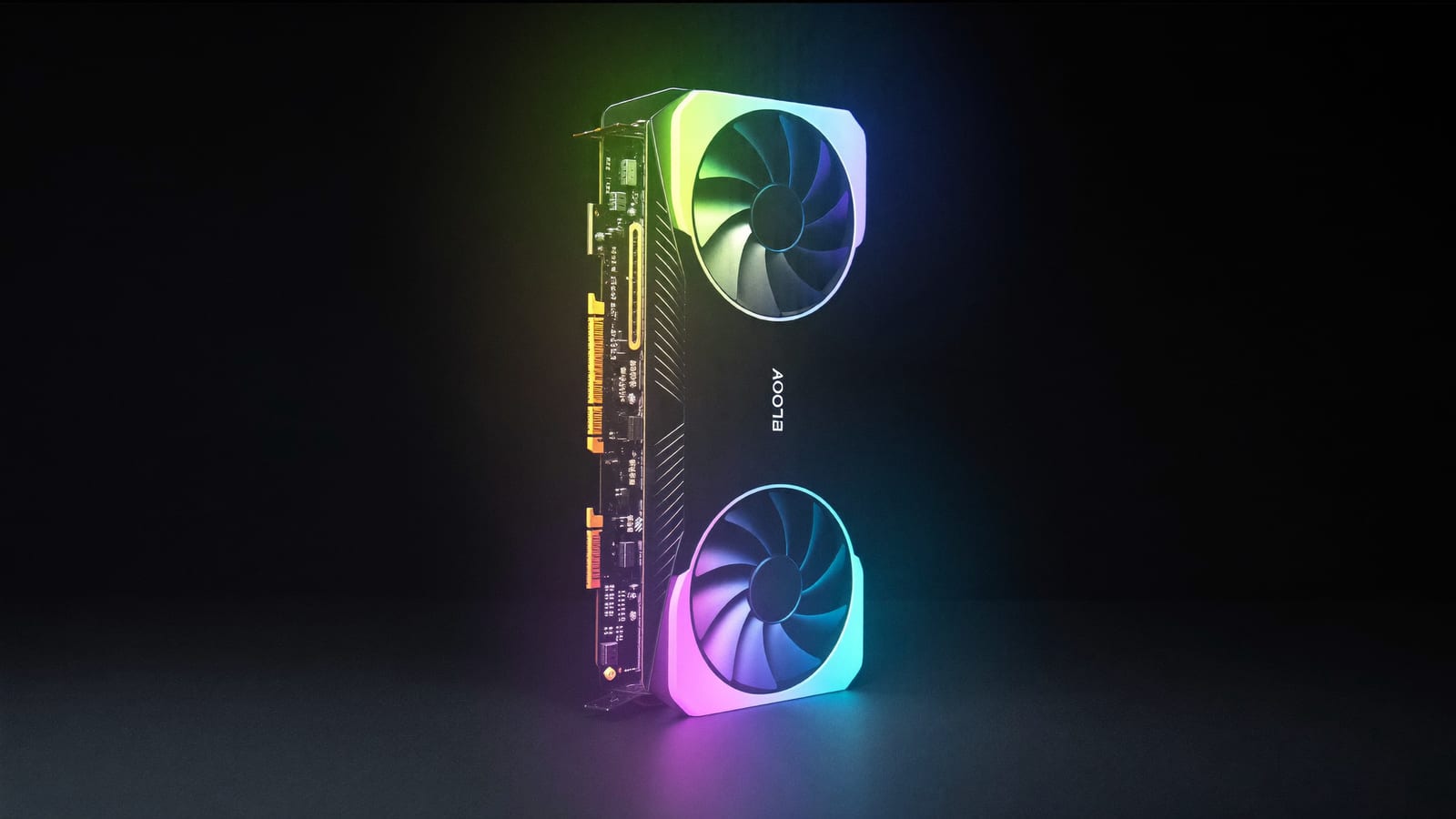
Measured at 102.7 tokens/sec — double a 3090 — with the only 32GB of VRAM in consumer land. Then the street price doubles the MSRP and the whole verdict flips. Both answers, with the math.
The RTX 5090 I'd recommend costs $1,999. The one you can actually buy costs about twice that, and those are two different products. NVIDIA's page still says $1,999; hardware-corner's price tracker currently lists the US street average at $3,699, and that's been the shape of this market all year — the memory shortage did to GDDR7 what it did to everything else. So the question 'is the 5090 worth it for local AI' has two honest answers, and which one you get depends entirely on the number on the price tag in front of you.
Let me give you both, with the measurements to back them.
What $1,999-worth of card actually delivers
Credit where due: this is the fastest consumer inference card ever made, and it isn't close. NVIDIA's specs give it 32GB of GDDR7 at 1,792 GB/s — 78% more bandwidth than a 4090, 91% more than a 3090 — and since token generation is a bandwidth job, the measurements track almost exactly: hardware-corner clocked102.7 tokens/sec on Qwen3-14B Q4_K at 16k context (llama.cpp build 8189), versus 52.1 for the 3090 on the same model and harness. Double the bandwidth, double the speed. Physics behaving.
The number that impressed me more is what happens at absurd context: 97.3 t/s on Qwen3.5-35B (MXFP4) at 256k context. A quarter-million tokens of context, on a consumer card, at speed you can converse with. That's not a benchmark flex — long context is where 24GB cards suffocate, because the KV cache eats what the weights leave behind. The extra 8GB isn't for bigger models so much as bigger memory of the conversation. Run the numbers for your own workload in the VRAM calculator and watch how fast context, not parameters, becomes the constraint at 24GB.
And the ceiling, stated plainly because spec sheets won't: a dense 70B at Q4 is roughly 40GB before you've typed a word. The 5090 does not run it in VRAM. Nothing with 32GB does. If 70B-class is the actual goal, your realistic options are MoE offload tricks, two 24GB cards, unified-memory machines, or renting the hours — a decision we've priced out separately.
What $3,699 does to the argument
Everything, honestly. At MSRP, the 5090 costs about two used 3090s and out-runs either of them individually — reasonable people take the single fast card. At $3,699 you're paying dual-3090 money plus $1,700, for 16GB less total VRAM. The dual-3090 build has real caveats — pipeline-parallel quirks, a PSU bill, more heat — but $1,700 buys a lot of caveat tolerance.
Budget the platform too: 575W of card wants a 1000W+ PSU and case airflow to match. · Pexels
Two more line items the listicles skip. First, the platform tax: this is a 575W card. If your PSU is under 1000W or your case was built for polite 250W GPUs, add $150–250 to the real price. Second, the daily reality is better than the spec suggests — inference is bursty, and between generations the card idles — but sustained batch work genuinely pulls the wattage, and in Europe at €0.30/kWh a heavy month shows up on the bill. I notice it on mine.
Who should actually buy one
The 32B-at-long-context daily driver. If Qwen3-32B-class models with serious context are your working setup, this is the only single consumer card where that's comfortable. Check which GPU your model actually wants — for 32B, the answer is genuinely this or workstation cards costing more.
The image/video generator who also runs LLMs. Diffusion and video models are compute-bound; Blackwell's advantage there exceeds its LLM advantage, and 32GB enables resolutions 24GB can't touch. If that's half your workload, the 5090's case roughly doubles.
The one-box pragmatist with MSRP luck. Near $1,999–2,400, buy it and don't look back. The regret zone is paying $3,500+ for workloads a $1,000 card handles.
And who shouldn't: if your models are 8–14B — most people's actually are — a used 3090 at ~$1,000 runs them at speeds you will not feel as slow, and the leftover $2,700 is two years of API calls, or a very good holiday. The 5090 is a wonderful answer to a question most local-AI users aren't asking yet.
7/ 10
Verdict
Worth it at MSRP. Not at street.
The measured performance is real and the 32GB long-context headroom is unique among consumer cards. But value is a function of price, and at $3,699 the same silicon scores lower than it did at launch: dual 3090s beat it on capacity per dollar, renting beats it on commitment, and a used 3090 beats it on sanity for small models. Find one near $2,000 and the score is a 9.
Best for: Yes: 32B/long-context daily users, image+LLM dual workloads, MSRP finders. No: 8–14B users, 70B chasers, anyone doing the math at $3,699.
The questions people actually ask
Can the RTX 5090 run a 70B model?
Not a dense 70B in VRAM — that's roughly 40GB at Q4 before context, against 32GB on the card. You can run 70B with CPU/MoE offload at reduced speed, but that works on cheaper cards too. What the 5090 uniquely runs well is the 30-35B class at very long context, and large MoE models whose active weights fit.
Is the 5090 worth it over the 4090 for local AI?
The measured gap is about 47% on generation (102.7 vs 69.8 t/s on the same 14B benchmark) plus 8GB more VRAM. At similar street premiums the 5090 is clearly the better buy of the two — the harder question is whether either beats a used 3090 for your actual models, and that depends on whether you need what 24GB can't do.
Should I wait for prices to fall?
The honest answer: nobody can promise you a date. Street prices have held far above MSRP through 2026's memory shortage, and NVIDIA shelving its 24GB Super refresh over the same supply issues doesn't suggest relief soon. If your work needs the card now, price the rental route first — it converts 'wait and hope' into 'run models today for under a dollar an hour.'
How loud and hot is it in practice?
We haven't tested one ourselves, so I won't invent a decibel number. What's structural: 575W has to leave the case as heat, which in summer means the room, and the Founders cooler exhausts partly into your CPU's intake. Plan airflow like you're cooling two machines — because thermally, you are.
If you take one thing from this page: decide at the price in front of you, not the one in the reviews. The cost-to-run pages keep the rent-side numbers live so the break-even math stays honest after this article ages — which is more than I can say for most of what ranks on this question.