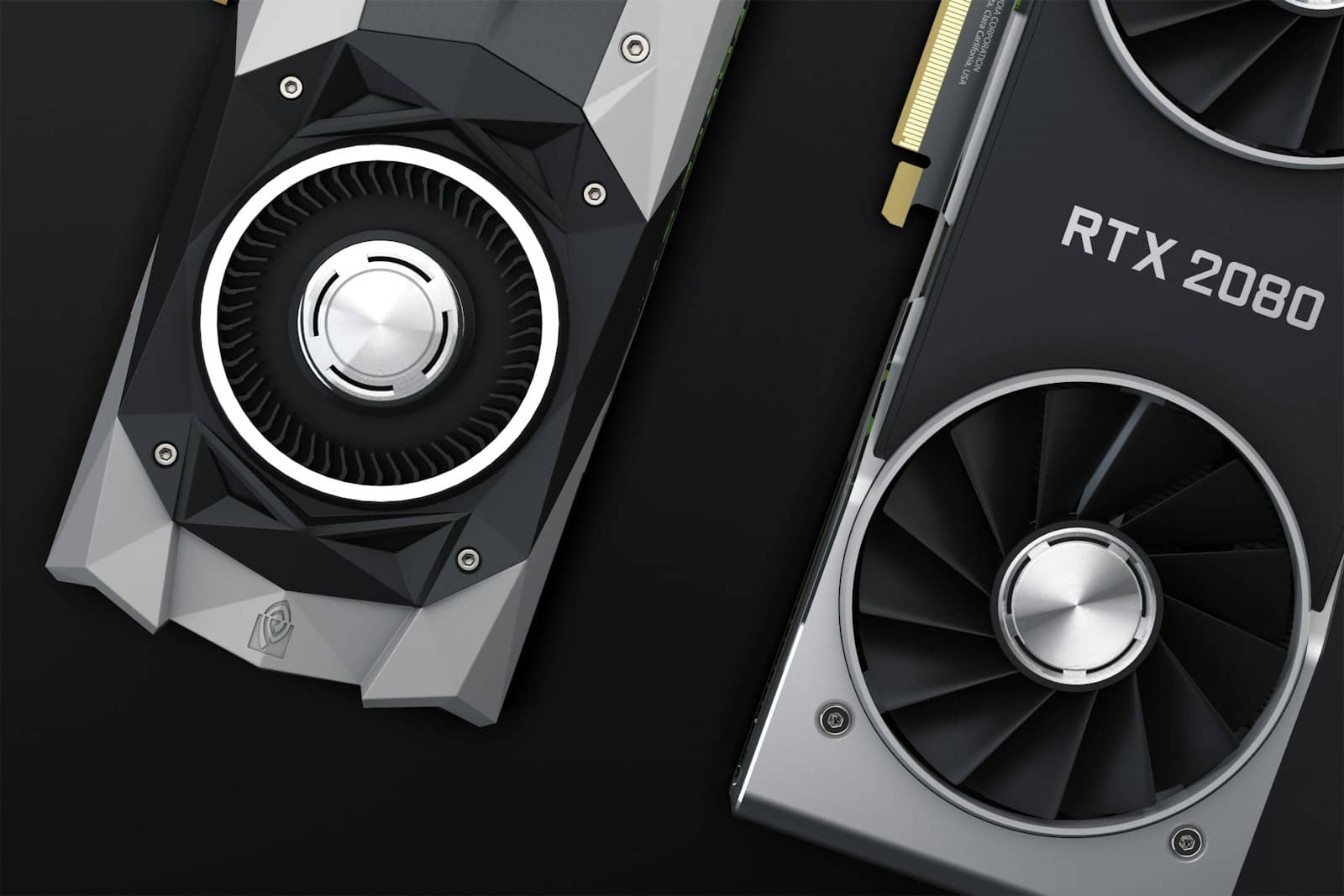
A new RTX 5060 Ti 16GB looks like the safe budget pick. But 16GB can't load the 32B models a used 3090 runs at 30 tokens/sec — and in local AI, the card that opens the file wins before speed matters.
This is the budget local-AI decision I get asked about most, and the honest answer is uncomfortable: a brand-new $549 RTX 5060 Ti 16GB is the worse buy for most people, and it's not especially close. The reason is one number. Hardware-corner's llama.cpp benchmarks put a used RTX 3090 at 30.3 tokens/sec generating Qwen3-32B at Q4 — a model the 5060 Ti physically cannot load, because 32B at Q4 needs more than 16GB. The 3090 has 24GB. The 5060 Ti has 16. In local AI, the card that can open the file wins the argument before speed is even discussed.
That's the headline. But there's a real case for the 5060 Ti hiding underneath it, and if you're in the specific situation it fits, I'd genuinely tell you to buy the new card. Let me lay out both honestly.
Does it fit? — VRAM at a glance
Qwen3-32B (Q4) needs ≈20 GB
RTX 5060 Ti16 GBover 4 GB
Used RTX 309024 GBfits
16GB can't load a 32B model at all; the 3090's 24GB runs it at ~30 tok/s. Capability the newer card can't buy back with speed.
The capability gap you can't out-spec
Everything about local LLMs starts with what fits in VRAM. A 32-billion-parameter model at Q4_K_M is roughly 19–20GB before you add context — comfortably inside a 3090's 24GB, comfortably outside a 5060 Ti's 16GB. So the interesting mid-size models of 2026 — Qwen3-32B, Gemma-class 27–31B — are simply off the menu on 16GB. You're not running them slowly; you're not running them. Check the VRAM math for any model and the wall is obvious the moment you cross ~24B.
On the models both cards can run, the 3090 still wins because it has more raw memory bandwidth — 936 GB/s against the 5060 Ti's narrow 128-bit bus. Hardware-corner measured the 5060 Ti at 69.2 t/s on Qwen3-8B (Q4, 4k), where the 3090 does 87.5. Same model, same harness, the older card is ~27% quicker. The 5060 Ti loses on capability and loses on speed. Its entire case rests on the three things a benchmark doesn't show.
The measured picture
VRAM
RTX 5060 Ti 16GB
16GB GDDR7
Used RTX 3090
24GB GDDR6X
Memory bandwidth
RTX 5060 Ti 16GB
~448 GB/s (128-bit)
Used RTX 3090
936 GB/s
Biggest model at Q4
RTX 5060 Ti 16GB
~14B class
Used RTX 3090
~32B class
Qwen3-8B Q4 gen @4k*
RTX 5060 Ti 16GB
69.2 t/s
Used RTX 3090
87.5 t/s
Qwen3-14B Q4 gen @16k*
RTX 5060 Ti 16GB
32.9 t/s
Used RTX 3090
52.1 t/s
Qwen3-32B Q4 gen @16k*
RTX 5060 Ti 16GB
can't load
Used RTX 3090
30.3 t/s
Rated power
RTX 5060 Ti 16GB
~180W
Used RTX 3090
~350W
Typical price*
RTX 5060 Ti 16GB
$549 new
Used RTX 3090
~$1,000 used
Warranty
RTX 5060 Ti 16GB
Full
Used RTX 3090
None / seller-dependent
RTX 5060 Ti 16GB
Used RTX 3090
VRAM
16GB GDDR7
24GB GDDR6X
Memory bandwidth
~448 GB/s (128-bit)
936 GB/s
Biggest model at Q4
~14B class
~32B class
Qwen3-8B Q4 gen @4k*
69.2 t/s
87.5 t/s
Qwen3-14B Q4 gen @16k*
32.9 t/s
52.1 t/s
Qwen3-32B Q4 gen @16k*
can't load
30.3 t/s
Rated power
~180W
~350W
Typical price*
$549 new
~$1,000 used
Warranty
Full
None / seller-dependent
Head to head
RTX 5060 Ti
16GB · new
vs
Used RTX 3090
24GB · used
16 GB
VRAM
24 GB
~14B
Biggest model
~32B
69.2 t/s
8B gen @4k
87.5 t/s
~180W
Power
~350W
Full
Warranty
None
~$549
Price
~$1,000
Ti wins 3wins 3 3090
*Measured llama.cpp figures from hardware-corner's RTX 5060 Ti and RTX 3090 benchmark pages (updated March 2026); prices are their tracked US figures and move around. We don't run our own benchmarks — these are the best harness-disclosed public numbers for both cards.
Where the new card actually makes sense
I don't want to bury the 5060 Ti unfairly, because for a real slice of buyers it's the right call. Three reasons, and they're all things the 3090 can't offer at any price.
Power and heat. ~180W versus ~350W is not a rounding error. It means a smaller PSU, a cooler quieter case, and — if you're in Europe paying €0.30/kWh — meaningfully less on the bill for an always-on box. For a machine that idles a lot and sips when it works, the efficient card is genuinely nicer to live with.
Zero used-market risk. A new 5060 Ti has a warranty and no prior life. A used 3090 might have spent two years mining, and its GDDR6X runs famously hot — aged thermal pads are the common failure. If the idea of buying a five-year-old card off a stranger makes you anxious, that anxiety has a real basis, and the new card erases it.
GDDR7 and current-gen features. It's a 2025-era card with FP4 support and current media engines. If you also game or dabble in image generation at modest resolutions, it's a more well-rounded modern GPU than a 3090 that's showing its age everywhere except VRAM capacity.
The 5060 Ti 16GB: efficient, warrantied, current-gen — and hard-capped at 16GB, which is the catch for local AI. · NVIDIA
The rent-instead option nobody mentions
Before you spend anything, here's the sanity check I'd run. As of July 22, 2026, our live price tracker shows used-3090-class cards renting from about $0.15/hr on Vast.ai's spot market. That's roughly 6,600 hours — nine months of full-time daily use — for the price of one used 3090, and you get to run 24GB (or 48, or 80) without owning, cooling or reselling anything. If you're not certain local AI is going to become a daily habit, renting first answers the capability question for the cost of a few coffees, and you can always buy once you know what you actually need.
Verdict
3090 for capability, 5060 Ti for peace of mind
If you want to run the mid-size models that make local AI genuinely useful in 2026 — the 27–32B class — the used 3090's 24GB is the cheapest ticket in, and 16GB doesn't sell that ticket at any speed. Buy the 5060 Ti only if your models are 14B-and-under and you specifically value the warranty, the low power draw, or simply not gambling on a used card. Both are defensible; picking the 16GB card and then wanting to run a 32B model is the one outcome to avoid.
Best for: 5060 Ti 16GB: ≤14B models, efficiency-focused, warranty-wanters, dual gaming use. Used 3090: anyone targeting 27–32B models, best VRAM-per-dollar, comfortable buying used.
The questions people actually ask
Can the RTX 5060 Ti 16GB run a 32B model at all?
Not properly. A 32B model at Q4 needs roughly 19–20GB before context, so it won't fit in 16GB VRAM. You could force it with heavy CPU offload, but that drops you to a few tokens per second — slow enough that you won't use it. If 32B-class models are the goal, 16GB is the wrong card and no setting fixes that.
Is a used 3090 reliable enough to trust in 2026?
With care, yes. The silicon rarely dies from mining; neglected cooling is what kills these cards, and the GDDR6X memory runs hot. Ask for temperature screenshots under load, prefer sellers who can answer technical questions, and budget ~$30 for a thermal-pad replacement if there's no service history. That turns most of the used-market risk into a known, cheap maintenance item.
What about the RTX 3060 12GB — isn't that the real budget pick?
For a first toe in the water at $200–250 used, the 3060 12GB is a legitimately good starter — it runs every 7–8B model and most 13–14B at Q4. But it's a step below both cards here on capability, and 12GB closes doors the 16GB and 24GB cards leave open. It's the 'try it cheaply' option, not the 'settle in for 32B models' one.
Does the 5060 Ti's newer architecture close the VRAM gap somehow?
No. FP4 support and GDDR7 make it a nice current-gen card, but no amount of architectural cleverness lets 16GB hold a model that needs 20. Capacity is a hard wall; the 3090's advantage here is boring physics, not a benchmark quirk. Newer doesn't beat bigger when the bottleneck is memory size.
Whichever way you lean, decide from your real model list, not a spec-sheet vibe — the VRAM calculator shows exactly what fits in 16 versus 24GB, and if you want the full ladder of options the best local LLM by VRAM tier guide maps models to memory. Buy the card your models need. Everything else is a tiebreaker.