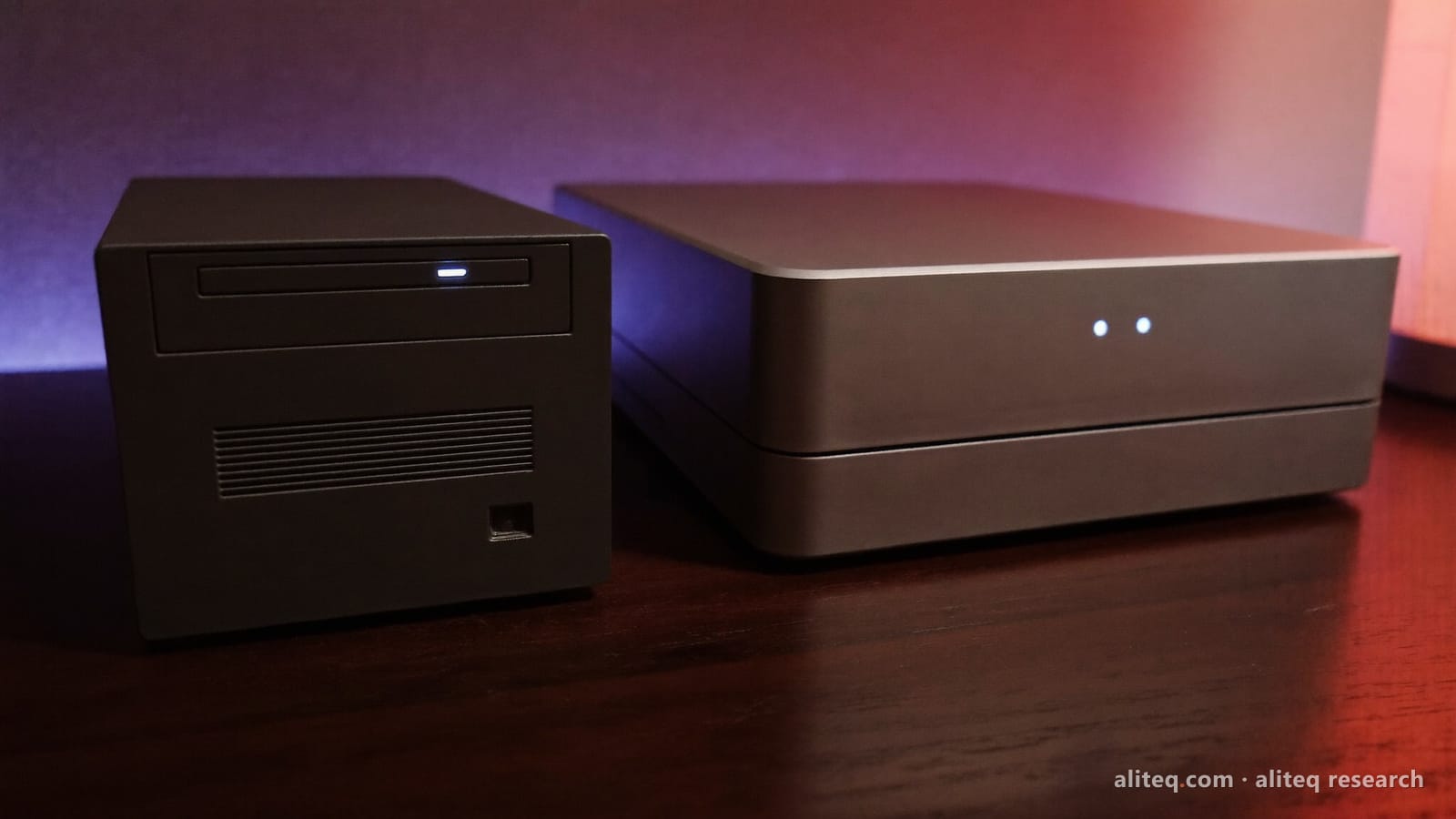
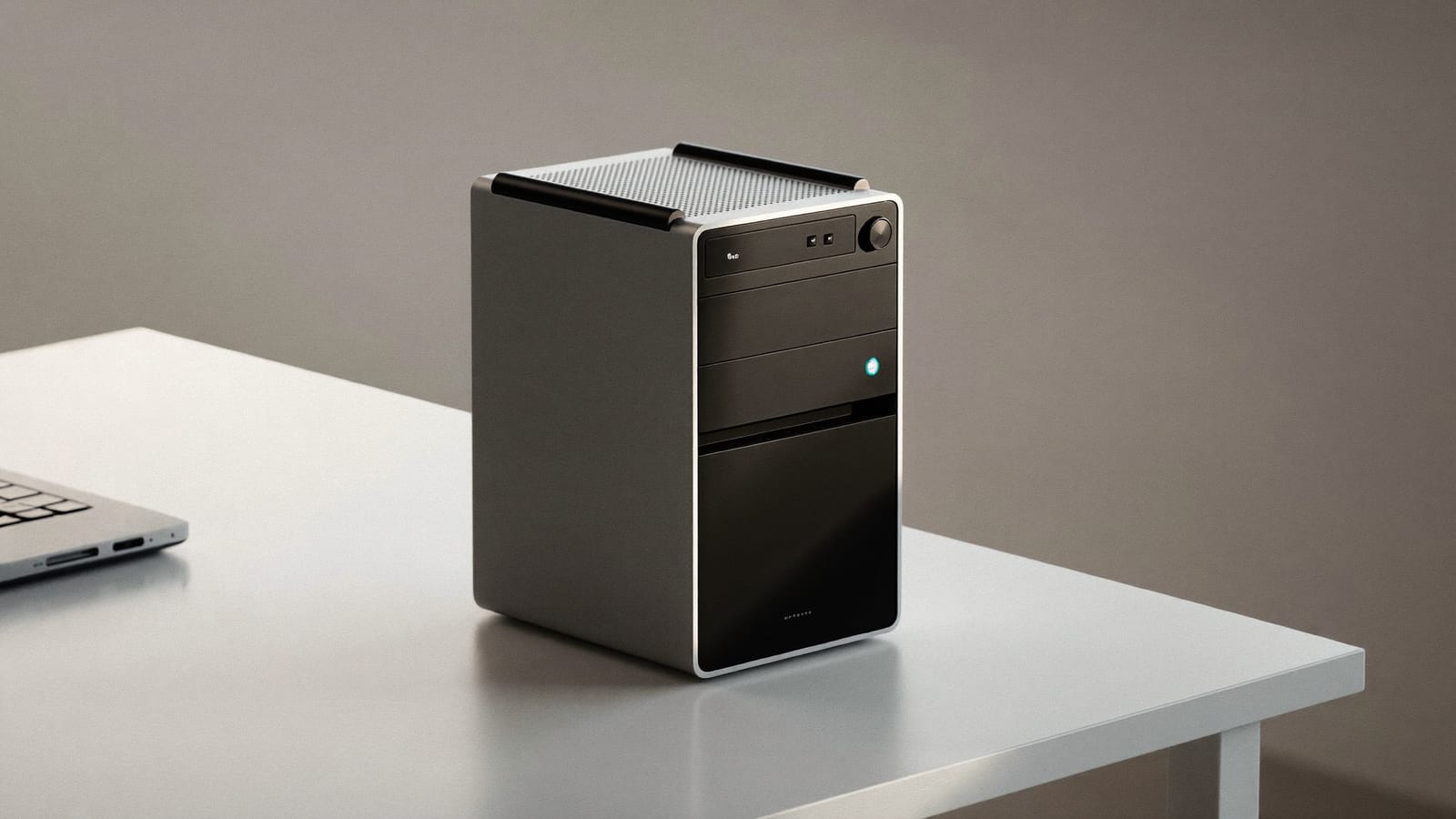
the Framework Desktop and its Ryzen AI Max+ 395 twins hand you ~96GB of GPU memory for less than one RTX 5090 costs today — enough to load models no single consumer GPU can touch. whether they actually run fast comes down to one word: bandwidth.
Here's the counterintuitive thing about the new wave of AMD Strix Halo mini-PCs — the Framework Desktop and its Ryzen AI Max+ 395 twins from GMKtec, HP and Beelink. For about $3,500 at today's prices, one of these will happily load and run a 120-billion-parameter AI model that no single consumer graphics card on Earth can hold. Ask that exact same machine to run a 70-billion model and it slows to a crawl. Both facts are true, and the reason why is the single most important thing to understand before you spend two grand on a local-AI box.
$3,499.99
GMKtec EVO-X2, 128GB (Sep 2026)
128GB, up to ~96GB usable as VRAM
~96 GB
Usable GPU memory
driver splits 128GB → 32GB OS / 96GB VRAM
~212 GB/s
Memory bandwidth
measured; the real bottleneck
32 GB
vs one RTX 5090
and street price is now $5,000+
Why a 120B model runs but a 70B model crawls
Token generation speed on these machines is, roughly, memory bandwidth divided by how much of the model has to be read for each token. A dense 70B model reads all 70 billion parameters every token — so on ~212 GB/s of bandwidth it manages only about 4–6 tokens per second. Painful. But a mixture-of-experts (MoE) model only activates a small slice of itself per token. A 120B-class MoE like Llama 4 Scout activates far fewer parameters each step, so the same machine runs it at a genuinely usable ~20 tok/s. The lesson: on Strix Halo, a model's total size decides whether it fits; its active size decides whether it's usable.
Token generation speed on a Strix Halo box (Q4, independent tests)
Qwen3-30B (MoE, ~3B active)74.8 tok/s
Llama 4 Scout (109B MoE)20.2 tok/s
Qwen3-235B (MoE, 22B active)~11 tok/s
Dense 70B (e.g. Llama 3.3)~4-6 tok/s
Read that chart as a buying guide, not a spec sheet. If your dream is a big dense 70B chatbot running locally, this is not the machine — you will get single-digit tokens per second and hate it. If you want to run modern MoE models (which is where most of the open-weight action is in 2026 anyway), it's a different story entirely.
The bandwidth wall — and the prompt-processing catch
That ~212 GB/s figure is the whole story. A discrete RTX 5090 has roughly 1,792 GB/s; a Mac Studio M3 Ultra about 819 GB/s. Strix Halo trades raw bandwidth for sheer capacity, and that trade shows up twice. First in token generation (above). Second in prompt processing — the time to digest a long prompt before it answers. On a 120B model, a Strix Halo box prefills at roughly 340 tok/s versus around 1,700 on Nvidia's new DGX Spark — a ~5× gap you feel as lag before the first word appears on long documents. Short chats hide it; a 100-page RAG prompt does not.
So why is it still a bargain? Because 2026 broke every alternative
Normally you would just buy a real GPU. But in mid-2026 the alternatives collapsed. The RTX 5090 has only 32GB and its street price sits above $5,000 — you would need three of them (~$15,000, plus a workstation to feed them) to reach ~96GB. Apple pulled its 256GB and 512GB Mac Studio configurations during the DRAM shortage; as of late June it sells the M3 Ultra in a 96GB config starting at $5,299. Against that field, a 128GB Strix Halo box at about $3,500 (GMKtec's EVO-X2, September 2026) delivering ~96GB of usable memory works out to roughly $36 per usable gigabyte — comfortably the cheapest legitimate path to big local-AI memory right now. The catch is simply that you're buying capacity, not speed.
Buy it if you want to run large MoE models (Qwen3-235B, Llama 4 Scout, GPT-OSS 120B) at home for around $3,500, and you mostly do short-to-medium prompts.
Skip it if your use case is a dense 70B model or heavy long-context prompt processing — you'll be bandwidth-starved and happier with a discrete GPU (if you can find/afford one) or an API.
Watch the price: the DRAM squeeze has pushed 128GB boxes well above their launch prices. On 27 September 2026 GMKtec's EVO-X2 with 128GB listed at $3,499.99, and the Framework Desktop was out of stock. Check live prices before you buy.
This is the exact question this site was built to answer — which hardware runs which model — and Strix Halo is the most interesting answer of 2026 precisely because it's so lopsided: unbeatable on capacity-per-dollar, hamstrung on bandwidth. Know which of those two you actually need, and the buy decision makes itself.
To go deeper, AMD's ROCm documentation is worth a look: AMD ROCm docs.