Phi-4 Mini, Gemma 3, and Llama 3.2 all advertise roughly the same 128K context window. Benchmark data says that number means something very different for each one.
Phi-4 Mini, Gemma 3, and Llama 3.2 all print the same headline spec: roughly 128,000 tokens of context. Microsoft's card says 128K. Google's Gemma 3 lists 131K. Meta's Llama 3.2 says 128K too. On paper you'd assume they're interchangeable for anything long-context — a big PDF, a full codebase, hours of chat history. They aren't, and the gap isn't a rounding error. It's the difference between a model that's still useful past 40,000 tokens and one that's technically still running but has quietly stopped paying attention.
Same number, different reality
Context-window numbers get marketed like a spec you can shop on — bigger is better, full stop. That's not how transformer attention actually degrades. NVIDIA's RULER benchmark tested models against their claimed context lengths using tasks harder than the standard needle-in-a-haystack test, and the finding was blunt: models that score well on simple retrieval still fall apart on multi-hop reasoning and aggregation well before hitting the number on the box. A rough rule from that research holds up across model families — expect meaningful degradation starting 30-40% before the claimed limit. A model advertising 128K is often shaky past 80,000-90,000 tokens, even though it won't throw an error or refuse the input.
The actual accuracy gap
Where these three genuinely separate is general accuracy, not context length. Phi-4 Mini scores 73% on MMLU and 62% on MATH; Llama 3.2 3B scores 65% and 48% on the same benchmarks, per comparisons from InsiderLLM and Local AI Master. That's a meaningful gap for a model you're leaning on to actually reason over a long document, not just retrieve a fact from it — RULER's research specifically found needle-in-haystack scores can look perfect while comprehension and multi-step reasoning quietly fail at the same context length. Gemma 3's strength runs a different direction: Google built it multimodal from the start, so it's the only one of the three that reads images natively, which matters if your local pipeline needs to handle screenshots or scanned documents alongside text.
Small local models compared, August 2026
Phi-4 Mini
Params
3.8B
Claimed context
128K
VRAM @ Q4
~3GB
Where it wins
MMLU 73% / MATH 62% — beats Llama 3.2 3B by a wide margin
Gemma 3 (4B)
Params
4B
Claimed context
131K
VRAM @ Q4
~3-4GB
Where it wins
Only one of the three with native vision — reads images and screenshots
Llama 3.2 (3B)
Params
3B
Claimed context
128K
VRAM @ Q4
~2-3GB
Where it wins
MMLU 65% / MATH 48% — solid, and the widest tool/framework support
Params
Claimed context
VRAM @ Q4
Where it wins
Phi-4 Mini
3.8B
128K
~3GB
MMLU 73% / MATH 62% — beats Llama 3.2 3B by a wide margin
Gemma 3 (4B)
4B
131K
~3-4GB
Only one of the three with native vision — reads images and screenshots
Llama 3.2 (3B)
3B
128K
~2-3GB
MMLU 65% / MATH 48% — solid, and the widest tool/framework support
None of these accuracy numbers move if you push past a model's effective context — they're benchmark scores at standard test length, not proof the 128K figure holds at 128K. That's a separate axis, and it's the one that actually determines whether "my model supports 128K" is true for your specific job.
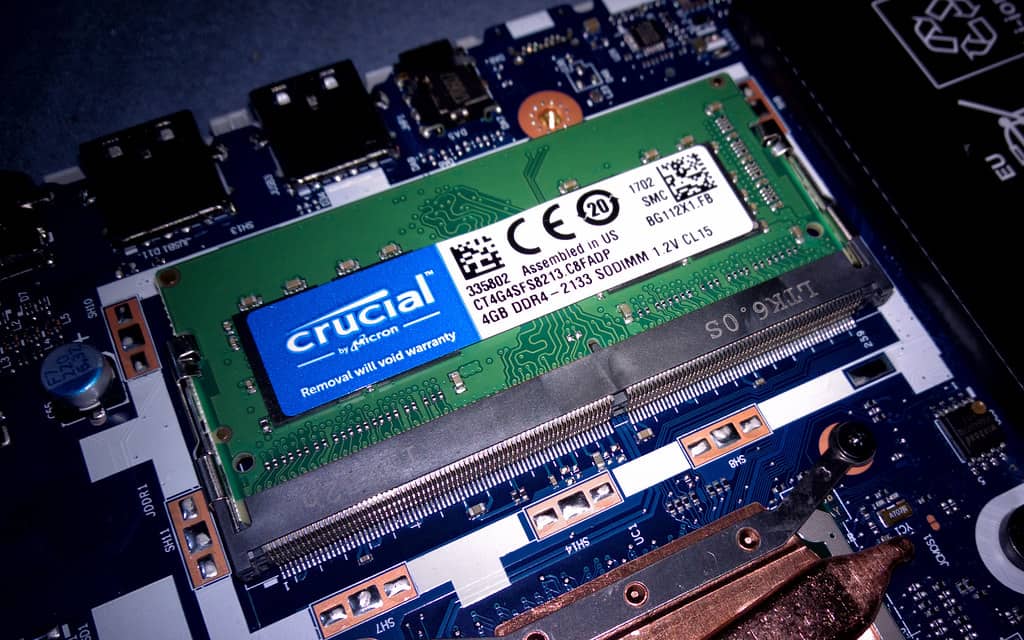
All three models fit comfortably on a single consumer GPU at Q4 — the real decision is accuracy and effective context, not raw VRAM. · Unsplash
What actually changes at 12GB, 8GB, and CPU-only
At Q4 quantization, all three models fit inside 3-4GB of VRAM, which means the model choice barely touches your hardware budget — this isn't a case where the bigger card buys you a better model. It buys you more room for the KV cache, which is where long-context use actually lives or dies. Feed 60,000 tokens into any of these at 4GB of VRAM and you'll likely run out of cache room before you run out of model. If you're serious about using the claimed context length rather than just the small-talk case, budget VRAM for the cache the same way you'd budget for the model — our 12GB VRAM guide has the actual headroom math.
7/ 10
Verdict
Which one should you run?
For pure reasoning over long context on a budget GPU, Phi-4 Mini is the strongest of the three right now — the MMLU and MATH gap over Llama 3.2 is large enough to matter, and it's the smallest to boot. Don't take any of the three's 128K claim at face value past roughly 80K tokens without testing your actual workload.
Best for: Pick Phi-4 Mini for reasoning-heavy long-context work. Pick Gemma 3 if you need vision. Pick Llama 3.2 if ecosystem support and fine-tune availability matter more to you than the accuracy gap.
Can I actually use the full 128K context on an 8GB GPU?
Technically yes, but you'll trade almost all your remaining VRAM for KV cache at that length, leaving little room for anything else. In practice, most 8GB setups stay comfortable up to roughly 32K-48K tokens before you feel the squeeze.
Is Gemma 3's 131K context window actually bigger than Phi-4 Mini's 128K?
The 3,000-token difference isn't meaningful in practice — treat both as roughly 128K, since real-world reliability degrades well before either limit regardless.
Which of these three is easiest to run with Ollama?
All three have day-one Ollama support. Our Ollama management guide covers pulling, updating, and removing any of them cleanly.
Does quantization hurt long-context accuracy more than short-context accuracy?
Yes, generally — Q4 quantization costs roughly 2-5% accuracy across standard benchmarks, but that error compounds over more tokens, so the degradation curve at long context is steeper than the flat benchmark number suggests.
Context-window marketing is the new clock-speed war — a single number that's technically true and practically misleading if you don't check what happens past the midpoint. My honest take: benchmark your own use case at the context length you'll actually use, not the one on the spec sheet, before committing a workflow to any of these. If you're still deciding on the GPU underneath any of this, our breakdown of what actually determines local-AI VRAM needs is the better starting point than chasing another context-window number.