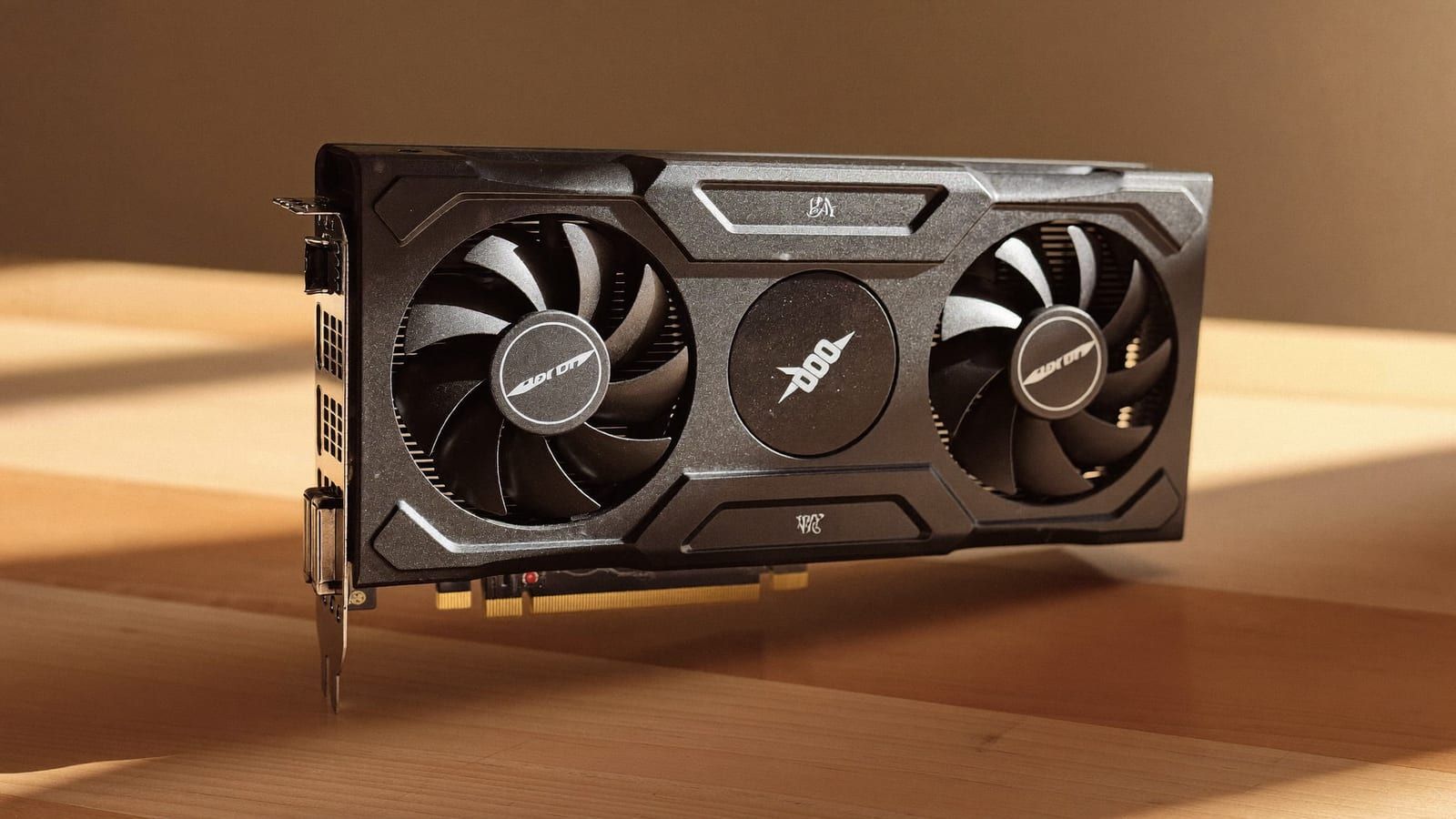
16GB of CUDA VRAM for $429 is the best budget on-ramp to local AI — but a narrow 128-bit bus and a brutal 2026 price surge mean it's only worth it near MSRP. My honest buy call, and what I'd get instead when it's marked up.
Here's the card I get asked about more than any other by people on a budget who want to run AI at home: the RTX 5060 Ti 16GB. And my answer comes with a giant asterisk. On paper it's the cheapest way to put 16GB of CUDA-friendly VRAM in your machine — a $429 MSRP for the memory that actually decides what models you can load. The catch is that 'MSRP' has been a fantasy for most of 2026. So my honest take up front: buy it at or near $429 and it's a genuinely smart local-AI starter card; pay the marked-up price and you're better off somewhere else. Let me walk through exactly why, and what I'd buy instead when it's overpriced.
16GB
VRAM
GDDR7 — the reason to buy it
128-bit
Memory bus
448 GB/s — the compromise
$429
MSRP
the price it's worth buying at
~$805
Surged median
Aug 2026 — skip at this
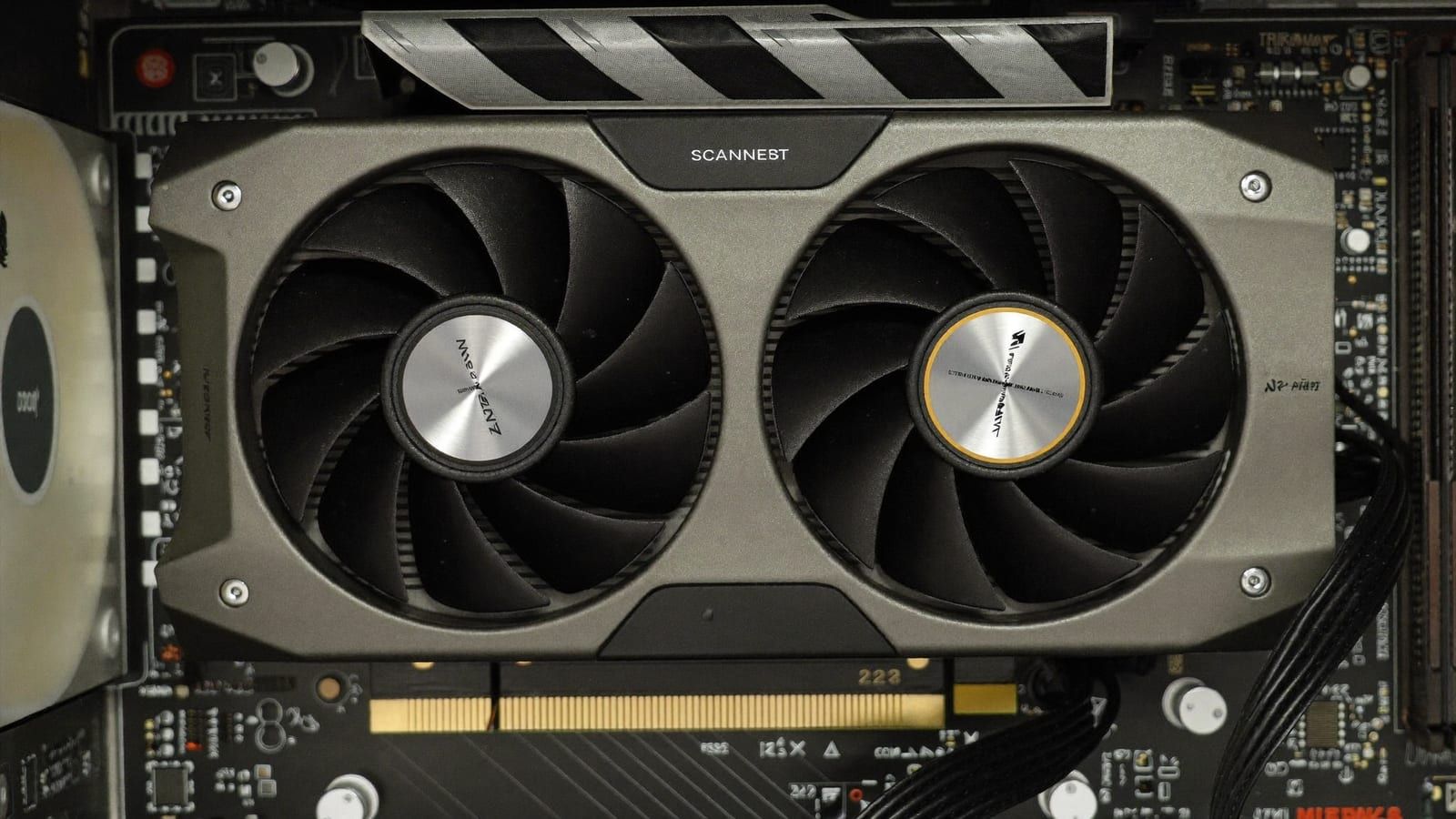
The 5060 Ti 16GB's pitch is simple: 16GB of CUDA VRAM at the lowest sticker price — when you can find it at sticker. Illustration generated with AI. · Generated with Higgsfield
Why 16GB on a cheap card matters for local AI
I say it in every GPU piece because it's the one rule that actually holds: for local inference, VRAM is the ceiling. A model has to fit in memory or it spills into system RAM and slows to a crawl. 16GB is the sweet spot for most people getting started — it comfortably holds a 7–8B or 13–14B model at a good quantization, and stretches to a quantized ~30B if you don't mind waiting on tokens. The 5060 Ti 16GB gets you into that tier for the least money on the NVIDIA side, which matters because nearly every local-AI tool (llama.cpp, Ollama, ComfyUI, PyTorch) targets CUDA first. If you want the model to load on the first try without wrestling AMD's ROCm, this is the cheapest CUDA door in. Size what your target models actually need in our cost-to-run tool, and see the wider field in the best local-LLM GPUs for 16GB of VRAM.
The honest weakness: a 128-bit bus
This is where I temper the enthusiasm. NVIDIA gave the 5060 Ti a generous 16GB, but hung it on a narrow 128-bit memory bus — 448 GB/s of bandwidth per the spec sheet. For LLM inference, bandwidth is a big part of how fast tokens come out, and reviewers note the 5060 Ti is bandwidth-limited compared to wider-bus cards like the RX 9070 or a used 3090. In practice that means: it'll happily hold a 13–14B model (that's the VRAM), but it generates tokens more slowly than a card with more memory bandwidth. For a first local-AI card running small-to-mid models, I think that's a fair trade for the price. If your plan is heavier 30B-class work, the narrow bus is the first thing you'll feel.
The three ways to get to 16GB+ for local AI
RTX 5060 Ti 16GB
VRAM
16GB GDDR7
Bandwidth
448 GB/s (128-bit)
Price (Sep 2026)
$429 MSRP / ~$805 street
RX 9070
VRAM
16GB GDDR6
Bandwidth
Wider bus, faster
Price (Sep 2026)
~$630
Used RTX 3090
VRAM
24GB GDDR6X
Bandwidth
936 GB/s (384-bit)
Price (Sep 2026)
~$700–1,000 used
VRAM
Bandwidth
Price (Sep 2026)
RTX 5060 Ti 16GB
16GB GDDR7
448 GB/s (128-bit)
$429 MSRP / ~$805 street
RX 9070
16GB GDDR6
Wider bus, faster
~$630
Used RTX 3090
24GB GDDR6X
936 GB/s (384-bit)
~$700–1,000 used
Cost per GB of VRAM (lower is better) — derived from Sep-2026 prices
5060 Ti 16GB @ MSRP~$27/GB
$429 ÷ 16GB — best case
Used RTX 3090 (24GB)~$35/GB
~$850 ÷ 24GB, faster bus
RX 9070 (16GB)~$39/GB
~$630 ÷ 16GB
5060 Ti 16GB @ ~$805~$50/GB
surged — worst value
Read those bars the way I do: at MSRP the 5060 Ti 16GB is the cheapest 16GB you can buy, full stop — a brilliant entry card. The moment it's marked up toward $800, that advantage evaporates and a used RTX 3090 quietly wins: 24GB instead of 16GB, and roughly double the memory bandwidth, for similar money. That's the whole decision in one chart.
Who I'd actually recommend it to
Pros
+ Cheapest CUDA 16GB card at MSRP — the easy on-ramp to local AI
+ 16GB comfortably runs 7–14B models + a quantized 30B
+ Low 180W power draw — easy on a modest PSU and a small build
+ CUDA 'just works' with every local-AI tool, unlike AMD's ROCm
Cons
− 128-bit bus (448 GB/s) throttles token speed on bigger models
− Terrible value if you pay the surged ~$805 price
− A used RTX 3090 gives more VRAM AND bandwidth for similar money
− Not the card for serious 30B-class work or fine-tuning
Verdict
What I'd tell a first-time local-AI builder
If you can get it at or near its $429 MSRP, buy it — it's the least-expensive way to 16GB of CUDA VRAM and a genuinely good first local-AI card for 7–14B models. If it's marked up toward $800, I'd skip it and buy a used RTX 3090 instead: more VRAM, more bandwidth, similar money. Same rule I give everyone — size the VRAM to your model, then buy the memory near a fair price, not at a panic one.
Best for: Budget builders who want the cheapest sane way to start running local LLMs on CUDA
Common questions
Is the RTX 5060 Ti 16GB good for local AI?
Yes, at MSRP — it's the cheapest way to get 16GB of CUDA VRAM, enough to run 7–14B models comfortably and a quantized ~30B. Its weakness is a narrow 128-bit memory bus (448 GB/s), which slows token throughput on bigger models. Great starter card; not a heavy lifter.
5060 Ti 16GB or a used RTX 3090 for AI?
At MSRP, the 5060 Ti wins on price and power draw. But if the 5060 Ti is marked up, a used RTX 3090 is usually the better local-AI buy: 24GB vs 16GB and much more memory bandwidth for similar money — I break that down in the used-GPU guide.
Why does the 128-bit bus matter?
For LLM inference, memory bandwidth affects how fast tokens are generated. The 5060 Ti's 128-bit bus gives 448 GB/s — fine for small-to-mid models, but noticeably slower than wider-bus cards once you load a 30B-class model. It has the VRAM to hold big models; it just feeds them more slowly.
How much should I pay for one?
Its MSRP is $429. I'd treat anything up to ~$500 as fair and walk away above that — the 2026 surge pushed it toward $805 at times, where it stops being good value. Check a live tracker on the day.
Is the 8GB version fine for AI?
No — for local AI, skip the 8GB 5060 Ti. 8GB caps you to small 7–8B models at tight quantization. The whole point of this card for AI is the 16GB variant; the extra memory is what makes it worth it.