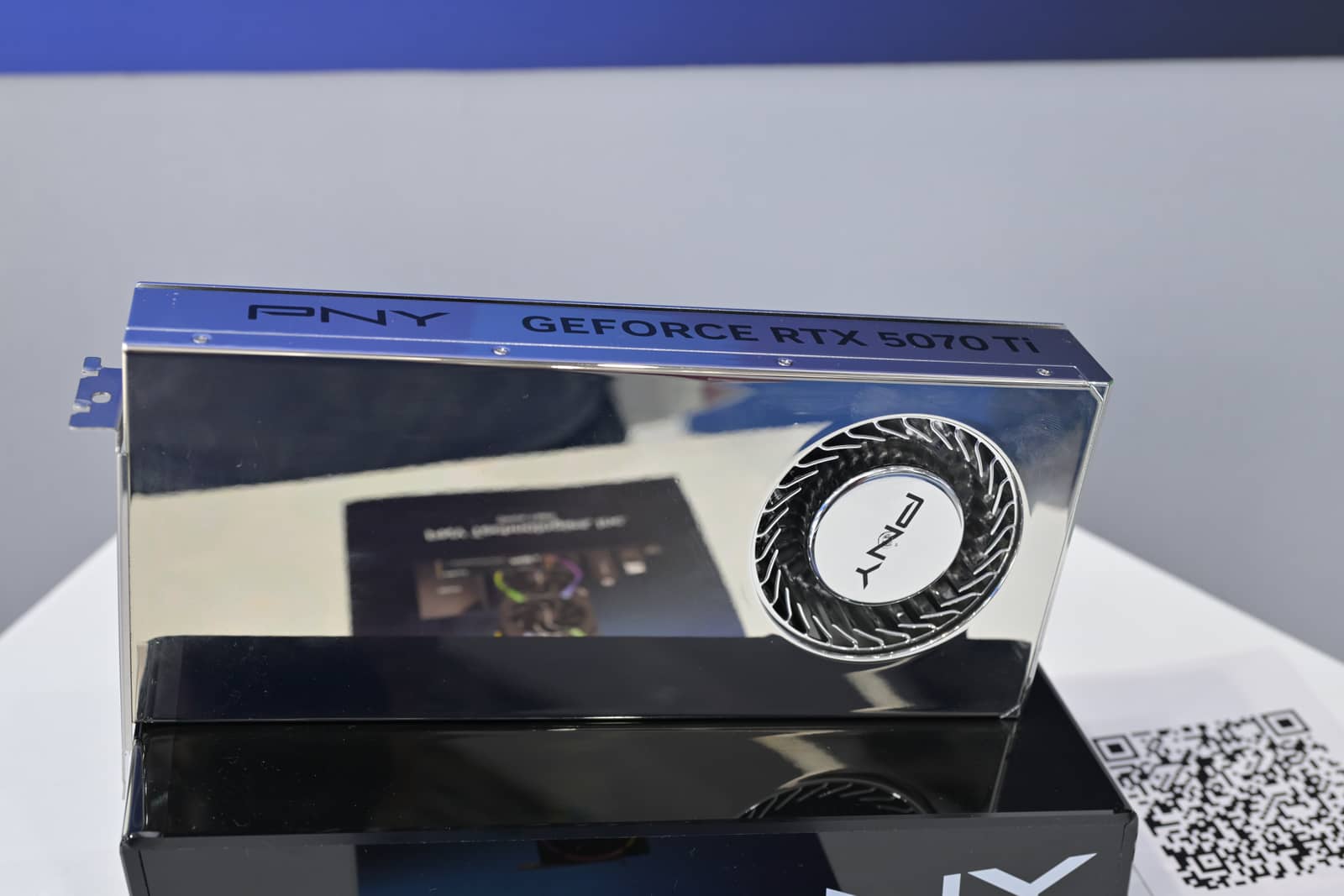
Nvidia's RTX PRO 6000 Blackwell, the 96GB workstation card serious local-AI builders have circled all year, now costs $16,000. That's not scalper markup — it's Nvidia's own pricing, confirmed by Tom's Hardware this week, up from $13,250 two months ago and nearly double the $8,565 it launched at less than a year ago.
How an $8,565 card became a $16,000 card
The RTX PRO 6000's price in 2026
2025 launch
RTX PRO 6000 Blackwell 96GB debuts at $8,565, positioned as the successor to the RTX 6000 Ada for AI development and pro-visualization workstations.
June 2026
Price climbs to $13,250 as GDDR7 and broader memory-chip costs start rising industry-wide.
August 2026
Nvidia repriced the card to $16,000 — an 87% increase from launch and a 21% jump in just two months.
On paper, two RTX 5090s beat the RTX PRO 6000 on price per gigabyte. In practice it's not that simple: the 5090 has no NVLink, so its 32GB doesn't pool into a single addressable space automatically. You need tensor-parallel software — vLLM's tensor-parallel mode, for instance — to split a model across two cards, which adds a real point of failure and setup time the RTX PRO 6000's single 96GB pool never asks for. See our dual RTX 5090 versus a single big card breakdown for how that plays out at a smaller scale.
Bandwidth is the number everyone skips past
1,792 GB/s
RTX PRO 6000 bandwidth
512-bit GDDR7 bus
273 GB/s
DGX Spark bandwidth
unified LPDDR5x
6.6x
Bandwidth gap
RTX PRO 6000 vs. DGX Spark
Once a model actually fits in memory, LLM inference at small batch sizes is bandwidth-bound, not compute-bound — bandwidth is what decides tokens per second. That's exactly why StorageReview's own local-AI leaderboard crowned the Dell Precision 7875, running dual RTX PRO 6000 cards for 192GB combined, its pick for 'Best Tower for Local AI' over any unified-memory appliance — full GDDR7 bandwidth on both cards, no compromise.
StorageReview's top-ranked local-AI tower runs two of these for 192GB combined VRAM. · Press
Who this is actually for
7/ 10
Verdict
Worth it — for a specific buyer
If you're running 70B-class models in production, need consistent low-latency inference, and the alternative is renting cloud GPU hours indefinitely — a market where rental prices have already doubled this year — $16,000 amortizes fast against a team's time. If you're comparing this to a gaming GPU, it was never built for you; look at dual RTX 5090s or the DGX Spark instead.
Best for: AI studios, ML engineers, and dev shops running 70B+ models daily — not hobbyists
Is the RTX PRO 6000 Blackwell worth $16,000 for local AI?
Only if you specifically need 96GB at 1,792GB/s in one card. For most home local-AI setups, a DGX Spark or a pair of RTX 5090s gets you more capacity or better raw compute per dollar.
Why did the RTX PRO 6000 nearly double in price?
GDDR7 and broader memory-chip costs rose sharply through 2026 as datacenter AI demand competed with consumer supply. Nvidia raised the card's price twice in three months — $8,565 to $13,250 in June, then to $16,000 in August.
What's a cheaper alternative with similar VRAM capacity?
Nvidia's own DGX Spark offers 128GB of unified memory for $4,699 — more capacity for under a third of the price, but at 273GB/s versus the RTX PRO 6000's 1,792GB/s, so the same model runs noticeably slower.
Can I combine cheaper GPUs to match the RTX PRO 6000's VRAM?
Two RTX 5090s give you 64GB for roughly $9,000–9,600, cheaper per GB, but the memory doesn't pool automatically like a single card — you need tensor-parallel inference software to split a model across them.
Watch the next two months. GDDR7 supply isn't loosening yet, and if the June-to-August pattern repeats, we're looking at a $19,000–20,000 card by October. If you genuinely need this card for what it does, the argument for buying now — price or not — gets stronger every cycle it doesn't cool off.