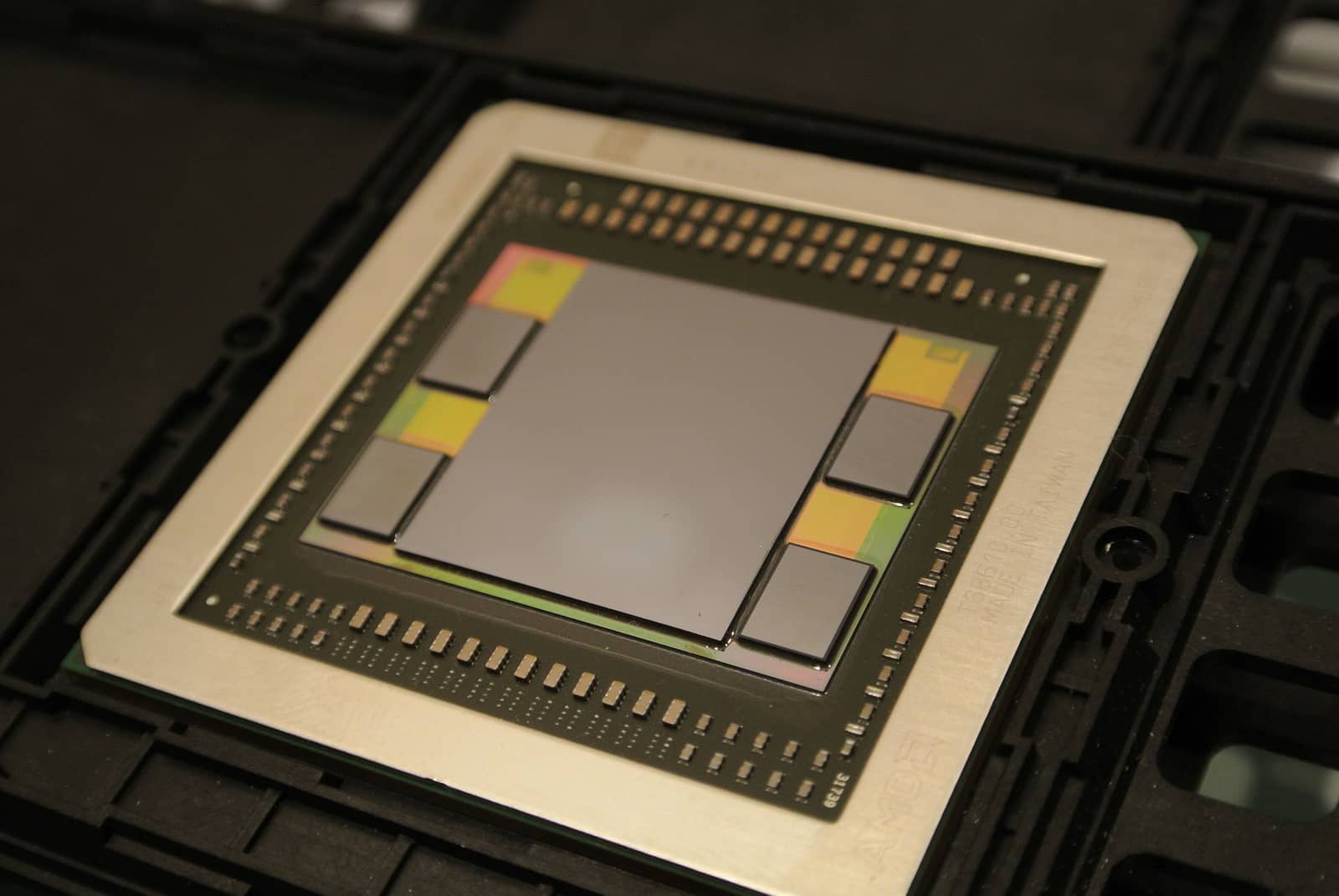
The AMD Instinct MI50 is a seven-year-old server card nobody was supposed to still care about, and it's currently one of the cheapest ways to get 32GB of fast VRAM into a PC. Tested 32GB units are trading for $120-250 on eBay, according to multiple seller listings and the hobbyist writeups that have made this card a minor cult object in local-AI circles. That's 32GB of HBM2 running at 1,024 GB/s — faster memory bandwidth than an RTX 5090. Here's the catch nobody puts in the headline: AMD dropped official driver support for the MI50's architecture in ROCm 7.x, and one detailed builder's log calls the card "e-waste" the moment that support window fully closes. Both things are true. The card is a genuinely great deal today, and it comes with a real, non-theoretical expiration risk.
the spec sheet is genuinely absurd for the price
The MI50 launched in 2019 on AMD's Vega 20 architecture — 7nm, 13.2 billion transistors, 3,840 stream processors, and up to 26.5 TFLOPS of FP16 compute. None of that has aged particularly well for gaming. For local AI inference, the number that matters is the 32GB of HBM2 running at 1,024 GB/s, and that number hasn't aged at all: it still beats every consumer GPU on the market except the very top of Nvidia's Blackwell stack. Our used RTX 3090 comparison already made the case that older, VRAM-heavy cards often beat brand-new ones for this exact workload — the MI50 takes that logic to its extreme. A single card costs less than a third of what an RTX 5060 Ti 16GB sells for right now, with double the VRAM and more than double the bandwidth.
32GB HBM2
VRAM
vs. 16GB on most current mid-range consumer cards
1,024 GB/s
Bandwidth
faster than the RTX 5090's GDDR7
$120-250
Used price
tested units, per eBay listings
250-300W
Power draw
under sustained load
The MI50 was designed for airflow-cooled server chassis, not desktop cases — that's why it ships without a fan. · Unsplash
the software risk is real, not theoretical
This is the part that separates the MI50 from the used Tesla P40 — a comparably old, comparably cheap card with its own well-documented tradeoffs. The P40's limitations are mostly about raw speed and lack of tensor cores. The MI50's biggest risk is that AMD has actively dropped official support for its gfx906 architecture starting with ROCm 7.x, the software stack almost every local-AI tool relies on to talk to AMD hardware. One builder documented getting it running anyway by manually copying gfx906 support files out of ROCm 6.4.4 into a newer install — a workaround, not a fix, and one that depends on community maintenance continuing indefinitely. llama.cpp, Ollama, and vLLM all report mixed results on the card according to hands-on writeups, meaning some tools work cleanly and others need patched builds. If you need something that works the moment you plug it in, this isn't that card.
The performance, when it works, backs up the hype. One community benchmark of a single MI50 running a 7B model at Q4 quantization measured over 1,200 tokens/second of prompt processing and around 100-110 tokens/second of generation — genuinely fast for a card this cheap. Scaled up, a four-card MI50 rig — roughly the same idea as the dual-V100 build Hackaday documented in late July, just with AMD's cheaper card instead of Nvidia's — put 128GB of pooled VRAM behind a 235-billion-parameter mixture-of-experts model and generated at roughly 20 tokens/second, entirely on used cards that together cost less than one new RTX 5070 Ti. That's the kind of model size a $2,000-plus consumer GPU can't touch at any price, running on hardware that would otherwise be scrapped.
Most MI50 buyers add their own blower fan since the card ships bare. · Unsplash
7/ 10
Verdict
Is the MI50 32GB worth it for local AI in 2026?
Yes, conditionally. If you're comfortable with Linux, willing to add your own cooling, and want the cheapest path to real VRAM headroom for mixture-of-experts and 70B-class models, the MI50 is one of the best value plays in local AI hardware right now, full stop. If you want something you can install alongside Windows and forget about, or you're not willing to gamble on community-maintained driver support outliving official AMD backing, buy a used RTX 3090 instead and pay the premium for a card that just works.
Best for: Linux-comfortable tinkerers who want maximum VRAM per dollar and don't mind a driver workaround.
A motherboard with "Above 4G Decoding" support enabled in BIOS — required for the card to even initialize.
A 1,200W+ PSU if you're running more than one card; a single MI50 draws 250-300W under load.
An aftermarket blower fan — these ship as bare server cards with no cooling attached.
A Linux install and ROCm 6.4.4 driver files, since ROCm 7.x dropped native gfx906 support.
Does the MI50 work on Windows?
Not reliably for AI workloads — the practical path is Linux with ROCm, and even that now requires pulling driver components from an older ROCm release.
How does the MI50 compare to a used Tesla P40?
The MI50 has faster memory (1,024 GB/s vs. the P40's roughly 350 GB/s) and native FP16 support the P40 lacks, but the P40 currently has a more stable, officially-supported CUDA path — see our full P40 breakdown.
Can I mix an MI50 with an Nvidia GPU in the same machine?
Technically yes for running separate workloads, but you can't pool VRAM across an AMD and Nvidia card for a single model the way you can across two of the same brand — see do you need two GPUs for local AI.
Is buying an MI50 in 2026 too risky given the dropped ROCm support?
It's a real risk, not a dealbreaker — community maintainers have kept gfx906 support alive through workarounds so far, but budget for the possibility that stops working within a couple of years, not decades.
The MI50 isn't a card I'd recommend to someone who just wants Ollama to work on the first try. It's a card I'd recommend to someone who's already comfortable with running local AI in Docker or patching together a Linux driver stack, and who cares more about cost-per-gigabyte than convenience. At $120-250 for 32GB of genuinely fast memory, it's still one of the best deals in local AI hardware in 2026 — just go in knowing AMD, not the market, is the variable that could end that deal early.