Instinct MI400 and Helios racks got the headlines at Advancing AI 2026 — but the actual local-AI hardware for individuals already exists, and it's cheaper than an RTX 5090.
AMD held its biggest AI event of the year on July 23, 2026, in San Francisco, and the headlines were exactly what you'd expect from a keynote aimed at hyperscalers: the Instinct MI400 series, a rack-scale system called Helios, and a 6th-generation EPYC CPU with up to 256 cores. None of that is anything an individual will ever own. The actual local-AI news for people running models on their own desk isn't from this event at all — it's a card AMD already shipped, that most coverage of Advancing AI 2026 didn't even mention.
what actually got announced
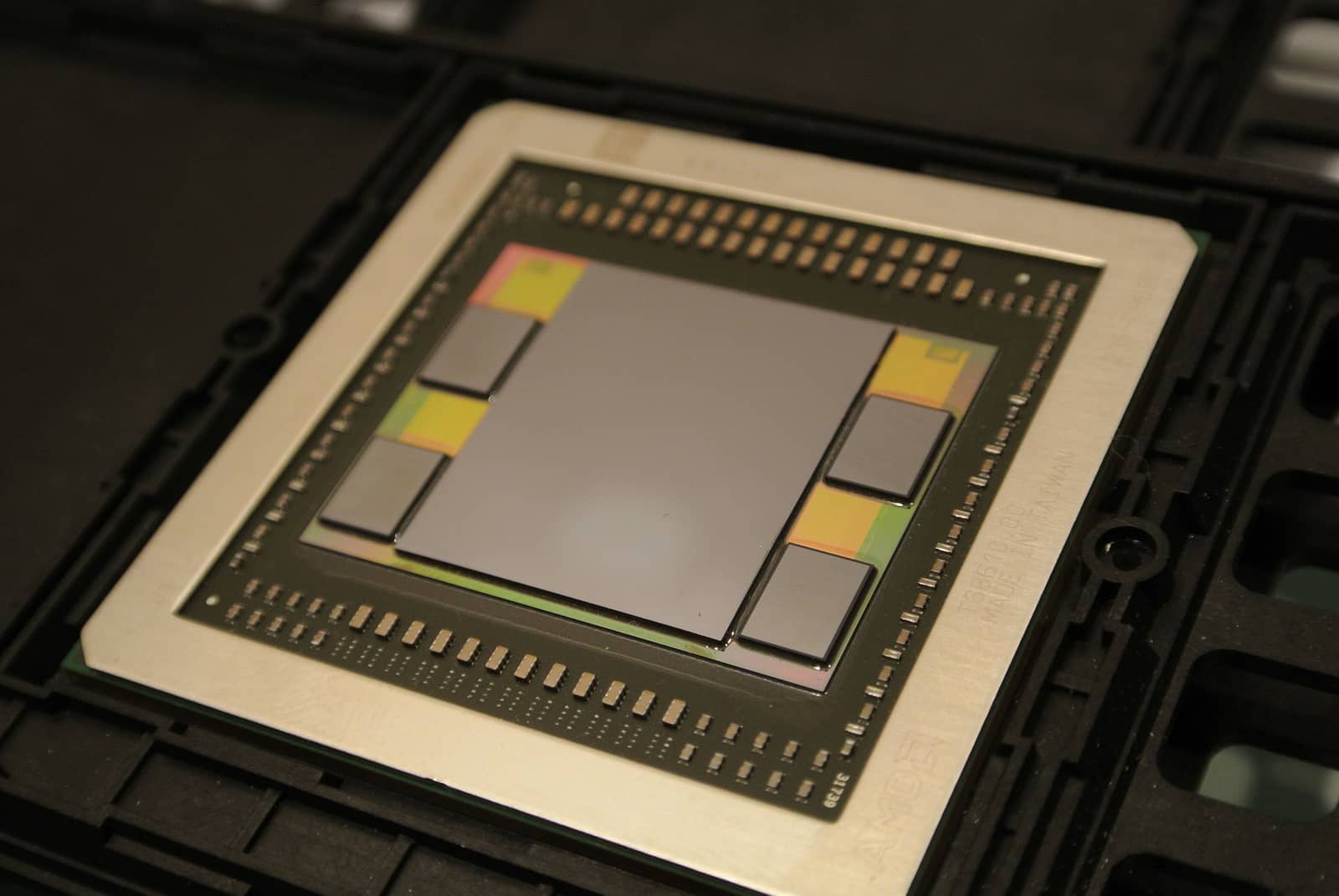
The Instinct MI400 series splits into two SKUs — the MI430X and the higher-end, AI-specialized MI455X — built on a 2nm process with CDNA 5 architecture and next-generation HBM4 memory. Helios is AMD's first rack-scale answer to Nvidia's biggest AI racks: a single rack packing 72 MI455X accelerators, 31TB of combined HBM4 memory, and 1.4 petabytes per second of aggregate bandwidth, according to AMD's own release. It's genuinely impressive engineering, and it's aimed entirely at the same handful of AI labs and cloud providers buying Nvidia's Blackwell and Rubin racks. If you're not signing a multi-million-dollar compute contract, none of this changes what's on your desk.
the card built for exactly this: Radeon AI PRO R9700
The R9700 isn't new — it started shipping in system-integrator workstations back in July 2025 and reached wider DIY retail through the following months. What's changed is that the software finally caught up to it. The card itself: RDNA4 architecture on the Navi 48 die, 64 compute units, 32GB of GDDR6 on a 300W board, rated for up to 1,531 TOPS of INT4 sparse compute. Official pricing starts at $1,299, with board-partner cards from Sapphire and ASRock running $1,244 to $1,277, as TechRadar covered when AMD first detailed pricing.
R9700 vs the Nvidia card people default to
AMD Radeon AI PRO R9700
$1,299
vs
Nvidia RTX 5090
$1,999
32GB GDDR6
VRAM
32GB GDDR7
$1,299 (from $1,244)
Price
$1,999 MSRP
RDNA4 / Navi 48
Architecture
Blackwell
300W
TDP
575W
ROCm 7.2 — CUDA parity as of March 2026
Software maturity for LLM inference
CUDA — years of tooling and community support
budget-conscious 32GB VRAM local inference
Best for
training, gaming, and anything CUDA-only
R9700 wins 2wins 2 5090
The R9700 matches the RTX 5090's 32GB VRAM ceiling for local-model inference — at roughly two-thirds the price. · Unsplash
does ROCm actually work now
This is the part that's genuinely changed. ROCm 7.2, released in March 2026, is the first AMD software stack to hit real feature parity with CUDA for the tools people actually use to run local models: Ollama, LM Studio, llama.cpp, and vLLM all auto-detect RDNA3, RDNA4, and Strix Halo hardware out of the box, on a single combined Windows-and-Linux release. AMD's own documentation now ships official llama.cpp install instructions, and pre-built vLLM wheels for ROCm exist instead of requiring a source build. Phoronix's benchmarks back this up with real single- and dual-GPU numbers, not marketing slides. Two years ago, recommending an AMD card for local AI came with an asterisk the length of a paragraph. That asterisk is a lot shorter now.
should you actually buy one
Verdict
buy it if 32GB of VRAM is the actual requirement, not the RTX 5090 by default
The R9700 makes the most sense for someone who's specifically hit a VRAM wall — running 30B-40B parameter models at usable quantization, or wanting headroom for longer context windows — and doesn't want to pay RTX 5090 prices to get there. If you're newer to local AI or you want the path of least resistance, our existing local-AI GPU picks still lean Nvidia for good reason. If you don't need 32GB at all, a 16GB card covers most local models people actually run day to day for a lot less money.
Best for: local-AI builders who've specifically outgrown 16-24GB and don't want to pay 5090 money to fix it
Is the Radeon AI PRO R9700 good for gaming too?
It's built and priced for compute workloads, not gaming — you'd get better gaming value from a Radeon RX 9070 XT or an Nvidia GeForce card at a similar price. The R9700 competes on VRAM-per-dollar for inference, not frame rates.
Does ROCm work on Windows or only Linux?
ROCm 7.2 is a combined Windows and Linux release as of March 2026 — that's the change that makes the R9700 realistic for people who don't want to dual-boot or run a separate Linux box just for local AI.
What GPUs does ROCm 7.2 officially support?
The RX 9070, RX 9070 XT, RX 9060 XT LP, and Radeon AI PRO R9600D and R9700, with RDNA3 and Strix Halo also covered under the same release.
Is the Instinct MI400 something I could ever buy for a home setup?
No — it's a datacenter accelerator sold to cloud providers and AI labs as part of full rack systems like Helios, not something available at retail.
AMD's keynotes are going to keep being about Instinct and EPYC and rack-scale systems for the foreseeable future, because that's where the actual AI infrastructure money is. That's fine — it just means the consumer-relevant news from AMD rarely comes wrapped in a keynote. It comes quietly, from a card that's been shipping for a year and a software stack that finally caught up to it. If you've been assuming AMD isn't a serious option for local AI, that assumption is now a year out of date.