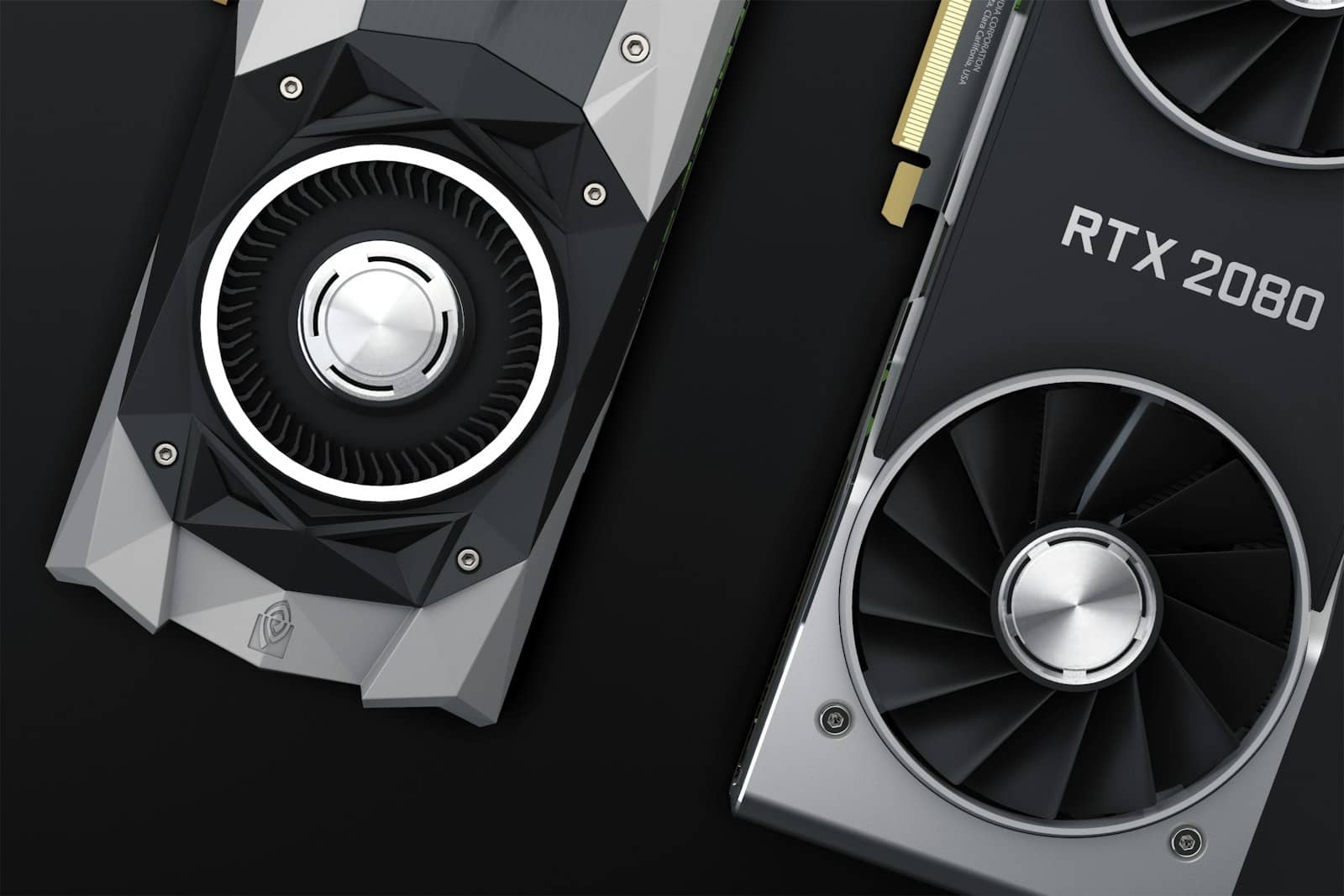
Modders in China are selling RTX 3080s with double the stock VRAM for about $445. Here's the real math on whether that's a shortcut or a way to fry your PC.
Modders in China are taking five-year-old RTX 3080s, desoldering the stock GDDR6X chips, and swapping in double-density modules to turn a 10GB card into a 20GB one. They're selling for around ¥3,000 — roughly $445 — in secondhand markets, and they actually work: full driver support, full CUDA, the same 8,704 cores as the day the card launched. I still wouldn't put one in a PC I cared about, and here's the actual reasoning, not just a gut reaction to "gray market GPU."
What you're actually buying
~$445
Price
~¥3,000 in China's secondhand market
20GB
VRAM
up from stock 10GB GDDR6X
~320W
Power draw
unchanged from stock 3080
None
Warranty
unofficial hardware modification
The mod itself isn't a scam — it's a real hardware swap, and it's been documented by multiple outlets independently. The card keeps the RTX 3080's original 8,704 CUDA cores and 320-bit memory interface; the change is purely doubling the GDDR6X module density to hit 20GB. Because it's still fundamentally Ampere silicon, it doesn't gain DLSS Frame Generation or Multi Frame Generation — those are Ada and Blackwell exclusives — and power draw stays in the same roughly 320W class as a stock 3080. Nvidia hasn't blessed any of this, which is exactly why there's no warranty path if a memory chip fails.
Does 20GB actually help for local AI
This is the part that matters more than gaming. A stock 10GB RTX 3080 already handles 13B-parameter models at reasonable quantization, but the context window gets squeezed fast — you're constantly trading conversation length for headroom. Doubling to 20GB genuinely opens the door to comfortably running 13B–24B quantized models with real context, which is a meaningful jump for anyone using Ollama or a similar local runtime. The catch is that Ampere lacks the newer, more efficient inference kernels and FP8 support that Ada and Blackwell cards ship with, so tokens-per-second on a modded 3080 will trail a modern 16GB card running the same model size, even with more headroom to spare.
Modded RTX 3080 20GB vs. a new RX 9060 XT 16GB
Modded RTX 3080 20GB
~$445
vs
RX 9060 XT 16GB (new)
~$423–459
20GB (modified)
VRAM
16GB (stock)
None
Warranty
Full manufacturer warranty
~320W
Power draw
~180W class
Current, full CUDA
Driver support
Current, day-one
Older Ampere kernels
Inference efficiency
Modern RDNA4 efficiency
20GB wins 1wins 4 (new)
The honest verdict
4/ 10
Verdict
My actual take
Skip it unless you're already comfortable soldering and RMA-free by choice. The extra 4GB of VRAM over a new 16GB card doesn't offset zero warranty, higher power draw, and older, slower inference kernels. If your goal is genuinely more usable VRAM per dollar for local AI, a real 16GB card at a similar price point wins on every axis except raw capacity.
Best for: Only hobbyists who fully understand and accept the reliability trade-off
Ask the seller for a memtest_vulkan or OCCT VRAM stress-test result before paying, not after.
Check actual seller history and return policy on the specific listing, not the platform's general policy.
Run your own extended stress test the moment it arrives — don't wait for a project deadline to find out it's unstable.
Never run it unattended on a job you can't afford to silently corrupt.
Common questions
Can I get official Nvidia drivers for a modded RTX 3080 20GB?
Yes — since the core GPU die is unchanged, standard GeForce drivers and full CUDA support work normally. The modification is purely to the VRAM modules.
Does a modded 20GB RTX 3080 support DLSS Frame Generation?
No. Frame Generation and Multi Frame Generation require Ada Lovelace or Blackwell hardware; Ampere cards, modified or not, don't get it.
Is 20GB of VRAM enough for local AI in 2026?
It's enough for comfortable 13B–24B quantized models with real context length, though inference speed will lag a modern card with efficient kernels running the same model.
Is it safer to just buy a used, unmodified RTX 3080 10GB?
Yes, if you don't need the extra VRAM — you keep the original, validated memory configuration and avoid the reliability question entirely.