PC Gamer's 2026 buying guide doesn't have one "best graphics card" anymore. It has two. The RX 9070 keeps the overall crown, and the RTX 5050 just took the budget slot outright. That split sounds harmless — pick the cheap one if you're broke, pick the good one if you're not — but I think the budget pick is the wrong recommendation for almost anyone reading it in buying-guide mode, and the reason fits on one line: 8GB of VRAM in 2026 is a countdown timer, not a spec.
The two picks, side by side
What $249 to $805 actually buys you right now
RTX 5050
Card
$249
MSRP
~$309
Street price (Aug 2026)
8GB GDDR6
VRAM
128-bit
RX 9060 XT 16GB
Card
$349
MSRP
~$423–459
Street price (Aug 2026)
16GB GDDR6
VRAM
128-bit
RX 9070
Card
$549
MSRP
~$650
Street price (Aug 2026)
16GB GDDR6
VRAM
256-bit
RTX 5060 Ti 16GB
Card
$429
MSRP
~$805
Street price (Aug 2026)
16GB GDDR7
VRAM
128-bit
Card
MSRP
Street price (Aug 2026)
VRAM
Memory bus
RTX 5050
$249
~$309
8GB GDDR6
128-bit
RX 9060 XT 16GB
$349
~$423–459
16GB GDDR6
128-bit
RX 9070
$549
~$650
16GB GDDR6
256-bit
RTX 5060 Ti 16GB
$429
~$805
16GB GDDR7
128-bit
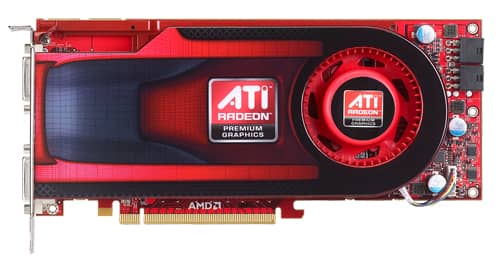
Look at that last row again. The RTX 5060 Ti 16GB — a tier below the RX 9070 on paper — now has a median US price of $805, according to Wccftech's tracking, 88% above its $429 launch MSRP. The RX 9070, which beats it in raw performance, is sitting around $650. Memory pricing broke the normal hierarchy this year, and I'd take the objectively faster card for $150 less over the weaker one every single time. This is exactly the kind of thing covered in our breakdown of the RX 9070 undercutting Nvidia's stack — check current prices before you trust any tier list, including this one.
Why 8GB is the actual dividing line, not clock speed
The RTX 5050 is a genuinely fine little card for what it is — Nvidia's own spec sheet puts it at 2,560 CUDA cores and a 130W power draw, and it's roughly 60% faster than the RTX 3050 it replaces in raster games. None of that fixes the memory bus. 8GB on a 128-bit interface was already tight for 1440p with high-res texture packs in 2024; by 2026, several current releases blow past 8GB of VRAM allocation at 1440p with textures on high, well before the GPU's compute runs out of steam. You don't get a slowdown warning. You get texture pop-in, stutter, and settings you have to manually turn back down on a card you just bought.
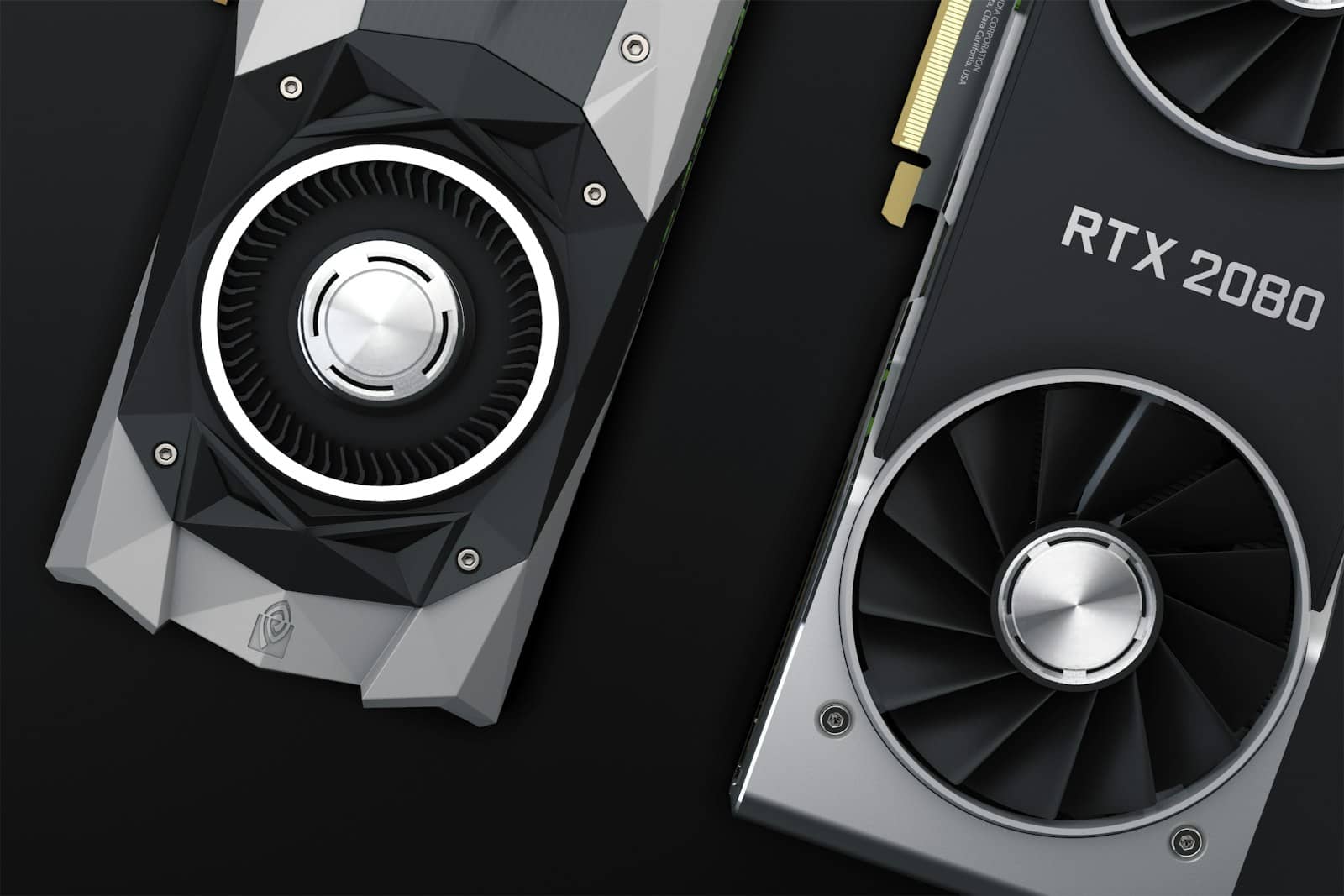
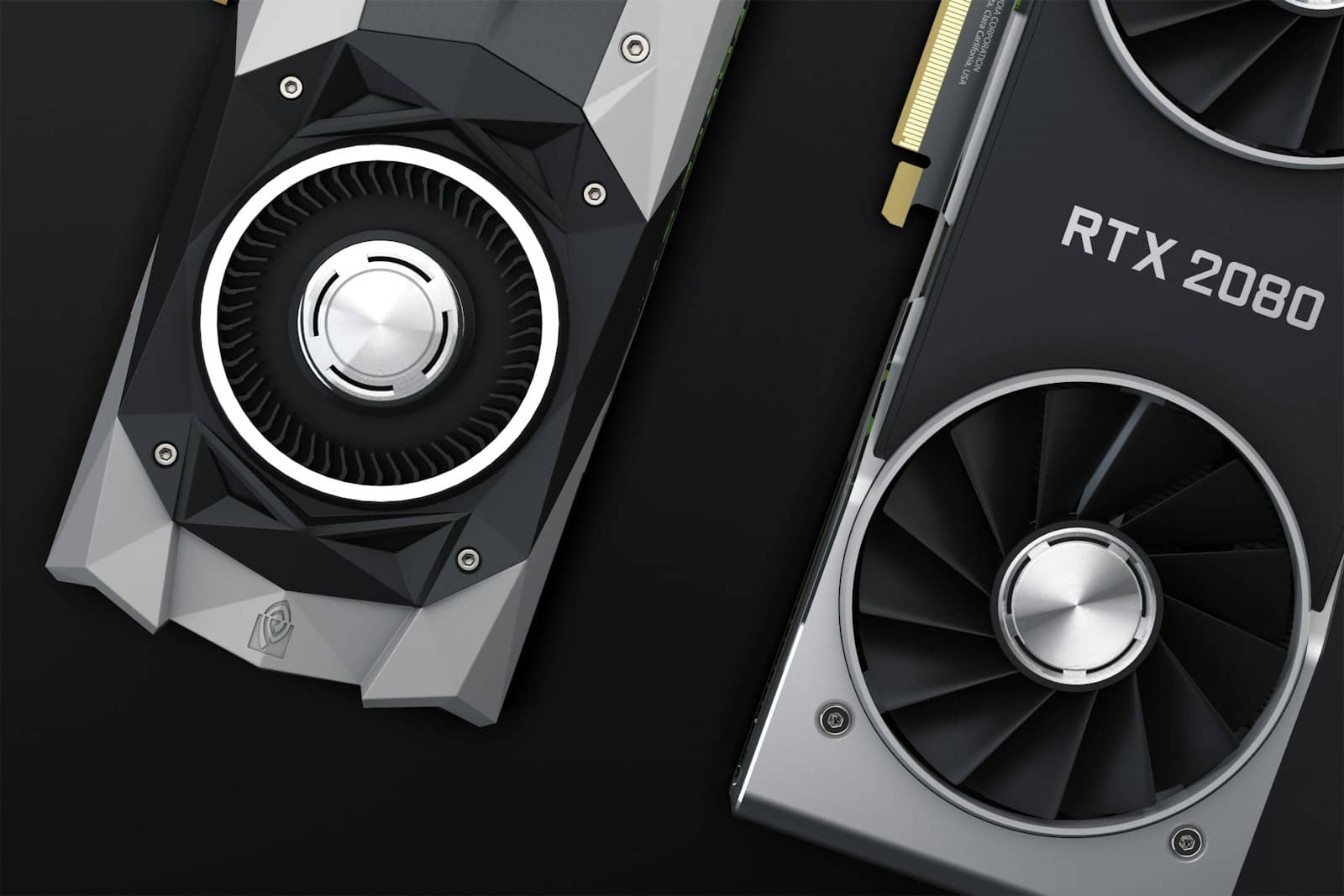
The RX 9070's 16GB buffer is the bigger reason to buy it than raw shader count. · Unsplash
Who should actually buy which
Verdict
RTX 5050 — buy only if
You're building a strict sub-$300 1080p esports box (CS2, Valorant, Overwatch 2) and you will not touch AAA titles or any local AI tooling on this machine. For that narrow case it's efficient, quiet, and cheap to run.
Best for: 1080p esports builds on a hard budget, nothing else
Verdict
RX 9070 — buy if
You want one GPU that handles 1440p gaming comfortably for the next 3–4 years and leaves headroom for running a quantized 13B–14B local LLM on the side without immediately hitting a VRAM wall. At current street prices it's the best dollar-per-VRAM-gigabyte card in this comparison.
Best for: 1440p gamers and anyone who might dabble in local AI
Today's street price, not MSRP — this market moves weekly, see our best GPU for local AI tracker.
Whether your case and PSU can handle the RX 9070's higher power draw versus the 5050's single 8-pin connector.
Whether a 16GB RX 9060 XT is actually cheaper than the 5050 in your region right now — it sometimes is.
Common questions
Is the RTX 5050 good enough for 1440p gaming?
Not comfortably. Its 128-bit bus and 8GB buffer are built for 1080p; pushing 1440p means turning textures down on newer titles regardless of frame rate.
Is 8GB of VRAM enough in 2026?
For strict 1080p esports, yes. For anything AAA at 1440p or any local AI experimentation, no — 16GB is the safer floor this year.
Why does the RTX 5060 Ti 16GB cost more than the RX 9070?
GDDR7 memory pricing spiked sharply through mid-2026, and Nvidia's 16GB SKUs got hit harder than AMD's GDDR6-based cards. It's a supply issue, not a performance one — see our RTX 5060 Ti price piece.
Should I wait for prices to drop before buying either card?
If you can wait, wait. Memory pricing is the volatile variable right now, not the GPUs themselves — nothing here suggests either card is getting a refresh soon.
PC Gamer isn't wrong that the RTX 5050 is the best card at its exact price point — it is. My disagreement is with treating "cheapest" and "budget pick" as the same recommendation when the difference between 8GB and 16GB now decides whether a card ages well or badly. If you can stretch to the RX 9070 or a 16GB RX 9060 XT, do it. The $150–300 gap buys you a GPU that isn't guessing about next year.