The question every local-AI owner eventually asks — after they've picked the GPU or the Mac, after they've got a model actually running — is what it's costing them in electricity. A developer writing for Towards Data Science just answered it properly, building a tool called TokenWatt that reads Apple Silicon's whole-SoC power draw through Apple's own IOReport interface and subtracts a rolling idle baseline, so what's left is the actual marginal cost of a request. Wall-calibrated against a Shelly smart plug, the numbers land within about ±2.6-4.5% of ground truth. At the author's $0.31/kWh electricity rate, a small model flat-out generating text costs $0.063 per million output tokens. Even the most expensive model tested — a dense 27B — costs $0.554 per million. That's not a rounding error away from free. It basically is free.
The MoE result is the interesting part, and it lines up with something we've explained before: why some huge models run faster and cheaper than small ones. A mixture-of-experts model only wakes up a handful of its 'experts' per token instead of running every parameter through the math, so a 120B MoE model can genuinely cost less in electricity than a 27B dense model that runs its full weight count on every single token. Parameter count alone tells you almost nothing about real-world cost — the quantization format you run it in changes the picture further on top of that.
$0.063
Qwen3.5-4B
per million output tokens
$0.087
Qwen3.6-35B (MoE)
per million output tokens
$0.109
gpt-oss-120B (MoE)
per million output tokens
Why a bigger model can cost less to run
Dense models run every parameter for every token, so cost scales more or less linearly with size. Mixture-of-experts models route each token through a small subset of specialized sub-networks, so the total parameter count can balloon into the hundreds of billions while the actual compute — and the power draw — per token stays close to that of a much smaller model. That's the whole reason gpt-oss-120B beat Qwen3.6-27B in this test despite having roughly 4.5x the parameters.
Cost per million output tokens: local vs. cloud API
Local, small model (Qwen3.5-4B)$0.06
Local, worst case (dense 27B)$0.55
GPT-5.4-nano API$1.25
Gemini 2.5 Flash API$2.50
Claude Haiku 4.5 API$5.00
Does the same math hold on a GPU instead of a Mac?
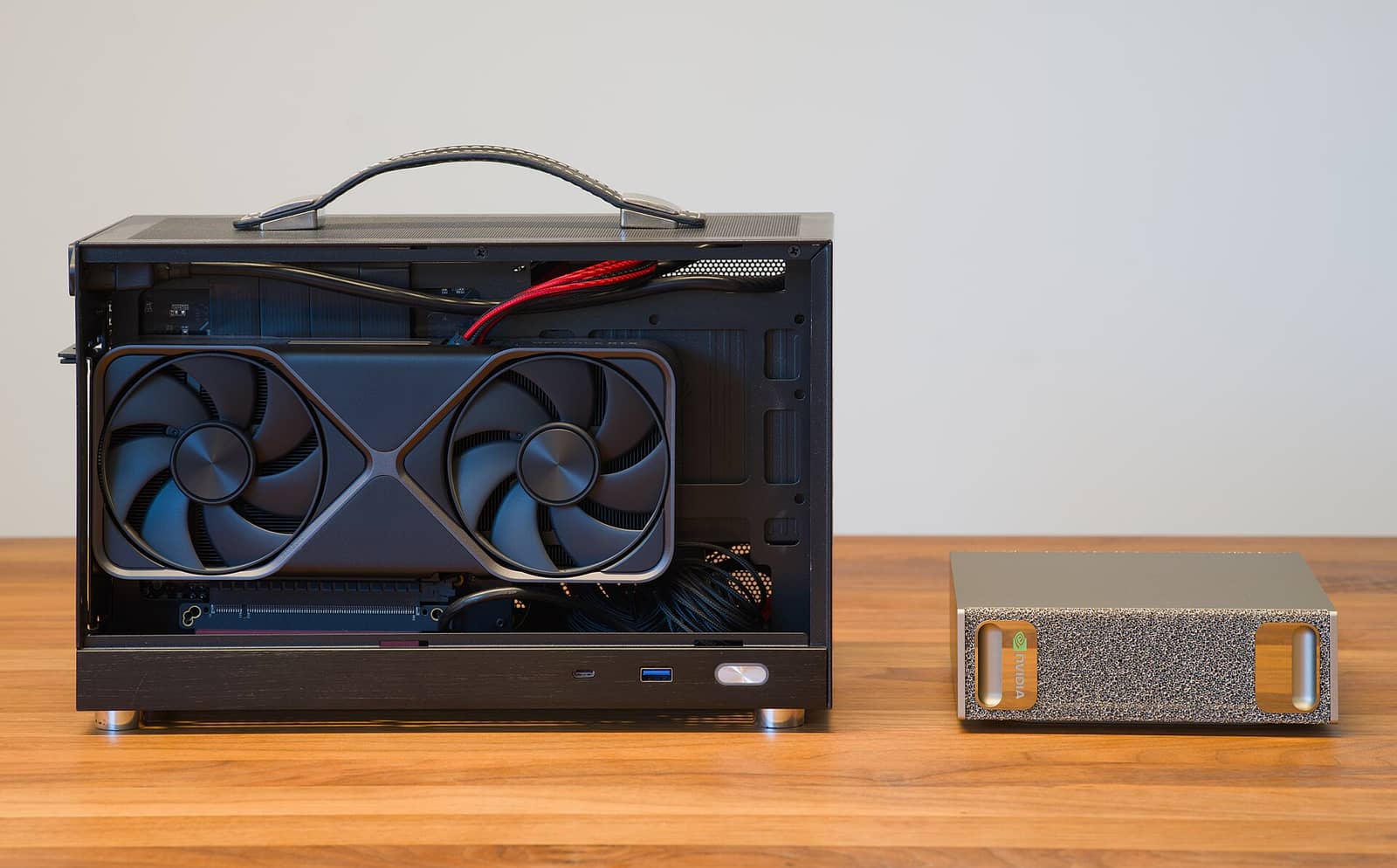
Here's where I'll flag my own reasoning as an estimate, not a measurement — nobody's run TokenWatt on a discrete GPU yet. Apple Silicon's whole chip draws somewhere in the 40-90W range under sustained AI load; an RTX 4090 is rated for up to 450W on its own, before the rest of the PC is even counted. A GPU generates tokens faster per watt for raw throughput, but its idle and peak power draw are both dramatically higher, so per-token electricity cost on a discrete GPU setup is plausibly higher than on Apple Silicon — even if the total bill stays trivial either way. This is a prediction, not a fact, and someone should actually measure it. Our Mac Studio vs. Nvidia's own local-AI chip benchmark and breakdown of which Mac actually makes sense for local AI are the closest real comparisons we have right now.
Even running models around the clock, electricity turned out to be the cheapest line item in local AI — by a wide margin. · Unsplash
If you use local AI occasionally, electricity cost is genuine noise — don't factor it into a buying decision at all.
If you're running it 24/7 as a personal API server, the math still favors local by 10-90x versus the cloud APIs measured here.
The comparison that actually matters is hardware amortization versus a cloud subscription, not electricity versus a cloud subscription.
MoE models are the efficiency play if running cost matters to you at all — a bigger parameter count doesn't mean a bigger bill.
Is running local AI actually cheaper than ChatGPT or Claude?
On electricity alone, yes, by a wide margin — $0.06-0.55 per million tokens locally versus $1.25-5.00 on the cloud APIs measured here. Once you count the hardware, it depends entirely on how much you actually use it.
Does model size predict how much it costs to run?
No. A 120-billion-parameter MoE model in this test cost less per token than a 27-billion-parameter dense model, because MoE architectures only activate a fraction of their weights per token.
Is this measurement accurate?
The author wall-calibrated it against a physical smart plug and reports accuracy within about ±2.6-4.5%, which is tight enough to trust the relative comparisons here.
Does this apply to Nvidia GPUs too, not just Macs?
Not measured yet — this specific study covers Apple Silicon only. A discrete GPU likely costs more per token in electricity given its much higher power ceiling, but that's an informed guess, not a tested number.
Verdict
Is electricity a reason to worry about running local AI?
No. Whatever GPU or Mac you're running, electricity is very likely the smallest number in the whole equation — smaller than the hardware, smaller than your time, smaller than a single cloud API subscription would cost you. If cost is what's stopping you from trying local AI, it isn't the number you should be doing the math on.
Best for: anyone deciding whether local AI is worth the up-front hardware cost
The number that should actually give someone pause here isn't in this study at all — it's the hardware price tag every local-AI guide, including ours, keeps coming back to. Electricity was never the blocker. If you already own the Mac or the GPU, running models on it costs close to nothing. The real decision is still upstream of that, in the $250-4,000 you spend once, before any of these token costs even start counting.