An AI hobbyist just proved you can hit 32GB of VRAM for $266 by bolting a five-year-old datacenter GPU built for server racks onto a gaming PC. The card is a Tesla V100 SXM2, pulled from decommissioned AI-training hardware, wired through a bare $50 adapter board, and paired with an RTX 4080 already doing display duty. The result runs a 27-billion-parameter model at 32 tokens per second. The stock cooling fan, untouched, hits 82 decibels — somewhere between a garbage disposal and a leaf blower right next to your desk.
The Tesla V100 launched in 2017 as Nvidia's flagship data-center accelerator — the first GPU to break 100 teraflops of deep-learning throughput, and the chip behind early iterations of the biggest AI training clusters in the world. It never had a video output, because it was never meant to sit on a desk. It was meant to sit in a rack inside a DGX-1 chassis, doing nothing but matrix math for years. Those racks have mostly been replaced by A100s and H100s now, and that churn is exactly why a 16GB HBM2 card with 900 GB/s of memory bandwidth — comparable to a current RTX 4070 Ti Super — is showing up on eBay for less than a mid-range phone.
What it actually took to get there
The SXM2 socket is Nvidia's server mezzanine connector, not a card edge, so there's no way to plug it into a normal motherboard without an adapter — and the adapters that exist are exactly what they sound like: a bare PCB with an SXM2 socket on one side and a PCIe edge connector on the other, no shroud, no backplate, nothing between the gold fingers and your case. According to the original build log, the card ran about £150 on eBay and the adapter another £50 — roughly $266 all-in, the exact figure Tom's Hardware put in its headline. The V100 slotted in alongside the RTX 4080, which kept driving the display and handling anything that needed a current driver, while the V100 sat there purely as extra inference memory.
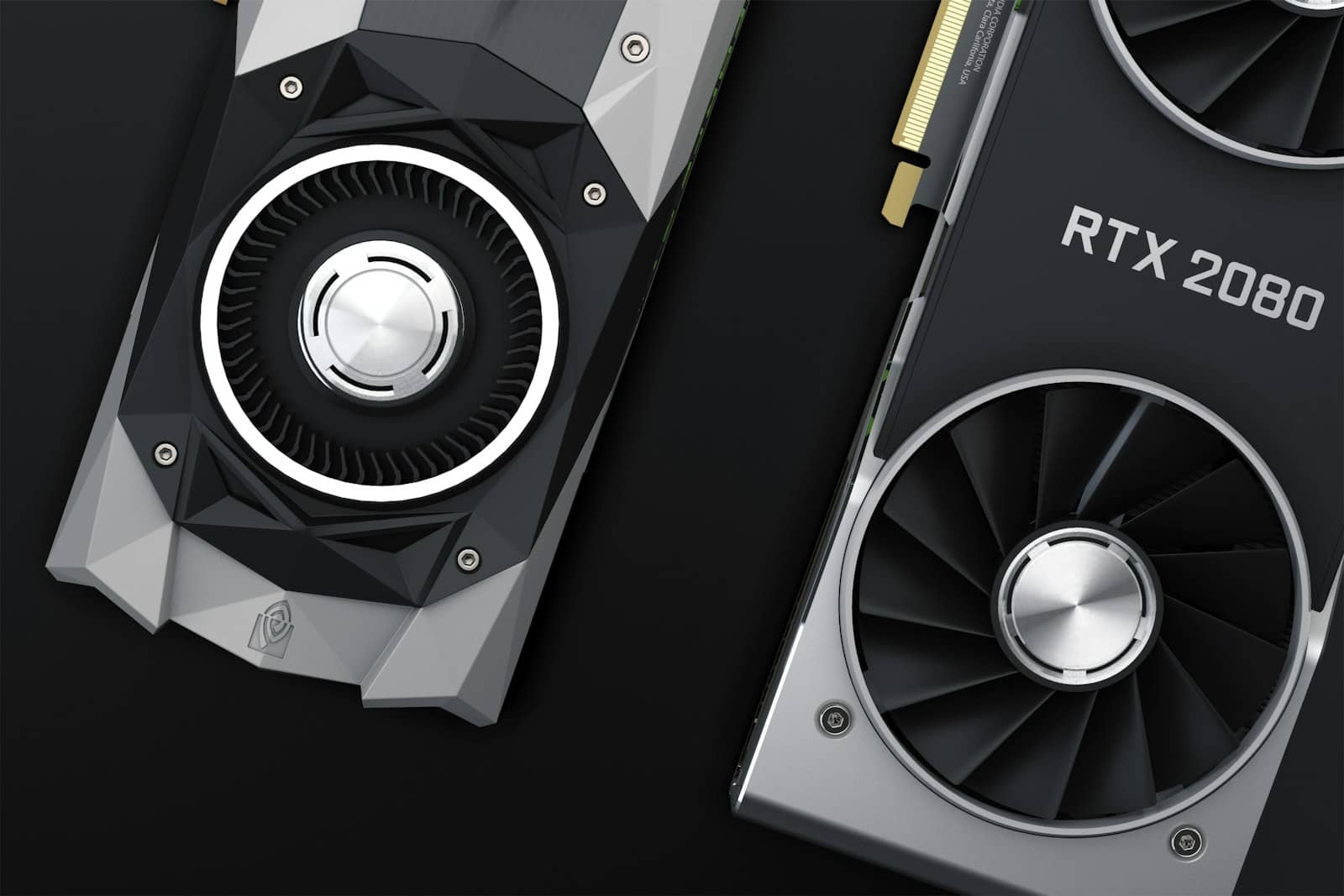
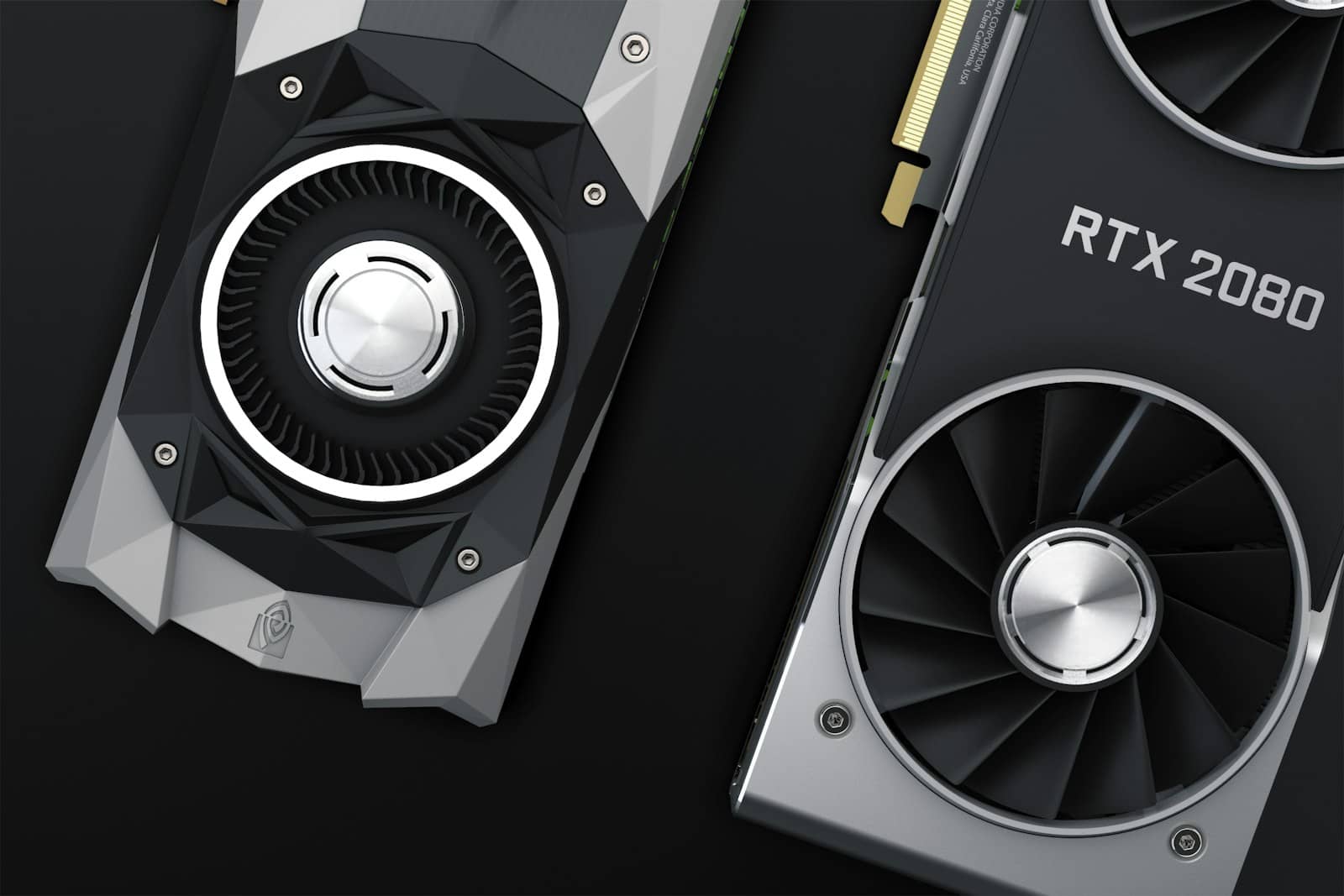
The Tesla V100 was built for server racks, not desktops — it has no video output of its own. · Unsplash
The catch nobody puts in the headline
No display output, ever — the V100 is compute-only, so a second, modern GPU has to be in the system just to see a desktop.
Driver support ends at Nvidia's legacy 535 branch. Newer CUDA toolkits and some inference frameworks have already dropped Volta.
82 decibels stock isn't “a bit loud” — that's hearing-protection territory in a closed room, and it takes real fan-curve tuning to live with.
No standard PCIe power connector on an SXM2 card — the adapter has to improvise 12V delivery, which isn't something to trust on a whim.
Zero warranty, zero support, and a real chance the listing is decommissioned server e-waste with unknown hours already on it.
How it actually performs
Once it was running, the numbers were solid rather than spectacular. Loaded with Qwen3.6-27B at Q5_K_M quantization — about a 19GB file, comfortably split across both cards' 32GB — the rig generated text at roughly 32 tokens per second, with prompt processing between 133 and 160 tokens per second, running llama.cpp on NixOS with Nvidia's legacy 535 driver and CUDA 12.2. The builder called the output “genuinely competitive with the latest cloud models,” putting it roughly level with Claude Sonnet 4.6 on Artificial Analysis's Agentic Index — a claim about the model, worth separating from the claim about the hardware underneath it. Power draw peaked around 150W, which is the one spec here that's unambiguously good: under half of what a single RTX 3090 pulls at full tilt.
Tesla V100 vs. the GPUs you'd actually consider instead
Tesla V100 SXM2 16GB
VRAM
16GB HBM2
Bandwidth
900 GB/s
Typical price
~$266 (GPU + adapter)
Plug-and-play?
No — needs adapter, no display out
RTX 3090 24GB (used)
VRAM
24GB GDDR6X
Bandwidth
936 GB/s
Typical price
~$700–$1,000
Plug-and-play?
Yes
RTX 5070 Ti 16GB (new)
VRAM
16GB GDDR7
Bandwidth
896 GB/s
Typical price
~$750–$900
Plug-and-play?
Yes
VRAM
Bandwidth
Typical price
Plug-and-play?
Tesla V100 SXM2 16GB
16GB HBM2
900 GB/s
~$266 (GPU + adapter)
No — needs adapter, no display out
RTX 3090 24GB (used)
24GB GDDR6X
936 GB/s
~$700–$1,000
Yes
RTX 5070 Ti 16GB (new)
16GB GDDR7
896 GB/s
~$750–$900
Yes
Line those cards up and the V100's case narrows fast. It beats a new RTX 5070 Ti on raw memory bandwidth and undercuts either alternative on price, but it's also the only one of the three that can't drive a monitor, needs a driver from three release branches back, and shipped with a fan that sounds like yard equipment. If VRAM headroom is genuinely the only thing between you and a bigger model, and a display GPU is already doing that job in your system, this is a real way to add 16GB for under $270 — see our breakdown of how much VRAM you actually need for what that unlocks. For almost everyone else, a used RTX 3090 or a 16GB RTX 5070 Ti gets you a supported, quiet, plug-in card for not that much more, and no legacy driver to troubleshoot at 11pm.
6/ 10
Verdict
Verdict
A clever, cheap way to add raw VRAM to a system that already has a working display GPU — not a card to build a first local-AI rig around. The math only wins if you value memory over convenience, noise and support.
Best for: Tinkerers with a spare PCIe slot and an existing GPU, not first-time local-AI builders
Tesla V100 for local AI — quick answers
Can a Tesla V100 output video on its own?
No. It's a compute-only data-center card with no display outputs — you need a separate GPU in the same system to drive a monitor.
Does a Tesla V100 need a special adapter to work in a normal PC?
The SXM2 variant does — it uses Nvidia's server mezzanine socket, not a PCIe card edge, so it needs a passive SXM2-to-PCIe adapter board to fit a standard motherboard slot. PCIe versions of the V100 exist and skip this step, usually for a higher price.
How loud is the Tesla V100's stock cooling?
Around 82 decibels at full speed in the build this piece is based on — loud enough that most people fan-tune it down for anything but short bursts.
Is a used RTX 3090 a better buy than a Tesla V100 for local AI?
For most people, yes. It costs more, but it has 8GB more VRAM, a standard PCIe interface, a display output, and current driver support — see the full comparison.
None of this is a product review — Nvidia never sold the V100 to be repurposed this way, and it shows. It's a five-year-old server part getting a second life because the used market is pricing it like scrap. That's honestly the more interesting story: the memory shortage reshaping GPU prices everywhere is pushing more people toward exactly this kind of scrappy secondhand math, and it ties straight back to the bigger question of whether local AI is worth it at all. V100s, P100s and older Teslas are going to keep turning up in home rigs as GPU prices climb. I wouldn't build around one — but I'd keep watching what shows up next.