Splatoon Raiders is the first spin-off the series has ever had, it's PvE rather than turf war, and it lands July 23. I've got one real worry about it, and it isn't the thing most people are complaining about.
Splatoon has been one of Nintendo's most stubbornly consistent franchises: three mainline games, all built around chaotic four-on-four online turf war. On July 23 that changes. Splatoon Raiders is the first spin-off the series has ever had, it's a Switch 2 exclusive, and it isn't competitive multiplayer at all — it's a co-op, PvE treasure hunt. For a series this defined by one format, that's a genuine swerve.
What you actually do in it
You play a customizable Inkling or Octoling mechanic stranded on the Spirhalite Islands alongside Deep Cut — Shiver, Frye and Big Man, the idol trio from Splatoon 3. From a Hideout Ship you launch raids on Salmonid islands, hunt treasure, and loot gear you upgrade across three difficulty tiers. Nintendo's own store page is the cleanest source for the details, and the shape it describes is much closer to an extended Salmon Run than to anything in the mainline games.
Base yourself on the Hideout Ship, then launch raids out to Salmonid-held islands.
Hunt treasure and loot gear, then upgrade it — a progression loop the mainline games have never really had.
Three difficulty tiers, so it scales rather than assuming you're already good at Splatoon.
Co-op throughout, with Deep Cut along for the story rather than as menu decoration.
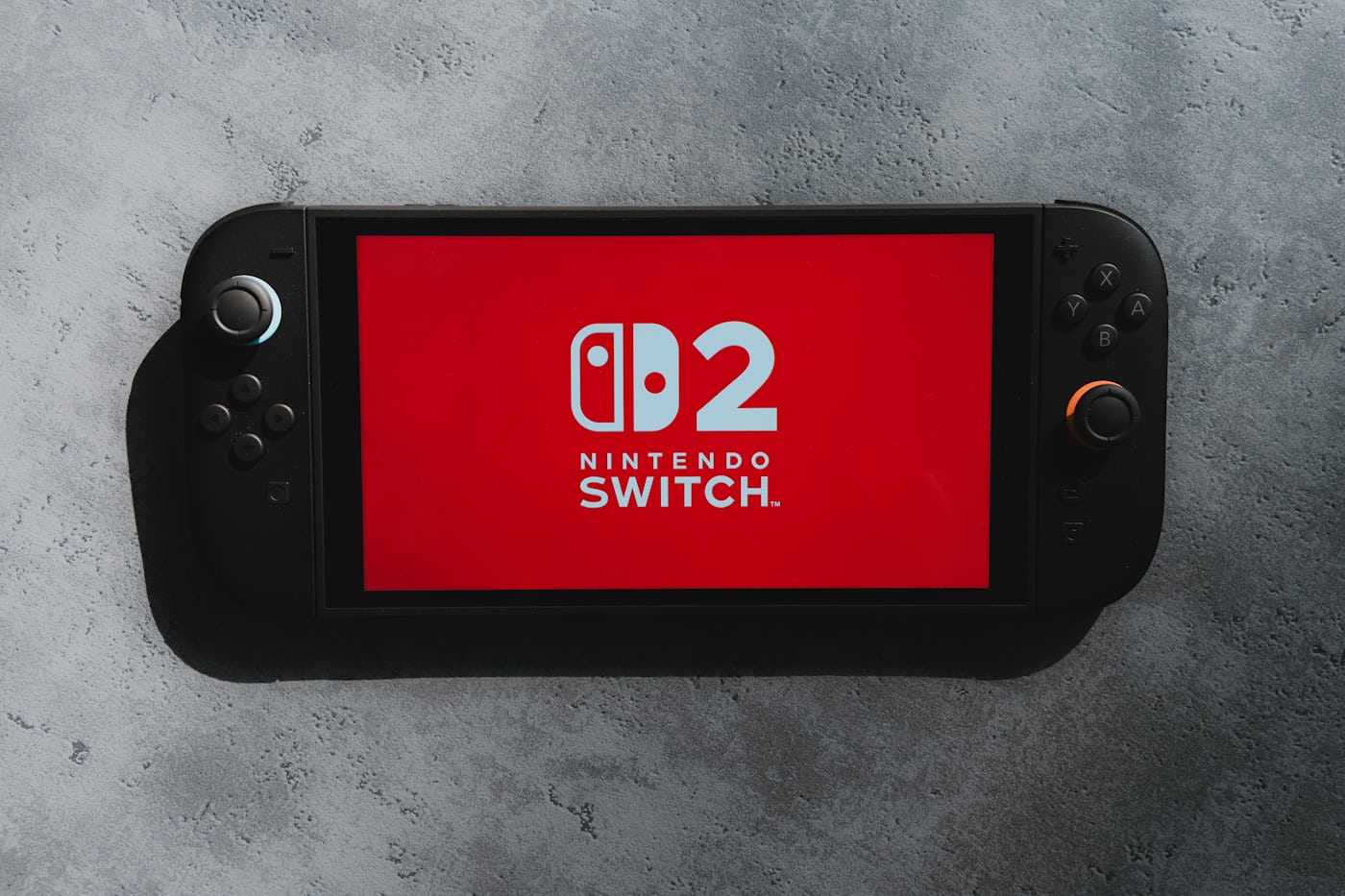
A Switch 2 exclusive, and the first Splatoon game to support HDR output. · Unsplash
The worry I actually have
Most of the scepticism I've seen is 'Splatoon without turf war isn't Splatoon.' I don't think that's the real risk. Salmon Run has been the quiet favourite mode for a lot of players for years, and the movement, the ink mechanics and the art direction all survive the format change perfectly well. Building a whole game on that foundation is a reasonable idea.
My read is that Raiders is a bridge title, and I mean that neutrally rather than dismissively. It keeps the Splatoon world in front of players while Splatoon 4 cooks, and it lets Nintendo test whether the series works in a format it has never tried, at a price that doesn't demand mainline-level commitment from anyone. That's a sensible experiment. Whether it's a good game is a separate question, and one nobody can answer until people have actually played more than the opening islands.
Common questions
Is this Splatoon 4?
No. It's the series' first spin-off — a co-op PvE game rather than a mainline competitive entry — and it's priced below a mainline release at $49.99 digital.
Is there turf war or competitive multiplayer?
No. This is PvE co-op focused on raiding Salmonid islands and hunting treasure. If online turf war is the only reason you play Splatoon, this isn't aimed at you.
Do I need to have played Splatoon 3?
It helps for the characters — Deep Cut are from Splatoon 3 — but the format is different enough that it doesn't assume deep series knowledge. The three difficulty tiers suggest it's built to accommodate newcomers.
Is it on the original Switch?
No, it's a Switch 2 exclusive, and it's the first Splatoon title to support HDR output.
Are the amiibo required?
No. Three Deep Cut amiibo launch alongside it and unlock in-game outfits, but they're cosmetic rather than necessary.