Most of what a small business site needs from SEO comes from free tools made by Google and Microsoft. What each free tool covers, which jobs are one-off rather than a subscription, the four situations where a paid tool earns its fee, and which one fits which budget, with prices checked on the vendors' pages.
This post contains affiliate links. If you buy through them, Aliteq may earn a commission — at no extra cost to you. Prices change; check the retailer for today’s price.
Share
Most small businesses don't need a paid SEO tool to start, and many never do. Google Search Console and Bing Webmaster Tools show which searches find you, which pages work, what's broken, and (in Bing's case) how often Copilot cites you, all free. A paid tool earns its fee in four situations: researching competitors, tracking many rankings, tracking AI answers over time, and auditing a large catalogue. If one of those is your problem, prices start around $129 a month for the main all-in-one tools. Checked on the vendors' own pages on 1 November 2026.
Why people are asking
The price of the big tools is the most common complaint in SEO forums. A January 2026 r/SEO post titled "Bye Semrush. After 8 years, cutting the cord" drew 219 votes; the poster said the data was inaccurate and the tool too expensive (the thread). One reply said that if the tools "were more affordable you wouldn't mind"; another had gone "vanilla: Google Search Console + Keyword Planner". A December 2025 thread vented about Ahrefs at $249 a month, with extras like Brand Radar costing more (the thread).
The accuracy complaint deserves a fair hearing. Third-party tools estimate other sites' traffic and keyword volumes from their own data, so the numbers won't match what Search Console shows for your own site. A reply in the same Semrush thread made the useful distinction: it still uses Semrush to compare markets and competitors, not for absolute numbers. That's a good rule for any of these tools: trust them for direction and comparison, and trust Search Console for your own site.
The free stack, and what each tool covers
Google Search Console
What it covers
Your queries, clicks, impressions, average position; indexing errors; AI Overviews and AI Mode impressions
Cost
Free
Bing Webmaster Tools
What it covers
Bing search data, plus AI Performance: citations in Copilot and Bing's AI answers
Cost
Free
Keyword Planner
What it covers
Search volume estimates and keyword ideas
Cost
Inside Google Ads; billing details required
PageSpeed Insights
What it covers
Speed from real Chrome users (28 days) plus a lab test
Cost
Free
Rich Results Test
What it covers
Whether your structured data qualifies for rich results
Cost
Free
What it covers
Cost
Google Search Console
Your queries, clicks, impressions, average position; indexing errors; AI Overviews and AI Mode impressions
Free
Bing Webmaster Tools
Bing search data, plus AI Performance: citations in Copilot and Bing's AI answers
Free
Keyword Planner
Search volume estimates and keyword ideas
Inside Google Ads; billing details required
PageSpeed Insights
Speed from real Chrome users (28 days) plus a lab test
Free
Rich Results Test
Whether your structured data qualifies for rich results
Free
Google Search Console
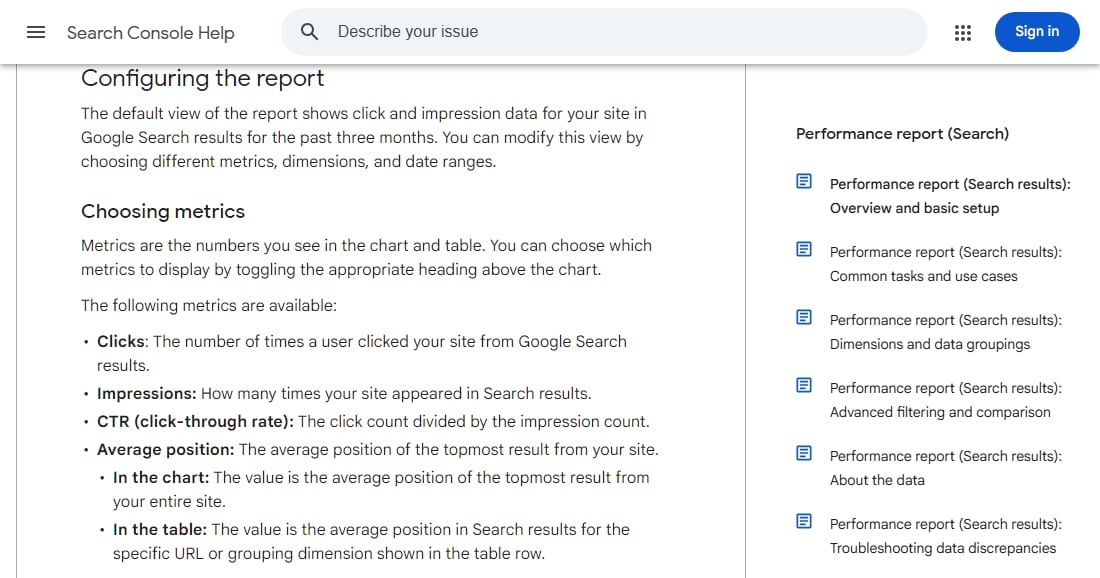
This is the one tool every site should have. Google's help page says the Performance report shows clicks ("the number of times a user clicked your site from Google Search results"), impressions, click-through rate and average position, broken down by query and page. It's real Google data about your own site, which no paid tool has.
Google's own Search Console Help page on the Performance report, captured 1 Nov 2026. · Google Search Console Help
It now also has a generative AI performance report. Google says it counts "how many times links to your site were shown to a user in a generative AI feature on Google Search", covering AI Overviews and AI Mode.
Bing Webmaster Tools, including AI Performance
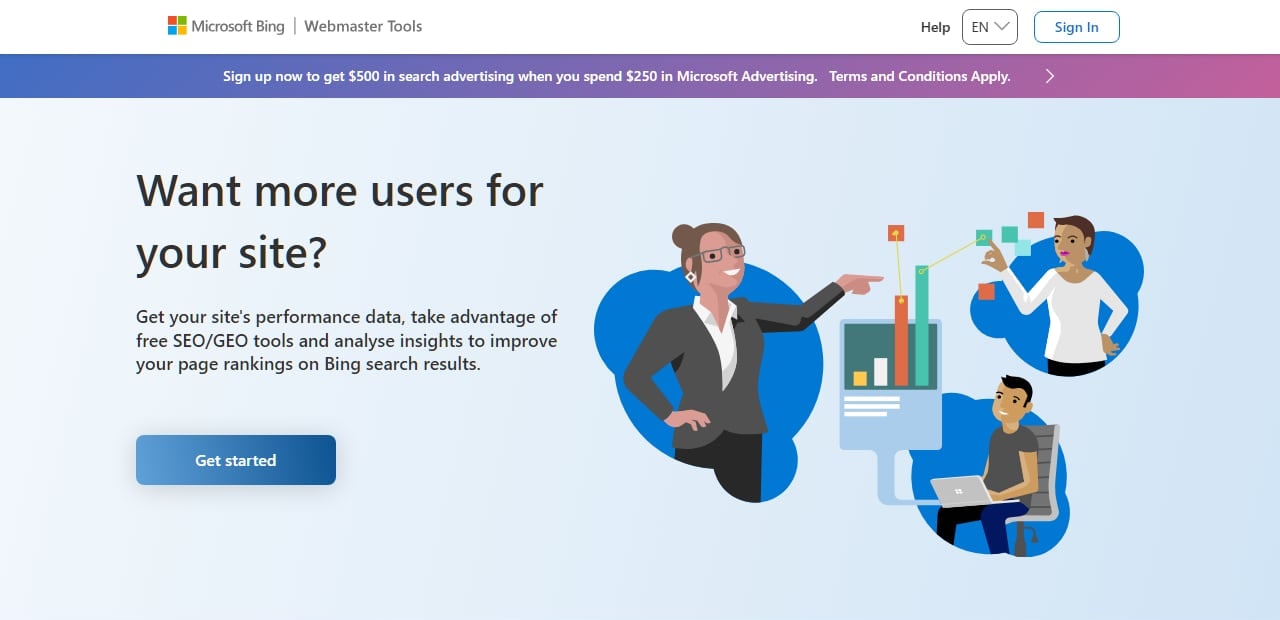
Bing matters more than its share of searches suggests, because Microsoft Copilot answers from it. Since February 2026, Bing Webmaster Tools has an AI Performance report. Microsoft's announcement says it covers "Microsoft Copilot, AI-generated summaries in Bing, and select partner integrations", and shows total citations, cited pages, and the "grounding queries" the AI used when it pulled your content. Microsoft adds that the data "represents a sample of overall citation activity".
Microsoft's own Bing Webmaster Tools home page, captured 1 Nov 2026. · Microsoft Bing
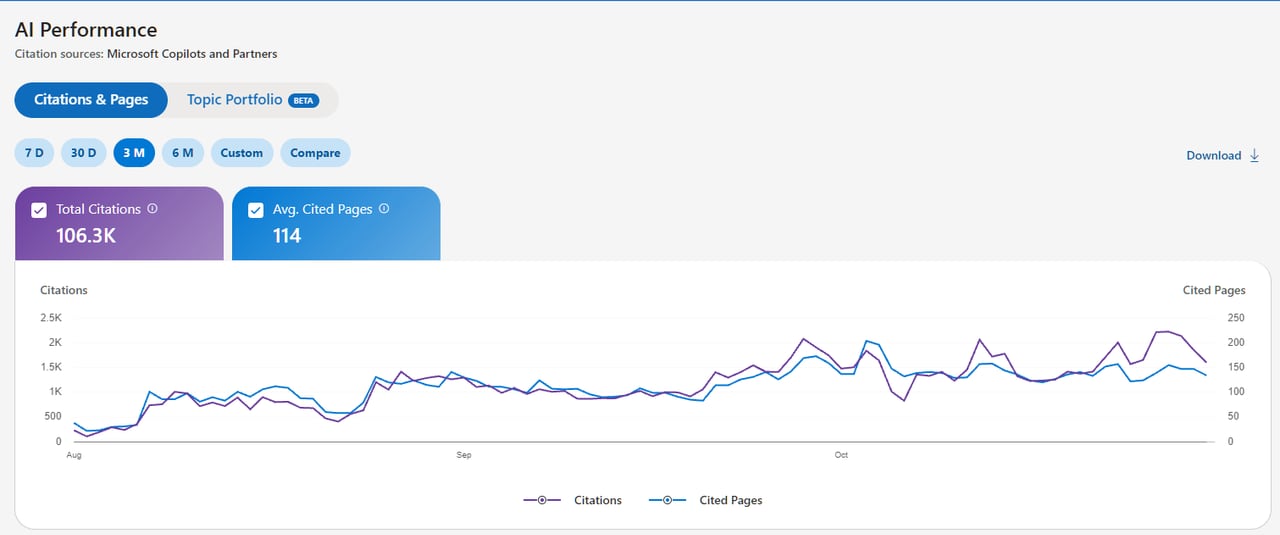
Our own site in Bing Webmaster Tools' AI Performance report, captured 1 Nov 2026: how often Copilot cited us over 3 months. · Bing Webmaster Tools
We use it on aliteq.com. It counted 104,800 Copilot citations of our pages between 31 July and 29 October 2026, while Copilot sent 3 visits in October. What that taught us is in what AI assistant citations actually sent us. No paid tool gave us that number; it came from the free report.
Keyword Planner
Google's keyword tool estimates monthly searches and suggests related keywords. It lives inside Google Ads, and Google's help page says "You must complete your account setup by entering your billing information" to use features like keyword ideas. It also says keywords with very low volumes "aren't discoverable or forecastable", which is where many local and niche searches sit.
PageSpeed Insights and the Rich Results Test
PageSpeed Insights tests any URL. Google's documentation says its real-user data is "powered by the Chrome User Experience Report (CrUX) dataset" over "the previous 28-day collection period", and its lab test uses Lighthouse. The Rich Results Test is, in Google's words, "The official Google tool for testing your structured data": it shows whether your product, review or FAQ markup can produce rich results.
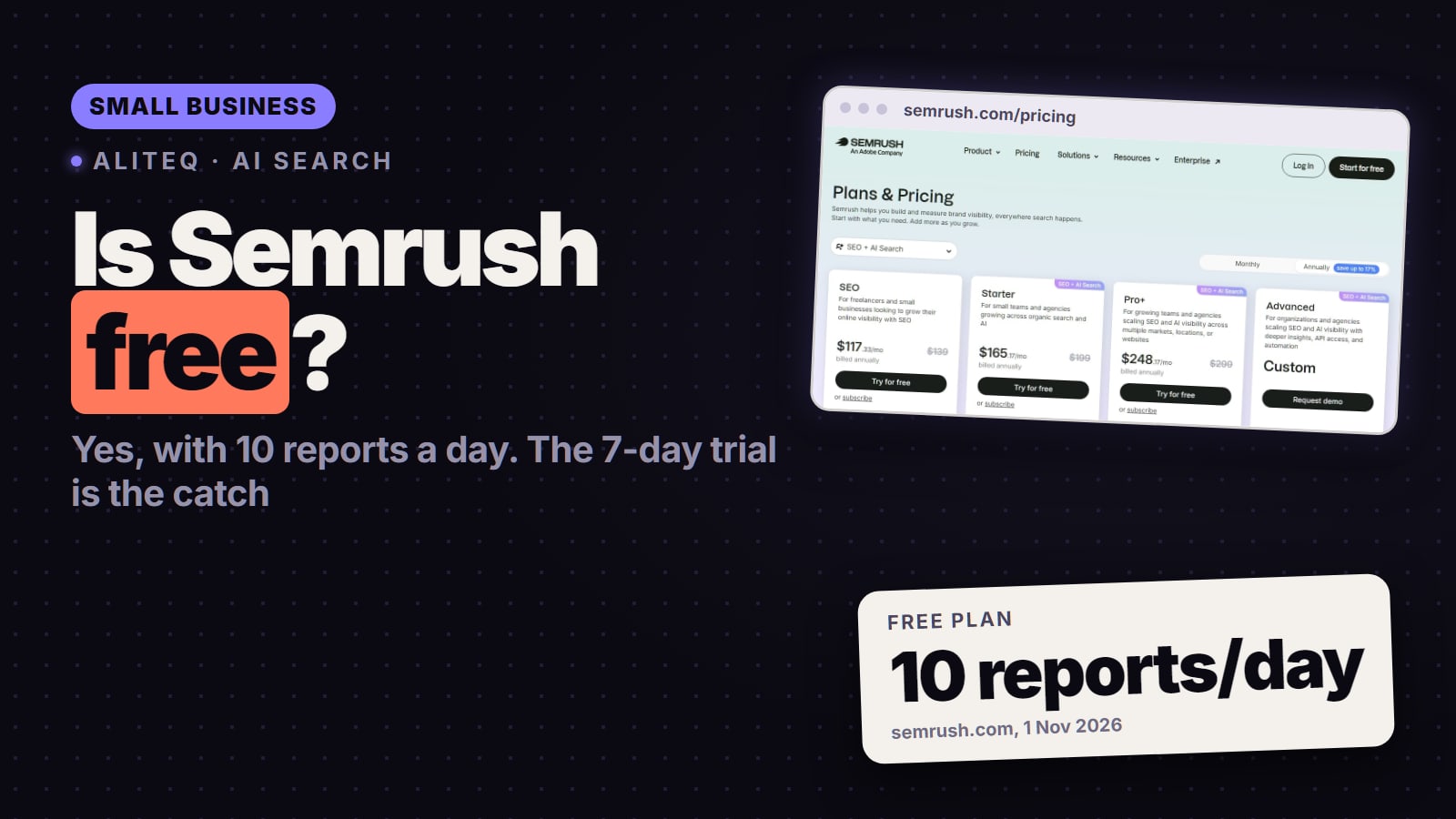
Two free extras worth knowing: Semrush has a free plan with 10 reports a day (details in Is Semrush free?), and Ahrefs lists an "Ahrefs Free" option on its pricing page, described as "Get Ahrefs data on your site and fix what matters".
One-time jobs vs. recurring jobs
A store owner asked in r/shopify on 21 October for "tools to automate SEO for an ecommerce website", and the most useful reply was that "half of what you listed is a one-time job, not a subscription" (the thread). It's worth sorting your list the same way before you pay for anything.
One-time (or once a year) jobs, free tools are enough:
Writing unique titles and meta descriptions for your main pages
Setting up redirects after a site move or URL change
Adding product, review or local-business structured data, then checking it in the Rich Results Test
Fixing speed problems PageSpeed Insights flags (image sizes, a heavy theme or app)
Submitting a sitemap to Google and Bing
Making sure robots.txt doesn't block Googlebot, Bingbot or AI crawlers
Recurring jobs:
Watching your clicks and queries (Search Console, monthly: free)
Fixing new indexing errors (Search Console emails you: free)
Writing and updating pages that answer customers' questions (your time, not a tool)
Tracking competitors and many rankings (this is where paid tools come in)
When a paid tool earns its fee
1. You need to see what competitors rank for
Search Console only shows your own site. If you want to know which searches bring a competitor traffic, which pages of theirs rank, and who links to them, you need a third-party database. This is the main thing the paid tools sell, and the reason even the r/SEO poster who cancelled Semrush saw others keeping it for market and competitor research.
2. You track a lot of keywords, or in several places
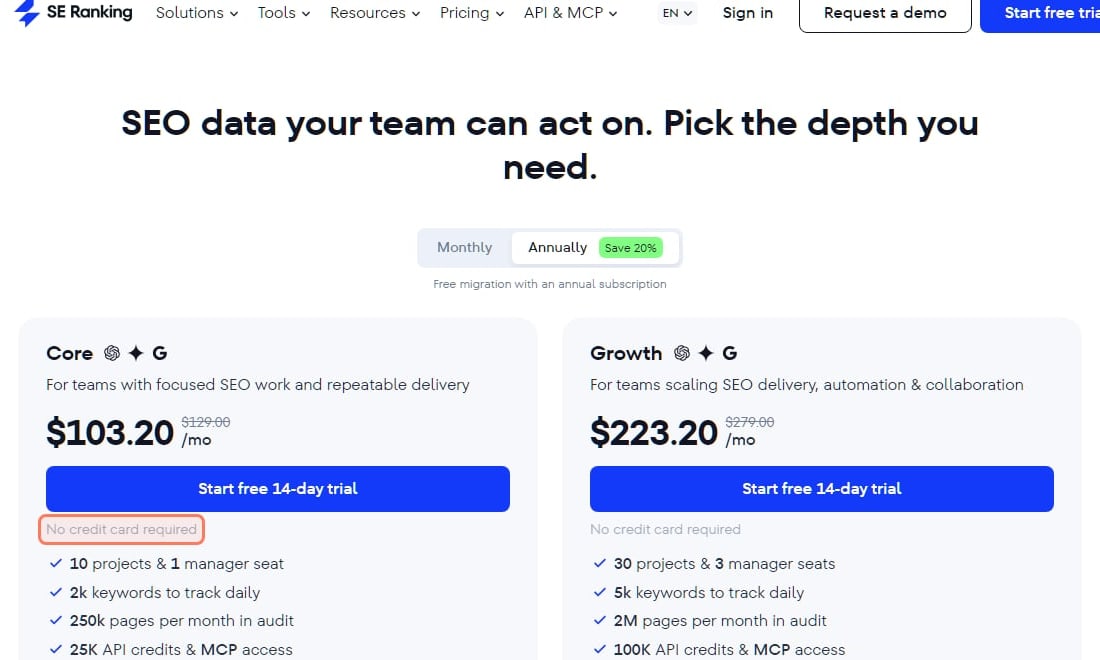
Search Console gives your average position, but it's an average across all searches, and you only see a query once you're getting impressions for it. If you need daily positions for hundreds of keywords, in specific cities or countries, a rank tracker does that. SE Ranking's Core plan, for example, tracks 2,000 keywords daily, per its pricing page.
3. You want AI answers tracked over time
The free reports cover Copilot (Bing) and Google's AI features, but not ChatGPT, and checking by hand only covers the questions you remember to ask. A July 2026 r/SEO thread, "Change my view: AIO isn't worth it", had a reply arguing that what matters is being named for questions like "best CRM for a 12-person business" (the thread). If your customers ask that kind of question, a tracker runs the same prompts across several assistants daily and shows changes.
4. Your site has thousands of pages
A ten-page service business can find its broken links by hand. A store with 5,000 products and filter pages can't. A site audit crawls everything and lists missing titles, duplicate pages, broken links and redirect chains. SE Ranking's Core plan includes audits of 250,000 pages a month, per its pricing page.
If none of these four describes you, the free stack plus a monthly hour of your own time is likely the better spend.
Which paid tool for which budget
Prices read on each vendor's pricing page on 1 November 2026, monthly billing unless stated.
SE Ranking's pricing page, captured 1 Nov 2026 (annual billing shown; monthly is $129 and $279). · SE Ranking
SE Ranking
Entry plan
Core $129/mo ($103.20/mo yearly); Growth $279
What stands out
AI-visibility tracking (25 prompts a day, 5 AI engines) on Core; 14-day trial, no card
Semrush
Entry plan
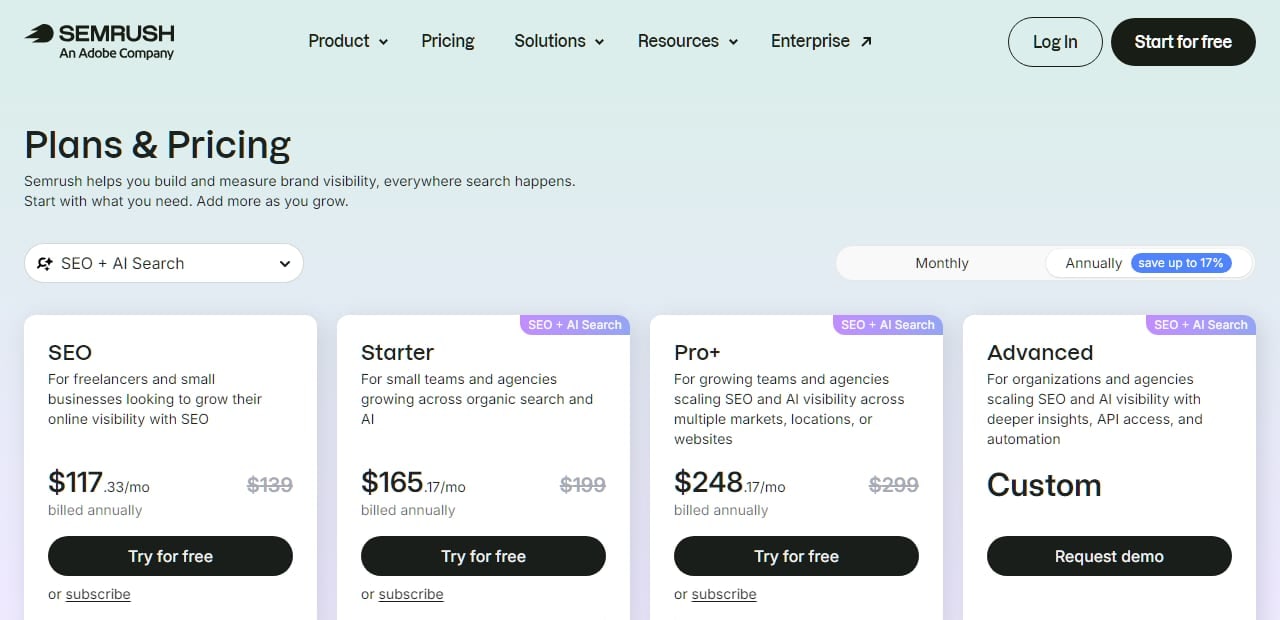
SEO $139/mo ($117.33/mo yearly); higher plans $199 and $299
What stands out
Largest marketing toolkit; free plan; 7-day trial; AI Visibility Toolkit is $99/mo
Ahrefs
Entry plan
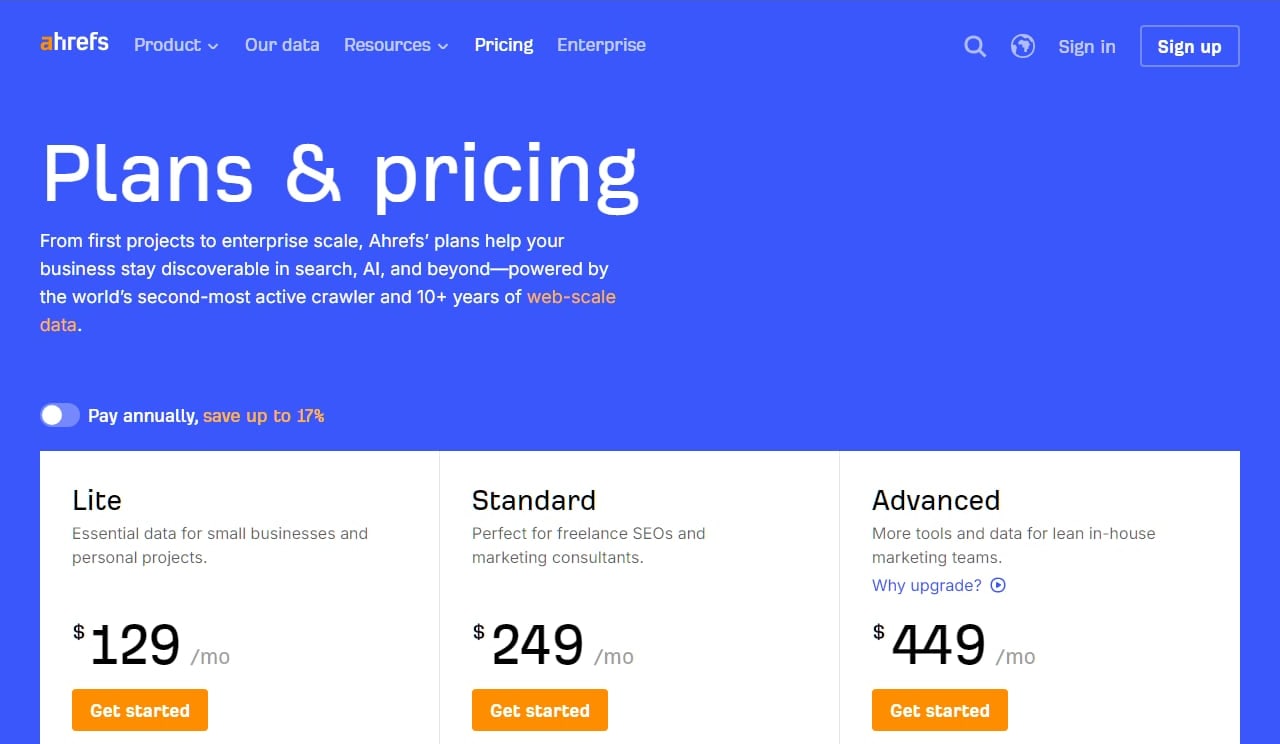
Starter $29/mo; Lite $129; Standard $249; Advanced $449
What stands out
Strong link data; Brand Radar AI "from $199/mo" extra
Entry plan
What stands out
SE Ranking
Core $129/mo ($103.20/mo yearly); Growth $279
AI-visibility tracking (25 prompts a day, 5 AI engines) on Core; 14-day trial, no card
Semrush
SEO $139/mo ($117.33/mo yearly); higher plans $199 and $299
Largest marketing toolkit; free plan; 7-day trial; AI Visibility Toolkit is $99/mo
Ahrefs
Starter $29/mo; Lite $129; Standard $249; Advanced $449
Strong link data; Brand Radar AI "from $199/mo" extra
Small budget, one site or one store: SE Ranking Core. It's the plan we'd start a small business on. It covers rank tracking, a site audit and AI-visibility tracking in one subscription, and its 14-day trial doesn't ask for a card, so you can test it against your own Search Console data before paying. A February 2026 r/SEO thread asked whether SE Ranking is "the most affordable and quality SEO tool"; one reply said they use it and it's pretty good, another that Semrush is great but very expensive (the thread). Plan details are in SE Ranking pricing.
Bigger budget, or competitor research is the main job: Semrush. Its SEO plan is $139 a month, and the AI Visibility Toolkit is a separate $99 a month that Semrush's knowledge base says "does not offer a free trial". Its free plan is a fair way to try the interface first. Owners in the r/SEO threads above are split on whether its numbers justify the price, so check its estimates for your own site against Search Console during the 7-day trial.
Semrush's own pricing page, captured 1 Nov 2026 (annual billing shown; monthly is $139, $199 and $299). · Semrush
Link research as the priority: Ahrefs. Ahrefs has no affiliate programme, so this is a plain link to its pricing page. Lite is $129 a month and Standard $249, and AI tracking through Brand Radar is an add-on "from $199/mo", which is the cost complaint in the December r/SEO thread.
Ahrefs' own pricing page, captured 1 Nov 2026. · Ahrefs
Whichever you pick, start on the trial or free plan, cancel if it isn't doing one of the four jobs above, and keep Search Console as your source of truth.
Common questions
Can I do SEO for my small business without paid tools?
Yes. Google Search Console, Bing Webmaster Tools, PageSpeed Insights and the Rich Results Test are free and cover your own site's queries, clicks, errors, speed and structured data. Paid tools mainly add competitor data, large-scale rank tracking and daily AI-answer tracking.
Is Google Search Console enough for SEO?
For your own site, it's the most accurate source there is, because it's Google's own data. It can't show competitors' rankings or traffic, and it only shows queries once you get impressions for them.
Why don't Semrush's numbers match Search Console?
Third-party tools estimate traffic and keyword volumes from their own data, while Search Console reports Google's actual clicks and impressions for your site. Use the tools for direction and comparison, and Search Console for your own numbers.
What is the cheapest paid SEO tool worth trying?
Among the all-in-one tools we checked on 1 Nov 2026, SE Ranking Core is $129 a month or $103.20 billed yearly, with a 14-day trial that doesn't ask for a card. Ahrefs has a $29 Starter plan, and Semrush has a free plan with 10 reports a day.
Is there a free way to see if Copilot or Google's AI cites my site?
Yes. Bing Webmaster Tools' AI Performance report shows citations in Copilot and Bing's AI answers, and Search Console's generative AI report shows impressions in AI Overviews and AI Mode. Neither covers ChatGPT, which you can check by asking it your customers' questions.