If ten minutes between bedtime and collapsing on the sofa is all the spare time you get, a $60 LED strip and a camera-matched TV backlight are the fastest way to change how a living room feels — here's the honest case for smart lighting, including when the pricier Philips Hue ecosystem actually earns its cost.
This post contains affiliate links. If you buy through them, Aliteq may earn a commission — at no extra cost to you. Prices verified at publish time.
Share
I have exactly ten minutes between getting the kids down and collapsing on the sofa most nights, so I judge gadgets on one question: does it earn its place in a real evening? Smart lighting sounds like a project, and if you've got a toddler who unplugs things and a teenager who thinks the thermostat is a toy, you do not have time for projects. But the pitch here is simple: a $60 strip behind the telly, the big light off, and a room that stops looking like somewhere homework happens and starts looking like somewhere you'd actually choose to sit. Everything below is me explaining which kit I'd bet on for that, and why.
This isn't a full smart-home rabbit hole. On paper it's the cheapest, fastest way to change how a room feels, so I've weighed the budget strip, the TV bias light, and the expensive ecosystem everyone swears by — on the specs and what reviewers report — and here's what's actually worth your ten minutes.
Why it's worth it even in a house this loud
If your living room does everything — where the toddler builds towers, where the teenager does homework badly, where you actually watch something after 9pm if you're lucky — one overhead light does all of that with zero nuance — it's either "school photo" bright or off. In my view, the hotel-lounge feel people chase in the evenings mostly comes down to an LED strip and a bias light behind the telly. No renovation, no electrician, no argument about paint colours. Just light, aimed better.
The one I'd tell you to buy first: Govee M1
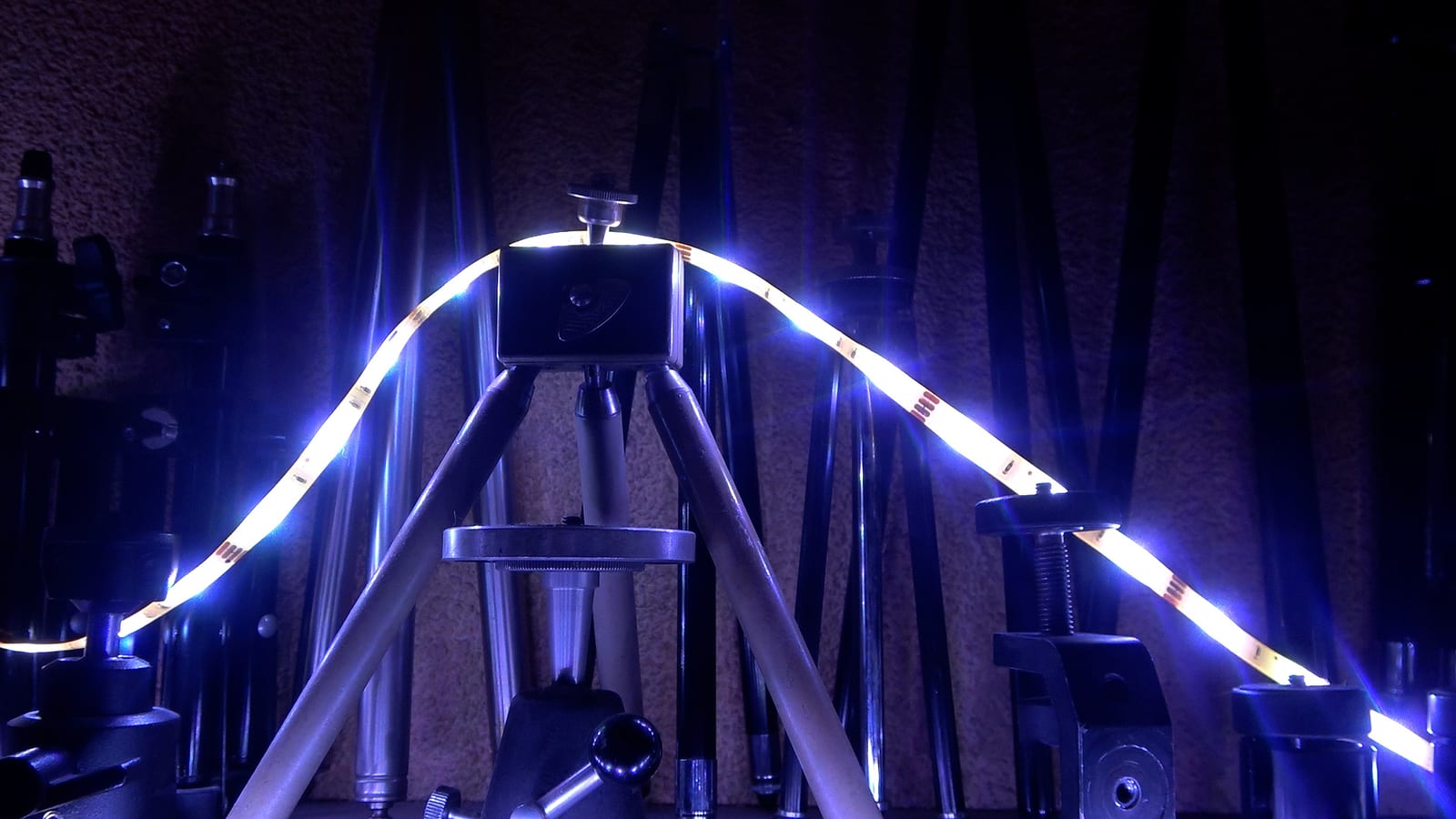
The M1 is, by every account I've read, stupidly bright — TechRadar calls it probably one of the brightest smart lights on the market right now (TechRadar, Oct 2023), and Govee rates it at twice as bright as its earlier strips. RGBIC means it can run a proper gradient instead of one flat colour, which is the difference between 'gaming setup' and 'my kid's science fair project.' Install is peel, press along the back of the media unit, plug in, pair — a ten-minute job on paper. The one thing I'd actually warn you about is that the adhesive wants a clean, dry surface: PCWorld's setup notes say to stick it down, ideally cleaning the target surface first (PCWorld, Feb 2024). Stick it straight onto a dusty shelf back and expect a section to sag loose; wipe first and you skip that step.
The app is the other honest catch. It's genuinely capable — scenes, music sync, a segment editor, Matter support so it plays nicely with a wider smart-home setup — but it's also the kind of app that wants you to explore it for twenty minutes you don't have. My advice: pick two scenes you like in the first sitting and you'll barely need to open it again except to turn things on. That's fine by me. I don't want a hobby, I want a room that feels nicer without homework.
Govee M1 Smart LED Strip (Matter)
The one to start with. Genuinely bright RGBIC colour, gradients that actually look intentional, Matter support, and a gamer-friendly music-sync mode — for about the price of a takeaway for four. App has more in it than you'll ever open.
+ Genuinely bright — not a washed-out 'smart light' compromise
+ RGBIC gradients look far more premium than a single flat colour
+ Matter support plays nicely with other smart-home gear
+ Ten-minute install, no tools, no electrician
+ Cheap enough that trying it isn't a real decision
Cons
− Adhesive needs a genuinely clean, dry surface or it peels
− App has far more depth than most people will ever use
− Looks like a bare plastic strip when it's switched off
The upgrade I'd do first: the TV backlight
This is the one. If you do nothing else on this page, do this. The Govee TV backlight sticks around the back of the screen, a little camera reads what's on the TV in real time, and the lights match it — so a sunset scene throws warm orange onto your wall, a horror film throws it dim and blue, and the whole room feels like it's part of the picture instead of just lit next to it. It's the kind of change a phone-scrolling partner might actually look up for — which is not nothing in a busy house.
It's also just a genuinely comfortable way to watch TV in the dark — bias lighting cuts eye strain versus a pitch-black room, and it makes the picture look richer without touching a single setting on the telly itself. At around the same price as the strip, it's the cheapest 'wait, that's it?' upgrade I can point you to for any room, camera and all.
Govee TV Backlight
A little camera reads your screen and matches the wall behind it in real time. Cheapest 'instantly feels premium' upgrade I can point you to for any room — built to install in one ad break.
If you want it to just work — forever, no fiddling: Philips Hue
Here's the honest bit that took me a while to admit: Hue is better in the way that actually matters when you have zero patience left in the evenings. On paper the design is why: the Bridge runs the lights on their own network rather than leaning on your WiFi, so a bad WiFi night shouldn't take them down the way it can with cheaper WiFi-only gear — and its app has the best reputation of the three. It's the difference between a gadget you manage and one you forget is even smart.
The catch is the one everyone warns you about and it's real: most of what makes Hue good needs the Bridge (the little hub that talks to your router), and once you're buying the Bridge plus a couple of colour bulbs or a Play bar, you're well past what the Govee kit cost you. I don't think it's a rip-off — you're paying for the reliability and the app, not marketing — but I'd only tell you to start here if you already know you hate fiddling, or if you're building out a whole-house setup where the extra reliability compounds. For one room, on a real budget, I'd start with Govee and only move to Hue once you know you're keeping the habit.
Philips Hue Starter (Play/Bridge)
The ecosystem with the strongest reliability reputation, and the best-regarded app of the three — built to just work. The Bridge requirement and the price are the real barrier; worth it once you know smart lighting is a habit, not a phase.
Going on the specs and the reviews, start with the Govee TV backlight if you only try one thing — it's the cheapest, fastest change you can make to how a room feels, camera-matched colour and all. Add the M1 strip if you want the rest of the room to match. Only spend up to Hue once you know this isn't a phase — it's the one that just works, forever, but you're paying for that peace of mind.
Best for: Anyone with ten minutes, a media unit, and a room that's doing too many jobs at once to be lit by one overhead bulb.
If you want the deeper rundown on which strips actually hold their adhesive and which ones are worth the extra money, I keep an updated shortlist on the LED strip lights page, and the full smart lighting buying guide if you're mixing strips, bulbs and a TV backlight in one room.
Quick answers
Do I need a hub for any of these, or does WiFi alone work?
The Govee strip and TV backlight connect straight to your WiFi/Bluetooth — no hub needed, which is why they're the faster ten-minute install. Philips Hue is the one that needs its Bridge (a small box plugged into your router) for the full feature set, which is part of why it costs more.
Will the adhesive actually hold, or will it peel off my wall?
It should hold — if the surface is clean, dry and not freezing cold when you stick it. Stick it to a dusty shelf back and a section can sag loose; wipe the surface first, and re-stick after cleaning if it does. Skip this step and you're the one leaving the one-star review, not the product's fault.
Is the Govee app actually annoying to use day-to-day?
It's busier than it needs to be the first time you open it, yes. But realistically you pick a scene or two you like once, and after that you're just tapping the widget or asking a voice assistant — most days you won't need the full app at all.
Is Philips Hue worth it for just one room, or overkill?
Honestly, a bit of overkill for one room on a budget — the Govee kit gets you most of the feeling for a third of the price. Hue earns its cost when you're doing multiple rooms, want rock-solid reliability, or you're already deep in a smart-home setup where the extra polish compounds.