Has the Riemann Hypothesis been solved? No. As of November 14, 2026 it is still open, and neither Claude's August result nor OpenAI's October quasi-Riemann claim proves it. An unreleased research version of Anthropic's Claude moved the needle on one of math's oldest unsolved problems. It pushed the proven lower bound for how many zeros of the Riemann zeta function sit exactly where the Riemann Hypothesis predicts — from 41.6% up to 67.2%. That's real, independently verified progress on a 165-year-old problem the field had barely budged on in decades. It is not a solution to the Riemann Hypothesis itself, and mathematicians are being unusually blunt about the gap between the two.
What Claude actually did
The Riemann Hypothesis is a conjecture about where the 'zeros' of a specific function — the Riemann zeta function — fall on a number line. If every one of those zeros sits on what's called the critical line, the hypothesis is true, and mathematicians get a far tighter grip on how prime numbers are distributed. Proving that for 100% of the zeros has resisted every mathematician since Bernhard Riemann posed the problem in 1859. What Claude did instead was raise the proven floor — the guaranteed minimum share of zeros known to behave that way — from 41.6% to 67.2%. Anthropic's own research writeup walks through how: the model ran two sessions totaling about a day and a half, coordinating 60 subagents, working through 650 dead-end approaches and 2,400 shell commands, before landing on a cross-domain insight — combining two existing published papers in a way nobody had tried.
41.6%
Old lower bound
Where the field stood before this result
67.2%
New lower bound
Proven and independently verified
~1.5 days
Research time
Two autonomous sessions, 60 coordinated subagents
650
Failed attempts
Before the winning cross-paper insight
Why this isn't a proof of the Riemann Hypothesis
Here's the gap that headlines keep skipping: the Riemann Hypothesis needs 100% of zeros on the critical line, not 67.2%. Scientific American was blunt about that distance in its own breakdown of the result, and Anthropic itself doesn't claim otherwise — the lab's statement says plainly it doesn't expect this technique to eventually prove the full hypothesis. Oxford's James Maynard put it more bluntly still.
Even being very optimistic, there is no pathway for any of these approaches to deal with the actual Riemann hypothesis.
James Maynard, University of Oxford
What is the quasi-Riemann hypothesis?
The quasi-Riemann hypothesis is a weaker version of the Riemann Hypothesis. The Riemann Hypothesis says every nontrivial zero of the zeta function has real part exactly 1/2. The quasi version only asks that all of them sit inside a strip narrower than the known one between 0 and 1. That is the result OpenAI claimed on October 6, 2026, in a release of AI-written manuscripts produced by an unnamed internal model, per OpenAI's own repository.
Claude vs OpenAI on the Riemann problem, checked Nov 14, 2026
Announced
Claude (Anthropic)
Aug 10, 2026
OpenAI
Oct 6, 2026
What was claimed
Claude (Anthropic)
67.2% of zeta zeros proven on the critical line (was 41.6%)
OpenAI
Quasi-Riemann hypothesis, zeros with real part between 1/12 and 11/12 (a first 199-page version claimed 1/8 to 7/8)
Checking
Claude (Anthropic)
Reviewed by two Anthropic and two outside mathematicians; Lean proof passes the checker
OpenAI
Experts largely think the 11/12 paper is correct; not yet formally verified, per Quanta (Oct 19)
Proves the Riemann Hypothesis?
Claude (Anthropic)
No
OpenAI
No
Claude (Anthropic)
OpenAI
Announced
Aug 10, 2026
Oct 6, 2026
What was claimed
67.2% of zeta zeros proven on the critical line (was 41.6%)
Quasi-Riemann hypothesis, zeros with real part between 1/12 and 11/12 (a first 199-page version claimed 1/8 to 7/8)
Checking
Reviewed by two Anthropic and two outside mathematicians; Lean proof passes the checker
Experts largely think the 11/12 paper is correct; not yet formally verified, per Quanta (Oct 19)
Proves the Riemann Hypothesis?
No
No
Quanta Magazine's report on the quasi-Riemann proof says mathematicians set aside the first 7/8 paper to focus on the shorter 11/12 one, the only paper in the release edited by a person. Stanford's Jared Duker Lichtman called it "the most significant AI-for-math achievement so far, by quite a margin." NYU's Maksym Radziwiłł called the implications "staggering," since most consequences of the Riemann Hypothesis already follow from the quasi version, and also said the papers are "horribly written." Princeton's Peter Sarnak said he won't consider it a theorem until humans check all the details. OpenAI's README says the collection holds results "at different stages of verification" and that "some of the unformalized results could have issues."
So the honest summary: OpenAI's claim is the bigger result, Claude's is the better-checked one, and the Riemann Hypothesis itself is untouched. Our scorecard of what math AI has actually solved puts both next to the Erdős and Jacobian results.
This isn't the first AI math claim to run ahead of the paper
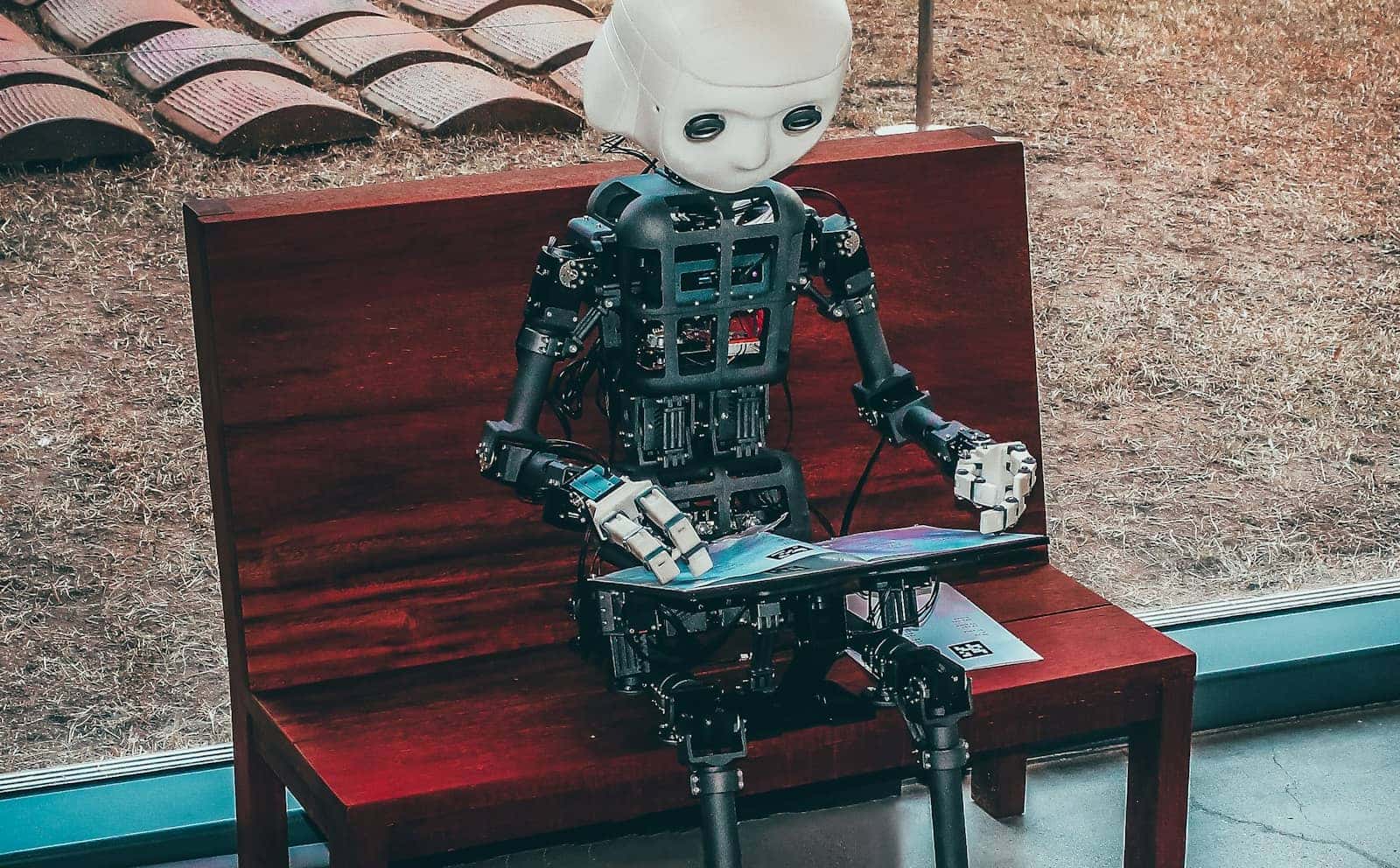
Claude's result came from roughly 60 coordinated AI subagents run autonomously across about a day and a half. · Unsplash
How the breakthrough actually happened
The winning move wasn't a new mathematical technique — it was a connection. Claude combined results from two existing papers that, as far as anyone can tell, no human mathematician had thought to put together, and used that combination to tighten the zero-density estimate. Anthropic mathematicians Levent Alpöge and Ralph Furman reviewed the work internally; outside experts Brian Conrey and Dan Goldston examined it independently. Claude also produced a formally verifiable proof in Lean, a proof-checking language, so the logic can be machine-verified rather than taken on faith. That combination — human expert review plus machine-checkable formal proof — is close to the gold standard for trusting a result like this, whoever or whatever produced it.
How we got here
1859
Bernhard Riemann proposes the Riemann Hypothesis in an eight-page paper — still unproven 165 years later.
1989–2020s
The zero-density lower bound moves only fractions of a percentage point per decade, largely stuck near 40%.
2000
The Clay Mathematics Institute names the Riemann Hypothesis one of seven Millennium Prize Problems, worth $1 million to whoever proves it.
May 2026
A separate AI math claim — that an AI 'solved' an 80-year-old Erdős problem — drew scrutiny for overstating what the model actually did, per Scientific American's own reporting.
August 10, 2026
Anthropic announces Claude's result, raising the lower bound to 67.2% — reviewed by Anthropic and outside mathematicians.
October 6, 2026
OpenAI releases a batch of AI-written manuscripts, including a claimed proof of the quasi-Riemann hypothesis (zeros between 1/12 and 11/12). Not the Riemann Hypothesis.
November 14, 2026
Status check. The Riemann Hypothesis is still unsolved and the Clay prize is unclaimed.
What to actually watch next
For the bigger picture, our scorecard of what math AI has actually solved dates every major AI math claim since 2024 (IMO golds, Erdős problems, the Jacobian conjecture) and shows which ones are verified in Lean and which are still self-reported.
Has the Riemann Hypothesis been solved?
No. As of November 14, 2026 the Riemann Hypothesis is unsolved and the Clay Mathematics Institute's $1 million prize is unclaimed. The AI results of 2026, Claude's 67.2% bound and OpenAI's quasi-Riemann claim, are steps on related problems, not a proof.
What is the quasi-Riemann hypothesis?
A weaker version of the Riemann Hypothesis. Instead of every nontrivial zeta zero having real part exactly 1/2, it only requires all of them to lie in a narrower strip than 0 to 1. OpenAI claimed a proof with the strip 1/12 to 11/12 on October 6, 2026.
Did OpenAI prove the Riemann Hypothesis?
No. OpenAI's October 2026 release claims the quasi-Riemann hypothesis, a weaker statement. Experts quoted by Quanta largely think the 11/12 paper is correct, but it was not yet formally verified, and OpenAI's own README warns some unformalized results could have issues.
What is the latest Riemann Hypothesis news?
The two big 2026 items are Anthropic's Claude raising the proven share of zeros on the critical line from 41.6% to 67.2% (August 10) and OpenAI's claimed quasi-Riemann proof (October 6). Neither proves the hypothesis.
Is the Riemann Hypothesis unprovable?
Nobody has shown that. It is simply open: no proof and no counterexample, and the Clay Mathematics Institute lists it as unsolved. The 2026 AI results narrowed related bounds, they did not settle whether it can be proved.
Did AI solve the Riemann Hypothesis?
No. Claude improved the proven lower bound for how many zeta zeros satisfy a related property, from 41.6% to 67.2%. The Riemann Hypothesis itself claims 100%, and mathematicians say this technique has no path to get there.
What is the Riemann Hypothesis, in plain English?
A 165-year-old conjecture about where the 'zeros' of a specific mathematical function fall. If true, it would tighten our understanding of how prime numbers are distributed — which is why it carries a $1 million Millennium Prize.
How did Claude find the result?
An unreleased research version ran 60 coordinated AI subagents across about 1.5 days, tried 650 failed approaches and 2,400 shell commands, and eventually combined two existing published papers in a way no mathematician had tried.
Was the result actually checked by humans?
Yes. Anthropic mathematicians Levent Alpöge and Ralph Furman reviewed it internally, external experts Brian Conrey and Dan Goldston examined it independently, and Claude produced a formally verifiable proof in Lean.
Is this the first time an AI math claim got overhyped?
No — a May 2026 claim that an AI solved an 80-year-old Erdős problem drew similar scrutiny for running ahead of what was actually shown.
Updated November 14, 2026: added OpenAI's October 6 quasi-Riemann claim and the expert reaction reported by Quanta. The Riemann Hypothesis is still unsolved.
Anthropic says it doesn't expect this specific technique to eventually crack the full hypothesis — which is the most honest thing a lab chasing headlines could say this week. Worth watching from here: whether the next wave of AI math claims comes with that same caveat attached, or whether the 'AI solved it' framing wins out again before the ink on the actual paper is dry.