Whether you train casually or six days a week — the Fitbit Inspire 3 for most people, the Amazfit Active 2 if you want it to feel nicer, and the honest truth about whether WHOOP's subscription is worth it.
This post contains affiliate links. If you buy through them, Aliteq may earn a commission — at no extra cost to you. Prices verified at publish time.
Share
If you train six days a week, the wearable question matters more than it looks. People ask me "which tracker should I buy" like there's one answer. There isn't. There's a cheap one that does the job, and there's the one that actually coaches you, and buying the wrong one for your actual life is how you end up with an expensive bracelet in a drawer.
Why "just get the cheap one" isn't always the right answer
Every gym has a guy who bought the $250 smartwatch and only ever checks the time on it. That's not a knock on the watch — it's a mismatch. If what you actually want is "did I hit my steps, how'd I sleep, ping me when my HR looks off," you're paying for features you'll never open. That's most people, most days. But if you're pushing volume week over week and want to know whether your body can take another hard session, a basic tracker doesn't have the sensors or the algorithm to tell you that. Different problem, different tool.
The one I'd recommend to almost everyone: Fitbit Inspire 3
This is the tracker I recommend when someone's just starting to pay attention to training and doesn't want to think about a wearable at all. It does steps, sleep stages, resting heart rate, SpO2, and 20-odd workout modes, and the battery genuinely goes over a week between charges — forget to charge it for a few days and it should just keep going, which is exactly what you want from something meant to be invisible on your wrist.
The screen is small, monochrome, not a smartwatch face, and that's part of why the battery holds up. What I'll tell you straight: wrist HR during a hard lifting set gets inconsistent, same as basically every optical sensor at this price. It's fine for a run and for resting HR overnight, and expect it to wobble mid-deadlift. And a chunk of the deeper stats sit behind a Fitbit Premium subscription, so budget for that if you want the full sleep-score breakdown, not just raw numbers.
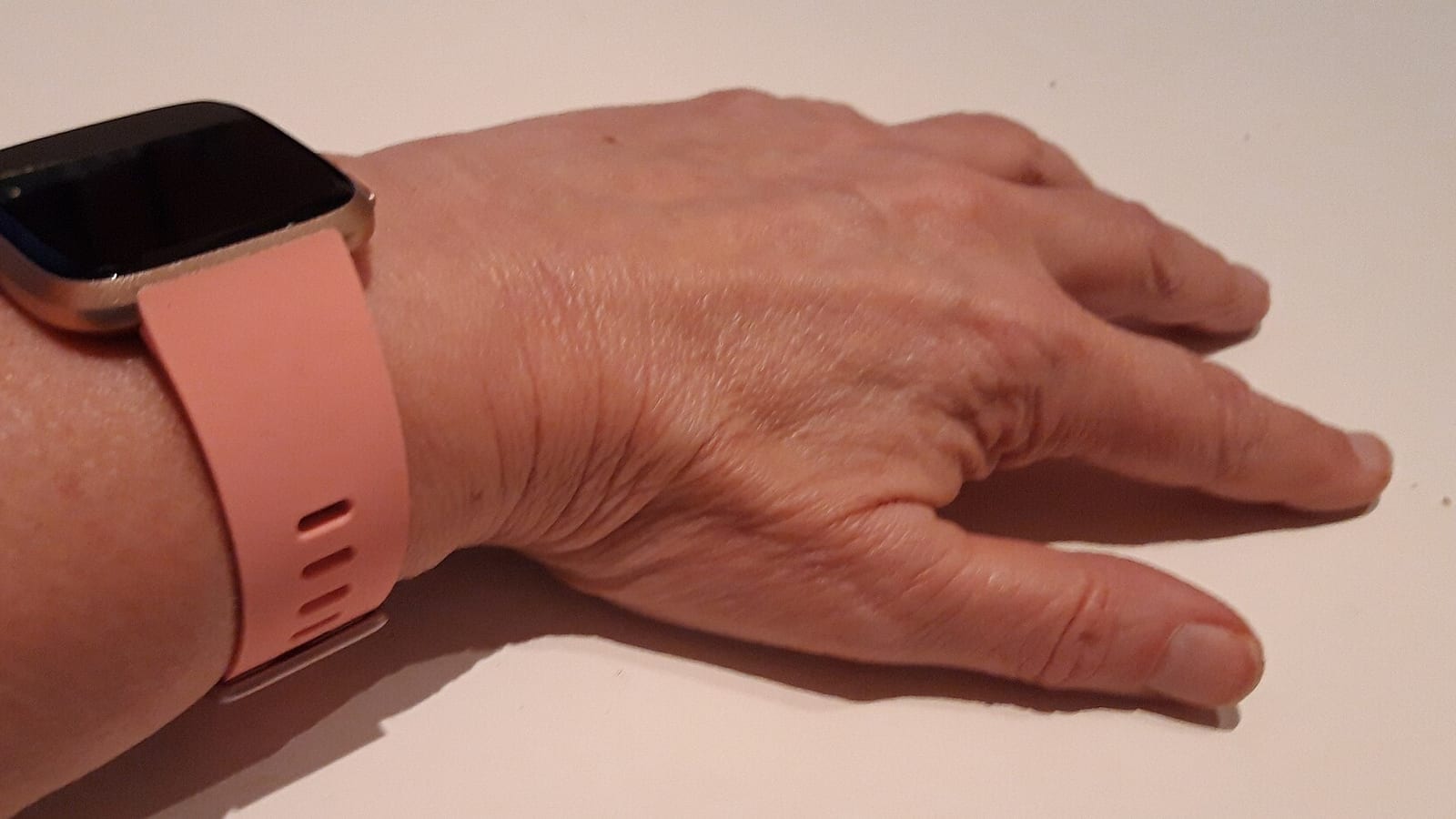
Fitbit Inspire 3
The one I'd hand a friend who just wants a tracker, not a project. Basics done cleanly, week-plus battery, small enough to forget. Deeper stats need Fitbit Premium.
The one that feels nicer than it should: Amazfit Active 2
On paper, this one punches well above its price. The screen looks like an actual smartwatch screen instead of a fitness-band afterthought, the build looks a step above its price, and the battery still gets you multiple days — up to about ten with normal use. There's a battery-manager mode in the Zepp app that shows exactly what to switch off (blood oxygen, stress tracking) to squeeze out more days, a nice touch most cheap trackers skip.
Where it shows its price is the software. The Zepp app works, and there's an AI-generated training-plan feature that's a fun bonus, but don't expect the polish or speed of Fitbit's app, let alone WHOOP's. If you want hardware that overdelivers and don't mind an app that's a little rougher around the edges, this is the one I'd get for someone who wants their tracker to look and feel like more than $100.
Amazfit Active 2
Punches above its price. Nicer screen and build than $99 has any right to buy, multi-day battery, a handy in-app battery manager. The Zepp app trails Fitbit's and WHOOP's in polish; the hardware doesn't feel budget.
This is the one that can actually change how you train, and also the one I'll talk you out of if you're not going to use it. There's no screen — everything lives in the app — and what you get instead is a strain score, recovery score, and sleep breakdown built to answer one question every morning: can my body take a hard day today, or should I back off. On a six-day week, that call matters more than a step count ever will.
The honest catch: it's a subscription, not a purchase. You pay for membership every year on top of the band, which for years was framed as "free hardware" — then WHOOP tried charging existing subscribers an upgrade fee for the 5.0. Real backlash followed before they walked it back for anyone with over a year left on their plan. Do the math against a screened tracker over the same stretch, because over two or three years WHOOP can end up the most expensive thing on this list, not the cheapest. Worth it if you'll actually open the app and adjust training off the recovery number. A waste if you're only glancing at it once a week.
WHOOP 5.0 band
No screen, all data — strain, recovery, sleep, built to answer 'can I go hard today.' It's the one built to actually change your training. The catch: it's a subscription forever, and the yearly cost adds up fast if you're not using it seriously.
+ Recovery and strain scores that actually tell you when to push or rest — nothing screened does this as well
+ No screen means nothing to check mid-set
+ Most detailed sleep tracking of the three
+ Small, screenless band designed to be worn to sleep
Cons
− A subscription forever — no one-time "just buy the hardware" option
− Yearly cost can pass a screened tracker within a couple of years
− No screen, no quick glance at time or step count
− The 2025 upgrade-fee backlash is a fair reason to be wary of future hardware transitions
8/ 10
Verdict
Jordan's verdict
Not sure which camp you're in? Start with the Fitbit Inspire 3 — cheap enough that getting it wrong costs you almost nothing, and it covers 90% of what most regular trainers need. Upgrade to the Amazfit Active 2 if you want the hardware to feel like more without paying smartwatch money. Only go WHOOP if you know you're the person who'll actually read the recovery score every morning and change your session because of it — otherwise you're paying a subscription to look at a number you ignore.
Best for: Anyone training seriously enough to care whether today should be a hard day or a light one — at whatever budget that comes with.
I keep an honestly-updated shortlist of everything I'd actually wear on the fitness trackers page, and the broader wearables buying guide if you're weighing a smartwatch or chest strap too. Same rule as always — nothing goes on there that doesn't earn its place on the spec sheet and in the reviews.
Quick answers
Is a cheap tracker's heart rate accurate enough for lifting?
For resting HR and steady cardio, yes. For a heavy lift or anything explosive, wrist-based optical sensors on any tracker — cheap or expensive — get noisy from the movement itself. If HR-during-lifting accuracy matters to you specifically, a chest strap always beats a wrist sensor, at any price.
Do I need Fitbit Premium to get value from the Inspire 3?
No — steps, basic sleep stages, resting HR and workout tracking all work without it. Premium unlocks the deeper sleep-score breakdown and guided content. Try it without a subscription first and only add it if you want the extra detail.
Is WHOOP actually worth paying for every year?
Only if you'll use the recovery data to actually change what you do that day. Check it once and move on with your plan anyway, and you're paying a real yearly cost for a number you're not acting on — get the Inspire 3 or Active 2 instead and save the difference.
Which one has the best battery life?
It's closer than it used to be. The Inspire 3 goes over a week, sometimes closer to two. The Amazfit Active 2 gets you roughly ten days with the always-on display off. The WHOOP 5.0 is a big jump over the old 4.0's roughly five days — Whoop promises two weeks of wear between charges (Tom's Guide, May 2025).