"Smart glasses" is two totally different products, and buying the wrong one is a $400 mistake. An honest, first-person breakdown of the Ray-Ban Meta (Gen 2), Xreal One Pro and Rokid Glasses — camera-and-AI vs. a wearable screen.
This post contains affiliate links. If you buy through them, Aliteq may earn a commission — at no extra cost to you. Prices verified at publish time.
Share
Every early adopter has a drawer. In the drawer are the corpses of every wearable that promised the future and then died in three weeks: a defunct fitness ring, an abandoned smartwatch or two, a pair of first-gen video glasses that made the wearer look like they were about to commit a crime. For years, smart glasses were a drawer category.
So when I tell you that in 2026 smart glasses finally crossed the line from "gadget you would feel embarrassed wearing" to "thing you might actually reach for on the way out the door" — that's based on what's actually shipping now, not the promise. But here's the catch nobody says out loud: there are two completely different products both calling themselves "smart glasses," and if you buy the wrong category you'll be furious. Let me save you the drawer.
First, the thing that will save you $400 of regret
"Smart glasses" is two products wearing a trench coat. Bucket one is camera-and-AI glasses: they look like normal sunglasses, they take photos and video, they talk to you, and they have no screen at all — the Ray-Ban Metas own this. Bucket two is display glasses: they beam a screen into your eyes. Some of those are just a big floating monitor you plug into stuff (Xreal); some try to put a tiny real screen into everyday frames (Rokid).
Picture someone ordering the Ray-Bans expecting to watch movies on a plane. There's no screen. Crushed. Picture someone else buying Xreals thinking they'll wear them to brunch and secretly film. They're a tethered monitor the size of a small hoagie of cable — not a discreet camera. Both glasses are great. Both would have bought the wrong bucket. Figure out your bucket first.
The pair I'd buy: Ray-Ban Meta (Gen 2)
These are the smart glasses most likely to graduate out of the novelty phase and into just… your glasses. That's the entire miracle. They look like Wayfarers because they are Wayfarers. Nobody at dinner clocks them as tech. And that's exactly why they're the ones that win — the future wearable isn't the one with the most features, it's the one you're not embarrassed to have on your face.
What they're actually for: grabbing hands-free video of your kid doing something you'd never get your phone out for in time — the Gen 2 shoots up to 3K now, up from 1080p (Tom's Guide, Oct 2025). Asking the AI dumb questions on a walk ("what's that building") and getting an answer in my ear without pulling anything out. Music through the open-ear speakers on a bike ride where you still want to hear traffic. Taking a call while my hands are full of groceries. It's a hundred tiny moments where the phone would've been friction and the glasses just aren't.
The Gen 2's big fix is battery — Meta roughly doubled it, and reviewers report getting through a real day (Meta claims up to eight hours; Tom's Guide went the whole day without worrying about the battery, and Engadget got five and a half hours of continuous music playback) instead of the Gen 1's anxiety-inducing four. The case tops them back up in your bag. This is the upgrade that turned them from a toy into a tool.
The honest part, because I promised: there is no display. Zero. If you want to see anything, these are not it. The camera won't beat your phone. And the privacy conversation is real — there's a capture light, but it's subtle, and Harvard students infamously showed you could wire glasses like these to face-recognition. Meta also trains on your captures by default; go dig in the settings. If you buy them, wear them like a camera, not a spy tool, and say when you're filming like a normal person. If that whole thing makes you uneasy, listen to that feeling.
Ray-Ban Meta (Gen 2)
The only smart glasses people actually keep wearing. Great 3K camera, an AI in your ear, open-ear audio, and a genuine day of battery now — inside frames nobody clocks as tech. No display, and that's the whole trick.
+ Look completely normal — the pair you're most likely to forget you're wearing
+ 3K video you'll actually get in the moment, hands-free
+ AI in your ear + open-ear audio that lets traffic through
+ Gen 2 battery finally lasts a real day
+ Case recharges them in your bag
Cons
− No display at all — none, zero, don't buy them for that
− Camera is good-for-glasses, not phone-beating
− Privacy optics are real; capture light is subtle and Meta trains on captures by default
The giant floating screen: Xreal One Pro
Completely different animal, and the one with the biggest wow factor on paper. You plug the Xreal One Pro into your phone, laptop, Steam Deck or a console with a USB-C cable, and a huge, sharp virtual screen just appears floating in front of you — like a personal cinema that folds into a glasses case. On a red-eye flight, in a cramped hotel room, on the couch when the TV's taken, that's exactly the job it's built for. The Pro is rated at 700 nits of perceived brightness (TechRadar, Jun 2025), which on paper should hold up in a lit room, and the field of view is wide enough on paper that games and movies should feel big, not like squinting through a mail slot.
This is the pick if what you actually want is a private monitor you can take anywhere — for flights, for a giant Steam Deck screen, for working on a laptop without hunching. It is a display device, full stop. There's no camera worth talking about, no standalone AI, no walking-around-town AR.
The honest catch, and it's a real one: the cable. The One Pro needs a physical USB-C tether to whatever's feeding it — there's no wireless streaming built in — so you're always leashed to a device. It's fine when you're sitting on a plane or a couch; it's annoying the second you want to move. And it does nothing on its own; it's a beautiful monitor with no computer inside. Know that going in and you'll love it. Expect standalone AR and you'll be mad.
Xreal One Pro
A huge, sharp virtual screen that folds into a glasses case — plug it into a phone, laptop, Steam Deck or console and get a personal cinema anywhere. Brighter than before and a wide field of view. It's a display, not standalone AR.
+ A genuinely huge, sharp floating screen — a private cinema in a case
+ Rated 700 nits perceived brightness, aimed at lit rooms, not just a dark plane
+ Wide field of view; games and movies feel big
+ Perfect for flights, hotels, and a giant Steam Deck / console screen
Cons
− Needs a USB-C cable — always tethered, no built-in wireless streaming
− It's a monitor with no brain: no camera, no standalone AI, no walking AR
− Priciest of the three, and it does one thing (that one thing very well)
The actual-screen-in-normal-glasses bet: Rokid Glasses
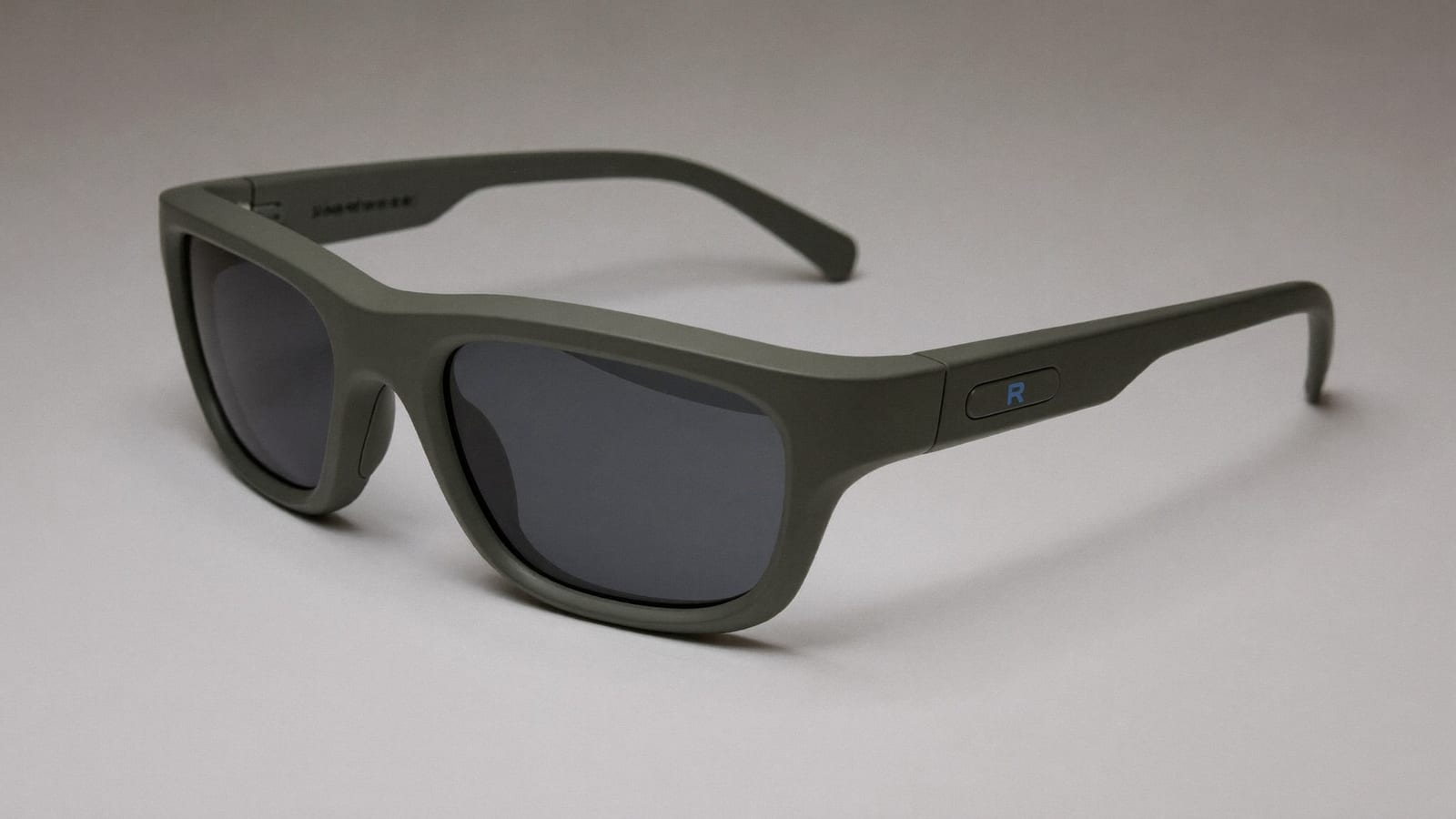
This is the one that scratches an early adopter's itch the hardest, because it's trying the genuinely hard thing: put a real display into glasses you could almost wear to work. At 49 grams per Rokid's spec page, they're in normal-glasses territory, and there's a green micro-LED screen floating text right in your view — live translation of the person in front of you, turn-by-turn directions, notifications, a teleprompter. Reading a live translation of a menu in your own field of view is the kind of thing that gets an involuntary "whoa" out loud. That's the future doing a little dance.
On paper they pull off "looks normal" better than most display glasses — from across a room most people shouldn't know. Up close, expect the screen housing to give it away, and the recording light is discreet enough that, like the Ray-Bans, you'll want to be a decent human about it. If the translation and navigation deliver as advertised, and you travel or sit in a lot of cross-language meetings, that alone can justify these.
The honest catch: battery. Rokid's "all-day" claim is defined as 6 hours of continuous Bluetooth music, not screen-on time, so expect less when you drive the display or record video. This is bleeding-edge hardware, and the spec sheet reads like it: impressive when it's on, back in the case sooner than you'd like. Buy them knowing you're paying the early-adopter tax.
Rokid Glasses
Discreet 49g glasses with a real green micro-LED screen — live translation, navigation and notifications floating in your view, in frames that look almost normal. The most 'future' of the three, with the roughest battery.
+ A real floating display in genuinely light, near-normal 49g glasses
+ Live translation and turn-by-turn navigation built in
+ The most 'living in the future' of the three by a mile
+ Discreet enough that most people won't clock the screen
Cons
− Battery is the weak point — heavy screen use drains it fast
− The all-day rating is for audio, not screen or video use
− Screen housing sits high; bleeding-edge, so expect rough edges
8/ 10
Verdict
Tyler's verdict
For almost everyone, buy the Ray-Ban Meta (Gen 2). They're the only pair that survives the novelty phase and becomes just your glasses — great camera, AI in your ear, a real day of battery, and nobody knows they're tech. Get the Xreal One Pro instead if what you actually want is a giant private screen for flights and gaming, and you're fine being tethered. Get the Rokid if you specifically want a display in everyday glasses and you'll forgive the battery. Different buckets, one right answer per person.
Best for: Ray-Bans for the camera-and-AI person who wants to look normal; Xreal for the traveler/gamer who wants a big screen anywhere; Rokid for the early adopter who wants a real screen in real glasses.
If you want the running shortlist of what's actually worth it, I keep an updated smart & AR glasses page with the current picks, and the wider AR & wearables buying guide if you're weighing headsets and the rest of the category too. No 40-item roundups — just the ones I'd tell a friend to buy.
Quick answers
Can the Ray-Ban Meta glasses show me a screen or notifications?
No. This is the single biggest misunderstanding. The Ray-Ban Meta (Gen 2) has no display of any kind — they're a camera, open-ear speakers and an AI you talk to, inside normal-looking frames. If you want to actually see something floating in your vision, you want the Rokid (for everyday use) or the Xreal (for a big movie/monitor screen).
Do the Xreal One Pro glasses work on their own, without a phone or PC?
No — they're a display, not a computer. The One Pro needs a USB-C cable to a phone, laptop, Steam Deck or console to show anything, and there's no built-in wireless streaming. Think of them as an incredible portable monitor you wear, not standalone AR glasses.
Are smart glasses a privacy problem for the people around me?
It's a fair concern. Camera glasses like the Ray-Bans and Rokid have a capture light, but it's subtle, and researchers have shown glasses like these can be wired to face-recognition. Meta also uses captures to train its AI by default — worth digging into the settings. My rule: wear them like a phone camera, not a hidden one, and tell people when you're filming. If that whole idea makes you uneasy, that instinct is valid.
Which one should I buy if I can only get one?
For most people, the Ray-Ban Meta (Gen 2) — they're the pair you'll actually keep wearing, and the ~$379 gets you the most everyday use. Only skip them if your ONE need is a big screen for flights and gaming (get the Xreal One Pro) or a real display in normal glasses for translation and navigation (get the Rokid). Match the buy to the one thing you want most.