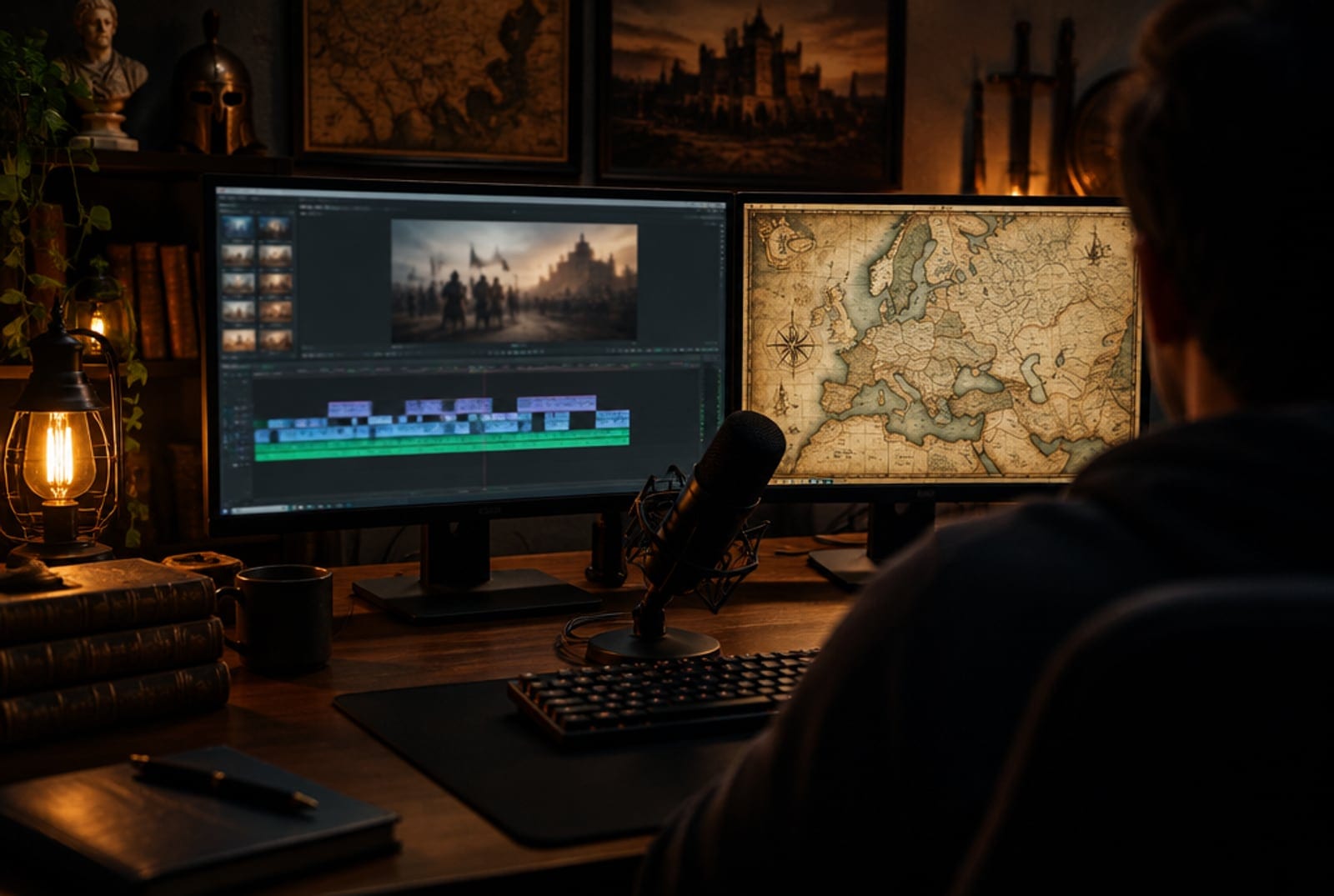
You want a faceless history channel. The script you can write. What stops you is twenty scenes of b-roll per video, a voice that does not sound like a robot, and a thumbnail that gets clicked. The weekly kit, built with AI, and the honest timeline before it earns.
This post contains affiliate links. If you buy through them, Aliteq may earn a commission — at no extra cost to you. Prices verified at publish time.
Share
You want to make history videos. You have evenings, a decent microphone, and no interest in being on camera. The script is the part you can do. What stops the first upload is everything after the script: twenty scenes of b-roll you cannot afford as stock footage, a narration that sounds human, and a thumbnail that competes with channels that have a designer.
This page is the weekly kit for one faceless video, built with AI, and the honest timeline that comes with it.
The weekly kit
One script, fact-checked. AI drafts fast and confidently invents dates. Every claim gets checked against a real source before it is read aloud. In history, one wrong date in the comments is the channel's credibility gone.
About twenty b-roll scenes. Period landscapes, maps, objects, atmosphere: "a misty Roman road at dawn, cinematic, no people," "an aged parchment map of the Mediterranean, candlelight." Stills first; add a slow push-in or pan with motion control where a scene needs movement.
One consistent narrator voice, chosen once and kept for every video, with the robotic tells fixed line by line.
One thumbnail system: one big subject, three to five words added in a real font, same style every week.
Higgsfield · Higgsfield image and motion tools
Sponsored
Higgsfield's image models produce period scenes, maps and objects from a style-locked prompt, and motion control turns a still into a slow cinematic move. Build one episode's b-roll on the free tier and cut it against your script.
A b-roll still is a fraction of a credit; motion clips cost more than stills, so animate only the scenes that need it. Twenty stills and a handful of moves per week sits inside a modest plan. Plans are on Higgsfield's pricing page; top-ups expire 90 days after purchase and subscription credits do not roll over.
Yes, with disclosure where the content is realistic synthetic media. Historical scenes are illustration, not a claim of real footage; say so in the description and you are on the right side of the policy.
Can I use real historical photos instead?
Where they are public domain or licensed, yes, and mixing real archival images with generated atmosphere is a strong look. Never present a generated scene as a real photograph.
How long should the first videos be?
Long enough to tell one story well, usually eight to fifteen minutes for history. Retention on the first few videos tells you more than any rule.