aliteq.

Nurse tees, teacher mugs: 20 original designs a week without the trademark strike

You sell print-on-demand shirts and mugs for nurses and teachers through Printful and Etsy. The niche works, the volume is the problem, and one franchise reference can end the shop. The weekly design routine and the lines that keep your account.

Aliteq TeamUpdated 3h ago3 min read
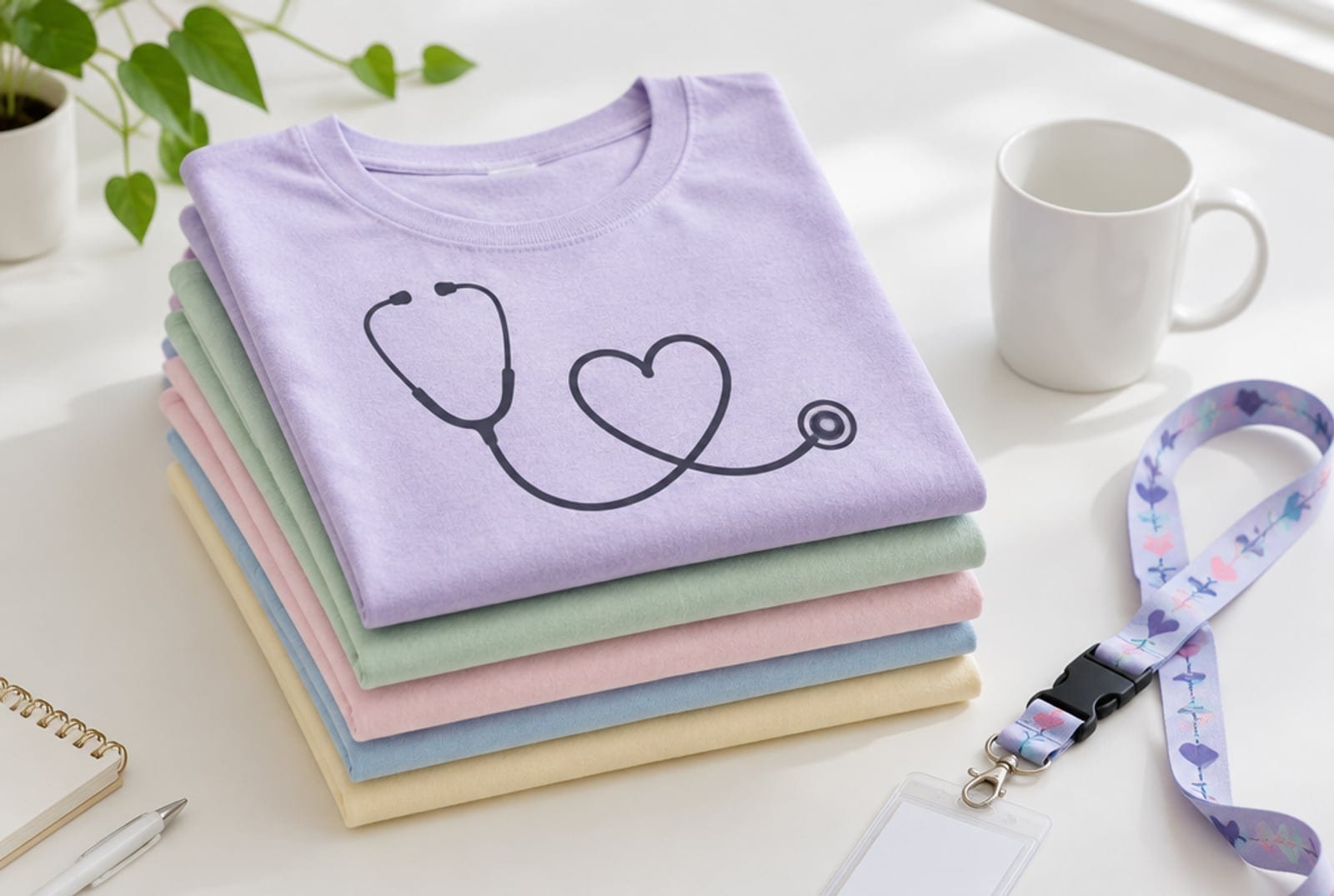
Stack of folded pastel t-shirts, the top one with a simple line-art stethoscope-and-heart design, mug and lanyard beside it

This post contains affiliate links. If you buy through them, Aliteq may earn a commission — at no extra cost to you. Prices verified at publish time.

Share

Your shop does nurse tees and teacher mugs. The audience has identity to wear, which is why the niche works. The problem is volume: the shops that win list twenty new designs a week, and you can draw two. The fear is the other problem: one design that looks a bit too much like a franchise character, and Printful, Etsy or Merch pulls the listing and strikes the account.

This page is the weekly routine for a print-on-demand seller who needs volume and cannot afford a strike.

What a POD design has to be

  • Original. Your concept, your composition, no borrowed characters or phrases
  • Print-ready: clean edges, a transparent background, big simple shapes
  • On-niche: an inside joke or an identity line a nurse would actually wear
  • Mocked up on the product, in a real-looking scene, within the hour

The weekly routine

  1. Write the concepts first, not the prompts. Twenty one-line ideas for one audience: "night shift survivor", "stethoscope heart", "coffee, charting, repeat". The concept is where the originality lives.
  2. Generate the artwork. Prompt the style and the subject, never a brand: "simple single-line stethoscope forming a heart, navy on transparent, print-ready, no text." Make three variants per concept, keep one.
  3. Add the words yourself in a free editor with a real font. Models still garble lettering, and lettering is half of a tee design.
  4. Generate the mockup scene for the listing: "folded pastel tees on a white table, soft daylight," then place your design on the top shirt.
  5. Upload and market. Uploading is not marketing: pin every design, post every design.

Higgsfield

Higgsfield · Higgsfield image generation

Sponsored

Higgsfield's image models produce clean print-ready artwork from a style-and-subject prompt and the product mockup scene to list it in. Run one week's worth through the free tier and see what twenty originals feel like.

Try a week of designs, free →


The line that ends shops

Rights on your own originals: Higgsfield's help center says it does not claim ownership of generations and does not restrict commercial use, so your designs can go on products. The copyright caveat by country is in can you sell AI images you made.

What it costs

A design variant is a fraction of a credit; sixty variants and twenty mockups a week fit inside the smallest plan. Plans are on Higgsfield's pricing page. Top-ups expire 90 days after purchase and subscription credits do not roll over, so match the plan to your real weekly output.

Go deeper

HiggsfieldHiggsfieldSponsored

Twenty concepts, sixty variants, one afternoon

Concepts from you, artwork and mockups from the model, words in a real font. Free tier for the first batch.

Start with the free tier →

Common questions

POD sellers ask

Can I ask the model for the shirt text directly?
You can, and it will misspell it. Add words in an editor with a licensed font. It is also how you keep typography consistent across the shop.
Is a "nurse" or "teacher" design itself a trademark problem?
Professions are not trademarks. Specific hospital logos, school mascots, branded equipment and franchise characters are. Keep it to the profession and your own concept.
How many designs before a shop gets traction?
There is no guaranteed number. The shops that make it treat design as weekly output and marketing as daily output; results vary and nothing here promises sales.

Found this useful? Share it

Share

Aliteq

Aliteq Team

Aliteq started in 2019 as a PC hardware shop and is now a US-based publication. We build the VRAM and cost calculators on this site, track live cloud-GPU prices, and write guides with AI-assisted drafting that we check against primary sources before publishing.

The Aliteq brief

The tech worth knowing — hardware, AI, gaming, deals. No spam, unsubscribe anytime.

Keep reading