Forget 'beats Tesla.' The electric Megane and Scenic have two genuinely forward-looking features worth understanding: bidirectional charging that turns the car into a battery, and native Google software.
"Beats Tesla" is a headline you can safely ignore — cars are too multi-dimensional for a single winner. But strip the rivalry framing away and there's a real, interesting tech story in Renault's electric Megane and Scenic: two features where Renault took a genuinely different (and arguably better) approach than Tesla historically did. One is about what your car can do with its battery beyond driving; the other is about the software running the whole thing. Both point at where EVs are heading. So let me skip the drag-race talk and explain the two features that actually matter.
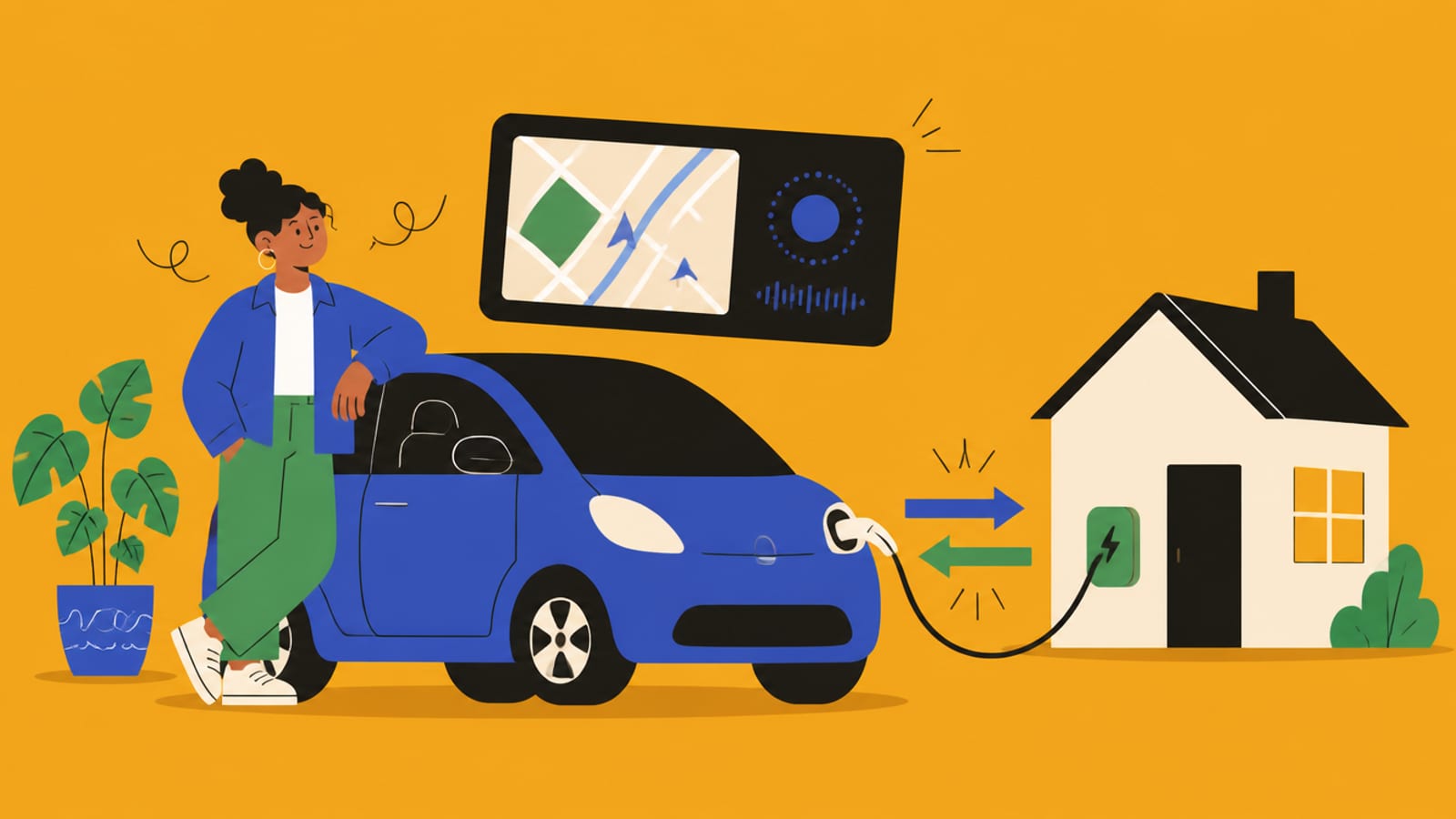
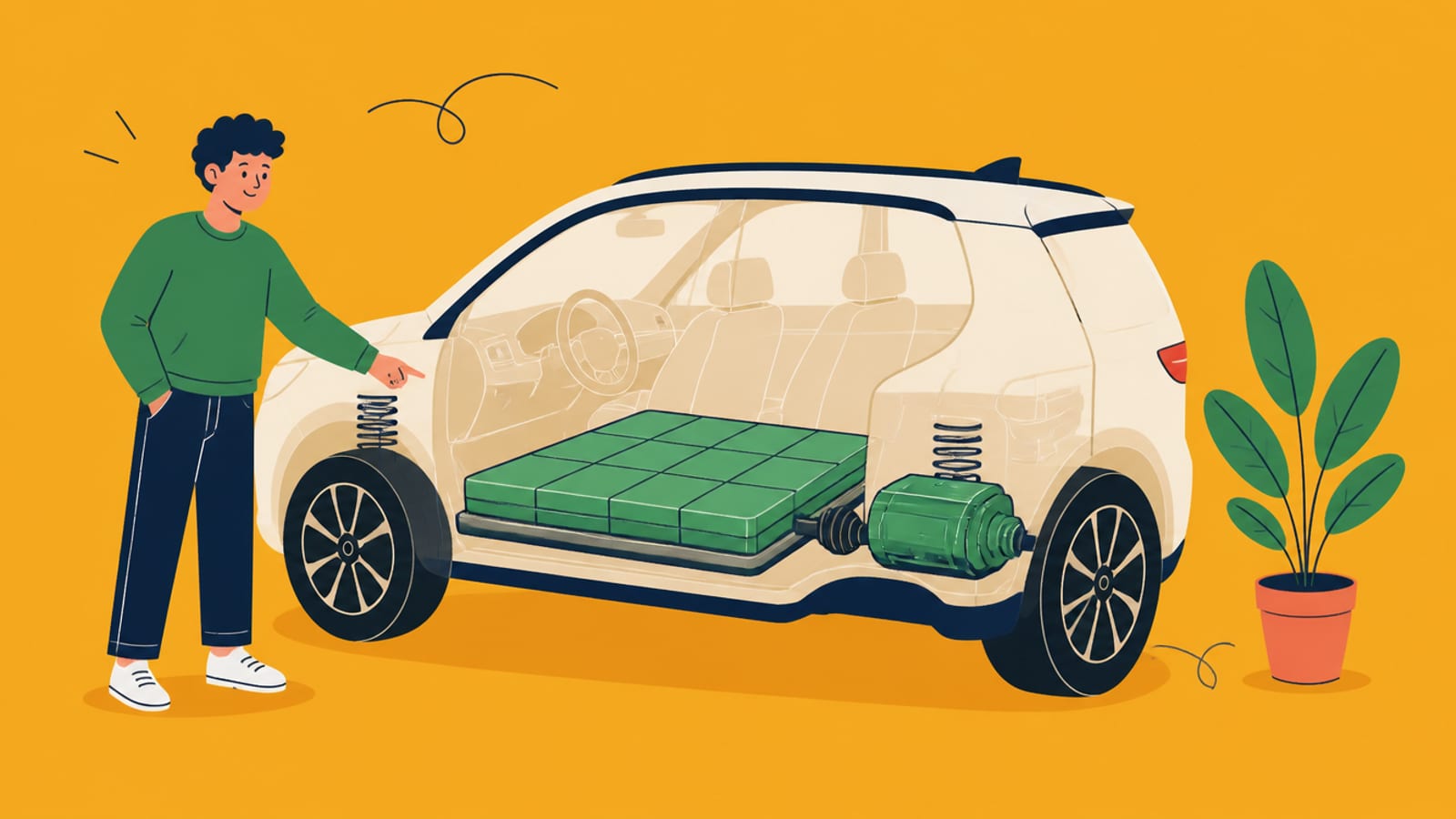
The two features that matter: bidirectional charging (energy flows both ways) and native Google software. Illustration by Aliteq. · Illustration by Aliteq / generated with Higgsfield
Feature 1: your car becomes a battery (V2G / V2L)
Most EVs only take energy in. Bidirectional charging lets these Renaults push energy back out, and that's a bigger deal than it sounds. Vehicle-to-Load (V2L) means you can plug appliances or tools straight into the car — handy for camping, work sites, or a power cut. Vehicle-to-Grid (V2G) is the ambitious one: the car can feed electricity back into the grid, so a fleet of parked EVs becomes a distributed energy store that can be charged when power is cheap/green and discharged when it's expensive/scarce. For the owner, done right, that can mean the car helps power your home and even earns or saves money by trading energy. It reframes the EV from 'a thing that drains electricity' to 'a mobile battery that happens to drive' — which is exactly the direction the whole energy system is moving.
Feature 2: software built with Google, not bolted on
The second feature is the brain. Renault's OpenR Link runs on Android Automotive OS — Google's actual in-car operating system — with Google Maps, Google Assistant and the Play Store built natively into the dashboard. That's different from projecting your phone (Android Auto/CarPlay): here the car itself is a Google device, so navigation, voice and apps are first-class and can update over the air. The significance is the ownership experience: the software feels modern and familiar, gets better over time, and treats the car like the connected computer it now is. Tesla proved software-defined cars matter; Renault's answer was to partner with Google rather than build it all alone — a pragmatic bet that's aged well.
Quick answers
What are the two standout features of the electric Renault Megane/Scenic?
Bidirectional charging (V2G/V2L) — the ability to send power back out to the grid or to appliances, turning the car into a mobile battery — and native Google software (OpenR Link on Android Automotive, with Maps, Assistant and Play built in rather than mirrored from a phone).
Do these Renaults really 'beat Tesla'?
That's headline hype — cars are too multi-dimensional for a single winner, and Tesla leads in other areas. What's true is that Renault took a notably forward-looking approach in these two specific areas (bidirectional charging and native Google integration) that's worth understanding on its own merits.
What is bidirectional charging good for?
Vehicle-to-Load lets you power appliances or tools directly from the car (camping, outages); Vehicle-to-Grid lets the car feed energy back to the grid, so it can charge when power is cheap/green and discharge when it's expensive — potentially helping power your home and saving money, where the infrastructure supports it.
Is the Google software just Android Auto?
No — it's deeper. OpenR Link is built on Android Automotive OS, meaning the car itself runs Google's in-car operating system with Maps, Assistant and Play built in, rather than mirroring your phone. It updates over the air and treats the car as a connected computer, with the privacy trade-offs that implies.