Skip the family-car verdict — the Scenic E-Tech is a great case study in how a modern EV is engineered. The dedicated platform, the efficiency-driven range, the heat pump, and what all of it teaches about judging any EV.
The Renault Scenic name spent two decades on a practical family minivan; its reinvention as an electric SUV is interesting less as 'a good family car' (plenty of reviews cover that) and more as a case study in how a modern EV is actually engineered. Under the badge sits a genuinely current electric platform, a big battery with a real efficiency story, and packaging tricks that only an EV allows. So rather than another test-drive verdict, let me pop the metaphorical bonnet and walk through the EV tech that makes the Scenic E-Tech tick — the stuff that generalises to how good electric cars are built now.
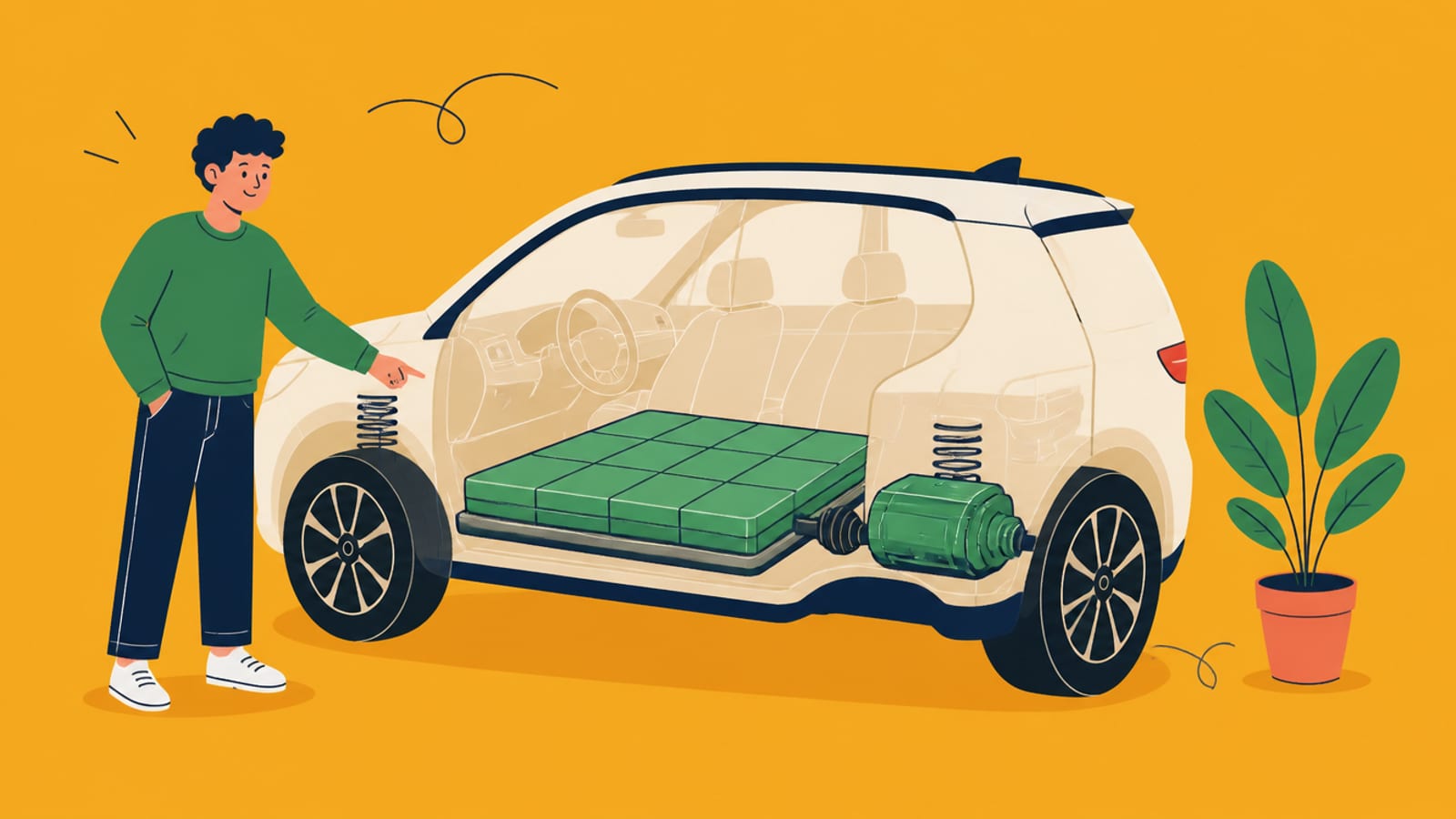
The Scenic E-Tech's real story is its EV engineering: a dedicated platform, a flat battery, an efficiency focus. Illustration by Aliteq. · Illustration by Aliteq / generated with Higgsfield
Why the platform matters most
The single most important fact about the Scenic E-Tech isn't a spec — it's that it's built on a dedicated EV platform (Renault's CMF-EV, shared with the Megane E-Tech and Nissan Ariya). Early electric cars were often petrol designs with a battery crammed in, which compromised space and efficiency. A purpose-built EV platform puts the battery flat in the floor and the motor(s) on the axle(s), which frees up a genuinely roomy, flat-floored cabin, lowers the centre of gravity (better handling), and lets engineers optimise for electric efficiency from the ground up. When people say a modern EV 'feels properly designed,' this is usually why. It's the difference between an EV and an EV conversion.
Range is an efficiency story, not just a battery story
It's tempting to reduce EV range to battery size, but the Scenic shows why efficiency matters just as much. Yes, the larger battery option is sizeable and pushes WLTP range up toward the 600 km mark — but a big battery is heavy and expensive, so the smarter engineering is squeezing more kilometres from each kilowatt-hour. That comes from aerodynamics, low rolling resistance, clever thermal management and — crucially — a heat pump. Cabin heating is one of the biggest range-killers in winter because resistive heaters draw a lot of power; a heat pump instead moves existing heat around (like a fridge in reverse), using far less energy to keep you warm. It's unglamorous, but a heat pump can meaningfully protect cold-weather range, and it's exactly the kind of detail that separates a well-engineered EV from a spec-sheet special.
Quick answers
What platform is the Renault Scenic E-Tech built on?
Renault's dedicated CMF-EV electric platform, shared with the Megane E-Tech and the Nissan Ariya. Being purpose-built for electric (rather than a converted petrol design) is why it has a flat floor, roomy cabin and good efficiency — the platform is the foundational bit of tech.
What's the range of the Scenic E-Tech?
It depends on the battery option; the larger battery pushes WLTP range toward roughly 600+ km. Just as important as the battery size is the efficiency engineering — aerodynamics, thermal management and a heat pump — that gets more distance from each kilowatt-hour.
Why does a heat pump matter in an EV?
Because cabin heating is a major range-killer in cold weather. A resistive heater burns a lot of battery to make heat; a heat pump moves existing heat around instead (like a reversed fridge), using far less energy. It can meaningfully protect winter range, which is why it's one of the most underrated EV features.
Is this a family-car review?
No — plenty of reviews cover the family-hauler angle. This is an EV-tech explainer using the Scenic to show how a modern electric car is actually engineered: the dedicated platform, the efficiency-driven range, and the packaging benefits of designing around a battery.