Lovable describes itself as a platform that builds and deploys web apps from plain English. Its own docs say where the app is hosted, what the built-in backend is, where your code sits and how you pay. A plain-language tour, from the docs.
If your only picture of Lovable is "type a sentence, get an app," a few ordinary questions go unanswered: where does the app actually run, who holds the database, can I take my code with me, and what am I paying for? Lovable's documentation answers all four. This page walks through them using only what those pages say, read on 3 October 2026.
What Lovable says it is
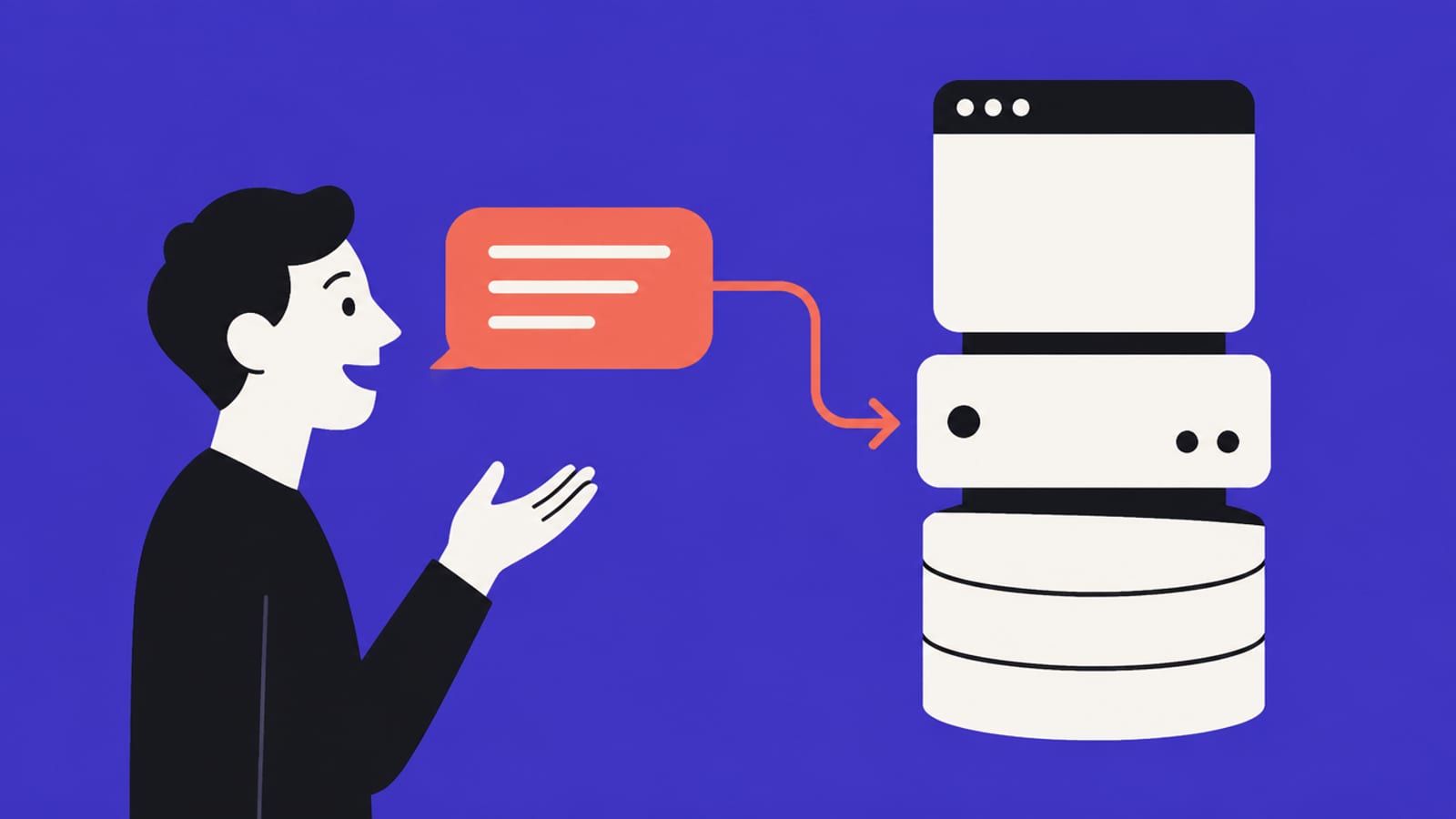
Its docs open with: "Lovable is a full-stack AI development platform for building, iterating on, and deploying web applications using natural language, with real code, security, and enterprise governance." The welcome page spells out the idea: "You describe what you want to build, and Lovable generates a working application that includes frontend, backend, database, authentication, and integrations, all backed by editable code."
That "editable code" matters. This isn't a locked diagram tool; the output is a real codebase, which is why the question of where it lives has a real answer.
Where your app and data live
Lovable's Cloud page says: "Lovable hosts your app and includes a built-in backend (Cloud) with a database, storage, authentication, realtime, and functions." Hosting "scales with traffic automatically," and you can adjust the database's instance size and storage in Advanced settings as the app grows.
On what the backend is, the docs are specific: "The built-in backend utilizes Supabase's open-source foundation." The docs call this the built-in backend (Cloud), "as opposed to an external backend you connect yourself, such as Supabase." So you have two shapes: the built-in one, or your own Supabase project. Lovable's Supabase page answers the obvious question directly: "Do I need Supabase? No. Lovable's built-in backend (Cloud) is enabled by default, so most projects never need a separate Supabase account." If either word is new, what Supabase is and what a backend actually does are the quick primers.
Where your code lives, and how to get a copy
"When you build with Lovable, your project code is stored and managed inside the Lovable platform." If you want your own copy, the docs say you can "export and sync your project to GitHub" to back up code, review changes, work locally and deploy outside Lovable, and the welcome page adds that a project's codebase "can be synced to GitHub, GitLab, or Bitbucket with Git sync." They're also relaxed about it: "You don't need GitHub to use Lovable. Many users build and launch entirely within Lovable."
The practical point is that portability is a setting you turn on, not something that happens by default. If owning a copy matters to you, set up the sync early rather than the day you need it.
What you pay for
The welcome page says you "can start for free, and plans are priced by credits, not by projects or seats." Projects live in shared workspaces, "where a group of people builds from one plan and a shared pool of credits." We're not quoting prices here because plans change; the useful idea is that the meter is credits, so the cost of a session depends on how much you ask the AI to do. Check the current plan page before you budget.
What stays yours to check
Lovable's Cloud page lists "Secure by default" among its reasons to use the built-in backend: "Enterprise-grade authentication, fine-grained access controls, and compliance best practices protect your app and data." That's Lovable describing its own product, and its Supabase page says "Lovable runs automated security checks against your database configuration, including Row Level Security (RLS) coverage, and flags issues it finds after schema changes." Neither changes the part no tool can do for you: deciding who's allowed to see what in your app. That's what Row Level Security is for, and the short list of things to confirm before you share the link is in the six things to fix in your Lovable app. If the app slows down as data grows, here's why.
Per its docs, a full-stack AI development platform for building, iterating on and deploying web applications using natural language. You describe what you want and it generates a working application with frontend, backend, database and authentication.
Does Lovable host my app?
Its Cloud docs say "Lovable hosts your app and includes a built-in backend," with hosting that scales with traffic automatically.
Can I get my code out of Lovable?
Your code is stored inside the platform, and the docs say you can export and sync it to GitHub, and per the welcome page to GitLab or Bitbucket as well. You don't need Git to use Lovable, but the sync is how you hold your own copy.
How does Lovable charge?
By credits, not by projects or seats, and you can start for free. Check the current plans page for the numbers.
This page has no affiliate links or sponsored placements. Every description of Lovable comes from its own documentation, read on 3 October 2026; we haven't built an app in it ourselves, and no quality or price comparison with other tools is made here.