A self-emptying Roborock is the robot vacuum I'd buy to stop resenting Sunday cleaning. Here's the honest take — dock noise, cords and all — plus the two dumb-cheap smart-home buys that turn it into a house that half-runs itself.
This post contains affiliate links. If you buy through them, Aliteq may earn a commission — at no extra cost to you. Prices verified at publish time.
Share
If Sunday afternoon in your house means dragging the vacuum out from under the stairs while someone cries about it, someone else stands on the cord, and the dog leaves the room in protest, you know the chore I mean. It's rarely the hardest job of the week — it just eats the one soft two-hour window the week gives you. That's the case for a self-emptying robot vacuum: not that it cleans better than you, but that it can hand that afternoon back.
Here's the honest, hands-full version of what I'd buy, what I'd skip, and the two dumb-cheap add-ons that turn one robot into a house that mostly runs itself while you're doing everything else.
The real win: you stop thinking about the floors
The trick isn't that a robot vacuums better than you — it doesn't, not really. It's that it vacuums often, at 10am on a Tuesday when the house is empty, when nobody in a hundred years would choose to vacuum. By the time everyone's home tripping over each other, the floors are already done. Crumbs from breakfast, the fine grey dog-and-people dust that collects along the skirting boards, the mystery grit by the back door — handled on a schedule, without a single Sunday going to it. That's the whole product. The floors stop being something you carry around in your head.
Roborock is the brand I'd pick, and for a robot with a motor and a battery that does a lap of the house daily, longevity is the number I care about — so check the warranty and that spare brushes, filters and bags are easy to buy before you commit. It maps your place on the first couple of runs, so you can tap 'do the kitchen' from your phone after dinner, or set no-go zones around the spot the dog's water bowl lives so it stops committing crimes there.
Let's talk about the dock, because that's what you're really buying
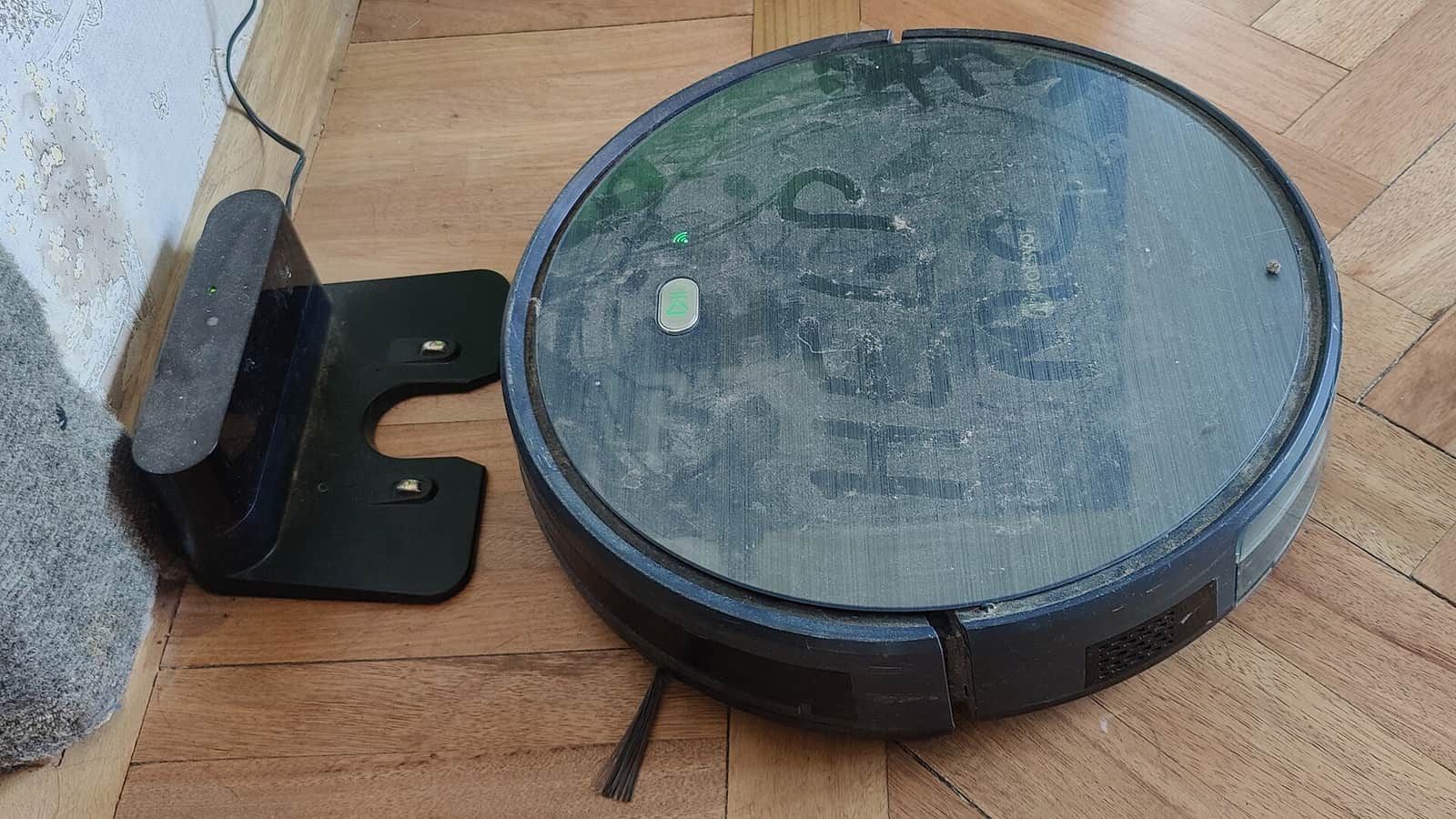
Any robot vacuum keeps floors tidy. The self-emptying part is what earns the upgrade and what costs the money. When the robot finishes, it reverses onto the dock and the dock sucks the little onboard bin up into a big bag inside the base. That bag is sized for weeks of debris, not days — how many depends on your house, and a shedding dog shortens it. So instead of emptying a tiny dusty bin every single run (which, be honest, you'd stop doing by week two), you deal with it roughly once a month. That's the difference between a gadget you actually keep using and one that ends up under the stairs next to the old vacuum.
The honest cost of that convenience: expect the empty-cycle to be loud. It's a short, powerful suction burst that pulls the robot's bin into the bag, and on a self-emptying dock it's the loudest part of the routine — the kind of noise that will make you jump if it fires mid-call. The fix is boring and total: use the app's do-not-disturb hours so it never empties at nap time or midnight, and put the dock somewhere with a door you can shut — a utility corner, a hallway, not three feet from where anyone sleeps. Do that once and you never think about it again.
Roborock Self-Empty Robot Vacuum
The star. Maps the house, cleans on a schedule while you're out, and auto-empties into the dock so you deal with a dust bag ~once a month instead of a vacuum every Sunday. You're paying for the dock — worth it if you'll actually use it daily. Goes on sale constantly, so buy on a dip.
+ Cleans on a schedule while the house is empty — floors are just done
+ Self-emptying dock means you touch a dust bag ~monthly, not a bin daily
+ Maps your home: 'clean the kitchen' from your phone, set no-go zones
+ Big-name brand, not a no-name gamble — longevity is the number that matters
+ Keeps up with day-to-day dust and crumbs by running often
Cons
− The dock is most of the price — a plain robot is far cheaper
− The self-empty burst is loud, if brief (schedule it)
− It WILL eat a stray charger cable — you have to keep floors tidy
− Heavy pet-hair days still need the odd brush clean-out by hand
Add-on #1: the $12 smart plug that automates literally anything
If the robot is the big swing, the smart plug is the tiny cheat code, and it's the one I recommend first to anyone who thinks 'smart home' sounds expensive and fiddly. It is a chunky little plug that sits between the wall and a normal, dumb appliance, and it lets you turn that appliance on and off from your phone, on a schedule, or by talking to it. That's it. That's the whole thing. And it quietly fixes a dozen daily annoyances.
Put one on the coffee maker so it's brewing before you're downstairs, one on the kids' bedroom lamp on a sunset schedule so nobody has to yell 'lights!' up the stairs, and one on the tangle of chargers behind the TV so you can kill it from bed instead of crawling around at 11pm. Get the Matter version so it plays nicely with whatever assistant you already have and you're not locked into one brand's app. They're often sold in multipacks for not much more than a single, and honestly you'll want more than one within a week — that's not upselling, that's just how it goes.
TP-Link Tapo / Kasa Smart Plug (Matter)
The cheapest, highest-joy smart-home buy there is. Schedule or voice-control any dumb appliance — coffee maker, lamps, the fan. Get the Matter version so it works with any assistant. Buy the multipack; you'll want more within a week.
Add-on #2: the cheap hub that ties it all together (buy it on sale)
Once you've got a robot and a plug or two, you want one thing you can just talk to — because in a busy house, hands are almost never free. The Echo is that thing, and it's the last piece I'd add, not the first. It's the voice hub that lets you say 'start the vacuum,' 'turn off the lamps,' 'set a 12-minute pasta timer' with a toddler on one hip and a colander in the other hand. That's the real magic of a smart home when you're time-poor: not screens, not apps — just saying the thing out loud and it happening.
The one piece of honest advice: do not pay full price. Echoes go on sale constantly — big sale days, holiday events — and the everyday list price is basically a suggestion. Grab the small round one, put it in the kitchen where the chaos peaks, and let it be the remote control for the whole quietly-automated house.
Amazon Echo (Alexa+)
The cheap voice hub that ties the robot and the plugs together — say it out loud and it happens, which is the only interface that works when your hands are full. Add it last, and NEVER pay list price; it's on sale constantly.
Buy the self-emptying Roborock — on a sale — if you'll run it most days; that's what turns it from a toy into the thing that gives you an afternoon back. Then add a couple of smart plugs and an Echo when they're discounted, and you've quietly got a house that half-runs itself for the price of one nice night out. Skip the fancier robot mopping tiers unless you love a gimmick; the boring, reliable version is the one you'll still be using in three years.
Best for: Busy households, pet owners, and anyone whose weekends keep getting eaten by chores they resent.
If you want the rest of what I'd actually put in a busy home, I keep the full smart-home picks list going — the stuff that earns its plug and the stuff that's just clutter with an app. And if it's the lamps that are driving you up the wall, the smart lighting guide is where I get specific about which bulbs are worth it and which are a headache. No 200-item lists; just what I think earns its place.
Quick answers
Is the self-emptying dock actually worth the extra money?
For a busy or pet household, yes — but only if you're honest that you'll run the robot most days. The value isn't the emptying itself, it's that it removes the one chore (emptying a tiny dusty bin every run) that makes people quietly abandon a plain robot. If you'd only run it once a week, a cheaper non-emptying model is the smarter buy and you'll empty the bin in ten seconds by hand.
Will a robot vacuum handle pet hair?
Day-to-day, yes — a robot running daily should keep on top of constant shedding better than a Sunday-only routine, simply because it runs more often. But expect heavy-shed seasons to mean popping the brush roll out and cutting tangled hair off it by hand every so often. It reduces the pet-hair problem a lot; it doesn't delete it. Thick or shag carpet is where they struggle most.
Isn't the dock really loud?
The self-empty burst is loud — think a short, proper roar, louder than the cleaning itself. But it only happens when the robot docks, and every good app has do-not-disturb hours. Set it to empty when you're out or awake, put the dock behind a door, and it's a non-issue. It's a placement-and-scheduling problem, not a dealbreaker.
Do I need to buy a whole smart-home system to start?
No — that's the trap. Start with one $12 smart plug on something annoying (a lamp, the coffee maker) and see if you like it. Add the robot when you're ready, and an Echo last, on a sale, once you've got a couple of things worth voice-controlling. Buying it all at once is how people end up overwhelmed; adding one piece at a time is how you end up with a house that just works.