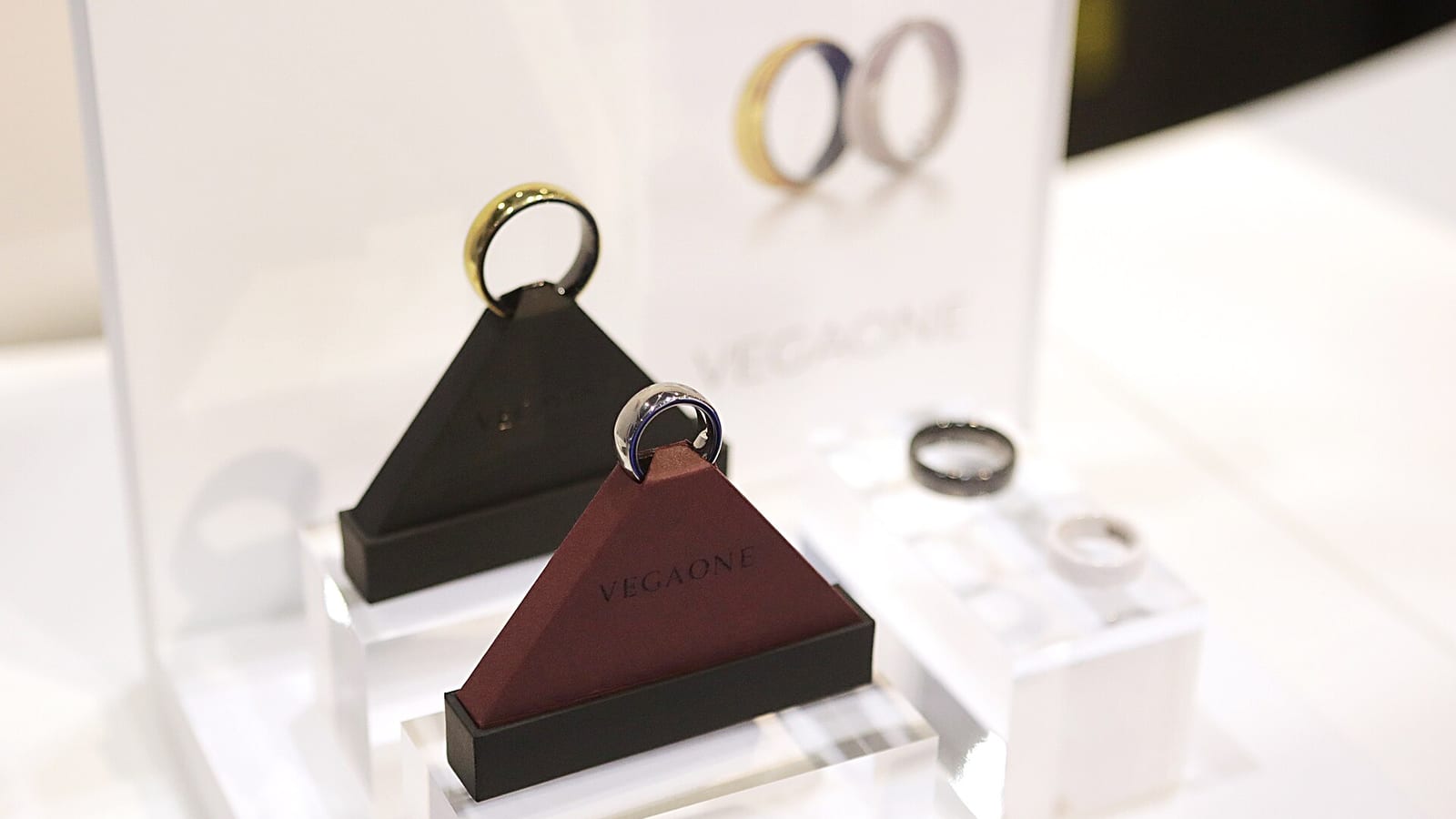
A ring can catch the overnight recovery data a watch keeps missing. Here's the honest take on the Oura Ring 4, why its subscription makes the RingConn Gen 2 my pick, and when the Samsung Galaxy Ring makes sense.
This post contains affiliate links. If you buy through them, Aliteq may earn a commission — at no extra cost to you. Prices verified at publish time.
Share
If you lift, the first reaction to a smart ring is fair: why move your tracker from a wrist that's already covered in a watch to a finger you use to grip a barbell? It sounds like a downgrade with better marketing. That was my first reaction too, and it was wrong, mostly — look at what a ring is actually built to do and the case gets a lot stronger.
Here's the thing a watch struggles to give you: people actually sleep with a ring on. Plenty of watch owners take theirs off at night because the band annoys them — which means the most important recovery data, the stuff that should change how you train the next morning, is full of holes. A ring is built to live on your finger 24/7, so the sleep and recovery picture has far fewer gaps. That's the whole case.
Why a ring can beat a watch (and why it won't for everyone)
The pitch is simple: a ring is small enough that you forget it's there, so you never take it off, so it never misses data. That's the whole trick, and it works. A recovery score you check before coffee is exactly the kind of thing that can talk you out of a dumb heavy day that would've buried you. And because it's always on, a good ring's sleep tracking should be more consistent than a wrist band that spends half its nights on the nightstand.
But be real about what a ring is not. No screen. It won't buzz your texts or show a live heart-rate graph mid-set, and it's not a workout watch — for lifting and running you'll still want something on your wrist. A ring is a recovery-and-sleep instrument you wear all day, not a coach on your arm. Want notifications? Buy a watch. Want the truth about how you slept? Buy a ring. Plenty of people end up wanting both, which is an expensive personality trait.
The one everyone copies: Oura Ring 4
The Oura is the ring the others are measured against, and it's easy to see why. The app is the best in the category — it doesn't just dump numbers on you, it turns a night's sleep and a day's strain into a readiness score designed to map to how your body actually feels. Titanium build, a flat profile designed to disappear on the finger, and roughly a week of rated battery. If you've never tracked recovery seriously, this is the smoothest on-ramp there is.
Now the catch, because it's the whole conversation: the subscription. You pay ~$349 for the ring and then about $6 a month (~$72/year) for the membership — without it you're left with bare daily scores and none of the deeper insights you bought the thing for. I don't love renting my own body data. Keep it three years and that sub quietly adds ~$200 on top of the sticker. The hardware's the best in the category. The pricing model is the part you have to make peace with.
Oura Ring 4
The gold-standard app and the sleekest recovery experience — the ring everyone else copies. The honest catch: ~$349 up front AND a ~$6/month membership to unlock the insights you actually want. Best data, at a price that keeps ticking.
+ Best-in-class app — readiness scores built to match how you feel
+ Excellent, consistent sleep tracking worn 24/7
+ Slim, flat titanium build
+ ~1 week of battery
Cons
− The ~$6/month subscription — you're renting your own data
− Deeper insights are locked behind that membership
− Most expensive to own over time once the sub is counted
The one I'd buy: RingConn Gen 2 (no subscription)
This is the ring I'd put on my finger. The RingConn Gen 2 costs ~$299 up front and then — nothing. No membership, no paywall, no monthly nibble at your card. Everything the ring tracks, you own, forever. Over a few years that difference stops being a spreadsheet argument and becomes a feeling: you open the app and there's no little 'upgrade to see this' nag sitting on your recovery data. It's just yours.
And it's not a compromise pick to get there. On paper it's thinner and lighter than the Oura, Trusted Reviews puts the battery at around 12 days (less than a week with sleep-apnea monitoring on), and it does 24/7 heart-rate and blood-oxygen tracking where some rivals only sample during sleep — it even added sleep-apnea screening. Is the app as polished as Oura's? From what I've read, no — Oura's software is still the one rivals get measured against. But the raw tracking is right there, and I'd rather have slightly plainer charts I own than gorgeous ones I rent.
RingConn Gen 2
The subscription-free value pick — and the one I would buy. ~$299 flat, no membership ever. Thinner and lighter than Oura, longer battery, 24/7 heart-rate + SpO2, even sleep-apnea screening. The app's a touch less polished; you'll survive.
+ Zero subscription — pay once, own your data forever
+ Thinner and lighter than Oura on paper
+ Longest battery of the three (~12 days per Trusted Reviews)
+ 24/7 heart-rate + blood-oxygen, plus sleep-apnea screening
Cons
− App is less polished than Oura's
− Insights are more raw-numbers, less hand-holding
− Smaller brand — not the household name Oura is
Best if you live in Samsung's world: Galaxy Ring
If your phone is a Galaxy and there's already a Galaxy Watch in your gym bag, the Samsung Galaxy Ring is the slick move. It's ~$399, no subscription, and inside Samsung Health it plays beautifully with the rest of your kit — pair it with a Galaxy Watch and Samsung fuses the two for better readings. The ecosystem glue is the real selling point. Outside a Galaxy phone, though, a lot of that shine dulls, so I'd only steer here if you're already a Samsung household.
One flaw you have to know before you tap buy: you cannot resize it. Fingers change — they can shift size across a heavy training block, and if you lose weight you could end up with a ring spinning loose. With a normal ring a jeweler fixes that in ten minutes. With this one, Samsung's answer is to return it and buy a new one at full price. Use the sizing kit, wear the sample for a couple of days including after a workout when your fingers swell, and take it dead seriously.
Samsung Galaxy Ring
The pick if you're all-in on Samsung — pairs with a Galaxy Watch and lives inside Samsung Health, no subscription. ~$399. The one catch: it comes in fixed sizes, so nail the sizing kit before you commit.
+ No subscription — features included in the price
+ Deep Galaxy Watch + Samsung Health integration
+ Clean build designed for all-day wear
Cons
− Fixed sizes — use the sizing kit first
− Most of its magic needs a Samsung phone to shine
− Priciest of the three up front
The gym-floor warning nobody puts in the ad
Here's the bit the glossy ads skip. Titanium is tough but not scratch-proof — grip a knurled barbell or a rack of dumbbells and metal-on-metal will scuff the finish over time. Worse, hard gripping presses the ring into your skin and can nudge the sensors off contact, so I wouldn't trust a mid-lift heart-rate reading anyway. My rule: ring comes off for heavy pulls and pressing, lives in the charger case in your bag, goes back on after. A cheap silicone sleeve should help on lighter days. Not a knock on any one ring — it's physics, and it's true for all three.
9/ 10
Verdict
Jordan's verdict
For most people, buy the RingConn Gen 2. It delivers most of the Oura experience, a longer rated battery, a thinner build, and — the part that wins it for me — no monthly bill nibbling at data that's already mine. Get the Oura Ring 4 only if the best-in-class app is worth a lifetime subscription to you, and the Galaxy Ring only if you're deep in Samsung's world (and you nail the sizing).
Best for: Anyone who wants honest sleep and recovery data worn 24/7 — and would rather own it once than rent it forever.
If you want to see how these stack up against everything else I'd actually strap on, I keep a running shortlist on the best smart rings page, and the full wearables buying guide if you're also weighing a watch or a band. No 50-item lists — just the stuff I'd wear myself.
Quick answers
Do I really need the Oura subscription?
For the full experience, basically yes. Without the ~$6/month membership the Oura Ring 4 shows only bare daily scores — the detailed insights and trends that are the whole point sit behind the paywall. If that bugs you as much as it bugs me, the RingConn Gen 2 gives you everything with zero subscription.
Can I wear a smart ring while lifting weights?
You can, but I wouldn't for heavy sessions. Gripping a barbell presses the ring into your skin — that scratches the titanium finish and can push the sensors off contact so your heart rate reads wrong anyway. Take it off for big lifts and pop it back on after. A silicone sleeve helps on lighter days.
What happens if I order the wrong size?
This is why every brand ships a sizing kit — use it, and wear the sample for a day or two, including right after a workout when your fingers swell. It matters most with the Galaxy Ring, which comes in fixed sizes, which is why Samsung offers a sizing kit. Fingers change over time too, so err toward a fit that stays snug without spinning.
How long does the battery actually last?
Roughly a week for the Oura Ring 4, and around 12 days for the RingConn Gen 2 per Trusted Reviews (less than a week with sleep-apnea monitoring on) — the longest of the three. All of them charge in a little dock in an hour or two, so you can top up while you shower. Battery anxiety shouldn't be a thing.