Emulators have a court ruling on their side. ROMs and encryption keys do not. Here is the US law in plain English, with the actual cases and court records, and where the real line sits in 2026.
Let's settle the part everyone gets half-wrong: in the US, an emulator is not illegal just for being an emulator. A federal appeals court said so in 2000. The legal trouble lives in the files you feed it and in breaking a console's encryption. This is the plain-English version, with the actual cases. It is general information about US law, not legal advice for your situation.
Is emulation legal in the US?
Yes. Emulation software is legal in the US when it is independently written. The key case is Sony Computer Entertainment v. Connectix, decided by the Ninth Circuit in February 2000. Connectix made the Virtual Game Station, a PlayStation emulator for the Mac. Sony sued and won an injunction. The appeals court reversed it.
The court wrote that Connectix's "intermediate copying and use of Sony's copyrighted BIOS was a fair use for the purpose of gaining access to the unprotected elements of Sony's software." It also called the emulator "a legitimate competitor in the market for platforms on which Sony and Sony-licensed games can be played." The opinion ends "REVERSED AND REMANDED."
That holding is why open-source emulators can publish their code. It does not cover shipping a console's copyrighted BIOS or firmware with the emulator. That is why most emulators ask you to supply those files yourself.
What about the Bleem case?
Sony v. Bleem (9th Cir., May 2000) is often cited as a second emulator win, but it decided a narrower point. The question was whether Bleem could use screenshots of PlayStation games in ads for its PC emulator. The court held that was fair use as comparative advertising. It supports emulator makers, but it is about advertising, not about whether emulators are legal.
How US emulation law got here
Feb 2000
Sony v. Connectix. The Ninth Circuit holds that reverse engineering the PlayStation BIOS to build an emulator was fair use.
May 2000
Sony v. Bleem. The Ninth Circuit holds that screenshots in the emulator's ads were fair use.
Aug 2021
Nintendo v. Storman. Judgment of $2,115,000 against the operator of the RomUniverse ROM site.
Mar 2024
Nintendo v. Tropic Haze. Yuzu's developer agrees to a $2.4 million judgment and a permanent injunction, nine days after the suit was filed.
Feb 2026
Nintendo keeps filing DMCA notices against Switch emulator repositories on GitHub, with notices logged on 12, 20 and 27 February.
What emulation laws apply: copyright and DMCA Section 1201
Two parts of US copyright law decide most emulation questions. Ordinary copyright covers copying the games themselves. Section 1201 of the DMCA covers getting around encryption and other "technological measures," whether or not anything is copied.
Section 1201(a)(1)(A) says "No person shall circumvent a technological measure that effectively controls access to a work protected under this title." Section 1201(a)(2) separately bans making or offering any tool "primarily designed or produced for the purpose of circumventing" such a measure. There is a narrow reverse engineering exception in 1201(f), limited to achieving interoperability of an independently created program.
This is the gap between old consoles and modern ones. A 1990s cartridge has no encryption to circumvent. A Switch game does.
Why Nintendo won against Yuzu
Nintendo sued Tropic Haze, Yuzu's developer, in the District of Rhode Island on February 26, 2024. The final judgment, entered March 6, 2024, awarded Nintendo $2,400,000 and a permanent injunction. Both sides agreed to it, so no court decided the case after a trial.
The judgment's stipulated facts say Yuzu "executes code that decrypts Nintendo Switch video games" using "unauthorized copies of Nintendo Switch cryptographic keys," and that it was "primarily designed to circumvent" Nintendo's protections. That is Section 1201 language. The case was not a ruling that emulators are illegal. It turned on decryption and keys.
Ryujinx, the other big Switch emulator, never went to court in any case we could find. Its official GitHub repository now returns "Not Found" (checked 4 Oct 2026). For what happened to the forks, see which Switch emulators survived.
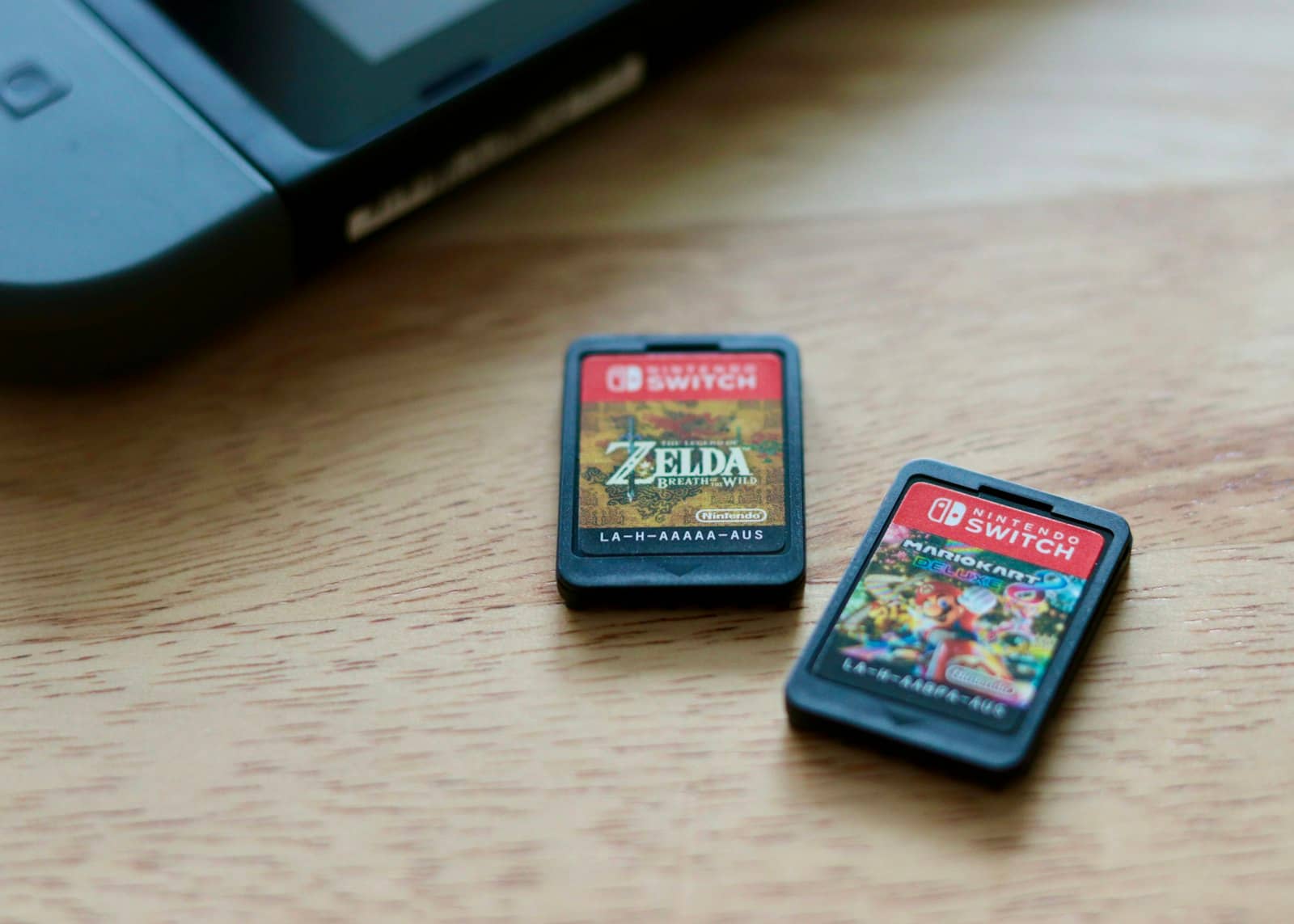
The legal line runs through the game files and the encryption, not the emulator itself. · Unsplash
Are ROMs legal?
Downloading or sharing a copy of a game you have no rights to is copying a copyrighted work without permission. Courts have treated ROM sites harshly. In Nintendo v. Storman, the federal court in Los Angeles entered judgment on August 5, 2021 for $2,115,000 in statutory damages against the RomUniverse operator.
There is no "abandonware" or "it's 20 years old" exception in the statute. Copyright in games from the 1980s and 1990s has not expired.
Copying a game you own is less clear. Section 117 lets "the owner of a copy of a computer program" make a copy "for archival purposes only." Whether that covers dumping a game cartridge has not been squarely tested in court for video games, as far as we found. Dumping modern encrypted media also runs into Section 1201, which has no general backup exception.
Does it differ outside the US?
Yes. The cases above are US federal law. The EU, UK, Japan and others have their own rules on circumvention and private copies, and some are stricter. If you live outside the US, check your own country's law rather than relying on these cases.
Quick answers
Is emulation legal?
In the US, yes. In Sony v. Connectix (2000), the Ninth Circuit held that reverse engineering a console's BIOS to build an emulator was fair use. The emulator becomes a problem when it ships copyrighted firmware or keys, or is built mainly to break encryption.
What laws cover emulation?
Two parts of US copyright law. Ordinary copyright (17 U.S.C. § 106) covers copying games and firmware. DMCA Section 1201 bans circumventing access controls like encryption, and trafficking in tools built for that. Section 117 covers archival copies of computer programs.
Are ROMs illegal to download?
Downloading a ROM of a game you have no rights to is unauthorized copying of a copyrighted work. Courts have awarded large damages against ROM sites, such as $2,115,000 against RomUniverse in 2021. Old age does not put a game in the public domain.
Is it legal to dump my own games?
It is a gray area. Section 117 allows archival copies of computer programs you own, but it has not been clearly tested for game cartridges, and Section 1201 has no general backup exception for encrypted media. This is general information, not legal advice.
Why was Yuzu shut down if emulators are legal?
The case was about decryption, not emulation. The agreed judgment says Yuzu decrypted Switch games using unauthorized copies of Nintendo's keys and was "primarily designed to circumvent" its protections. Yuzu's developer agreed to pay $2.4 million in March 2024.
Can I get in trouble for using an emulator?
Every public US case we found targets ROM sites and emulator developers, not individual players. Using a legally made emulator is not unlawful by itself. What you run on it is what matters.