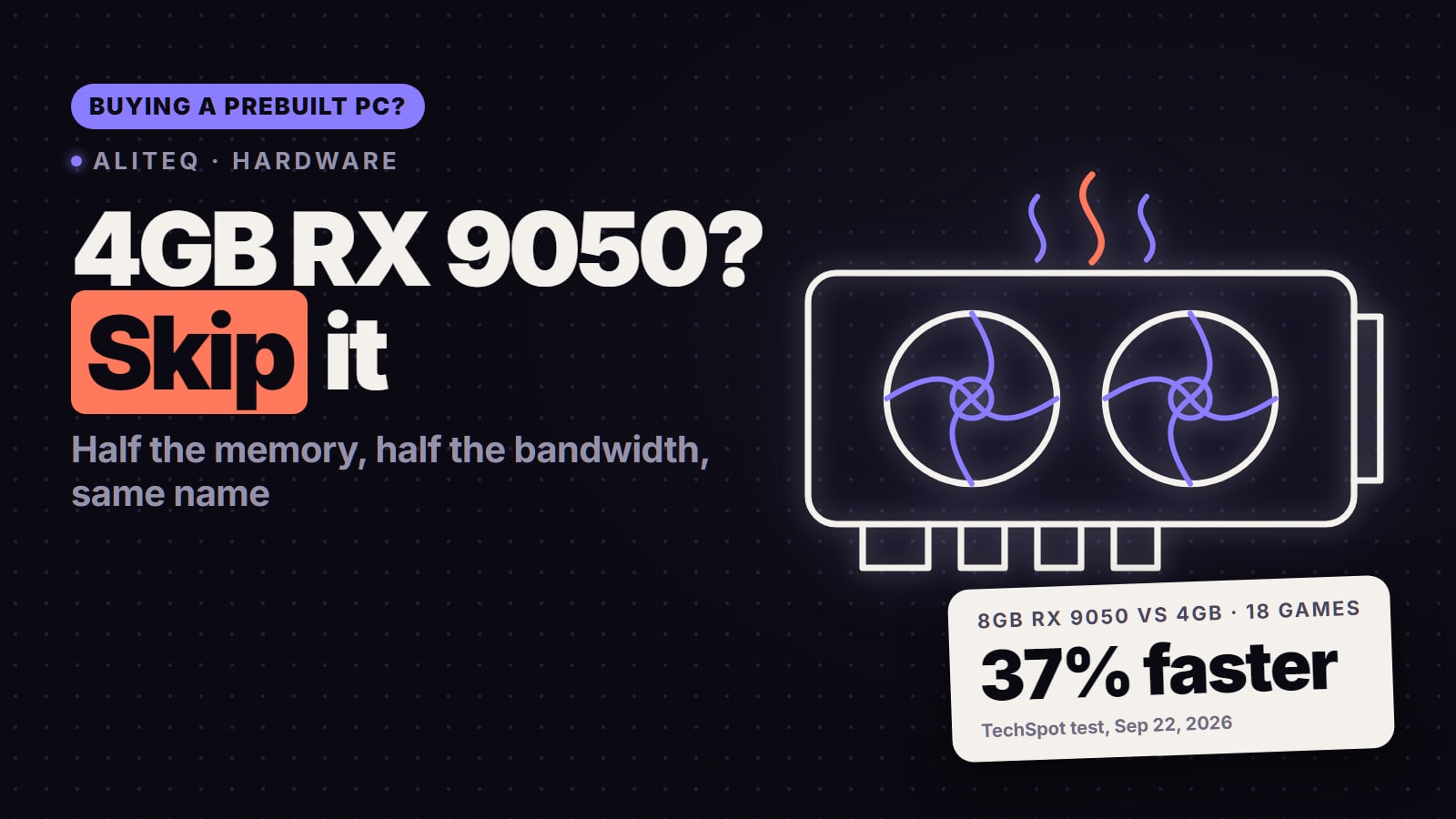
The 4GB RX 9050 shares a name with the 8GB card but has half the memory and half the bandwidth, and it's only sold inside prebuilt PCs. In TechSpot's 18-game test the 8GB card was 37% faster and Intel's Arc B570 was 44% faster. How to spot it, and what to buy for the same money.
Some links on this page are referral links: we may earn a commission, at no cost to you.
Share
Is the 4GB Radeon RX 9050 worth buying? No. It carries the same name as the 8GB RX 9050, but AMD's own spec page lists 4GB of GDDR6 on a 64-bit bus with up to 144 GB/s of bandwidth, exactly half the 8GB card's 128-bit and 288 GB/s, and half its Infinity Cache. You can't buy it on its own: it's only sold inside prebuilt PCs. In TechSpot's 18-game test the 8GB RX 9050 was 37% faster at 1080p Low, and Intel's Arc B570 10GB was 44% faster. For the same money, pick a PC or a card with an Arc B570, Arc B580 or another 8GB-plus GPU. Specs read on AMD's pages on November 3, 2026.
The 4GB RX 9050 in four numbers (AMD and TechSpot)
4
GB of GDDR6 memory
The 8GB card has 8GB
64
Memory bus, bits
The 8GB card has 128-bit
144
Memory bandwidth, GB/s
The 8GB card has 288 GB/s
37%
How much faster the 8GB card is
TechSpot, 18 games, 1080p Low
Is the 4GB RX 9050 worth buying?
No, not in any prebuilt and not at any price you're likely to see. Three things make it a bad buy:
It's much slower than the RX 9050 you read about. AMD's 8GB page shows frame rates like 96 fps in Cyberpunk 2077 and 60 fps in 007: First Light at 1080p Medium. Those numbers are for the 8GB card, tested by AMD in July 2026; the 4GB page shows no frame rates at all. In TechSpot's test, the 8GB card averaged 37% more performance across 18 games.
It's slower even in games that fit in 4GB. TechSpot found the gap holds where the game doesn't fill 4GB of memory. In Rainbow Six Siege X at 1080p High the 8GB card averaged 180 fps and the 4GB card 111 fps, while the old RX 6500 XT's 4GB and 8GB versions were identical. TechSpot's explanation: "That performance hit isn't being caused by VRAM capacity, but rather memory bandwidth."
The name hides the cut. TechSpot bought its test card inside a CyberPowerPC "Gamer Master Gaming Desktop" from Best Buy for $750, advertised with "AMD Radeon RX 9050 graphics". Only the spec sheet said 4GB. TechSpot's verdict: "the 4GB RX 9050 is a scam, plain and simple", and "There is no excuse for why this shouldn't be called the RX 9040".
TechSpot also warns its numbers are a best case: it tested on a Ryzen 7 9800X3D system with PCIe 5.0 and fast DDR5. The CyberPowerPC it bought has a Ryzen 5 5500, which limits the card to PCIe 3.0, and 8GB of single-channel DDR4, so the card will have less to fall back on when it runs out of memory.
How is the 4GB RX 9050 different from the 8GB one?
Same chip, same clocks, half the memory system. Here are AMD's two spec pages side by side, read November 3, 2026:
Radeon RX 9050 4GB vs 8GB (AMD's spec pages, read Nov 3, 2026)
Memory
Spec
4GB GDDR6
RX 9050 4GB
8GB GDDR6
Memory interface
Spec
64-bit
RX 9050 4GB
128-bit
Memory bandwidth
Spec
Up to 144 GB/s
RX 9050 4GB
Up to 288 GB/s
AMD Infinity Cache
Spec
16MB
RX 9050 4GB
32MB
Memory speed
Spec
Up to 18 Gbps
RX 9050 4GB
Up to 18 Gbps
Compute units / stream processors
Spec
16 / 1,024
RX 9050 4GB
16 / 1,024
Game / boost clock
Spec
1,920 / up to 2,600 MHz
RX 9050 4GB
1,920 / up to 2,600 MHz
Typical board power / minimum PSU
Spec
92W / 450W
RX 9050 4GB
92W / 450W
Where you can get it
Spec
Inside prebuilt PCs only
RX 9050 4GB
Standalone card in some regions
Spec
RX 9050 4GB
RX 9050 8GB
Memory
4GB GDDR6
8GB GDDR6
Memory interface
64-bit
128-bit
Memory bandwidth
Up to 144 GB/s
Up to 288 GB/s
AMD Infinity Cache
16MB
32MB
Memory speed
Up to 18 Gbps
Up to 18 Gbps
Compute units / stream processors
16 / 1,024
16 / 1,024
Game / boost clock
1,920 / up to 2,600 MHz
1,920 / up to 2,600 MHz
Typical board power / minimum PSU
92W / 450W
92W / 450W
Where you can get it
Inside prebuilt PCs only
Standalone card in some regions
TechSpot explains where the halving comes from: the chip's 128-bit bus is built from four 32-bit memory chips, and "Using only two of those chips cuts the bus to 64-bit, halving memory bandwidth along with capacity." The result is the same 144 GB/s as the Radeon RX 6500 XT, a card from 2022.
How much slower is the 4GB RX 9050 in games?
About a third slower on average, and up to 62% slower in single games. These are TechSpot's results at 1080p, mostly at Low and Medium presets, on its fast test PC (Sep 22, 2026):
How much faster the 8GB RX 9050 was than the 4GB card (TechSpot, 1080p, Sep 22, 2026)
Rainbow Six Siege X+62%
1080p High, 180 vs 111 fps
007 First Light+53%
Low, the game's lowest preset; the 4GB card hit 38 fps
Forza Horizon 6+47%
Medium preset
Battlefield 6+38%
Medium, 98 vs 71 fps
18-game average+37%
1080p Low, 18 games
Cyberpunk 2077 Phantom Liberty+8%
Medium, 80 vs 74 fps
The worst case for a new buyer is a new AAA game. In 007 First Light, TechSpot wrote that the 4GB card "managed just 38 fps using the Low preset, which is already the lowest quality setting available in the game", and only reached 60 fps with FSR Balanced upscaling, which it said "looks horrid" at 1080p. Cyberpunk 2077 was the one big game where the gap was small.
What should you buy instead at the same price?
An Intel Arc B570 10GB or Arc B580 12GB, or a prebuilt built around one. You can't buy the 4GB card alone, so TechSpot estimated its share of the $750 CyberPowerPC by pricing the other parts at about $400, and concluded the GPU is "potentially putting it in roughly the same territory as the Arc B570". In its test the B570 had the highest 18-game average at 1080p Low, and was on average 44% faster than the 4GB RX 9050.
Here's what the realistic alternatives cost in the US, from TechSpot's price tracking for October 2026 (published Nov 2, 2026), next to each maker's launch price:
US street prices in October 2026 (TechSpot, Nov 2, 2026)
Intel Arc B570about $290
Launch price from $219 (Intel); 10GB
Intel Arc B580about $350
Launch price from $249 (Intel); 12GB
NVIDIA RTX 5050about $420
Launch price from $249 (NVIDIA); 8GB
AMD RX 9060 XT 8GBabout $500
67% above its launch price; 8GB
Prices change monthly: TechSpot counts a 35% average rise in graphics card prices over the three months to October 2026 across the 10 countries it tracks, so check the price on the day. How the picks compare:
Intel Arc B570 10GB: the like-for-like replacement. In TechSpot's 18-game test it averaged 112 fps at 1080p Low, about 5% ahead of the 8GB RX 9050, with 10GB of memory for higher texture settings. Intel launched it "from $219"; TechSpot tracked it at about $290 in the US in October.
Intel Arc B580 12GB: the step up if you can stretch. Intel launched it "from $249" with 12GB; about $350 in the US in October per TechSpot. Our RTX 5050 review points to the same card.
The 8GB RX 9050 itself: fine, if you can find it. TechSpot found it for about 54,000 yen in Japan, "roughly $345", while the B570 was about $270 there. It launched at a suggested $279 in Asia-Pacific, Japan and Latin America, and on November 3, 2026 we found no US retail listing for it.
Skip the RTX 5050 at today's US price. NVIDIA launched it "Starting at $249" with 8GB of GDDR6, but TechSpot tracked US prices at about $420 in October, 68% above launch.
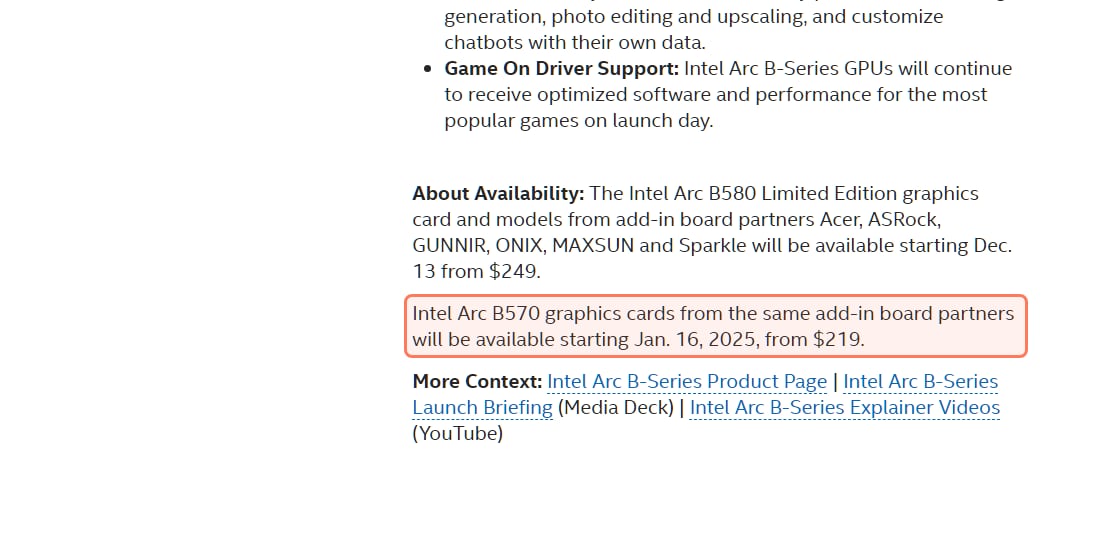
Intel's own launch prices for the Arc B570 and B580 (Intel Newsroom, read Nov 3, 2026). Street prices in late 2026 are higher; see TechSpot's tracking above. · Screenshot of intel.com by aliteq
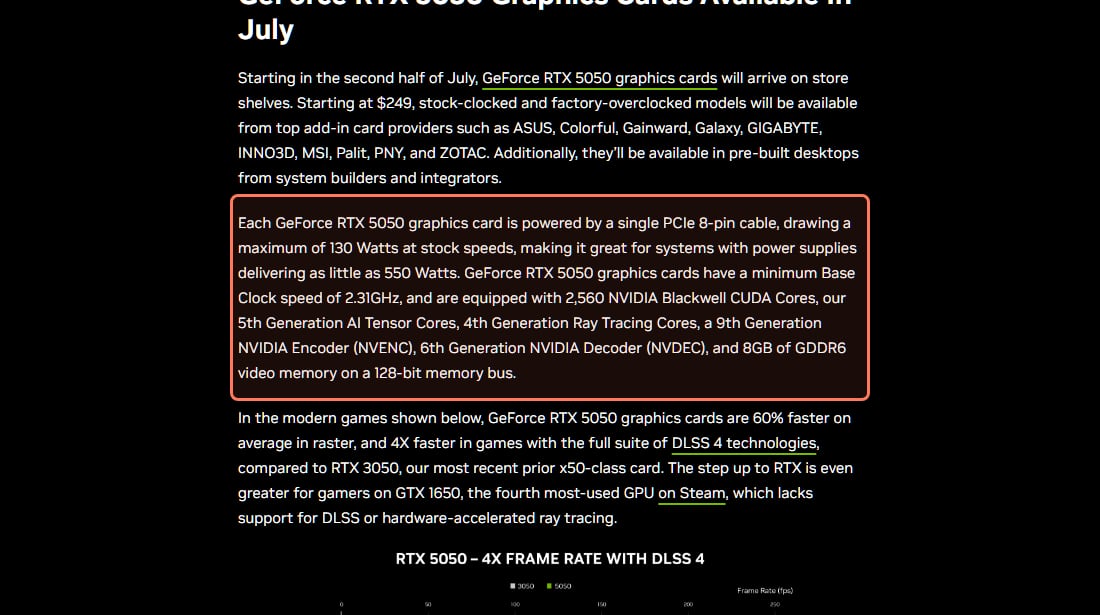
NVIDIA's RTX 5050 launch page (read Nov 3, 2026): from $249 with 8GB on a 128-bit bus. In October 2026 TechSpot tracked US prices at about $420. · Screenshot of nvidia.com by aliteq
Intel Arc B580 Limited Edition 12GB
Intel's own Arc B580 with 12GB of GDDR6, per Intel. Three times the memory of the 4GB RX 9050.
If you'd rather spend more for 16GB, the RX 9060 XT 16GB was the cheapest 16GB card in TechSpot's US price table for October 2026, at about $620, though that is 77% above its launch price. We compare it in RTX 5060 Ti vs RX 9060 XT, and is 8GB of VRAM enough for gaming covers how much memory you need.
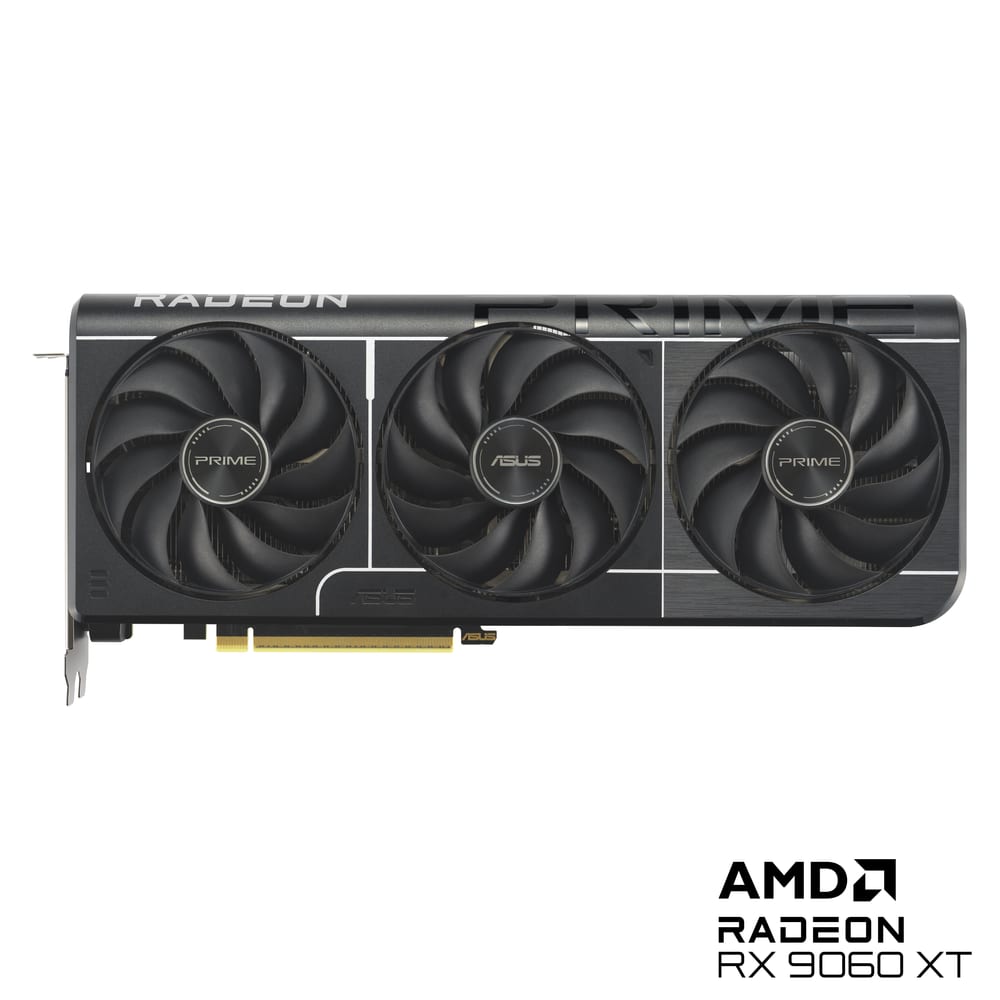
ASUS PRIME Radeon RX 9060 XT 16GB OC
AMD's RDNA 4 card with 16GB of GDDR6 and FSR 4 support. It is the 16GB version, not the 8GB one.
Best for: 1440p gaming with 16GB of VRAM for less money than the RTX 5060 Ti.
Read the graphics line on the spec sheet, not the headline. TechSpot's $750 CyberPowerPC was sold as having "AMD Radeon RX 9050 graphics", and the 4GB only showed up in the detailed specs. Before you buy any budget desktop:
Look for the memory next to the GPU name. "Radeon RX 9050" alone isn't enough. If the listing says 4GB, or doesn't say, assume 4GB until the seller confirms 8GB in writing.
Check the rest of the build. A Ryzen 5 5500 runs the card on PCIe 3.0, and 8GB of single-channel memory leaves little to fall back on. TechSpot expects both to make a 4GB card worse.
If you already bought one, a card swap is possible: AMD lists a 450W minimum PSU and one 8-pin connector for the RX 9050, but check your PSU's wattage and connectors before buying a bigger card.
Can a 4GB RX 9050 run local AI models?
Only small ones. A local model's weights plus its context have to fit in the card's memory, and 4GB holds only small, heavily quantized models. Put your model and context into our VRAM calculator to see what fits on 4GB, 8GB or 12GB before you buy. If you need a bigger card for a project or a weekend, renting one by the hour costs less than upgrading; today's prices are on our cloud GPU price page.
Why did AMD make a 4GB card in 2026?
AMD hasn't said why. What's on record: it's AMD's first 4GB desktop GPU since the RX 6400 in 2022, according to PCWorld's launch coverage, and it launched while memory prices drove graphics cards up across the board. TechSpot's November 2 price update counts a 35% average rise in three months across 10 countries and describes the B580's rise as "a good indication of the impact the memory crisis is having on a card with 12GB of GDDR6". A 64-bit, 4GB card uses two memory chips instead of four. That saves a PC maker money; it costs you a third of the card's performance.
2/ 10
Verdict
Not worth buying
Skip any prebuilt with the 4GB Radeon RX 9050. It has half the memory, half the bandwidth and half the cache of the 8GB card with the same name, and it was 37% slower across 18 games in TechSpot's test, even at low settings. For about the same money, an Intel Arc B570 10GB was 44% faster in the same test. If the PC you want lists only "Radeon RX 9050", ask for the memory size before you pay.
Best for: Anyone buying a budget gaming PC or a cheap prebuilt
Radeon RX 9050 4GB, answered
Is the 4GB RX 9050 worth buying?
No. AMD's spec pages (read Nov 3, 2026) list it with 4GB on a 64-bit bus and up to 144 GB/s, half the 8GB RX 9050's memory and bandwidth. In TechSpot's 18-game test (Sep 22, 2026) the 8GB card was 37% faster and Intel's Arc B570 was 44% faster.
What should I buy instead of the 4GB RX 9050?
An Intel Arc B570 10GB (about $290 in the US in October 2026, per TechSpot) or Arc B580 12GB (about $350), or a prebuilt built around one. The 8GB RX 9050 is fine too, but we found no US retail listing for it on Nov 3, 2026.
Can I buy the 4GB RX 9050 on its own?
No. It's sold only inside prebuilt desktops. TechSpot got its test card by buying a $750 CyberPowerPC desktop from Best Buy.
How do I know if a prebuilt has the 4GB or 8GB RX 9050?
Check the detailed spec sheet for the graphics memory. If it says 4GB, or the listing only says "Radeon RX 9050", ask the seller to confirm 8GB before you buy.
Why is the 4GB RX 9050 slower even in games that use less than 4GB?
Because its bus is 64-bit instead of 128-bit, it has half the memory bandwidth (144 vs 288 GB/s, per AMD) and half the Infinity Cache. TechSpot measured 180 vs 111 fps in Rainbow Six Siege X, a game that doesn't fill 4GB.
Is the 8GB RX 9050 sold in the US?
Not that we could find. It launched at a suggested $279 in Asia-Pacific, Japan and Latin America, TechSpot wrote it "wasn't actually intended for retail sale in the US", and we found no US retail listing on Nov 3, 2026.
Is the RTX 5050 a better choice?
Not at current US prices. NVIDIA launched it from $249 with 8GB, but TechSpot tracked it at about $420 in the US in October 2026, well above the Arc B570 and B580.
Short version: a "Radeon RX 9050" PC is only a decent budget buy if the spec sheet says 8GB. If it says 4GB, keep looking, and start with machines that list an Arc B570 or B580.