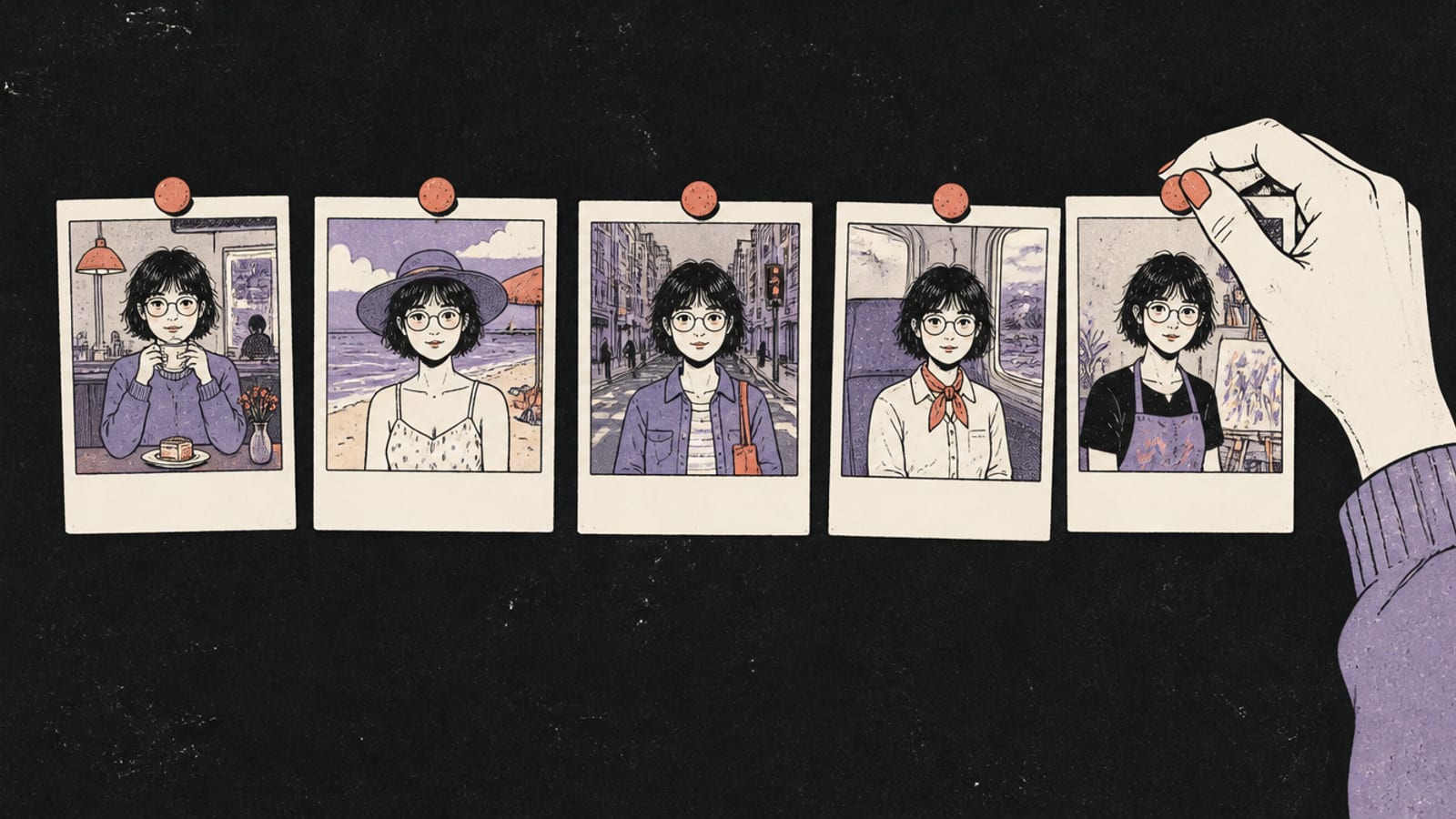
Build the character in Higgsfield's AI Influencer tool, then train a Soul ID on 20 or more portraits of it so the same face holds across posts. Character access is listed from the Plus plan up. Here are the steps, what each one cost us, and the disclosure rules that apply to a fictional face.
This post contains affiliate links. If you buy through them, Aliteq may earn a commission — at no extra cost to you. Prices verified at publish time.
Share
What is Higgsfield AI Influencer?
AI Influencer is Higgsfield's character builder for virtual personas. You pick every trait from menus instead of writing a prompt. Higgsfield's help article says it "works like a game character creator", and that characters "generate at up to 4K".
The builder covers "humans, mammals, reptiles, fish, hybrids, and aliens". The base panel sets character type, gender, origin, skin color, eye color, skin conditions and age. Advanced settings add Face, Body and Style tabs. Finished characters are saved to a character library for reuse.
The tool launched on 2 October 2026. Higgsfield's changelog entry lists three starting points: "create a character from scratch, from a reference, or from your own photo with Add your face". It also announced "5 for every user to try it, as of October 3, 2026", meaning five free generations.
AI Influencer gives you a character. It does not, on its own, give you the same face in a hundred different posts. That is Soul ID's job, and it is the step most guides skip.
How do you make an AI influencer on Higgsfield, step by step?
Design the character, save it, train a Soul ID on a batch of its portraits, then generate posts with that Soul ID. Higgsfield documents each step across two help articles. Here is the whole path in order.
From blank builder to a consistent character
Build the character
AI Influencer Studio, Create new, set traits in Builder and Advanced settings
Generate and refine
Cost shows before you confirm; text edits cost extra credits
Make 20+ portraits
Varied angles and expressions, at least one full-height shot
Train a Soul ID
20 to 80 photos, a few minutes, one face per Soul ID
Generate posts
Pick the character in Soul 2.0 or Soul Cinema; use it in Seedance via Elements
Animate if needed
Video button, Motion Control or lipsync for talking clips
Steps from Higgsfield's AI Influencer and Soul ID help articles, read 26 Oct 2026.
Open the builder. Go to AI Influencer from Higgsfield's top menu and select Create new.
Set the base identity. Character type, gender, origin, skin color, eye color, skin conditions and age.
Fine-tune. Use the Face, Body and Style tabs under Advanced settings.
Generate. Higgsfield says "The credit cost is shown before you confirm." To change something, type it into the Type to customize character field and select Edit. Text edits cost credits, and the Edit button shows how many.
Make portraits for training. The help center says to "generate a batch of its portraits and train a Soul ID on 20 or more of them".
Train the Soul ID. In Soul, choose Train new character, upload 20 to 80 photos, start training and name the character.
Generate posts. Select the trained character in the Character tab when you generate in Soul 2.0 or Soul Cinema.
For video, the AI Influencer page offers a video button under the preview. For movement copied from a real performance, Higgsfield suggests recording yourself and using Motion Control with the character's image. For talking-head clips, add speech through lipsync. Our talking avatar guide covers that part, so we won't repeat it here.
What we made: one fictional character, three shots
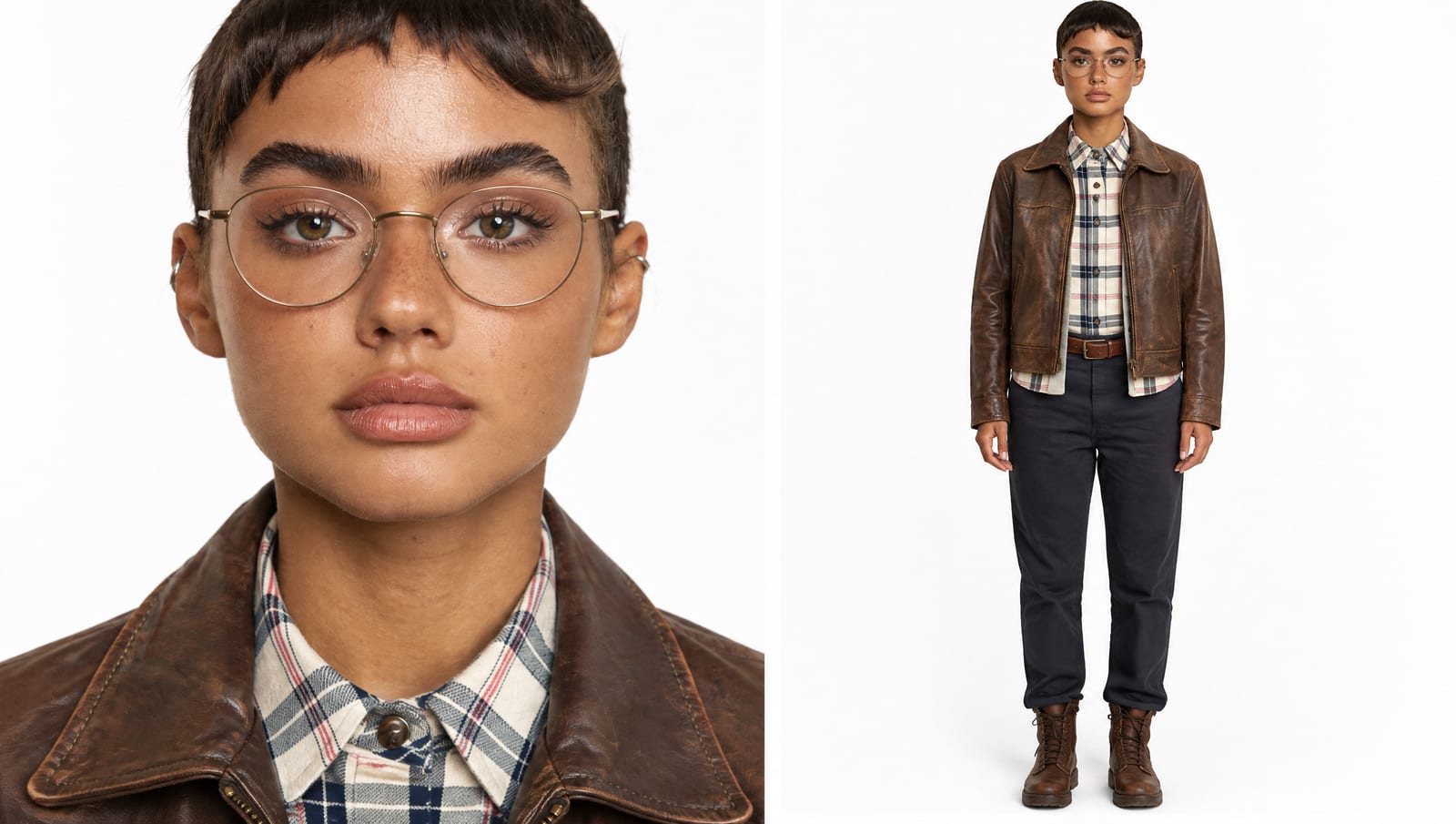
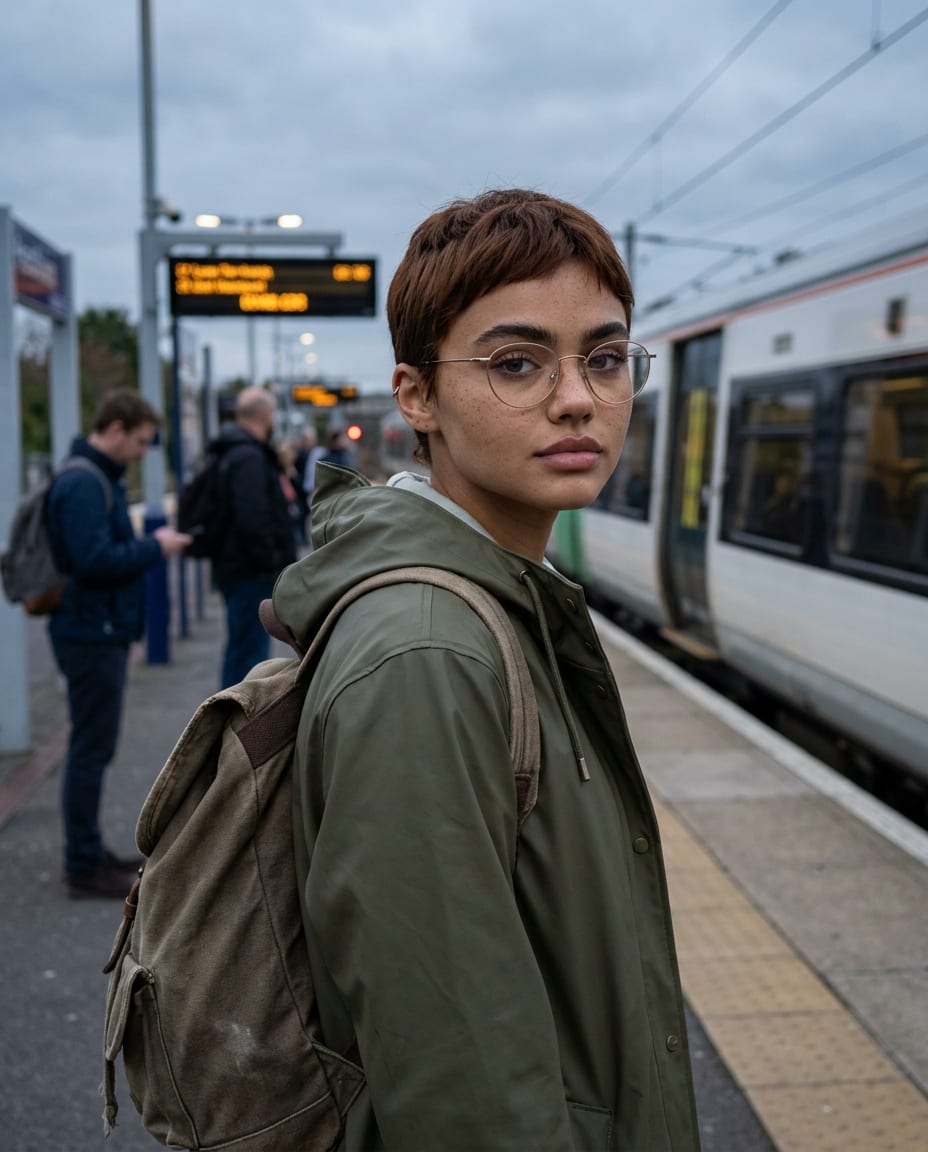
We built one fictional character to see the tool's output. We chose every trait in the builder: adult, female, short chestnut hair, hazel eyes, freckles, thick brows, ear piercings, round glasses, casual style. The brief said she is not based on any real person. Then we put the character sheet into Nano Banana 2 as a reference image for two lifestyle shots.
One invented character, three generations
Swipe →
The character sheet. Made by us with Higgsfield AI Influencer, 26 Oct 2026, one attempt, no edits. Fictional person. · Generated with Higgsfield
Shot 2, using the sheet as a reference. Made by us with Higgsfield (Nano Banana 2), 26 Oct 2026, one attempt, no edits. Fictional person. · Generated with Higgsfield
Shot 3, same method. Made by us with Higgsfield (Nano Banana 2), 26 Oct 2026, one attempt, no edits. Fictional person. · Generated with Higgsfield
Our honest read of the three images: the face, glasses, freckles and haircut carried over well from one reference image. The hair came out redder on the train platform than in the sheet. That kind of drift is what Soul ID is meant to reduce. Even after training, Higgsfield tells you to expect "clearly the same person" rather than a pixel-identical face.
The whole test cost about 4.1 credits: 1.12 for the sheet and 1.5 for each Nano Banana 2 shot, per our Higgsfield transaction history.
Which Higgsfield plan do you need for an AI influencer?
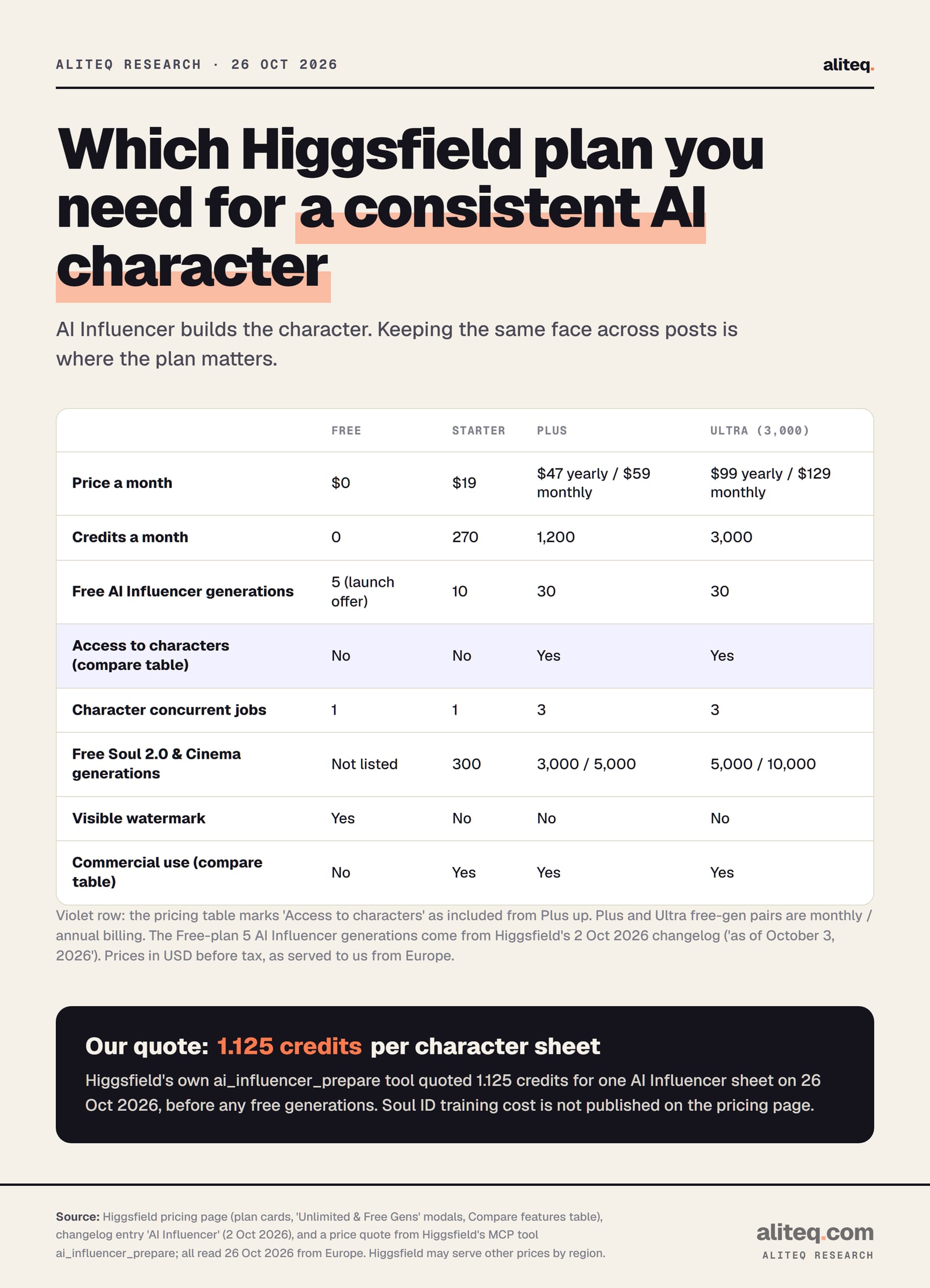
Plus or higher, if you want Higgsfield's character features. The pricing page compare table marks "Access to characters" as not included on Free and Starter, and included on Plus and Ultra. On 26 October 2026 Plus cost $47 a month billed yearly or $59 monthly, for 1,200 credits a month.
What each plan includes for character work. Higgsfield pricing page, AI Influencer changelog entry and our own quote from Higgsfield's tool, read 26 October 2026. · aliteq research
The table has one oddity. The Starter card's pop-up lists 10 free AI Influencer generations, yet the compare table says Starter has no access to characters. Higgsfield doesn't explain the difference. Our reading: Starter lets you try the builder, while saved characters and the character tools sit on Plus and up. Check the plan page before you pay if Starter is your target.
Two more plan facts matter for an influencer account. Free-plan files carry a visible watermark, and the pricing table marks commercial use as not included on Free. Our watermark guide and the plans compared page cover both in full.
How many credits does an AI influencer cost on Higgsfield?
Building the character is cheap; the portrait batch for Soul ID costs the most. Higgsfield's own quoting tool priced one AI Influencer character sheet at 1.125 credits on 26 October 2026, before any free generations. Training a Soul ID has no published price on the pricing page.
The numbers behind a consistent character
20
Minimum photos for a Soul ID
Higgsfield help center
80
Maximum photos supported
Higgsfield help center
1
Face per Soul ID
Use Elements for two or more characters
5
Free AI Influencer generations per user
Launch offer, from 3 Oct 2026
Here is our arithmetic for a starter set, in credits. It uses our own quotes and Higgsfield's pricing table, and it assumes you make the 20 training portraits the way we made our shots: Nano Banana 2 at 1K with the sheet as a reference.
Credits for one character, 20 training portraits and 30 post images
1 character sheet (AI Influencer)1.125 credits (our quote)
20 training portraits (Nano Banana 2, 1K)30 credits at 1.5 each (our quote)
30 post images (Soul 2.0)3.6 credits at 0.12 each (pricing table)
Soul ID trainingNot published
That adds up to about 35 credits before training. At Plus annual pricing ($47 for 1,200 credits, about $0.039 a credit) that is roughly $1.36 of credits. On Plus, the 30 Soul 2.0 images may also fit inside the plan's 3,000 or 5,000 free Soul 2.0 generations.
Two caveats. Higgsfield's pricing table lists Nano Banana 2 at 2 credits an image, but its tool quoted and charged us 1.5 at 1K. At 2 credits, the portrait batch would be 40. And the Generate button is the final word: Higgsfield's help center says the exact cost is shown before you confirm. Our credits guide has the full per-model table.
Can I use a real person's face for my AI influencer?
Only your own, or someone's who has given you permission. Higgsfield's Soul ID article says: "Only upload photos of yourself, or of someone who has given you permission to use their likeness." The safest route for a virtual influencer is the one we used: a character invented in the builder.
Higgsfield's Terms of Use put this in writing. If your content contains anyone's "name, likeness, voice, or other identifiable attributes", you represent that you have "obtained all necessary rights, releases, and consents from such individual". Section 5.3 adds the same promise for any face or voice you upload. Higgsfield also blocks some real faces outright, such as in Cinema Studio.
A character that looks like a celebrity, an ex or a classmate is not "fictional" in any useful sense. If you want a version of yourself instead, see our guide to AI images of yourself with Higgsfield.
Do you have to say an AI influencer is AI?
Yes, on the big platforms, when the content looks real. TikTok, YouTube and Meta all ask creators to label realistic AI-generated people, and a photoreal virtual influencer is exactly that.
TikTok: "we require creators to label AI-generated or significantly edited content that shows realistic-looking scenes or people". Unlabeled content "may be removed, restricted, or labeled by our team" (TikTok Community Guidelines).
YouTube: "We require creators to disclose AI-generated or altered content that seems realistic." Its examples include content that "Generates a realistic scene that didn't actually occur" (YouTube Help).
Instagram, Facebook and Threads: Meta requires people to use its disclosure tool "when they post organic content with a photorealistic video or realistic-sounding audio that was digitally created or altered, and we may apply penalties if they fail to do so" (Meta Newsroom).
Higgsfield's terms point the same way. Section 5.2(xi) says you may not "represent that any Output is human-generated when it is not". Section 5.5 says that where the law requires it, "you will disclose that Output is artificially generated or manipulated". A stylised cartoon character may fall outside the platforms' "realistic" test, but a lifelike face like ours does not. For YouTube's label in depth, see our YouTube altered or synthetic content guide.
Do sponsored posts by a virtual influencer need an FTC disclosure?
Yes. In the US, the FTC's Endorsement Guides cover endorsers who only appear to be people. The definition in 16 CFR 255.0 says the endorser "could be or appear to be an individual, group, or institution". That wording arrived in the FTC's 2023 update.
When the FTC adopted it, commenters asked whether it covered virtual influencers. The Commission answered that the language does not address "only virtual influencers" but is "intended to also encompass the writers of fake reviews and non-existent entities that purport to give endorsements" (Federal Register, 26 July 2023).
So a paid post from your character follows the same rule as a human's. Section 255.5 says a connection to the seller that the audience wouldn't expect "must be disclosed clearly and conspicuously". The FTC defines that as "difficult to miss (i.e., easily noticeable) and easily understandable by ordinary consumers". In practice: say "ad" or "paid partnership" in the post itself, in words a scroller sees, and use the platform's branded-content tool too.
Two other points from the guides apply. Brands are told to monitor their endorsers, and an advertiser "may be liable for a deceptive endorsement even when the endorser is not liable". Our reading: the guides also expect endorsers to be real users of what they praise, so an invented "I've used this serum for a month" from a character that can't use anything is a false experience claim. Selling the images themselves is a separate question; our can you sell Higgsfield AI images page covers ownership and resale.
What we couldn't verify
Soul ID training cost. Neither the pricing page nor the help article lists a credit price for training. Check the screen before you train.
The exact photo count. The help center says 20 to 80 photos. Higgsfield's MCP connector describes Soul training with 5 to 20 images and about 10 minutes. We followed the help center; we didn't train one.
What "Access to characters" covers. The compare table doesn't define it, and the Starter card still lists 10 free AI Influencer generations. We read the table from the page structure, which leaves small room for error.
The "Character" max-generations row. The table shows Free up to 1, Starter 9, Plus 40 and Ultra 100 in the monthly view, and different figures in the annual view. Higgsfield doesn't say what it counts.
Whether the 5-per-user launch offer still runs. The changelog dates it "as of October 3, 2026"; it may change without notice.
Any earnings. We make no claim about what an AI influencer earns. We found no audited figure tied to Higgsfield-made characters.
US prices. Our pricing data came back with a Danish country code. A US visitor may see different prices or promos.
Our verdict
Higgsfield is a sensible place to build a fictional influencer if you want the whole chain in one account: a builder with no prompts, Soul ID for the face, then video and lipsync for clips. The character itself is cheap; one sheet was quoted at 1.125 credits. Plan for Plus, because character access is listed from Plus up, and expect "the same person", not a clone, in every shot.
Skip it if you only want to test the idea: the free launch generations show you the builder without a subscription. Skip it too if your plan relies on a real person's face without written consent, or on hiding that the account is AI. Both break Higgsfield's terms, and the second breaks the platforms' rules.
To sign up safely, use higgsfield.ai itself; Higgsfield says it has no mobile app and doesn't sell lifetime plans or reseller accounts. Know the refund rule before you pay: first purchase only, within 7 days, with zero credits used, minus a fee of up to 6%.
Quick answers
Can you make an AI influencer with Higgsfield?
Yes. Build the character in AI Influencer, a menu-driven builder, then train a Soul ID on 20 or more portraits of it so the same face appears across posts.
Which Higgsfield plan includes AI characters?
Higgsfield's pricing table marks "Access to characters" as included on Plus and Ultra, not on Free or Starter. Plus was $47 a month billed yearly on 26 October 2026.
How much does a Higgsfield AI Influencer character cost?
Higgsfield's own quoting tool priced one character sheet at 1.125 credits on 26 October 2026. Soul ID training has no published price; the exact cost shows before you confirm.
Is Higgsfield AI Influencer free?
Higgsfield gave every user 5 free AI Influencer generations from 3 October 2026. Paid plans list 10 (Starter) or 30 (Plus and Ultra) free AI Influencer generations.
Do I need to label my AI influencer's posts as AI?
On TikTok, YouTube and Meta, yes, when the person or scene looks realistic. Higgsfield's terms also forbid presenting outputs as human-made.
Does a virtual influencer need an FTC ad disclosure?
Yes. The FTC's Endorsement Guides cover endorsers who only appear to be real, so paid posts need a clear, conspicuous disclosure of the brand deal.