A human UGC video runs about $175 at the median plus paid-ad rights and a week or more of waiting. A usable 15-second AI UGC ad costs roughly $3 to $26 depending on the tool, once you count the retries. Here is the arithmetic from each company's own pages, where each one wins, a 20-ads-a-month budget both ways, and why AI doesn't always come out ahead.
Some links on this page are referral links: we may earn a commission, at no cost to you.
Share
One usable human UGC video costs a median of about $175, or roughly $200 to $230 once you pay to run it as a paid ad for 30 days, and it takes about a week to arrive. One usable 15-second AI UGC ad costs roughly $16 to $26 on Higgsfield, $4 to $7 on Creatify and $4 to $14 on invideo, once you count the three to five tries it takes to get a keeper. Those are our sums from each company's own pricing pages, read November 18, 2026. AI is cheaper per ad by a wide margin. It isn't always cheaper per sale, and for products that live on trust, a real person still tends to win.
We're a US site with a referral link for one tool on this page (Higgsfield). The others are named fairly, and in two of the three AI cases below a rival is the cheaper option per ad. Every number has its source and read date; where we made the arithmetic, we say so.
What does one usable human UGC video really cost?
The base fee is the smaller part of the question. What you actually pay depends on whether you run the video as a paid ad, for how long, and how many hook versions you want.
$154 average paid per UGC deal; $180 average asking price
Not stated
Not stated
Billo says its $200 to $400 standard rate "usually includes hook variations and 90 days of paid usage", so a quote in that range may already cover the first three months of ads. Collabstr's figures come from more than 21,000 collaborations on its own marketplace, and Billo's $99 is its own platform's entry price, so both are sellers describing their own market. Influee's page carries a 2026 title but is dated April 2025.
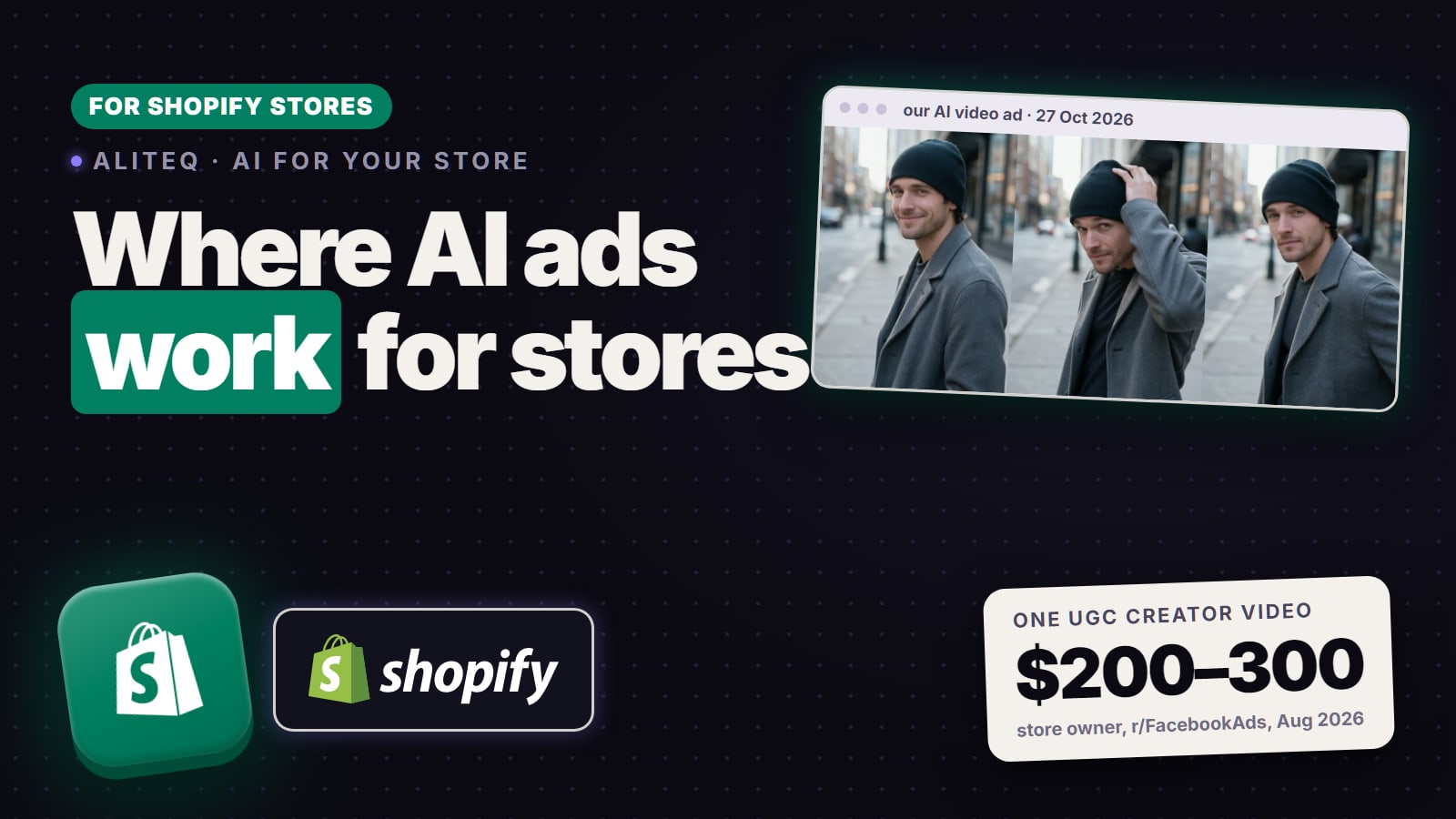
Turnaround is the number vendors don't publish. A store owner spending $25,000 a month on Meta said their creators take 7 to 10 days to deliver (r/FacebookAds, August 2026, read November 1, 2026), plus the time to ship the product to the creator.
Our arithmetic for one ad you run for 30 days: $175 base + 15 to 30% for paid use = about $201 to $228. Using Influee's own 30 to 50% usage line instead, it's $228 to $263. A perpetual buyout at Billo's 150 to 300% puts the same $175 video at $263 to $525 extra.
What does one usable AI UGC ad cost?
Price per generation is the wrong number, because you pay for the tries you throw away too. Higgsfield says a usable clip "in our own testing typically takes three to five generations to land" (Higgsfield blog, Sep 15, 2026). invideo's own budgeting page says to plan for "roughly 3 generations per usable shot" and to "assume only ~25% of generated clips reach the final cut" (invideo). Our own test of what one usable AI product clip costs landed inside that range: 4 of 10 clips kept the product right. So we price every tool below at 3 to 5 tries per keeper.
Cost per keeper = credits per try × tries per keeper × dollars per credit.
Higgsfield Plus, $59 for 1,200 credits
Credits per try
107.5 (15 s UGC Review template)
Dollars per credit
about 4.9 cents
Cost per usable ad at 3 to 5 tries
322.5 to 537.5 credits, about $16 to $26
Creatify Standard, $15 for 55 credits
Credits per try
about 5 (15 s Aurora avatar video)
Dollars per credit
about 27 cents
Cost per usable ad at 3 to 5 tries
15 to 25 credits, about $4 to $7
invideo Plus, $60 for 2,000 credits
Credits per try
44 to 90 (20 s at 2.2 to 4.5 a second)
Dollars per credit
3 cents
Cost per usable ad at 3 to 5 tries
132 to 450 credits, about $4 to $14
Arcads Starter, 8,000 credits
Credits per try
800 (talking-actor video up to 2 min)
Dollars per credit
No public dollar price
Cost per usable ad at 3 to 5 tries
2,400 to 4,000 credits
Credits per try
Dollars per credit
Cost per usable ad at 3 to 5 tries
Higgsfield Plus, $59 for 1,200 credits
107.5 (15 s UGC Review template)
about 4.9 cents
322.5 to 537.5 credits, about $16 to $26
Creatify Standard, $15 for 55 credits
about 5 (15 s Aurora avatar video)
about 27 cents
15 to 25 credits, about $4 to $7
invideo Plus, $60 for 2,000 credits
44 to 90 (20 s at 2.2 to 4.5 a second)
3 cents
132 to 450 credits, about $4 to $14
Arcads Starter, 8,000 credits
800 (talking-actor video up to 2 min)
No public dollar price
2,400 to 4,000 credits
Where each number comes from:
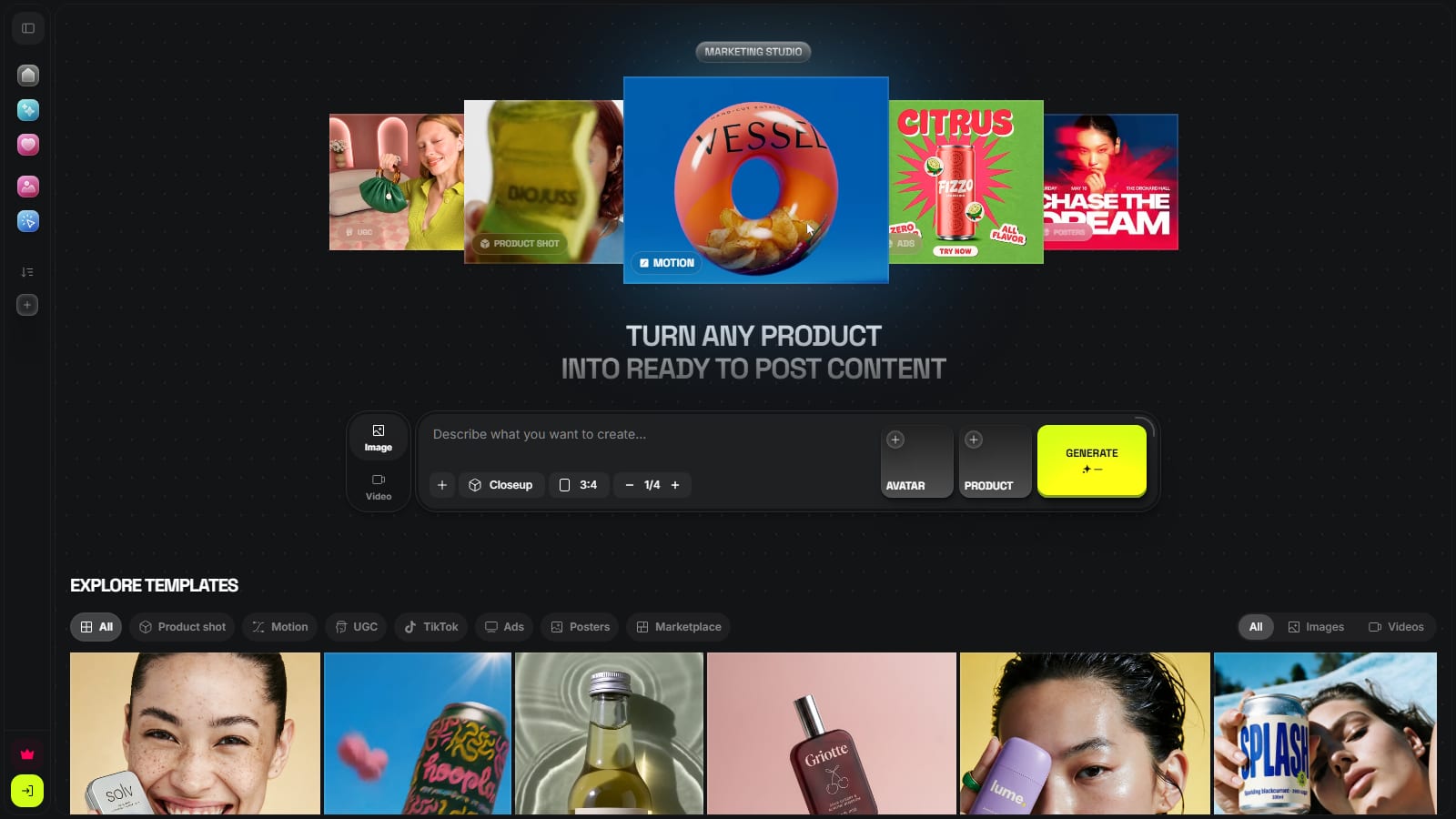
Higgsfield. Plus is $59 a month for 1,200 credits on the pricing page. Higgsfield's own guide lists a 15-second UGC Review template in Marketing Studio at 107.5 credits, with Hypermotion at 90 and TikTok Camera POV at 105 (Higgsfield blog, Oct 30, 2026). The exact cost shows on the button before you confirm. These figures match our guide to making product video ads without a studio, which puts a 15-second template ad at about $13 to $26 across the three templates.
Creatify. The pricing page says Standard's 55 credits make 11 Aurora avatar videos at 720p and 15 seconds, so about 5 credits each. It doesn't list the credit cost of a full URL-to-video ad, and it says "higher resolution and longer clips use more credits", so treat our figure as the floor. Creatify's URL-to-video page claims a ready ad "in under 60 seconds"; that's the vendor's claim. Our guide on how to turn a product link into a video ad compares the link-to-ad tools step by step.
invideo. The model pricing page lists Kling Avatar at 2.20 to 4.50 credits a second and HeyGen Lipsync at 1.70 to 3.40. Plus is $60 a seat a month for 2,000 credits (pricing). Our sum covers the talking clip only, before the stills you approve, the voice and the agent's work, which also use credits. Our walkthrough of invideo's UGC ads workflow explains each step and the product categories its actors refuse.
Arcads. Its pricing help article prices a talking-actor video up to 2 minutes at a flat 800 credits, says Starter has 8,000 credits a month and that failed generations are refunded automatically, but sends you to the app for dollar prices. So we can't put a dollar figure on it. Our Higgsfield vs HeyGen vs Arcads comparison covers Arcads' actor library and its licence terms.
Why is Higgsfield the dearest per ad here? Its 107.5-credit template makes a full product ad with motion and the product in the shot, not just an avatar talking to camera, and the same plan also covers product photos and b-roll. If all you need is a presenter reading a script, Creatify or invideo is the cheaper buy. If the ad has to show the product looking right, the Shopify guide to UGC video ads with AI shows where each kind of tool fits.
Which one sells better, AI UGC or a real creator?
There's no public, independent study that settles it, so be wary of any page that quotes one big number. The most-cited write-up is on Segwise's blog, a company that sells AI ad analytics and its own AI creative generator, so it's vendor-sourced. It retells an anonymous media buyer's $15,000 Meta test on a skincare brand, with the same offer, audience and landing page on both sides: "human UGC took the pure ROAS crown, AI UGC took the variants-per-dollar crown", with roughly 30 AI variants for the cost of 3 human videos (Segwise, Apr 27, 2026). It gives no ROAS or CPA figures, and the buyer and brand aren't named. Treat it as one anecdote that matches what most media buyers say, not as proof.
What that pattern suggests, and what we'd plan around:
Trust-driven products lean human. Skincare, supplements, fitness, food, anything worn or applied. The shopper is asking "did a real person use this?", and a real person on camera answers it.
AI wins on variations. Ten hooks for one idea, the same ad in five backgrounds, a version for every sale. At $4 to $26 a keeper you can test what you'd never pay a creator to film.
AI wins on speed. Same day against 7 to 10 days plus shipping. That matters most when an ad fatigues in a week.
Human wins on hands and faces in motion. AI presenters can look fine in a thumbnail and wrong when they pick up the product. Shoppers notice.
What do TikTok, Meta and the FTC require for AI UGC?
Three rules change how you can use AI UGC, whatever tool made it.
TikTok asks advertisers to switch on the toggle "This ad contains AI-generated content" when an ad's image, video or audio is "either completely AI-generated or significantly modified by AI". The toggle resets when you duplicate a campaign, so check it every time (TikTok Business Help Center, read Nov 18, 2026).
Meta applies an "AI info" label in About this ad for ads made with its own AI tools, and says it detects ads made with third-party AI tools through "industry-standard signals" (Meta, read Nov 18, 2026).
The FTC's 2024 rule covers reviews and testimonials that "misrepresent that they are by someone who does not exist" (FTC). An AI actor saying "I've used this for three months" is exactly that. Script AI presenters to explain and show the product, never to pose as a customer. This is general information, not legal advice.
Say a small DTC brand wants 20 usable 15-second ads a month to keep its Meta and TikTok creative fresh. Our arithmetic, at the prices read November 18, 2026:
Human creators at the $175 median
What you'd pay
$3,500 + $525 to $1,050 for 30 days of paid use = about $4,025 to $4,550
Notes
Plus product shipping; about 7 to 10 days per batch
Human creators at Billo's $200 to $400 standard rate
What you'd pay
$4,000 to $8,000
Notes
Billo says this usually includes hook variations and 90 days of paid use
Higgsfield Ultra 9K, $387 a month for 9,000 credits
What you'd pay
20 × 322.5 to 537.5 = 6,450 to 10,750 credits
Notes
One plan covers 20 keepers at up to about 4 tries each; at 5 tries you'd need more credits. About $387
Creatify Ultra, $95 a month for 730 credits
What you'd pay
20 × 15 to 25 = 300 to 500 credits
Notes
Covers 20 avatar ads with room to spare, if a full ad costs about what a 15 s avatar video does. About $95
invideo Max, $150 a seat for 5,000 credits
What you'd pay
20 × 132 to 450 = 2,640 to 9,000 credits
Notes
Covers 20 talking clips on the cheaper avatar settings; the dearest settings would need more credits. About $150
What you'd pay
Notes
Human creators at the $175 median
$3,500 + $525 to $1,050 for 30 days of paid use = about $4,025 to $4,550
Plus product shipping; about 7 to 10 days per batch
Human creators at Billo's $200 to $400 standard rate
$4,000 to $8,000
Billo says this usually includes hook variations and 90 days of paid use
Higgsfield Ultra 9K, $387 a month for 9,000 credits
20 × 322.5 to 537.5 = 6,450 to 10,750 credits
One plan covers 20 keepers at up to about 4 tries each; at 5 tries you'd need more credits. About $387
Creatify Ultra, $95 a month for 730 credits
20 × 15 to 25 = 300 to 500 credits
Covers 20 avatar ads with room to spare, if a full ad costs about what a 15 s avatar video does. About $95
invideo Max, $150 a seat for 5,000 credits
20 × 132 to 450 = 2,640 to 9,000 credits
Covers 20 talking clips on the cheaper avatar settings; the dearest settings would need more credits. About $150
Billed yearly, the AI plans cost less: Creatify Ultra is $66 a month and invideo Max $75 a seat, and in the Black Friday sale yearly Ultra 9K is $136 a month (read Nov 18, 2026; the page's countdown points at midnight UTC November 20, 2026, and Higgsfield has extended it before). An agency making ads for several brands should also look at whether the Higgsfield Team plan is worth it, which pools credits across seats.
The AI column leaves out the biggest cost: someone's time. Writing 20 scripts, checking every frame against the real product, and throwing away the clips where the label drifted takes hours. If that person is you, count your hours. If you'd hire an editor to do it, add their fee.
What does a hybrid plan look like?
This is what we'd actually run with the same budget, and it's where most brands end up.
Test with AI first. Make 15 to 20 AI versions of two or three ad ideas: different hooks, openings and captions, same product and offer. On Higgsfield's Ultra 6K plan ($258 a month for 6,000 credits) that's about 11 to 18 keepers at 107.5 credits and 3 to 5 tries each.
Let the ad platform pick. Run them at small budgets for a few days and keep the two or three hooks with the best click-through and cost per purchase.
Hire a creator for the winners. Brief three or four real creators on the proven hooks. At the $175 median plus 30 days of paid use, that's about $800 to $910 for four.
Use AI around the human ad. Product b-roll, new openings, holiday versions, cut from the same creator video, so the trust stays and the testing keeps going.
By our arithmetic that's about $1,060 to $1,170 a month (Ultra 6K plus four creator videos) against about $4,000 for 20 creator videos, with real people on the ads that matter most.
Is Higgsfield the right AI tool, or something cheaper?
Higgsfield is the tool we have a referral link with, and on this job it's not the cheapest per ad. It's the right pick when the ad needs the product itself to move and look right, and when you also want product photos, b-roll and cinematic clips from the same account, with the credit cost shown before every generation. Plans start at $19 a month (Starter, 270 credits), but its compare table marks the UGC builder "Not included" on Starter (read Oct 26, 2026), so the plan for this job is Plus at $59 a month for 1,200 credits or above (list prices, read Nov 18, 2026). New users get up to 50% off through our link.
Where something else is the better buy:
A presenter reading a script from your product page. Creatify or invideo does it for a fraction of the credits.
Lots of long talking-actor ads. Arcads charges the same 800 credits for a video up to 2 minutes, so a 60-second ad costs no more than a 15-second one.
One ad a month. Hire a creator. Learning a tool for a single ad isn't worth it, and you get real hands on the product.
A product the shopper must believe works on a real body. Skincare results, fit, taste: film it with a person, and use AI only for hooks and b-roll.
Our verdict
AI UGC is cheaper per ad by roughly eight times or more, and it's the only sane way to test 20 hooks a month on a small budget. A human creator is still the better buy for the ad you'll scale, in any category where trust closes the sale. Count cost per usable ad, not per generation, add paid-use rights to every creator quote, label AI ads where TikTok and Meta ask, and never let an AI actor pretend to be a customer.
Quick answers
How much does a UGC video cost in 2026?
Influee puts the median at about $175 a video, with most creators at $150 to $300. Billo's November 2026 guide cites $75 to $150 for beginners and $200 to $400 as the standard rate. Paid-ad use is usually extra, at 15 to 30% of the fee per 30 days.
Is AI UGC cheaper than a human creator?
Per ad, yes, by a lot. One usable 15-second AI UGC ad costs about $4 to $26 depending on the tool, counting three to five tries per keeper, against about $200 to $230 for a creator video with 30 days of paid use. Per sale, not always: human UGC tends to convert better where shoppers need to trust a real person.
How long does a UGC creator take to deliver?
Vendors rarely publish it. A store owner spending $25,000 a month on Meta said their creators take 7 to 10 days, plus shipping the product. AI UGC is ready the same day.
Do I have to label AI UGC ads?
On TikTok, switch on "This ad contains AI-generated content" when the ad is completely AI-generated or significantly modified by AI. Meta adds an "AI info" label when it detects AI. And under the FTC's rule, an AI actor must not pose as a real customer giving a testimonial.
Can AI UGC replace UGC creators completely?
For testing hooks, product b-roll and volume, mostly yes. For the ad you scale in trust-driven categories like skincare, supplements or fashion, most brands still pay a real creator. A hybrid plan, AI to test and a creator to film the winner, usually costs a fraction of all-human.
Higgsfield sales like 11.11 and Black Friday change prices for a few days at a time. When one starts, we read the real prices on Higgsfield's own page and email you what changed.
Written and sent by hand. One-click unsubscribe in every email. Emails may contain referral links.