An AI micro drama is a vertical, episodic story told in 1 to 3 minute episodes. Here is the five-step workflow from script to posted episode, the tools for each step with honest alternatives, what a 90-second episode costs in credits once retakes are counted, and where these series actually get watched.
Some links on this page are referral links: we may earn a commission, at no cost to you.
Share
An AI micro drama is a vertical, episodic story made for phones, with episodes of about 1 to 3 minutes that each end on a hook, and you make one in five steps: write the script, lock characters you can keep consistent, generate the shots, add voices and lip sync, then edit and post. The cost is mostly video credits. On Higgsfield's official credit table, a 90-second episode built from 18 five-second Seedance 2.5 clips at 720p is 630 credits in one pass, and 1,890 to 3,150 credits once you count three to five takes per usable clip, about $93 to $155 at the Plus list rate. Cheaper models such as Kling 3.0 bring the same episode down to 378 to 630 credits. Pages and prices read November 18, 2026.
We are a US site with a referral link for one of the tools below (Higgsfield). We have not made a micro drama series ourselves, so this page is built from the makers' own pages, official credit tables and dated reporting, with the arithmetic shown. Where another tool fits better, we say so.
What is an AI micro drama?
A micro drama (also called a short drama or vertical drama) is a scripted series shot in portrait for phones, with very short episodes and a cliffhanger at the end of each one. invideo's FAQ puts the norm at 60 to 120 seconds an episode, with a sweet spot around 90 to 100 seconds, and notes some platforms stretch to 3 to 5 minutes (invideo, updated Aug 10, 2026; a vendor's figure). The Next Web describes the format as "episodes of one to three minutes", viewed vertically on a phone (The Next Web, May 1, 2026).
The AI part is new and fast-growing. The Next Web reports AI-generated titles were 38% of one Chinese top-100 micro drama chart in January 2026, up from 7% a year earlier, and that more than 50,000 AI-native titles went up on Douyin in March 2026 alone. TheWrap reports that Dashverse, an AI micro drama studio, says an hour of its content costs around $20,000 to $30,000, against $150,000 budgets it cites for live-action vertical series (TheWrap, Jun 11, 2026). Those are studio numbers with teams behind them, not what a solo creator should expect.
The five-step workflow
1
Script. Write a one-line premise, a season outline and short episodes: a cold open in the first seconds, one escalation, a cliffhanger. TheWrap's source counts about one page of dialogue as one minute, or one episode. Keep it to two or three main characters and one to three locations.
2
Characters. Make a reference sheet for each character (face, hair, one signature outfit, one accessory) and reuse the same references in every shot. This is what stops faces drifting between episodes.
3
Shots. Turn each scene into a numbered shot list (framing, action, line, length), storyboard it, then generate the clips in 9:16. A 90-second episode is roughly 15 to 25 shots.
4
Voices and lip sync. Give each character one voice and keep it. Generate dialogue with a model that makes audio with the video, or add a voice and run lip sync on the clip.
5
Edit and post. Cut the clips, burn in captions, end on the hook, export 1080x1920, and label realistic AI where the platform asks before you upload.
Step 1. The script
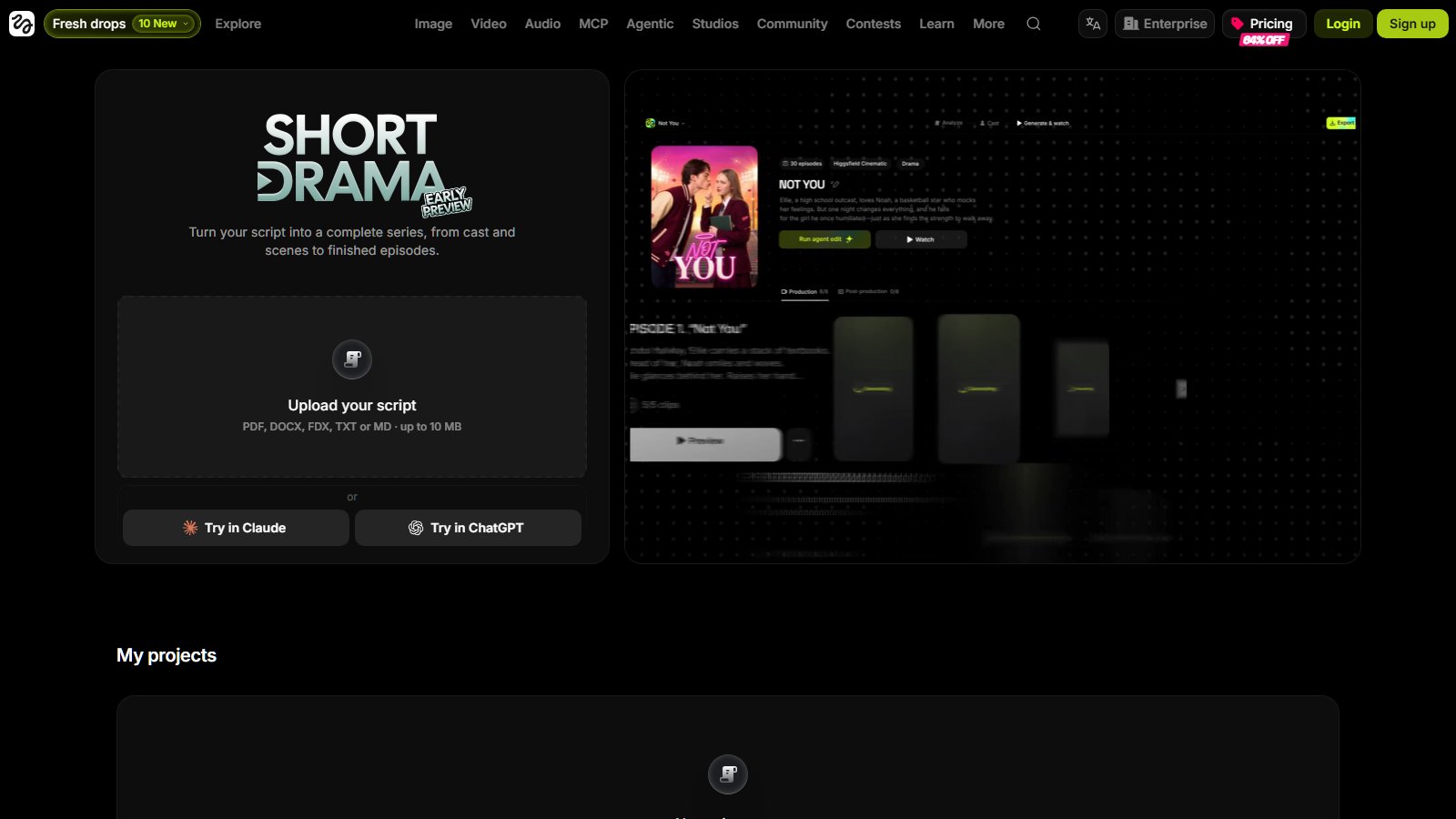
Claude or ChatGPT is the practical starting point: ask for a season outline of 20 to 30 episodes, then write each episode as a short screenplay with the cliffhanger first and the dialogue second. Keep the lines short; every line becomes a lip-synced shot you pay for. Higgsfield's new Short Drama page takes that script directly: you upload a PDF, DOCX, FDX (Final Draft), TXT or MD file up to 10 MB, and it says it turns the script "into a complete series, from cast and scenes to finished episodes". The page also has "Try in Claude" and "Try in ChatGPT" buttons, and its demo shows a 30-episode series (Short Drama, read signed out Nov 18, 2026). It is marked Early Preview and shows no price signed out, so check the credit cost in the app before you commit a whole season.
Step 2. Characters you can keep consistent
This is where most AI series fall apart: the lead's face, hair or jacket changes between shots. The fix is the same in every tool. Make the character once, save the references, and feed the same references into every shot instead of describing the person again in text. Morphic's walkthrough recommends two or three anchor traits per character, such as a signature outfit, a hairstyle and one accessory (Morphic, read Nov 18, 2026). Seedance 2.5 accepts up to 30 image, 10 video and 10 audio references in one pass, and ByteDance says it "can preserve the appearances and voices of multiple characters", while admitting scenes with several interacting characters still need work (ByteDance Seed, Jul 31, 2026).
Our own test shows how far consistency gets you today. In same AI face, 8 new scenes, 2 models, one fictional woman from one reference photo kept every detail in 10 of 16 shots: Seedream kept her 6 times out of 8, Nano Banana 4. For the full method of building a character once and reusing it, see how to make a consistent AI influencer on Higgsfield; the same character-sheet approach works for a drama cast.
Step 3. The shots
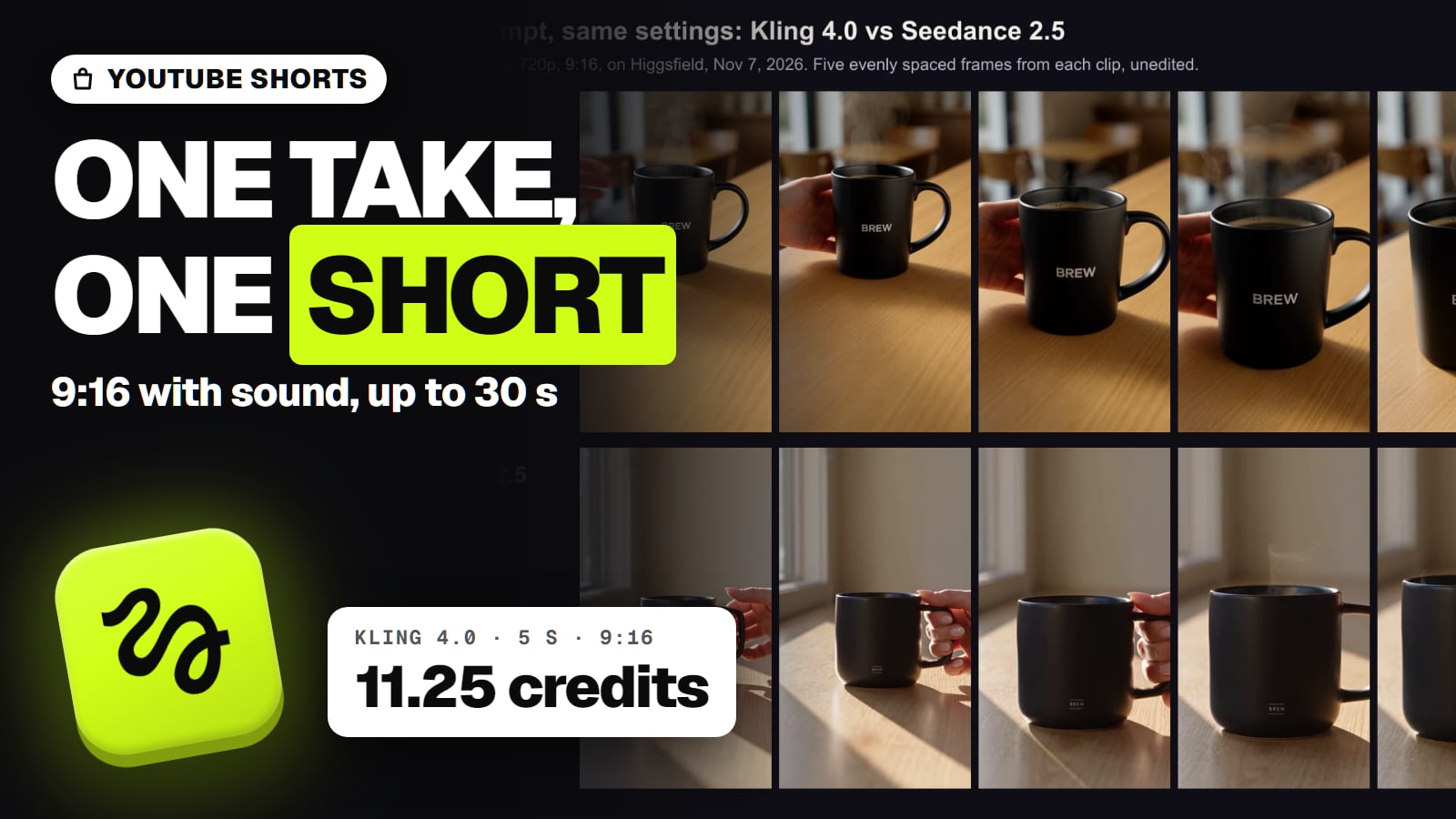
Storyboard before you generate. Higgsfield Popcorn "creates a storyboard that lets you plan and visualize your idea before generation", from a prompt plus up to 4 reference images (Popcorn, read Nov 18, 2026). Then generate each shot as a video clip. Seedance 2.5 makes up to 30 seconds in a single take with audio and video generated together, which suits longer dialogue beats; Kling 4.0 also makes 3 to 30 second clips (our Kling 4.0 on Higgsfield cost guide has the details). Short clips are cheaper to redo when one goes wrong, which is why most guides, invideo's included, work in many short shots. For a whole series of clip-by-clip math, the best AI video generator for long videos works out what a 10-minute video costs on each model.
Camera language matters more in drama than in ads: a slow push-in on a reveal, a handheld feel in an argument. Which Higgsfield camera move fits which shot lists every preset. If you already have a real clip with the motion you want, Higgsfield Genjutsu keeps the motion and rebuilds the rest.
Step 4. Voices and lip sync
Two ways. Generate the dialogue with the video, on a model that makes both at once (Seedance 2.5 generates audio and video together; Morphic's guide recommends Seedance 2.0 for dialogue because it lip-syncs in the same pass). Or record or generate a voice first and run lip sync on the clip. Higgsfield's Lipsync Studio does the second: upload an image or clip, upload audio or type text to generate speech, pick a model, and it lists models from "Infiniti Talk and Higgsfield Speak to Google VEO3, Kling, and more" (Lipsync Studio, read Nov 18, 2026). The credit cost shows on its Generate button. If you want a dedicated voice tool, ElevenLabs pricing and free AI voice generators cover the options. Whatever you use, keep one voice per character for the whole season.
Step 5. Edit and post
Cut in any editor (CapCut, Premiere, DaVinci Resolve), burn in captions because many viewers watch muted, put the strongest moment in the first seconds and end on the cliffhanger. Export 1080x1920. Then check the platform's AI rules (below) before you upload.
How much does one AI micro drama episode cost?
You pay for every generation, including the ones you throw away. Higgsfield says a usable clip "in our own testing typically takes three to five generations to land" (Higgsfield blog, Sep 15, 2026), and another of its posts says credits for generations that fail outright come back automatically, while a finished clip that just looks wrong is still billed (Higgsfield blog, Sep 10, 2026).
So here is one 90-second episode, cut as 18 shots of 5 seconds, priced from Higgsfield's official per-clip credit table (pricing, read Nov 18, 2026). Dollar figures use the Plus list price, $59 a month for 1,200 credits, about 4.9 cents a credit. Ultra 3K ($129 for 3,000 credits) is about 4.3 cents.
One 90-second episode, 18 five-second clips at 720p (Higgsfield credit table, read November 18, 2026)
Seedance 2.5, 35 credits a clip
Every clip a keeper
630 credits (about $31)
3 takes per keeper
1,890 credits (about $93)
5 takes per keeper
3,150 credits (about $155)
Kling 4.0, 11.25 credits a clip
Every clip a keeper
202.5 credits (about $10)
3 takes per keeper
607.5 credits (about $30)
5 takes per keeper
1,012.5 credits (about $50)
Wan 3.0, 8.75 credits a clip
Every clip a keeper
157.5 credits (about $8)
3 takes per keeper
472.5 credits (about $23)
5 takes per keeper
787.5 credits (about $39)
Kling 3.0, about 7 credits a clip
Every clip a keeper
126 credits (about $6)
3 takes per keeper
378 credits (about $19)
5 takes per keeper
630 credits (about $31)
Every clip a keeper
3 takes per keeper
5 takes per keeper
Seedance 2.5, 35 credits a clip
630 credits (about $31)
1,890 credits (about $93)
3,150 credits (about $155)
Kling 4.0, 11.25 credits a clip
202.5 credits (about $10)
607.5 credits (about $30)
1,012.5 credits (about $50)
Wan 3.0, 8.75 credits a clip
157.5 credits (about $8)
472.5 credits (about $23)
787.5 credits (about $39)
Kling 3.0, about 7 credits a clip
126 credits (about $6)
378 credits (about $19)
630 credits (about $31)
The arithmetic: 90 seconds ÷ 5 seconds = 18 clips. Seedance 2.5 at 720p is 35 credits a clip, so 18 × 35 = 630 credits if every clip works first time. At three takes per keeper that is 630 × 3 = 1,890 credits; at five, 630 × 5 = 3,150. The same 18 clips on Kling 3.0 at about 7 credits are 126 credits, or 378 to 630 with retakes; on Wan 3.0 at 8.75 credits they are 157.5, or 472.5 to 787.5.
A mixed route is what most budgets end up with: Seedance 2.5 for the 6 dialogue and hero shots (6 × 35 = 210 credits) and Kling 3.0 for the other 12 (12 × 7 = 84), so 294 credits a pass and 882 to 1,470 credits with three to five takes, about $43 to $72. At 1080p the Seedance 2.5 price goes to 80 credits a clip and Kling 3.0 to about 8, so check the resolution before you multiply.
What the table leaves out: lip sync passes, voices, the character reference images (a Nano Banana Pro image is 2 credits on the same table, so 3 characters × 8 references is 48 credits, once per season), music and your own editing time. It also assumes 5-second shots; Seedance 2.5 and Kling 4.0 can make longer single takes, which cost more per take on the Generate button. For scale, Plus's 1,200 monthly credits cover less than one Seedance 2.5 episode once retakes are counted, so a series on that model needs a bigger plan or a cheaper model for most shots. invideo, a competitor, documents one 10-episode series of 1.5 to 2 minute episodes at about $1,000 an episode by a 3-person crew in 3 days (invideo, Jul 15, 2026); that figure includes people's time and is a vendor's own case. How Higgsfield's credits expire and roll over is in Higgsfield credits explained, and Seedance's plan-by-plan cost is in how much Seedance costs on Higgsfield.
Which tools can you use, and when is something else better?
Tools for each step (makers' pages, read November 18, 2026)
Script
One route (Higgsfield)
Claude, ChatGPT
Alternatives
Higgsfield Short Drama takes the finished script (PDF, DOCX, FDX, TXT, MD, up to 10 MB)
ElevenLabs for voices; Morphic lip sync and dubbing
Edit and post
CapCut, Premiere, DaVinci Resolve
invideo edits inside its own workflow
Higgsfield puts the script-to-series tool, storyboards, the video models (Seedance 2.5, Kling 4.0, Kling 3.0, Wan 3.0) and lip sync in one account, with the credit cost shown before each generation. Plans start at $19 a month (Starter, 270 credits); Plus is $59 for 1,200 credits and Ultra 3K is $129 for 3,000 credits, list prices read Nov 18, 2026. Starter only includes Seedance 2.0 Fast and 2.0 Mini, so a Seedance 2.5 series needs Plus or higher. New users get up to 50% off through our link.
Where something else may be better:
You want the cheapest clips and only need one model. Kling's own app has a free monthly allowance (66 credits on the free account we checked on Nov 12, 2026, with a watermark and no commercial use); see is Kling AI free and Higgsfield vs Kling before you pick.
You want an agent to run the whole pipeline in an editor. invideo publishes a full micro drama workflow and cost case of its own, and Morphic publishes a step-by-step walkthrough with cast sheets, lip sync and dubbing. Both are vendors describing their own tools, so try them on one episode before you pay for a season.
Your story is mostly talking heads. A lip-sync-first workflow (voice first, then lip sync on a still) may cost less per minute than generating every line as a full video shot.
Where do people post AI micro dramas, and how do they make money?
Micro dramas are watched in three kinds of places, and each makes money differently. We report what the sources say; nothing here is a promise that a series will earn anything.
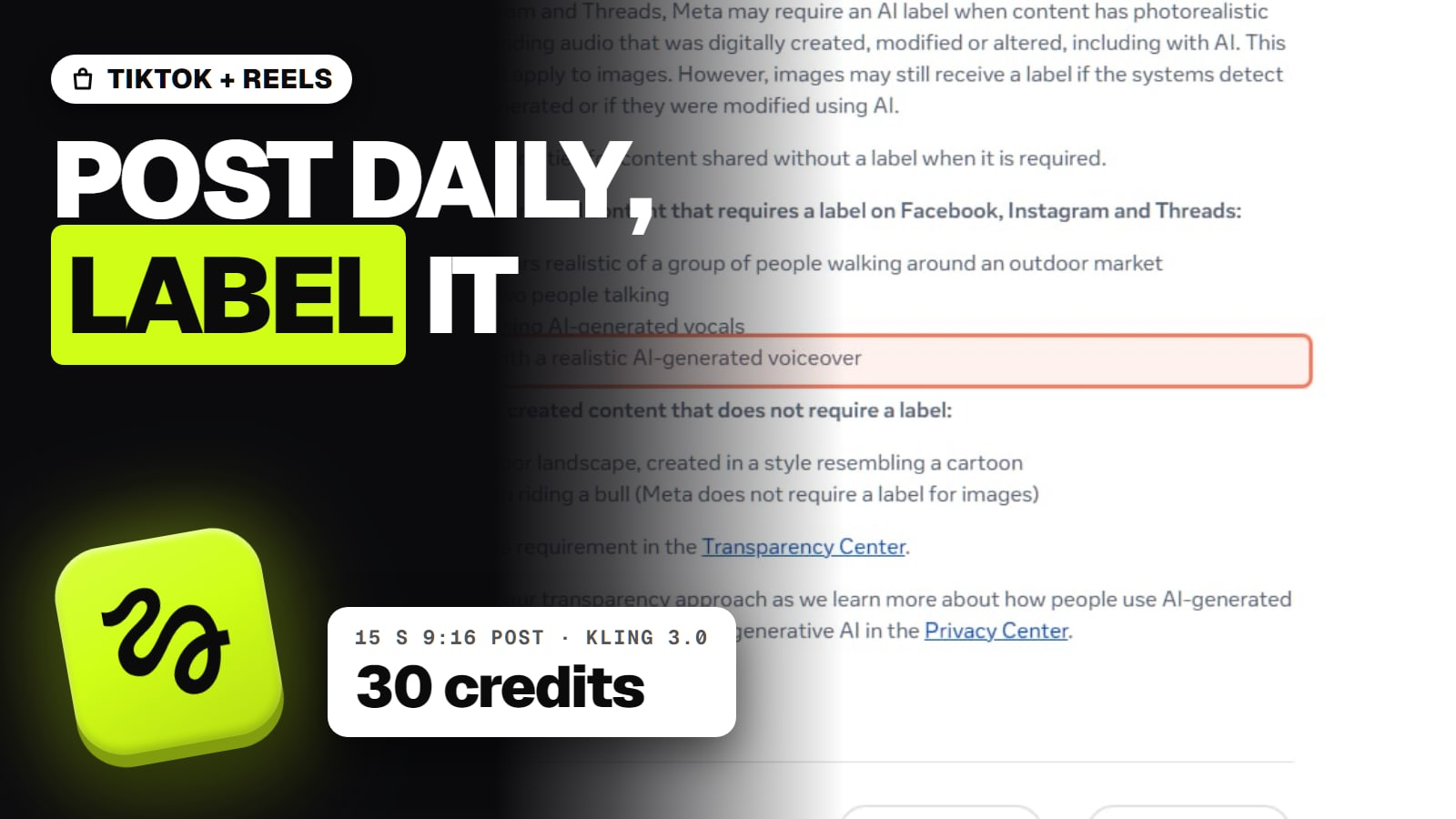
TikTok and PineDrama. TikTok launched PineDrama, a standalone app for series of one-minute episodes, in the US and Brazil on January 16, 2026. TechCrunch reported it as "free and currently ad-free", taking on ReelShort and DramaBox, and did not say whether independent creators can submit shows (TechCrunch). Most solo creators post episodes on regular TikTok, where TikTok requires creators to label "AI-generated or significantly edited content that shows realistic-looking scenes or people", and unlabeled content "may be removed, restricted, or labeled" (TikTok Community Guidelines, read Nov 18, 2026).
Micro drama apps (ReelShort, DramaBox and similar). These apps sell episodes through in-app purchases, advertising and subscriptions, per The Next Web, which reports ReelShort made about $400 million in 2024 revenue while remaining unprofitable. TheWrap reports AI studio Dashverse licenses some of its content to TikTok and ReelShort. That is a studio licensing deal, not an open upload slot, so treat these apps as buyers you pitch, not places you post.
YouTube. Shorts and longer episode compilations work, but monetization has a specific trap for series. YouTube's monetization policy lists, among content that can't earn, "videos where characters are put in the same situation over and over again with the same outcome" and "AI-generated content made with generic or unoriginal templates giving the impression of mass production" (YouTube Help, read Nov 18, 2026). Realistic AI also needs the altered or synthetic disclosure at upload; YouTube's AI label, explained covers when it applies. If you are building a channel around the series, how to start a faceless YouTube channel with AI covers the rest.
The honest picture: the money in micro dramas so far sits with studios and apps that make dozens of titles and pay for distribution. A solo AI series is a way to build an audience and a portfolio first. Make one strong pilot and three episodes before you spend on a full season.
Quick answers
What is an AI micro drama?
A vertical, episodic story made with AI video tools, with episodes of about 1 to 3 minutes (60 to 120 seconds is the common norm), a hook in the first seconds and a cliffhanger at the end of each episode.
How much does it cost to make one AI micro drama episode?
On Higgsfield's credit table, a 90-second episode of 18 five-second Seedance 2.5 clips at 720p is 630 credits per pass and 1,890 to 3,150 credits with three to five takes per usable clip, about $93 to $155 at the Plus list rate. On Kling 3.0 the same episode is 378 to 630 credits with retakes. Voices, lip sync and editing time come on top.
What is the best AI tool for micro dramas?
There is no single tool for every step. Claude or ChatGPT for the script; Higgsfield Short Drama, invideo or Morphic for the script-to-episode workflow; Seedance 2.5 or Kling 4.0 for shots; a lip sync tool or a model with built-in audio for dialogue. Pick by how consistent the characters stay in a test episode.
How do I keep the same character across episodes?
Make reference images of each character once (face, hair, one outfit, one accessory) and use the same references in every shot instead of describing the person again in text. In our 16-shot test the same face held in 10 shots.
Can I make money from an AI micro drama?
Possibly, but nothing guarantees it. The micro drama apps earn from in-app purchases, ads and subscriptions, mostly with studio content they license or produce. On YouTube, templated or repetitive AI series can't monetize under its inauthentic content policy, and TikTok requires labels on realistic AI.
Higgsfield sales like 11.11 and Black Friday change prices for a few days at a time. When one starts, we read the real prices on Higgsfield's own page and email you what changed.
Written and sent by hand. One-click unsubscribe in every email. Emails may contain referral links.