There are three practical routes, from product photos, from a product link, or from a human UGC creator. Here is what each one costs per usable clip, how long it takes, the workflow that keeps your product looking like your product, and the platform rules to check before you spend on ads.
Some links on this page are referral links: we may earn a commission, at no cost to you.
Share
Small brands make product video ads without a studio in three ways: AI built from their own product photos, a tool that turns a product link into a finished ad, or a human UGC creator. From photos, one usable 5-second AI clip cost us about 38 to 58 credits (roughly $1.85 to $2.90) in our own test, the same afternoon. A product-link tool makes a 15-second ad for about 90 to 108 credits a try, so roughly $13 to $26 once you count the retries. A human UGC creator costs a median of about $175 a video and a week or more, before you pay to run it as an ad. Prices and pages read November 18, 2026.
Copilot gets asked some version of this question a lot, and most answers come from tool vendors ranking themselves first. We are a US site with a referral link for one of the tools below (Higgsfield), so we say where a cheaper or simpler option is the better buy, and every number has its source and read date.
What are the three ways to make a product video ad without a studio?
Three routes for a small brand (read November 18, 2026)
AI from your product photos (image model, then image-to-video)
Cost
37.5 to 58 credits per usable 5 s clip in our test, about $1.85 to $2.90
Turnaround
Same day
Trade-off
Most control; you check every still and every frame
Product link to ad (Higgsfield Marketing Studio, Creatify)
Cost
90 to 107.5 Higgsfield credits per 15 s try; about $13 to $26 per keeper at 3 to 5 tries
Turnaround
Same day
Trade-off
Script, avatar and edit done for you; less control over the product
Human UGC creator
Cost
Median about $175 a video; usage rights 15 to 30% per 30 days
Turnaround
About 7 to 10 days
Trade-off
Real person, real product in hand
Cost
Turnaround
Trade-off
AI from your product photos (image model, then image-to-video)
37.5 to 58 credits per usable 5 s clip in our test, about $1.85 to $2.90
Same day
Most control; you check every still and every frame
Product link to ad (Higgsfield Marketing Studio, Creatify)
90 to 107.5 Higgsfield credits per 15 s try; about $13 to $26 per keeper at 3 to 5 tries
Same day
Script, avatar and edit done for you; less control over the product
Human UGC creator
Median about $175 a video; usage rights 15 to 30% per 30 days
About 7 to 10 days
Real person, real product in hand
Dollar figures for the AI routes use Higgsfield's Plus list price, $59 a month for 1,200 credits, about 4.9 cents a credit (pricing, read Nov 18, 2026). Cheaper per credit on bigger plans, dearer on Starter ($19 for 270 credits).
Route 1. AI from your product photos
You start from photos of the real product, make new still images around it (a studio background, a lifestyle scene, a hand holding it), keep only the stills that match the product exactly, and then animate those stills into short clips. On Higgsfield's pricing page a Nano Banana Pro image is 2 credits, Higgsfield Soul is 0.25 credits, a 5-second Kling 3.0 clip at 720p is about 7 credits and a 5-second Seedance 2.5 clip at 720p is 35 credits.
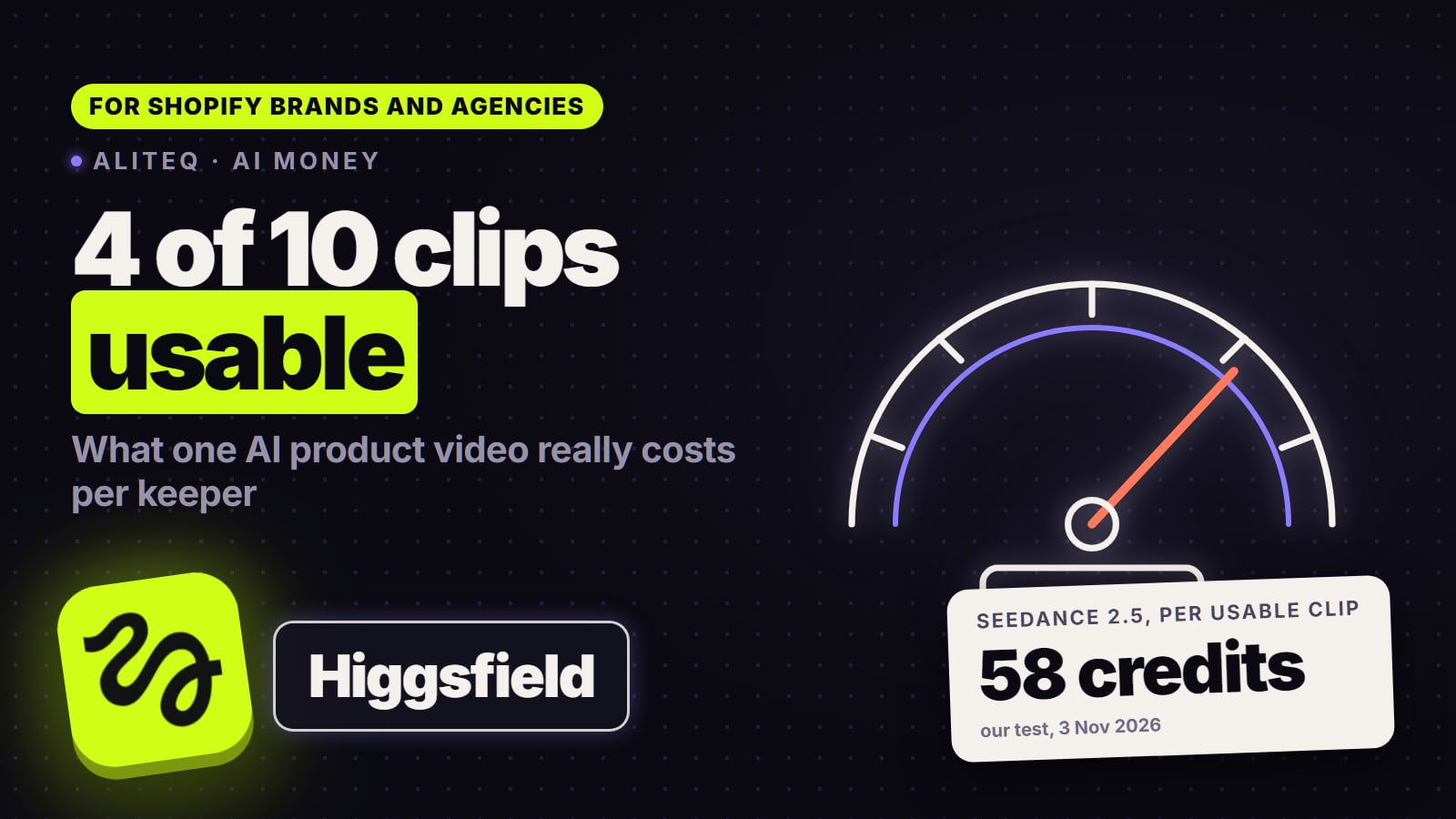
That's the cheapest route per clip, and the one we've actually run. Our one-phone-photo product shot test turned one photo of a plain beanie into 12 product images for 34 credits, about $1.67, but 5 of the 12 quietly changed the hat. Our test of what one usable AI product clip really costs then gave Kling 3.0 and Seedance 2.5 the same photo five times each: Kling kept the product right 1 time in 5 (37.5 credits per keeper), Seedance 3 times in 5 (about 58 credits per keeper). If you're choosing between those two image models, Nano Banana Pro or Higgsfield Soul for product shots compares them.
Best for: brands with good photos who want a steady flow of short product shots, b-roll and the first three seconds of an ad. Weak at: a person talking about the product; you'd add that with a creator or an avatar.
Route 2. Paste a product link, get an ad
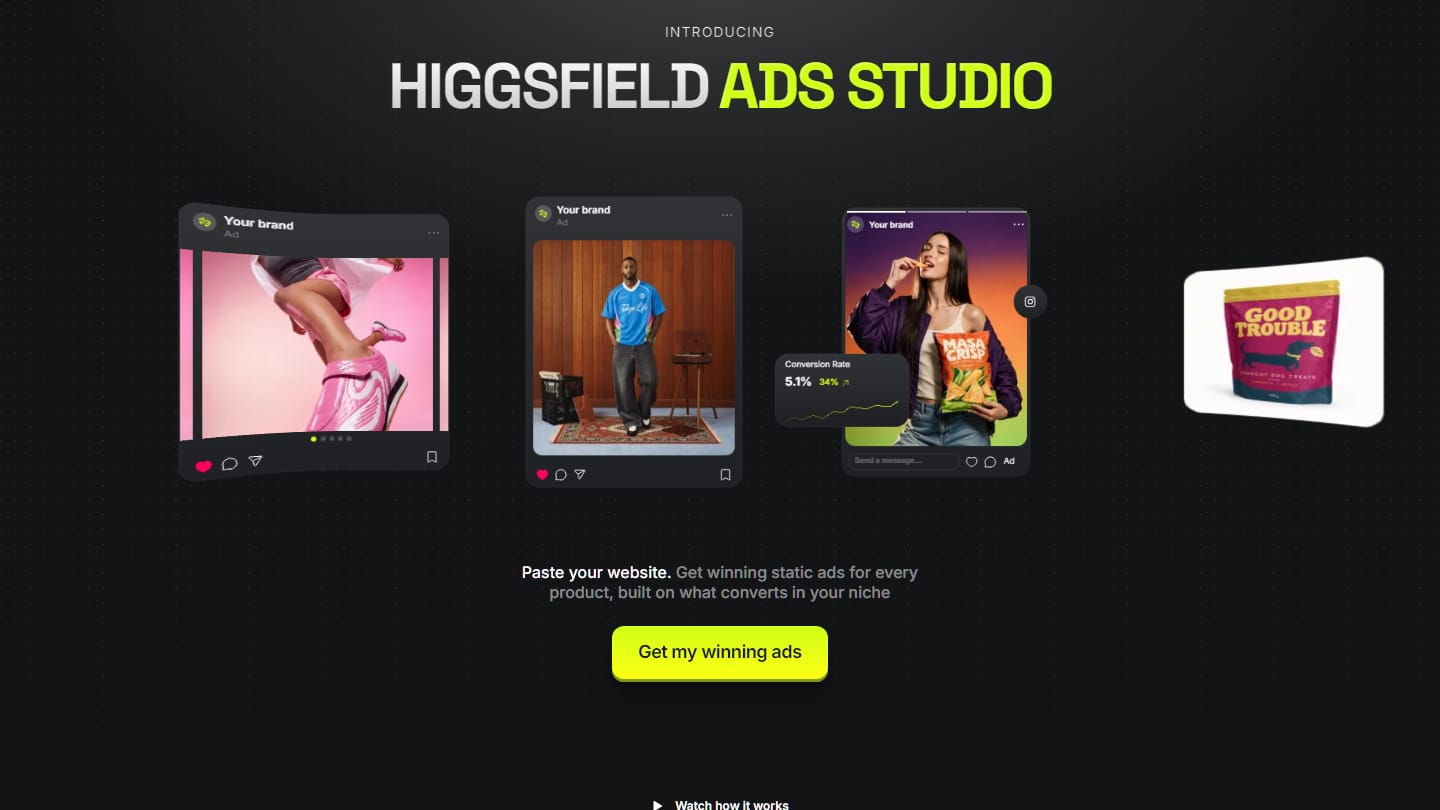
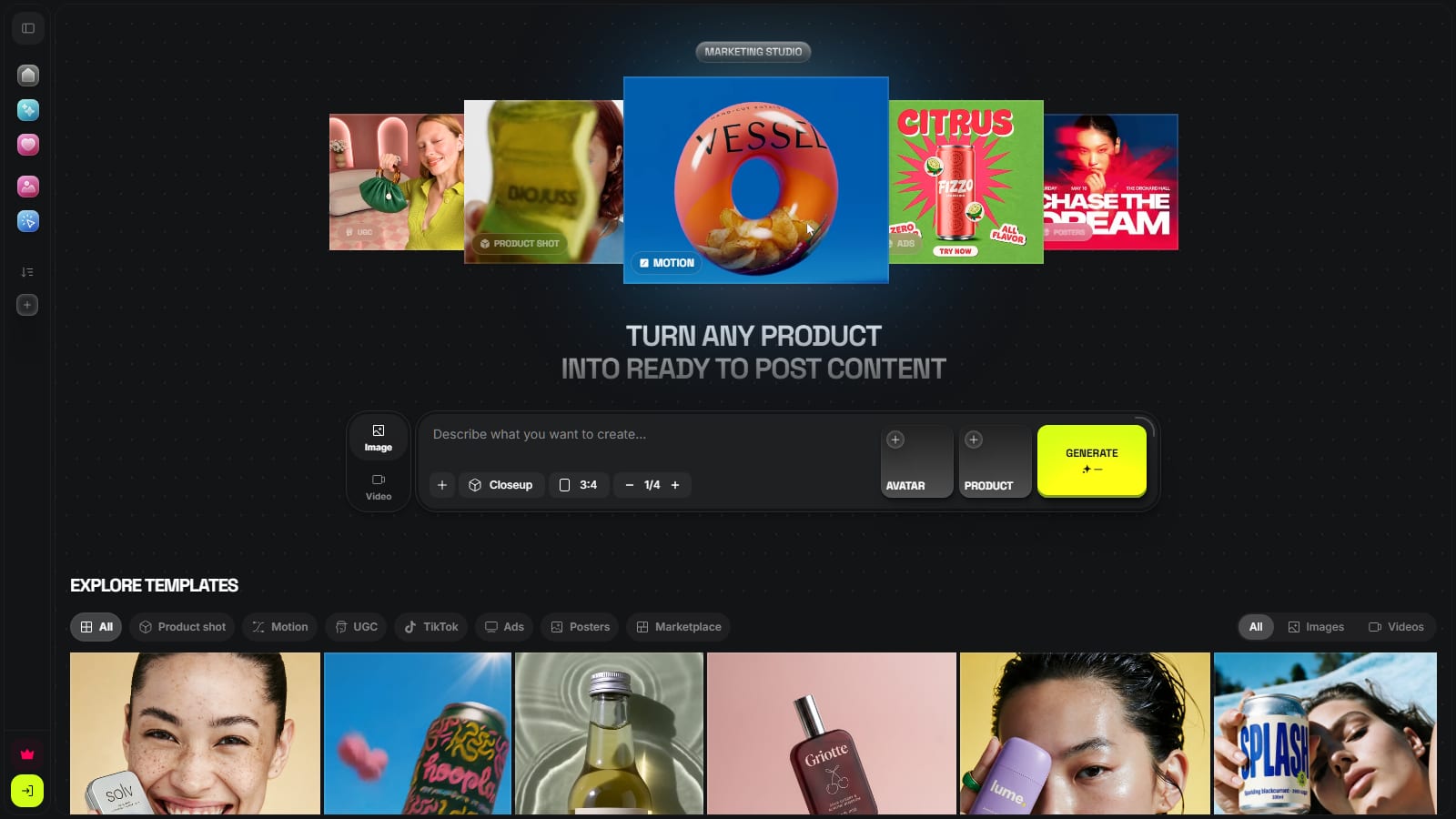
Several tools now read your product page and build the ad for you. In Higgsfield's Marketing Studio you pick a template, add your product (upload a product image, or paste a product page link in the Product Link tool) and press Recreate, and the exact credit cost shows on the button before you confirm (help center, read Nov 18, 2026). Higgsfield's own guide lists 15-second clips at 90 credits for a Hypermotion motion template, 105 for a TikTok Camera POV template and 107.5 for a UGC Review template, and says Review clips run 15 to 30 seconds (Higgsfield blog, Oct 30, 2026). Higgsfield's separate Ads Studio does the same for static ads: paste your website and it pulls your logo, colours, product names, images and prices, for one hero product or up to 10 at a time (Ads Studio, read Nov 18, 2026).
Creatify is the best-known alternative. Its URL-to-video page says "Paste a link. Get a video ad", in three steps (paste the URL, choose an AI avatar, generate and customize), works with Shopify, Amazon, Etsy and other stores, and claims a video ad "in under 60 seconds" (Creatify, read Nov 18, 2026; that's the vendor's claim). Creatify's plans start at $15 a month for 55 credits, or $10 a month billed yearly (pricing); its pricing page counts credits in 5-second video units, so check the cost of a full URL-to-video ad in the app before you buy.
Best for: brands that need a finished ad with a hook, script, captions and a presenter today. Weak at: keeping a detailed label or package perfect, because you control less of each frame. The full walk-through of this route, tool by tool, is in how to turn a product link into a video ad.
Route 3. Hire a human UGC creator
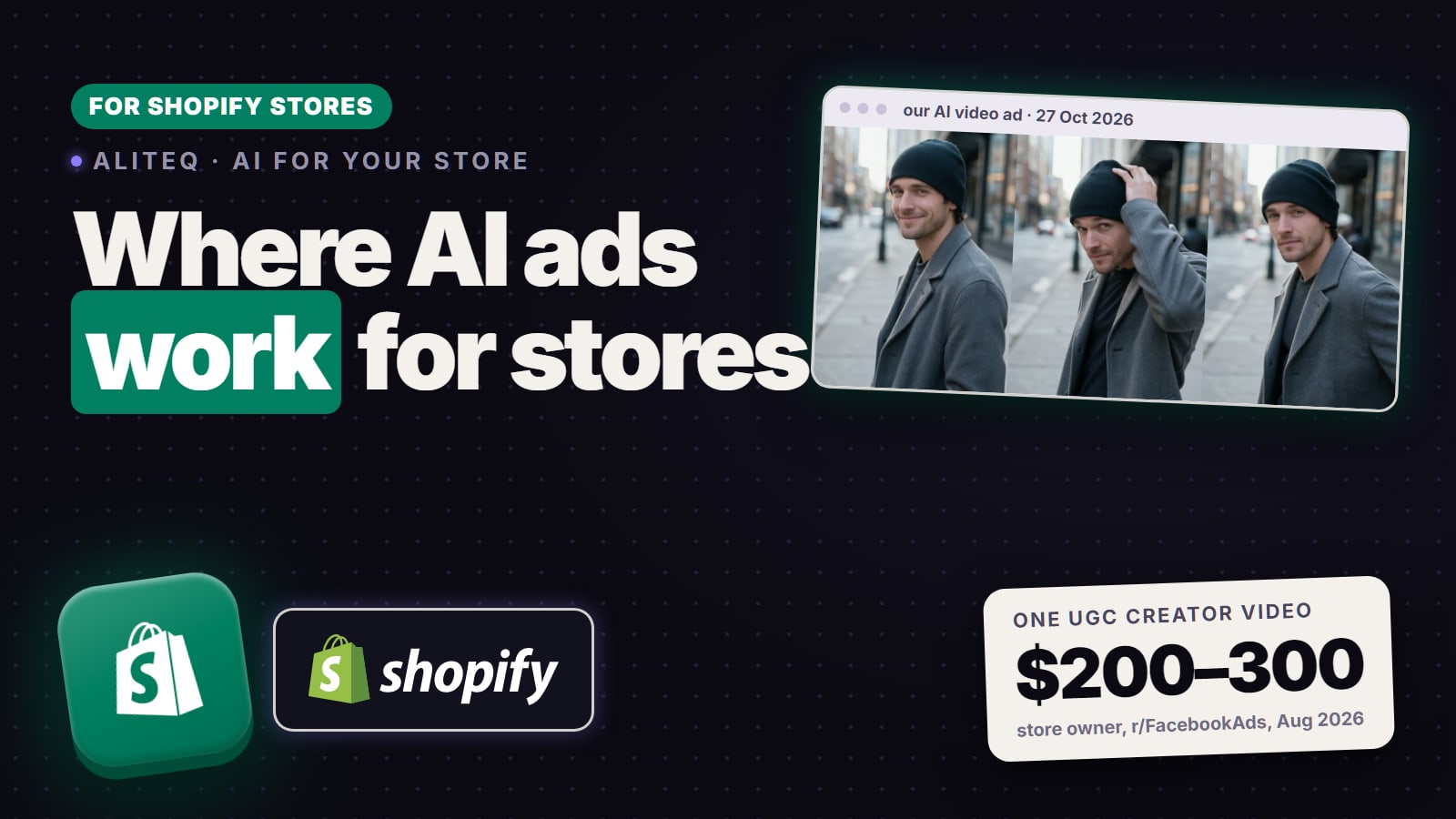
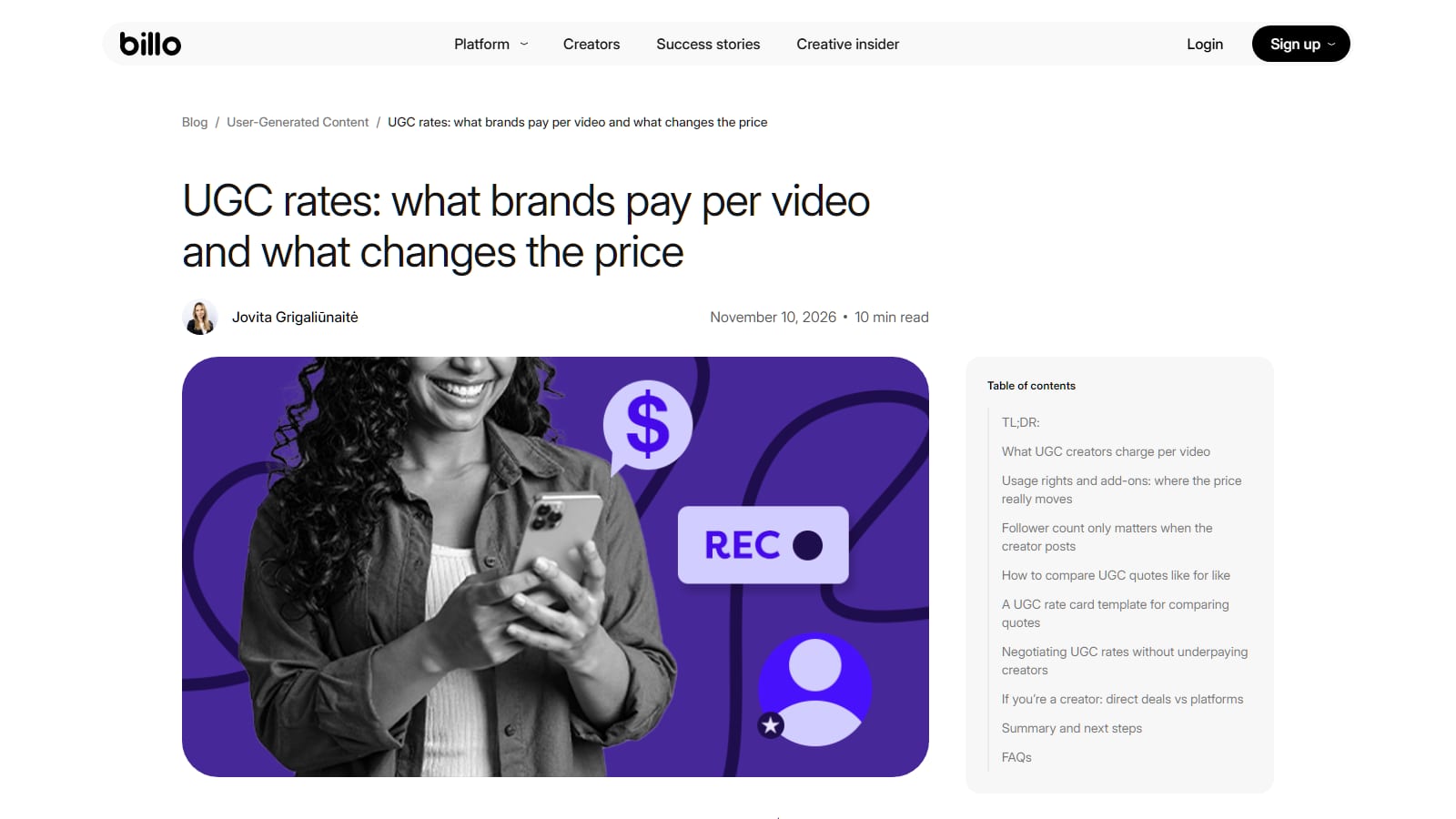
Influee's pricing guide puts the median at "around $175" a single UGC video, with most creators between $150 and $300 (Influee; the page is dated April 18, 2025, though its title says 2026). Billo's November 2026 rates guide cites $75 to $150 for beginners and $200 to $400 as the standard market rate, with paid ad use usually priced at 15 to 30% of the base fee per 30 days and perpetual buyouts at 150 to 300% (Billo, Nov 10, 2026). So a $175 video you run as a Meta ad for one month costs about $200 to $230. A store owner spending $25,000 a month on Meta said their creators take 7 to 10 days to deliver (r/FacebookAds, August 2026).
This is the order that kept our product right in both of our tests. It works with any image and video tool; we name the ones we used.
1
Photo. Shoot the real product on a phone in soft daylight, front, side and back, plus the label up close. These photos are the truth you check everything against.
2
Images. Make 6 to 10 stills with an image model (Nano Banana Pro, Soul, Seedream): a clean studio shot, a lifestyle scene, a hand holding it. Put the constraint in the prompt: same colour, same shape, no added details, no new text.
3
Check. Compare every still with the real photo at full size: label text, logo, cap, colour, proportions. Delete any that changed the product, even slightly.
4
Video clips. Animate only the approved stills, using each one as the start frame, in 5-second clips. Short clips cost less and drift less. Check five frames per clip, including the last second.
5
Variations. Keep the product the same and change the hook: the first three seconds, the background, the angle, the caption. Ten versions of one idea beat ten unrelated ads.
6
Captions. Burn in captions (most feed video plays muted) and add your offer in your own words. Don't let the AI write claims your product can't back up.
7
Platform rules. Export 9:16 for TikTok, Reels and Shorts, and turn on the AI disclosure where the platform asks for it before you upload.
How much does one usable AI clip really cost?
Price per generation is the wrong number. You pay for every attempt, including the ones you throw away. Higgsfield says so itself: a usable clip "in our own testing typically takes three to five generations to land" (Higgsfield blog, Sep 15, 2026), and another of its posts says the multiplier "sits between three and ten" for most creators (Higgsfield blog, Sep 10, 2026). The same post says credits for generations that fail outright, returning nothing, come back automatically; a finished clip that just looks wrong is still billed.
Our own number sits inside that range. In our cost-per-usable-clip test, 4 of 10 clips kept the product right, so about 2.5 tries per keeper overall, worse for Kling (5) and better for Seedance (1.7). The quick formula:
Cost per keeper = credits per try × tries per keeper.
5-second Seedance 2.5 clip at 720p: 35 credits × 3 to 5 tries = 105 to 175 credits, about $5 to $9.
15-second Marketing Studio template: 90 to 107.5 credits × 3 to 5 tries = 270 to 538 credits, about $13 to $26.
Both are a fraction of a $175 creator video. The catch is time: someone has to check every frame, and a clip that changes your product costs more in refunds than it saves.
Label and packaging drift. This is the big one. Models quietly add a cuff to a beanie, round a square bottle, change a colour in the last second or turn your label into lettering that looks like text but isn't. Five of twelve images in our photo test changed the product, and the most common video failure in our clip test was the same thing. Fix it with the workflow above: check the still, animate the still, never let a model invent the product from a text prompt.
Faces. AI presenters can look fine in a thumbnail and wrong in motion: mouths, hands, the way they hold the product. Shoppers notice. If your ad needs a person to vouch for the product, use a real person, or make it clear the presenter is an actor. The FTC's 2024 final rule covers reviews and testimonials that misrepresent "that they are by someone who does not exist" (FTC), so an AI avatar saying "I've used this for three months" is a fake testimonial. Script the AI to describe the product, not an experience nobody had.
Platform AI rules. Meta says it applies an "AI info" label to ads made or edited with its own generative AI tools and detects third-party AI tools "through industry-standard signals" (Meta, read Nov 18, 2026). TikTok asks advertisers to use its AI-generated content disclosure when an ad's image, video or audio is "completely AI-generated or significantly modified by AI" (TikTok, read Nov 18, 2026). TikTok Shop has its own stricter content rules for shoppable videos. All of it, platform by platform, is in TikTok Shop and Meta rules for AI video ads.
Is Higgsfield the right tool, or is something cheaper better?
Higgsfield is the tool we have a referral link with, and it fits this job well in one specific way: it puts the image models (Nano Banana Pro, Soul, Seedream), the video models (Kling, Seedance, Veo) and the ad templates in one account, with the credit cost shown before each generation. That's what both of our tests ran on. Plans start at $19 a month (Starter, 270 credits) and the plan most product-ad makers need is Plus, $59 a month for 1,200 credits, list prices read Nov 18, 2026. New users get up to 50% off through our link. Which plans include the ad tools is covered in can Higgsfield make UGC ads from a product link?, and agencies making ads for several brands should read whether the Higgsfield Team plan is worth it.
Where a cheaper or simpler tool is the better buy:
You only need a talking avatar reading a script from your product page. Creatify is built for exactly that, starting at $15 a month.
You need stills, not video. Higgsfield's own Ads Studio, or the image model alone, does it for a couple of credits an image. Don't pay for video credits you won't use.
You make one ad a month. A single creator video may be simpler than learning a tool, and it comes with real hands.
Your product has small print or a complex label. Keep the real product footage as the hero shot and use AI only for backgrounds, hooks and b-roll, whatever tool you use.
Our verdict
For most small brands the best mix is all three routes, in this order. Use AI from your own photos for cheap volume: hooks, b-roll, product shots, the ten versions of an idea. Use a product-link tool when you need a complete ad today. Pay a real creator once a concept has proven itself, and for anything that has to be held, worn or used on camera. Count cost per usable clip, not per generation, check every frame against the real product, and switch on the AI label before the platform does it for you.
Quick answers
How do small brands make product ads without a studio?
Three ways. Make AI images and short clips from your own product photos, use a tool that turns your product page link into a finished ad (Higgsfield Marketing Studio, Creatify), or hire a UGC creator. AI from photos is the cheapest per clip; a creator is the most trusted for products that need to be shown working.
How much does an AI product video ad cost?
In our test a usable 5-second clip made from a product photo cost 37.5 to 58 Higgsfield credits, about $1.85 to $2.90 at the Plus list rate. A 15-second Marketing Studio ad is 90 to 107.5 credits a try, so about $13 to $26 at three to five tries per keeper. A human UGC video has a median of about $175, before usage rights.
Why does the AI change my product's label or packaging?
Image and video models redraw the product every time and fill in details they're unsure of. Give the model clear reference photos, say "no added details, no new text" in the prompt, keep clips short, and only animate a still you've already checked.
Do I have to label AI video ads?
Meta applies an "AI info" label to ads it detects as made or edited with generative AI, and TikTok asks advertisers to disclose ads whose image, video or audio is completely AI-generated or significantly modified by AI. TikTok Shop has stricter rules of its own.
Higgsfield sales like 11.11 and Black Friday change prices for a few days at a time. When one starts, we read the real prices on Higgsfield's own page and email you what changed.
Written and sent by hand. One-click unsubscribe in every email. Emails may contain referral links.