We read what store owners spending real money on Meta and TikTok say about AI ads in 2026, then priced it against our own test. AI static ads and variations of a proven ad hold up. Talking-head AI avatars mostly don't. Here's the honest map, with what one usable ad actually costs.
Some links on this page are referral links: we may earn a commission, at no cost to you.
Share
AI ads work for a Shopify store in two places: static image ads, and quick variations of an ad that already sells. They mostly flop as one-prompt videos, where the product can change shape, and as talking-head AI "customers". Keep your real product photos as the truth, build AI around them, check every frame, and plan for re-rolls: a usable 15-second AI clip costs a few dollars in credits, not the $200 to $300 a creator charges. That's what store owners spending real money on Meta and TikTok report (threads read November 1, 2026), priced against our own test.
A store owner spending $25,000 a month on Meta put the problem plainly in r/FacebookAds this August: "winning ads die after 7-10 days." Their UGC creators charge "$200-300/video" and take 7 to 10 days to deliver, so keeping up would cost about "$15k/month just on creative production." And "half the time the take doesn't match the brief."
That's the gap AI ad tools promise to close. Some of it holds up. Some of it gets you an ad that looks like every other AI ad and quietly loses money. We read what store owners report in 2026, the threads with real spend behind them, and priced it against what our own AI test cost.
Where do AI ads actually work for a Shopify store?
1. Do AI static image ads beat hand-made ones?
The most consistent good news from store owners is about statics, not video. A Meta advertiser in r/PPC who tested about 40 AI statics across three DTC accounts said "About 3 out of every 10 AI images outperformed our manually designed creatives on CTR and CPA." In r/FacebookAds, a commenter who sells an AI ad tool said they "tested over 50 versions" of AI UGC video "which 'looked nice' but none of them performed", and that statics now take most of their AI spend. It's a vendor's account, but an unusual one: it argues against the AI video that most tools sell.
Three in ten isn't magic. It means AI is a cheap way to get more shots on goal, and most of them will still lose, same as hand-made ads.
2. How do you stop AI ads looking like generic AI slop?
The single biggest jump people report comes from giving the image model the brand's own material. In a 160-vote thread, an advertiser said Nano Banana on its own produced "generic AI slop", but a setup that pulled in the store's colours, fonts and logos got to "maybe 7 out of 10 ads come out actually good." A reply in the same thread: "meme style ads crush, over these fancy style ads."
For a Shopify store that means: your real product photos, your logo file, your hex colours, your actual offer. The less the model has to invent, the less it gets wrong.
3. Can AI keep a winning ad alive past creative fatigue?
The top answer to the $25k-a-month owner wasn't "make 100 AI ads". It was to build "3–4 strong concepts, then batch hooks, first 3 seconds, proof and CTA variants", adding that "AI is good enough for that middle layer now" (thread). The concept, the offer and the angle still come from you or a real creator. AI makes the 15 versions of it that Meta needs to keep the ad alive.
4. Which ad format suits AI: the testimonial or the contrast ad?
A store owner in r/ecommerce found the "creator holds product and says it changed my life" format "gets fake pretty quickly", while showdowns (old vs new, this vs that) did better because they're "about contrast instead of claims." That suits AI well: two products side by side, a before and after, a problem and the fix. No fake person has to vouch for anything.
Where do AI ads flop?
One-prompt full ads. A media buyer who split a $10,000 test between human UGC and AI across three online stores said one-prompt 30-second AI ads were "sloppy garbage" and "the product morphed into a blob" (thread). The post also promotes an AI tool, and the top reply blamed the prompting. Either way, an ad made in one step gets no checking.
Talking-head AI "customers". An advertiser running ads for a local detailing business said "the ai spokesperson made it feel like a weird insurance commercial nobody asked for", and another reported "CTR dropped compared to real videos we'd made" (thread).
Expensive products. Selling a $400 to $600 product, one seller said AI video "still looks pretty fake and polished in a way that feels off. Customers can tell" (thread). The advice they got in the replies: use real customer clips with AI only for voiceover and subtitles, and treat AI as "a cheap testing and b-roll layer, not the hero".
Demos. A brand spending heavily on Meta said AI UGC has "mastered the person looking straight at the camera holding the bottle", but "It can't (easily) get my products right" when the ad has to show the product working (thread).
How do you keep the product right in an AI ad?
The best advice in all of these threads came from a reply in that last one: "use real product footage/photos as the truth layer, then use AI around it for hooks, scripts, backgrounds."
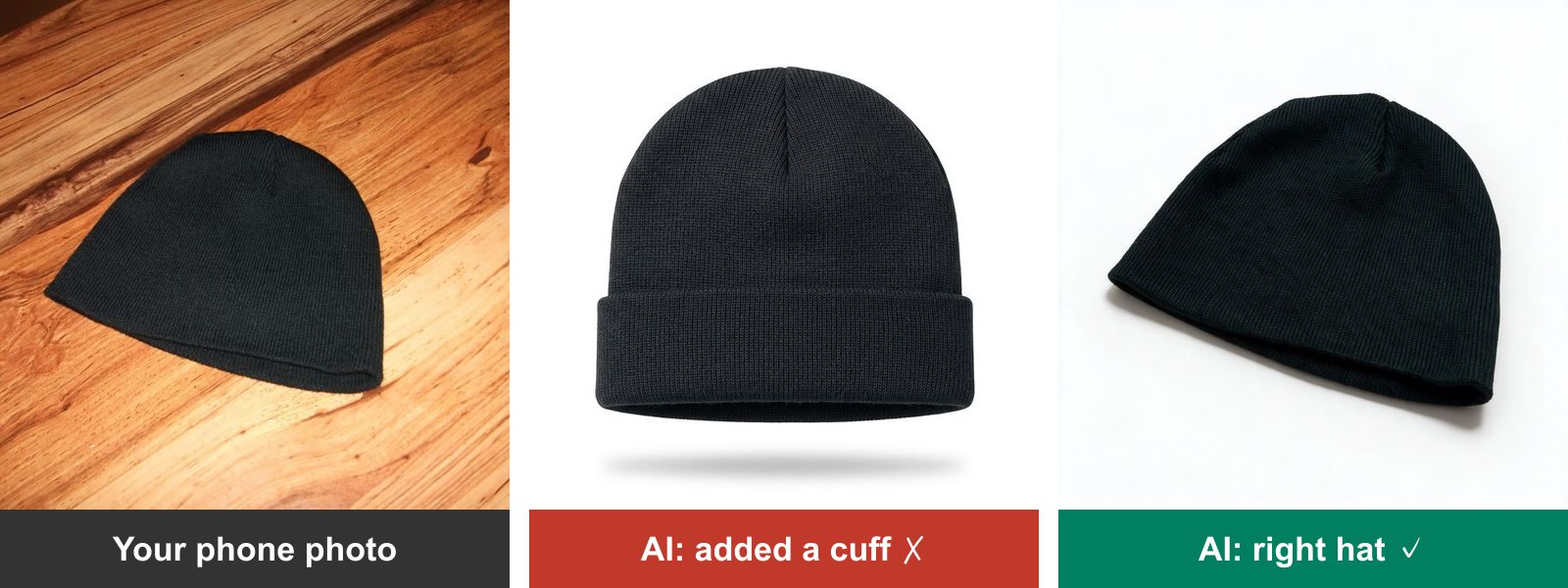
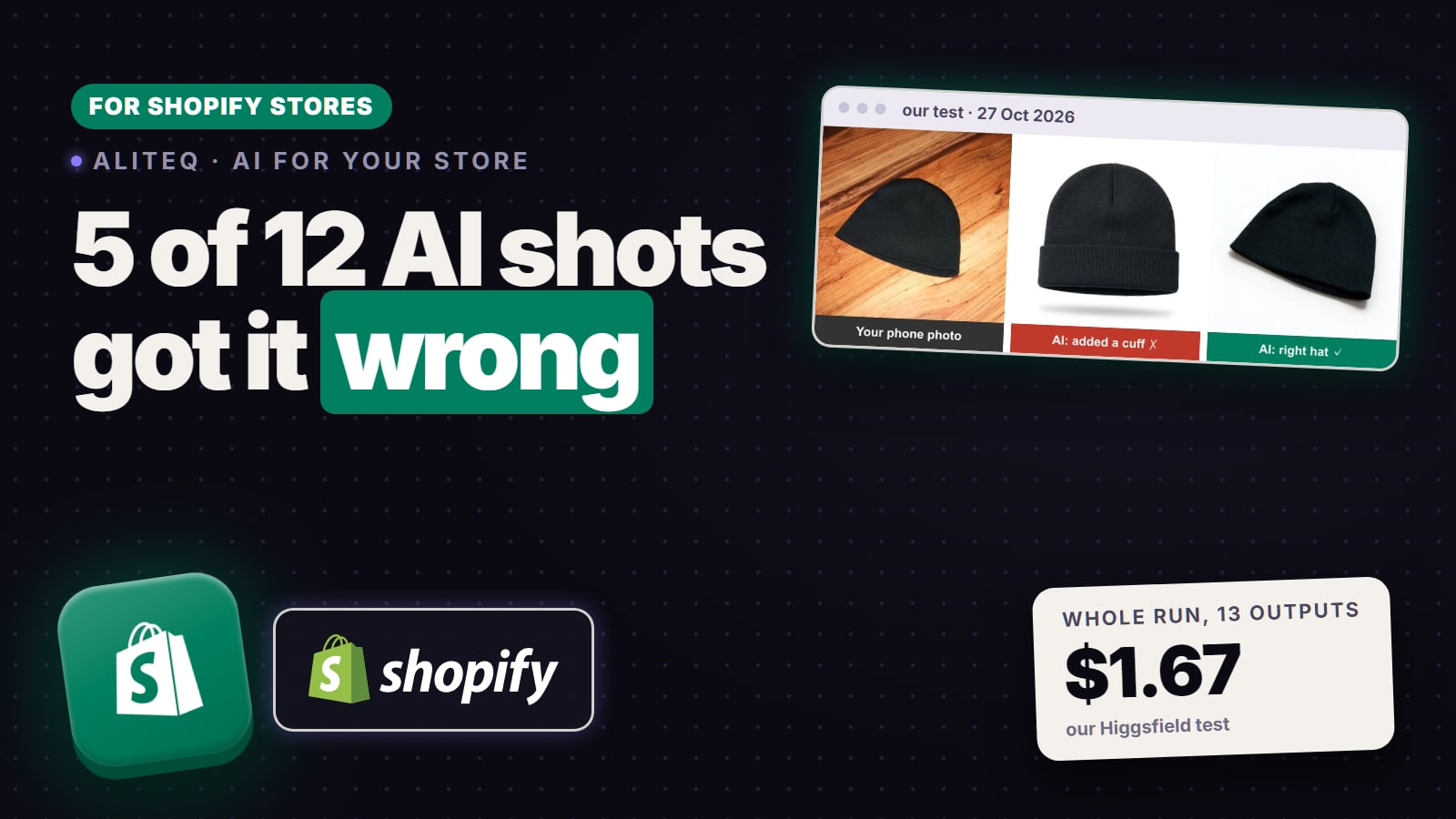
Our own test shows why. We gave an AI image model one phone photo of a plain beanie and asked for product shots. Five of twelve came back as a different hat: the model added a fold-over cuff the real one doesn't have. In an ad, that's a customer who orders one hat and receives another.
From our own test, Oct 27, 2026: same photo, same prompt. One model sold a different hat. Full results in our AI product photo test. · Left: John Harvey, public domain. Middle and right: generated with Higgsfield
The video ad from that test stayed true because we built it from an image we had already checked: the clip started from the approved photo, so the hat couldn't drift. That's the workflow in one sentence: check the still, then animate the still.
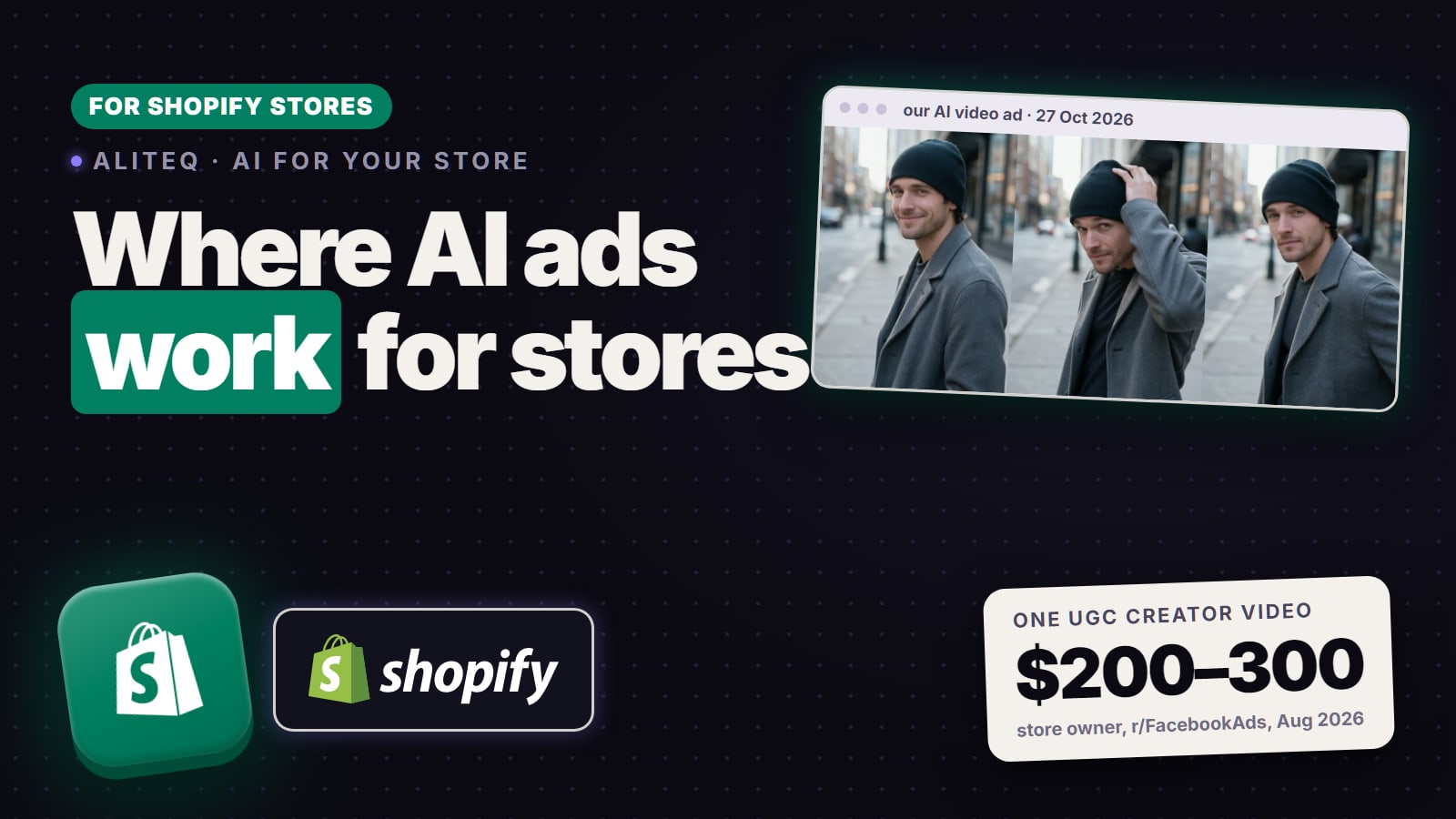
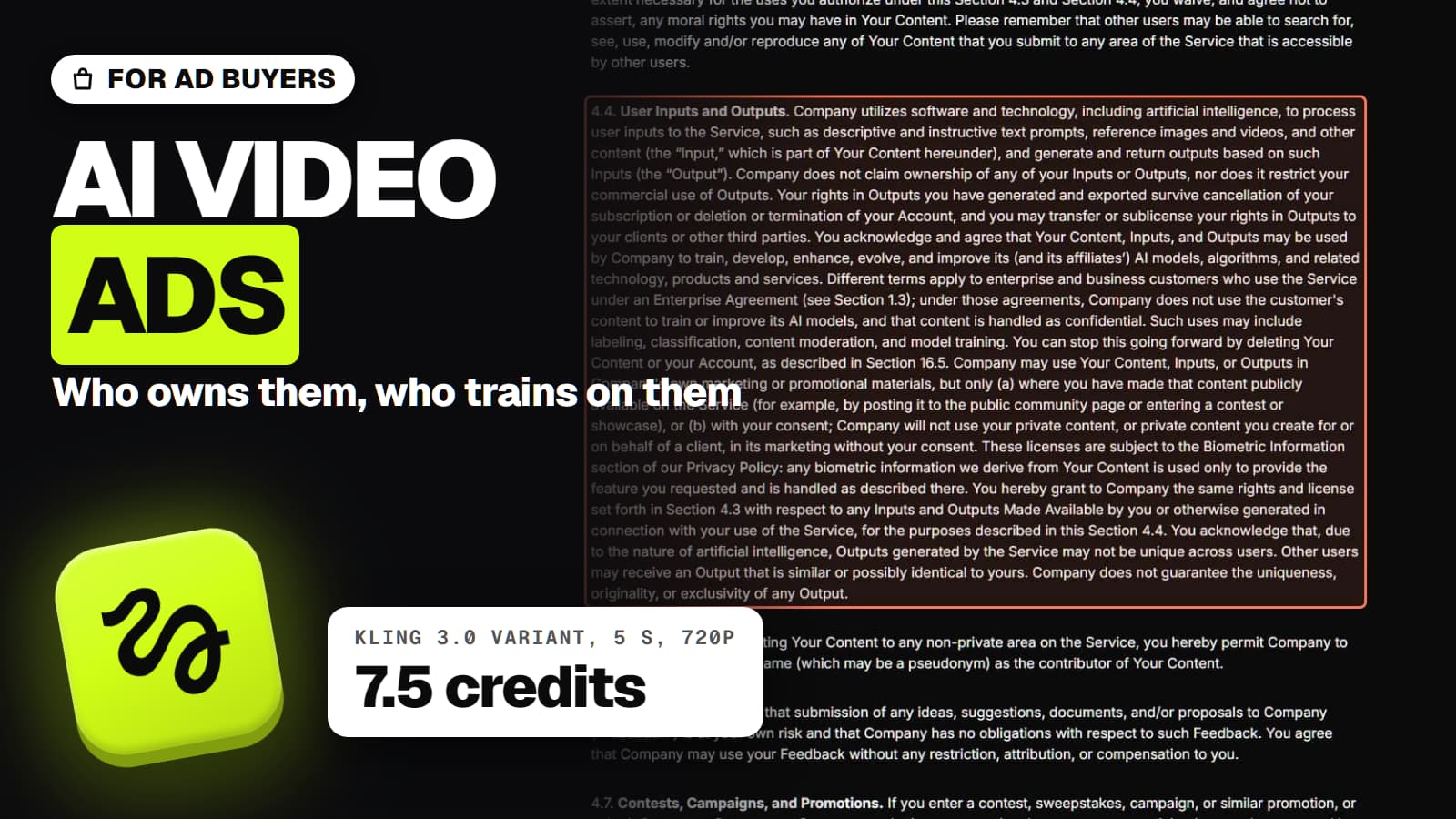
Our 5-second vertical clip, made from an approved product photo: 7.5 credits, about $0.37. One attempt, no edits. · Generated with Higgsfield (Kling 3.0)
How much does one usable AI video ad cost, re-rolls included?
The most useful question on this topic came from a one-product store owner in r/dropship: what's the cost "per usable clip … re-rolls included"? A cheaper model doesn't help, as one reply put it, "if it takes more generations."
Here's what we can show from our own account and the vendors' own pages:
One ad, by route (prices read 26 Oct to Nov 2, 2026)
UGC creator (what the $25k-a-month owner pays)
Cost per video
$200–300 a video
Turnaround
7–10 days
Note
Real person, real product
UGC platform, soona
Cost per video
From $89 a video
Turnaround
Days
Note
Real creator; starting price
UGC platform, Billo
Cost per video
From $99 a video
Turnaround
Days
Note
Prepaid packs, per Billo's blog
AI clip, 5 s, from a checked photo (our test, Kling 3.0)
Cost per video
7.5 credits, about $0.37
Turnaround
Minutes
Note
One attempt was usable
AI UGC-style ad, 15 s, 720p (Higgsfield Marketing Studio quote)
Cost per video
75 credits, about $2.48–3.69
Turnaround
Minutes
Note
Plus or Ultra plan; plan for re-rolls
Cost per video
Turnaround
Note
UGC creator (what the $25k-a-month owner pays)
$200–300 a video
7–10 days
Real person, real product
UGC platform, soona
From $89 a video
Days
Real creator; starting price
UGC platform, Billo
From $99 a video
Days
Prepaid packs, per Billo's blog
AI clip, 5 s, from a checked photo (our test, Kling 3.0)
7.5 credits, about $0.37
Minutes
One attempt was usable
AI UGC-style ad, 15 s, 720p (Higgsfield Marketing Studio quote)
75 credits, about $2.48–3.69
Minutes
Plus or Ultra plan; plan for re-rolls
Even if a usable 15-second AI ad takes three tries, that's 225 credits, about $7 to $11. The real cost isn't credits. It's your time checking every frame, and the money you lose if a bad one runs.
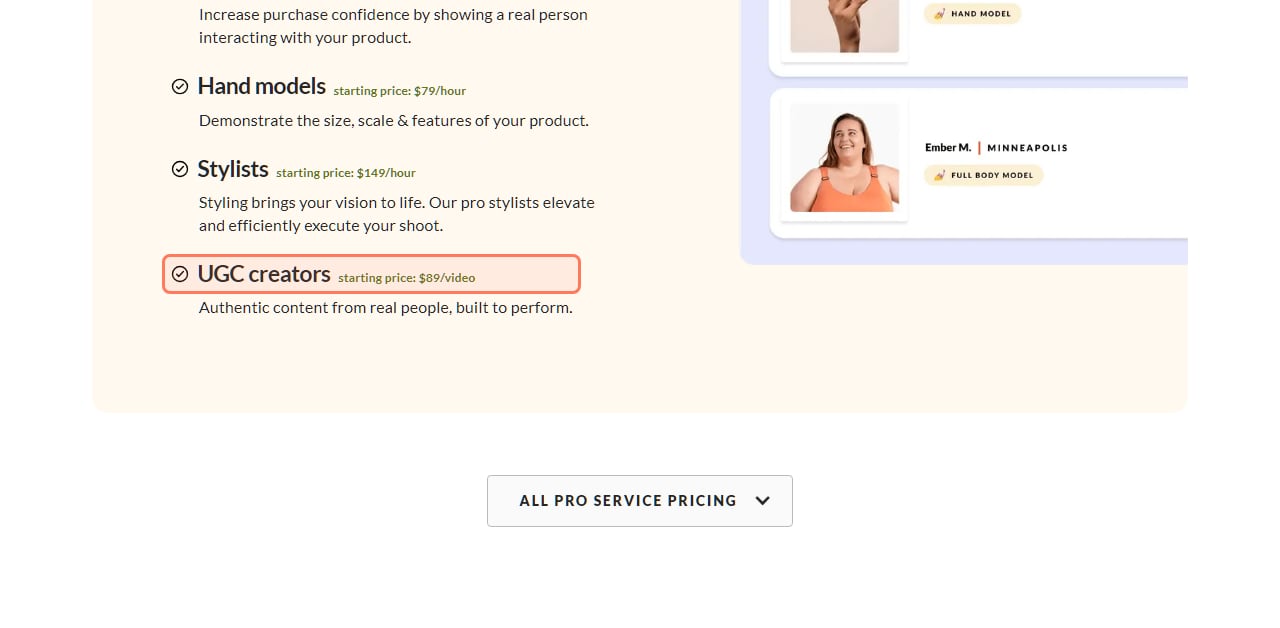
soona's UGC creator videos start at $89 each. Read Nov 2, 2026. · Screenshot: soona.co/pricing
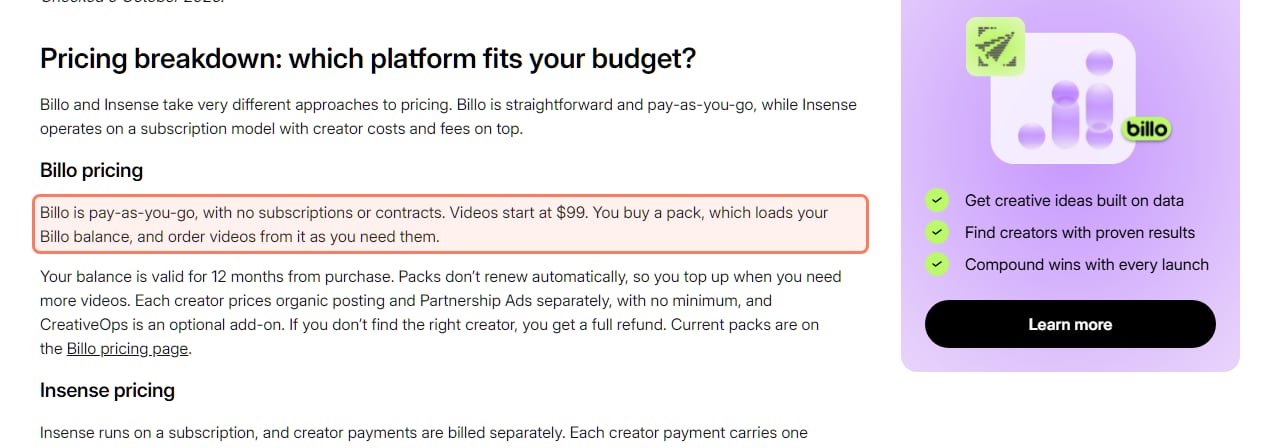
Billo's own blog: videos start at $99, bought in prepaid packs. Read Nov 2, 2026. · Screenshot: billo.app blog
Two warnings from owners about AI tool pricing. One said a $39 starter plan's 100 credits went on "One single 4:59 lip sync video" and the refund was refused (thread). Long talking clips eat credits fast. A reply in the same thread recommended Higgsfield, the tool we have a referral link with, because "you can clearly see how much each generation will cost", and suggested keeping clips to about 5 seconds and stitching them. Another owner making lots of organic videos found Higgsfield's "credits burn fast" (thread). Both are fair: short clips, fewer re-rolls, and a checked still image first keep the bill down.
Re-rolls hit agencies hardest. A marketing agency owner wrote in r/FacebookAds in August that "we use higgsfield to generate the ai ugc videos but end up spending like tons of money on rerunning the generation because the videos can hallucinate, or the voice comes out very odd". If you're an agency making ads for several stores, or a brand with a creative team, a shared workspace with pooled credits is a different purchase from a single plan: seats, the per-seat maths and who can manage what are in is the Higgsfield Team plan worth it for an agency or small team?, and who owns client work on each tool is in the agency section of Higgsfield vs HeyGen vs Arcads.
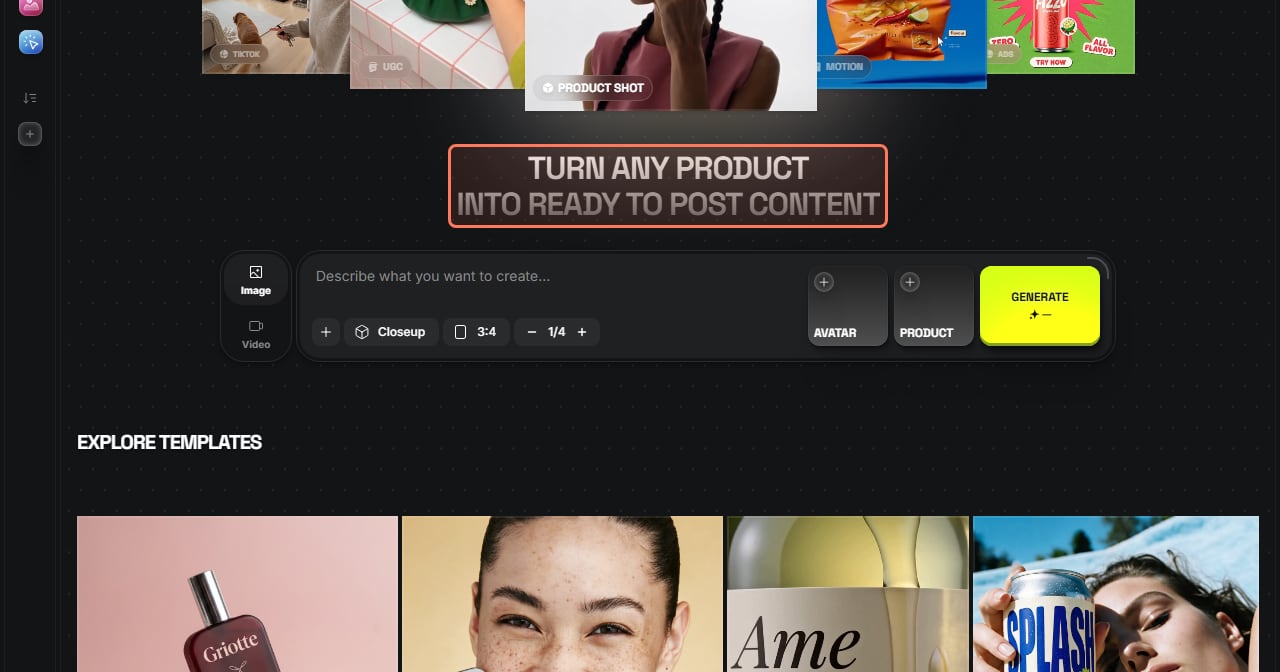
Higgsfield's Marketing Studio, where a product page becomes product shots and UGC-style ads. Read Nov 2, 2026. · Screenshot: higgsfield.ai/marketing-studio
How do you see which ads your competitors already run?
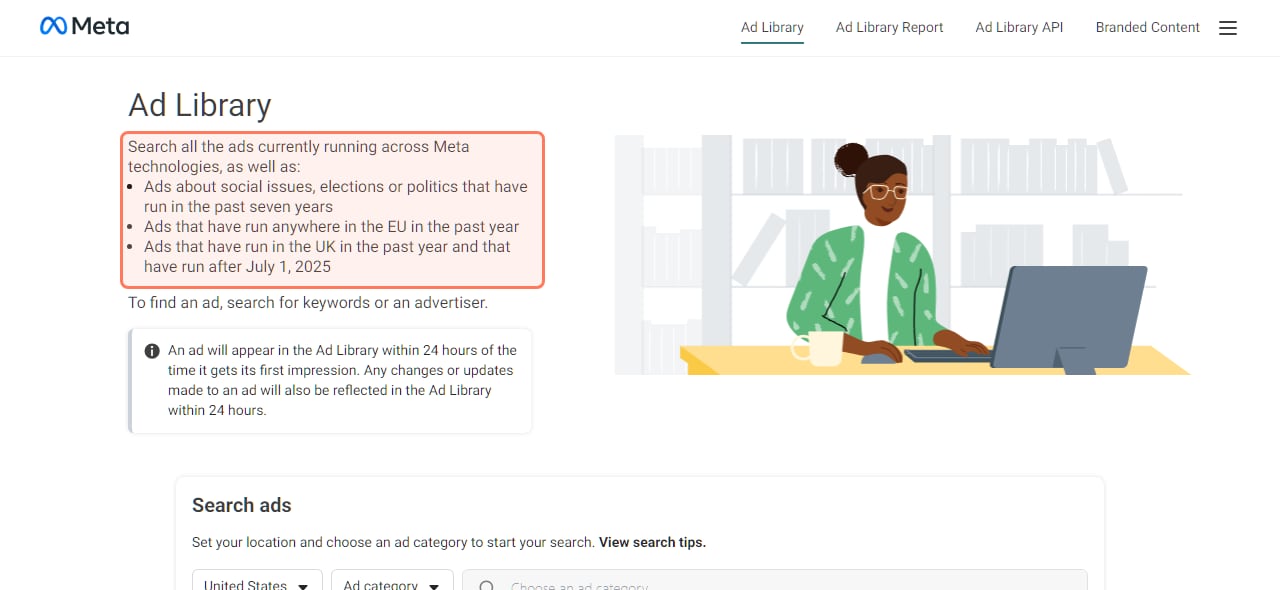
Before you make anything, see what your competitors already run. Meta's Ad Library is free, needs no login, and shows every active ad on Facebook and Instagram for any brand. Search two or three competitors, note which ads have run the longest (those are usually the ones making money), and write down the angle, not the visuals.
Meta's Ad Library, free and without login. Read Nov 2, 2026. · Screenshot: facebook.com/ads/library
Do Meta and TikTok label AI-made ads?
Plan for the label rather than trying to avoid it.
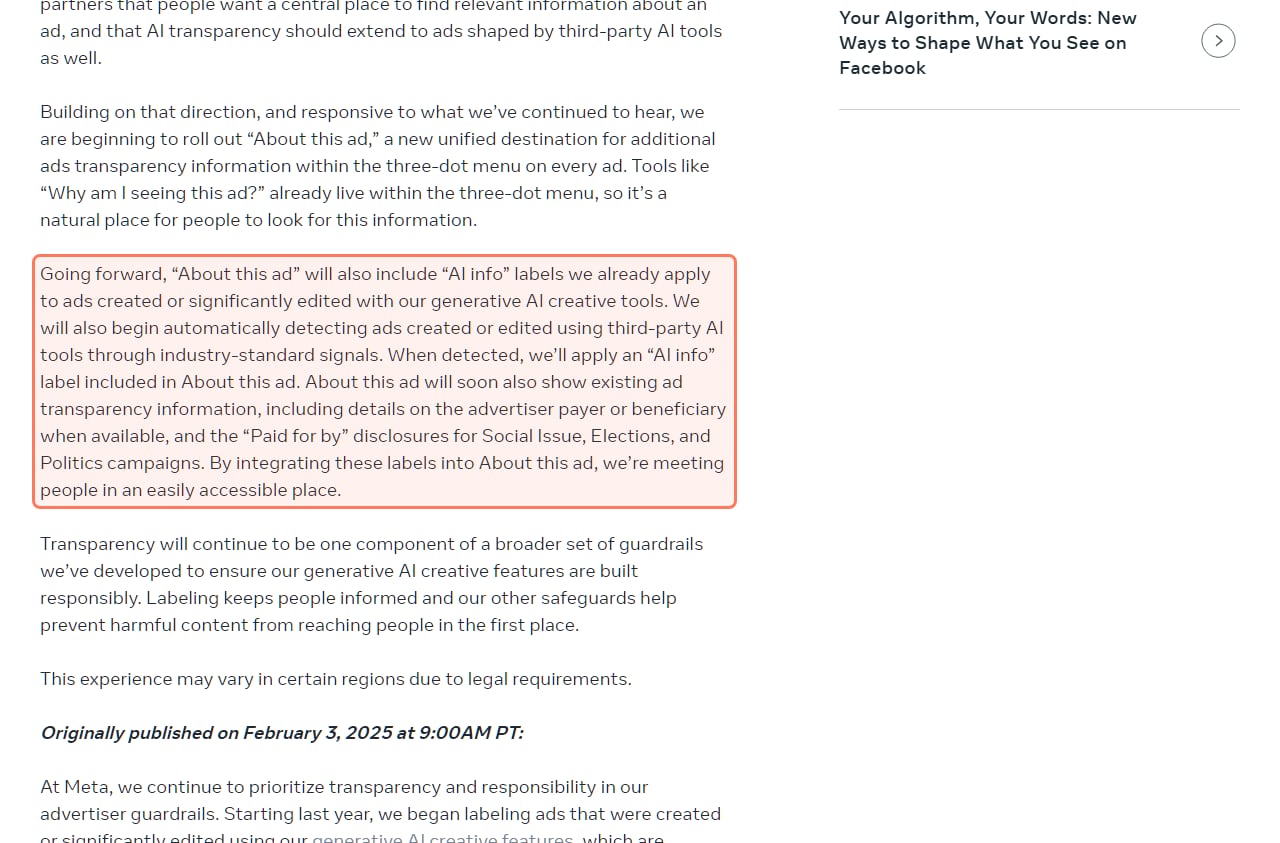
Meta says ads made or significantly edited with generative AI get an "AI info" label, including ads made with third-party AI tools that Meta detects (Meta newsroom).
TikTok says ads whose content "is either completely AI-generated or significantly modified by AI" must use its AI-generated content disclaimer (TikTok ads help).
Meta's rule on AI labels in ads. Read Nov 2, 2026. · Screenshot: about.fb.com
Does the label hurt results? Nobody we found has solid public data. One advertiser said their labelled AI avatar ads "still crush"; a reply said "It really depends on the product and demographic" (thread). Treat it as one more thing to test.
What can cost you far more than a bad AI ad?
Meta's own AI "enhancements". Meta can add AI changes to your ads: new backgrounds, text variations, music. Many advertisers hate them. A 155-vote thread is about switching them off, and the top reply warned "in about 5 days they will turn some of it back on". Another advertiser found Meta's AI had added polka music to an ad for a calm, zen brand. Check the creative settings on every new ad, and recheck them weekly.
Letting an AI agent run the ad account. One advertiser connected an AI coding agent to their Meta ads. It "worked great for about a week. then meta flagged the account and killed it", taking the "custom audiences, pixel history, everything" with it (thread). Use AI to analyse your ad data and draft creatives; make the changes in Ads Manager yourself.
Can an AI avatar pretend to be a customer in your ad?
An AI person holding your product is an actor, and that's fine when it's clearly an ad. An AI person saying "I've used this for three months and my skin cleared up" is a fake testimonial. The FTC's 2024 rule bans fake reviews and testimonials, including ones attributed to people who don't exist (FTC). Write AI scripts about the product, not about an experience nobody had. Our Higgsfield UGC ads guide goes through the rule in detail.
What does a weekly AI ad routine look like for a small store?
1
Monday, 30 min: check Meta Ad Library for 2–3 competitors and your own ads' results. Pick the one concept that's working.
2
Monday, 1 hour: make 6–10 AI statics of that concept from your real product photos, logo and colours. Change the hook and background, not the product.
3
Tuesday: animate 2–3 checked stills into 5-second clips. Check every frame against the real product.
4
Tuesday: upload with the AI label where it applies, and switch off any AI enhancements you didn't ask for.
5
Friday: keep the winners, kill the rest. When one AI version wins big, consider paying a real creator to remake it.
That last step comes from an owner who scaled with AI variations and then said "I hire real creators to remake it" once a concept proved itself (thread). AI does the cheap testing; the money goes on what already won.
Our verdict: are AI ads worth it for a Shopify store?
AI won't fix a weak offer, and it won't replace a real person showing your product working. What it does well is volume: the 10 versions of a winning ad that Meta burns through every week, for the price of a coffee instead of a $250 creator video. Start with statics, feed the model your real brand, animate only what you've checked, and keep your phone for anything that proves the product is real.
Ad creative is one part of a store that works. The full order we'd do it in, from product photos to getting found in Google and ChatGPT, is in AI for a Shopify store: what's worth it.
Choosing the model for the ad footage itself? The best AI video generator for ads compares commercial rights, ad shapes and cost per variant.
Quick answers
Do AI UGC ads actually convert?
Sometimes, but less reliably than AI static ads. Store owners on Reddit report AI statics beating hand-made ones about 3 times in 10, while talking-head AI avatars and one-prompt AI videos are the most common flops. Contrast ads and variations of a proven concept do better than fake testimonials.
How much does an AI video ad cost?
In our test a 5-second clip made from a checked product photo cost 7.5 Higgsfield credits, about $0.37. Higgsfield quotes a 15-second 720p UGC-style ad at 75 credits, about $2.48 to $3.69 depending on the plan. Plan for two or three tries per usable ad. Human UGC starts around $89 to $99 on platforms and $200 to $300 from creators.
Can customers tell an ad is AI?
Often, with video. Owners selling expensive products say AI video "feels off" and that customers can tell. Static images and short clips built from real product photos are much harder to spot. The bigger risk is an AI image that changes your product, so check every frame.
Do I have to label AI ads on Meta and TikTok?
Meta adds an "AI info" label to ads made or significantly edited with generative AI, including some made with third-party tools. TikTok requires its AI-generated content disclaimer on ads that are completely AI-generated or significantly modified by AI.
Can an AI avatar give a testimonial in my ad?
Not as a real customer. The FTC's 2024 rule bans fake reviews and testimonials, including ones from people who don't exist. An AI actor can show or describe the product; it shouldn't claim an experience nobody had.
Should I turn off Meta's AI creative enhancements?
Many advertisers do, because the enhancements can add unwanted music, text or backgrounds. If you switch them off, check again on each new ad, since advertisers report some options coming back on.